The Genesis of an Empire: The Rise and Reign of Ramesses I

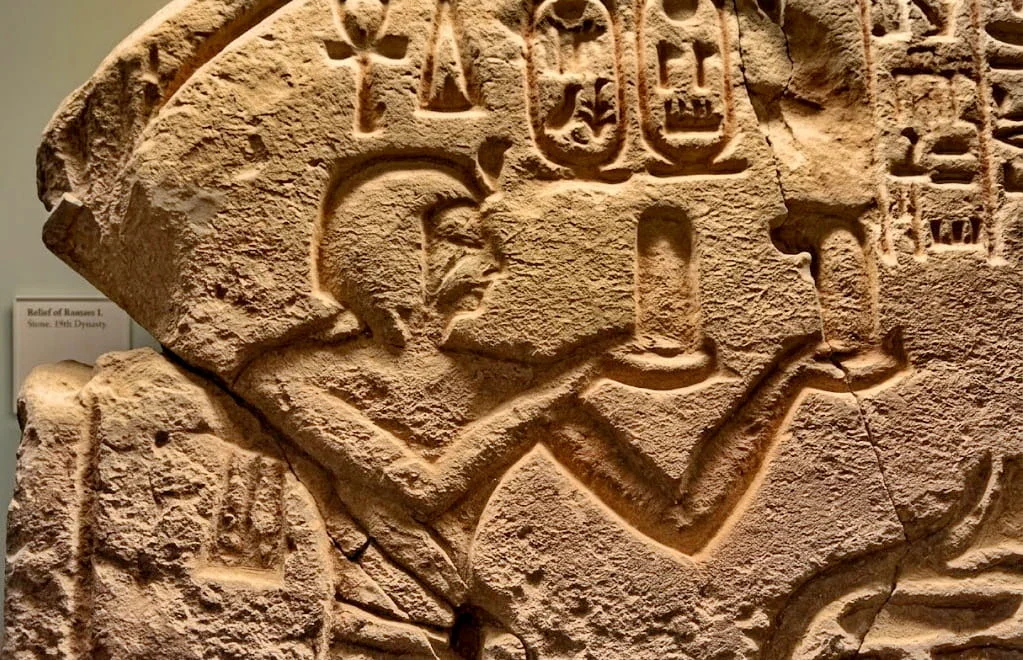
Pharaoh Ramesses I (c. 1292–1290 BCE) was the visionary founder of the Nineteenth Dynasty and the progenitor of the legendary Ramesside era. Originally a non-royal military generalissimo and Grand Vizier named Paramessu, he ascended the throne late in life when his predecessor, Horemheb, died without leaving an heir. Despite his exceptionally brief reign of roughly 16 to 22 months, Ramesses I secured Egypt's future stability by immediately appointing his brilliant, battle-ready son, Seti I, as co-regent to handle military campaigns on the volatile northeastern frontier. By anchoring his family's power base near the strategic Delta gateway and commissioning the earliest decorative reliefs of the Great Hypostyle Hall at Karnak, this pragmatic soldier-king successfully bridged the chaotic aftermath of the Amarna Period and laid the structural foundations for Egypt's greatest century of imperial grandeur.
The eye of Horus
WhatsApp
Email
Print

Ramesses I: The Soldier Who Became Pharaoh

A Radical Change in Leadership

The story of Egypt’s greatest imperial epoch does not begin with a royal prince. It does not start in the luxury of the Theban courts. Instead, it begins with an old man, a battle-hardened military general from the Nile Delta. His name was Paramessu. His sudden rise to power as Pharaoh Ramesses I marks a radical, meritocratic pivot in ancient Egyptian history.

The Crisis Facing Egypt

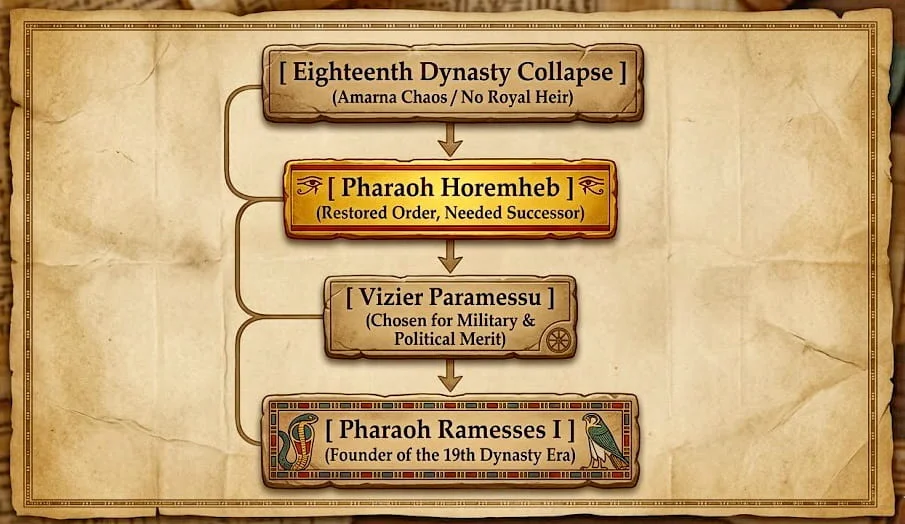
For over two centuries, the Eighteenth Dynasty had ruled Egypt. This bloodline drove the nation to unparalleled heights of wealth and artistic expression. However, Akhenaten’s radical religious experiment shattered the nation’s internal administration. It also severely damaged Egypt’s foreign territories in the Levant. When the last rulers of that line died without heirs, Egypt stood on a dangerous precipice. The country faced civil collapse and a massive threat from the aggressive Hittite Empire.

The Bridge to Glory

Ramesses I served as the vital, ironclad bridge over this historical chasm. Though his personal reign was remarkably brief, his rise to power fundamentally transformed the concept of Egyptian kingship. He successfully turned his non-royal military clan into a sovereign line. By doing this, he laid the literal and ideological foundations for the Nineteenth Dynasty. His accession guaranteed that the chaos of the Amarna Period was permanently buried. He successfully set the stage for a century of military dominance, unparalleled monument building, and geopolitical glory.
Divider

The Legacy of Horemheb: A Kingdom Without an Heir

The Legacy of Horemheb A Kingdom Without an Heir

Restoring Order to the Realm

To understand how a common military official claimed the Double Crown, one must look directly to his predecessor. Pharaoh Horemheb was his lifelong patron. Horemheb, a former generalissimo under Tutankhamun and Ay, took the throne with a single, consuming mission. He wanted to restore Ma’at, or universal order, to a deeply fractured kingdom.

Ramesses I: The Succession Crisis

Horemheb spent his reign systematically dismantling the remnants of Akhenaten’s Atenist revolution. He rebuilt desecrated traditional temples and ruthlessly stamped out bureaucratic corruption. Yet, despite his success in stabilizing the home front, Horemheb faced a devastating personal crisis as his life drew to a close. He had no surviving son to inherit the throne.

A Strategic Choice

Horemheb did not want Egypt to slip back into an unpredictable succession crisis. He also did not trust the ambitious nobles from the old court aristocracy. Therefore, Horemheb made a highly strategic, pragmatic choice. He bypassed the traditional royal bloodlines entirely. He turned to his most loyal, capable, and efficient administrator: his Grand Vizier and Commander of the Army, Paramessu.

Ramesses I: The Power of the Delta

Ramesses I The Power of the Delta

This choice was a calculated masterstroke of meritocracy. Paramessu was a man of action who shared Horemheb’s vision for a disciplined, centralized, and military-focused government. Furthermore, Paramessu’s family hailed from Avaris in the northeastern Nile Delta. This region was a bustling, strategic gateway to Asia and a vital military hub. By elevating a powerhouse family from the Delta, Horemheb ensured that Egypt’s future leadership would remain near the volatile northeastern frontier. The empire needed to project its military strength there against the rising Hittite threat.

Golden Scarab

From Paramessu to Ramesses I: The Coronation and Titles

From Paramessu to Ramesses I The Coronation and Titles

A Peaceful Transition

When Pharaoh Horemheb finally died, the carefully orchestrated transition of power went into effect smoothly. Records show that the transition did not cause a single drop of blood. The veteran general Paramessu walked into the sacred precinct of the temple in either 1292 BCE or 1295 BCE. He emerged as a living god and took the throne name Ramesses I.

Ramesses I: The Power of Royal Names

Ramesses I The Power of Royal Names

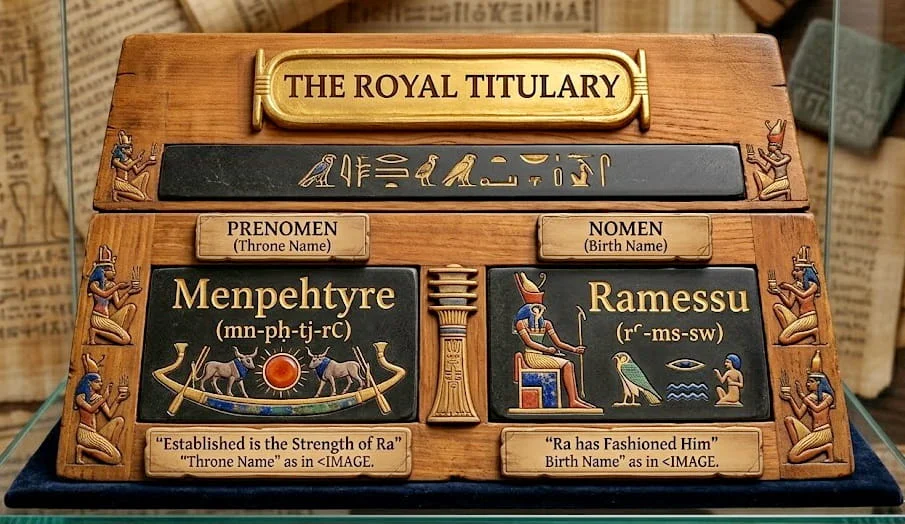
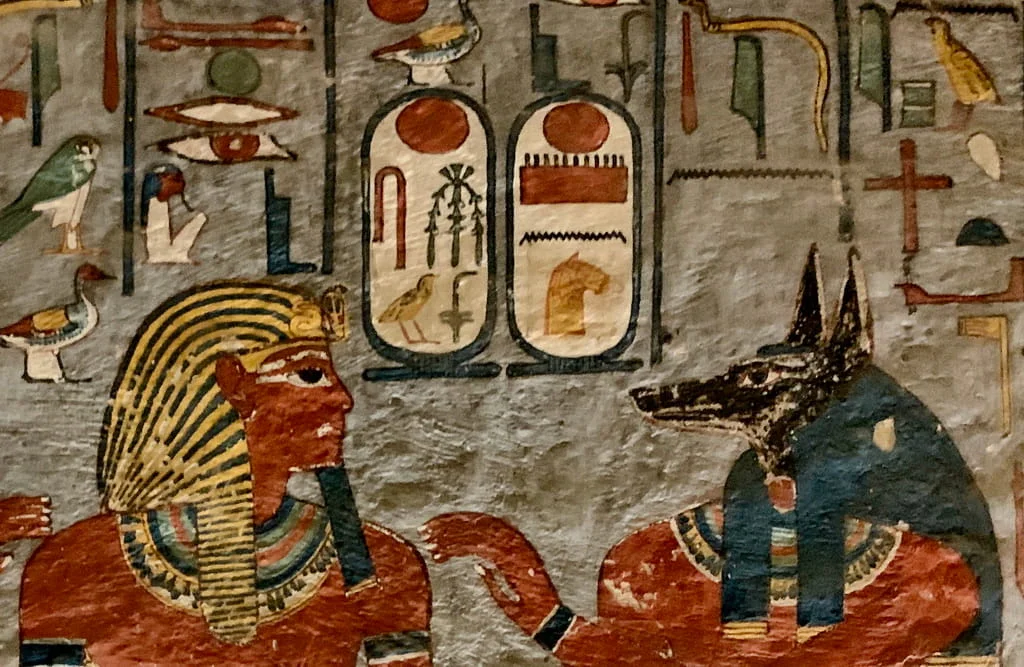
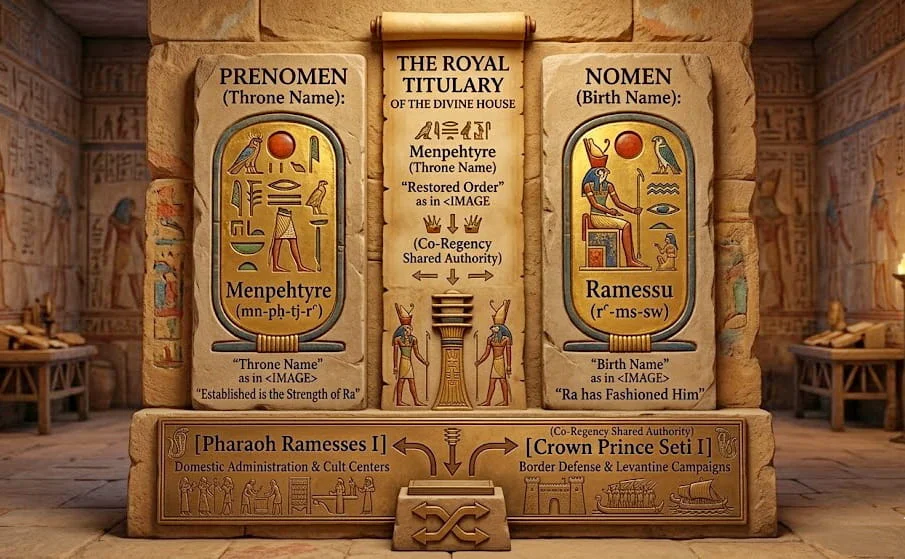
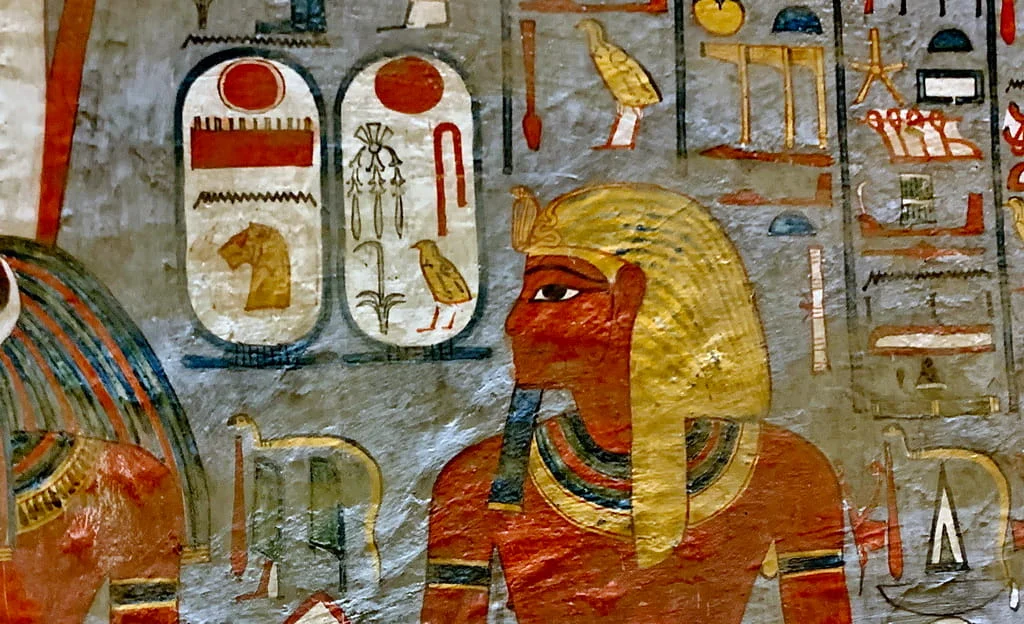
For a commoner ascending the throne, the selection of royal titles was the ultimate exercise in political propaganda. He chose the throne name Menpehtyre. This name translates to “Established is the Strength of Ra.” This choice was a brilliant, deliberate echo of the glorious Eighteenth Dynasty pharaoh Thutmose III, whose throne name was Menkheperre. By explicitly aligning his name with Egypt’s greatest historical conqueror, Ramesses I signaled his intent to the priesthood and foreign rivals. The era of isolationism was officially over, and a martial renaissance had arrived.

Honoring the Sun God

His birth name, Ramessu, which means “Ra has Fashioned Him,” was equally significant. It placed the sun god Ra at the center of the new dynasty’s identity. The kings of the Eighteenth Dynasty heavily favored the Theban god Amun in their names, such as Amenhotep or Tutankhamun. In contrast, the new Ramesside line anchored their legitimacy in the ancient, universal power of Ra. This god’s primary cult center sat near their ancestral Delta home. Through these names, Ramesses I perfectly balanced respect for old traditions with a bold declaration of a new political era.

The eye of Horus

Setting the Stage: The Brief Reign and Strategic Moves

Setting the Stage The Brief Reign and Strategic Moves

Securing the Next Generation

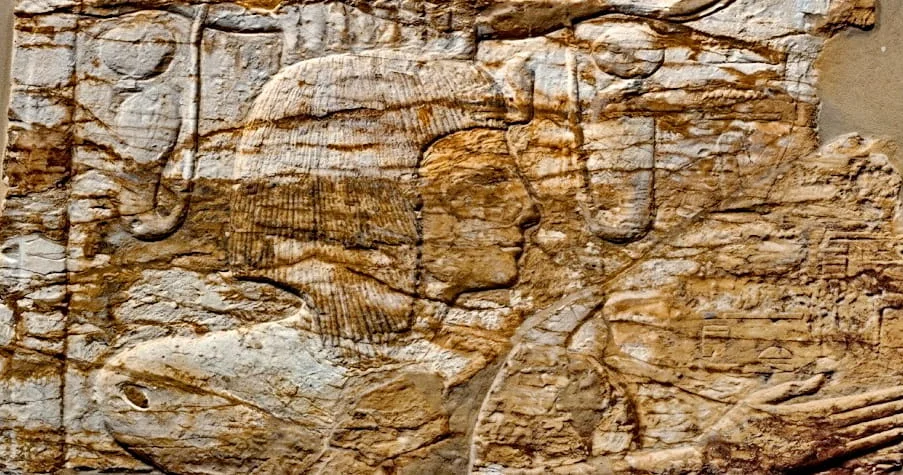
Ramesses I was already an old man when he received the Double Crown. He was likely in his late 50s or 60s, which was an advanced age for the ancient world. He recognized that his personal tenure on the throne would be short. Therefore, he wasted no time on vanity projects. Instead, he immediately enacted a brilliant administrative masterstroke. He appointed his mature, fiercely capable son, Seti I, as co-regent.

Ramesses I: Sharing the Royal Burden

Ramesses I Sharing the Royal Burden

This co-regency was not a mere honorary title. It was a highly practical division of labor that maximized the strengths of both men. By crowning Seti I early, Ramesses I eliminated any possibility of a succession crisis upon his death. The court displayed the transition of power openly to the public and the elite as an undisputed, continuous reality.

Defending the Borders

The old-aged Ramesses I remained at the domestic heart of Egypt to manage religious duties and judicial reforms. Meanwhile, Seti I assumed active command of the military. Seti immediately marched northeast to secure the borders. He reclaimed lost trade routes in Syria and countered Hittite probes into Egyptian-controlled territory.
Planting the Seeds of Greatness

Despite a reign lasting only 16 to 22 months, Ramesses I left an indelible mark on Egypt’s greatest monument. He commissioned the very first decorative reliefs on the massive entrance pillars of the Great Hypostyle Hall at Karnak. Though he died shortly after the work began, this small architectural seed grew rapidly. Seti I nurtured it, and his grandson, Ramesses II, brought it to absolute perfection.

Divider

The Eternal Rest: The Tomb (KV16) and the Missing Mummy

The Eternal Rest The Tomb (KV16) and the Missing Mummy

A Rushed Burial

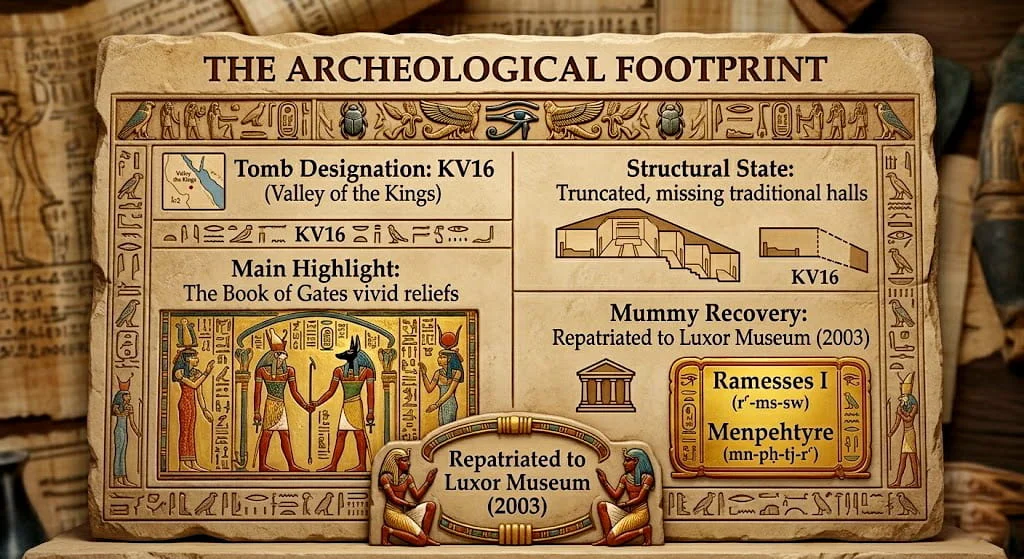
When the short reign of Ramesses I came to a sudden end around 1290 BCE, the royal court faced an immediate race against time. Because his time on the throne lasted less than two years, workers caught his eternal resting place in a state of abrupt incompletion. Modern archaeologists designate this tomb in the Valley of the Kings as KV16.

The Art of KV16

The Art of KV16

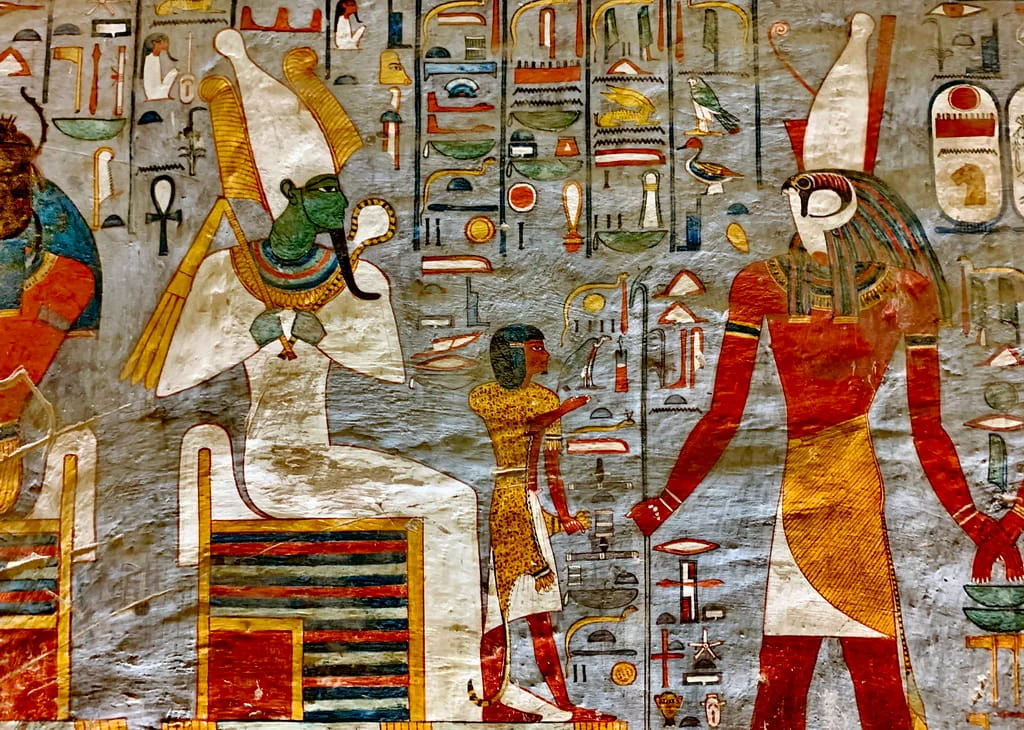
Architecturally, KV16 lacks the long, sprawling corridors and multiple pillared halls that define typical New Kingdom royal tombs. Instead, workers hastily converted what was intended to be a preliminary corridor into a final burial chamber. Yet, the tomb makes up for its small structural scale with artistic vibrance. Masterfully executed, deeply saturated reliefs cover the walls of the burial chamber. These scenes show the Book of Gates. These sacred texts guided the newly divine pharaoh through the treacherous hours of the underworld night. They ensured his successful rebirth alongside the sun god Ra each morning.

Ramesses I: The Stolen Pharaoh

Ramesses I The Stolen Pharaoh

The modern history of Ramesses I’s mummy is just as dramatic as his ancient rise to power. Sometime in the mid-19th century, local tomb-robbers from the Abd el-Rassul family discovered KV16. They clandestinely removed the pharaoh’s royal remains. Unbeknownst to the scholarly world, the thieves sold the mummy into the illicit antiquities trade. The mummy then traveled across the Atlantic Ocean.

The Journey Home

The Journey Home

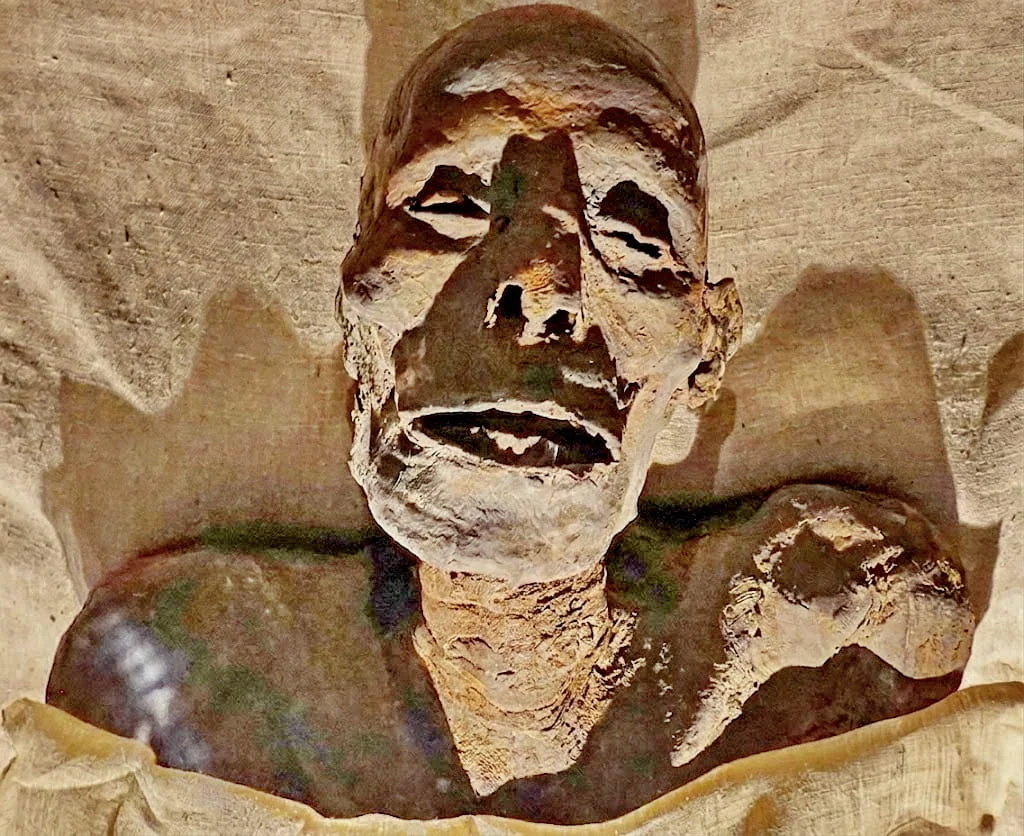
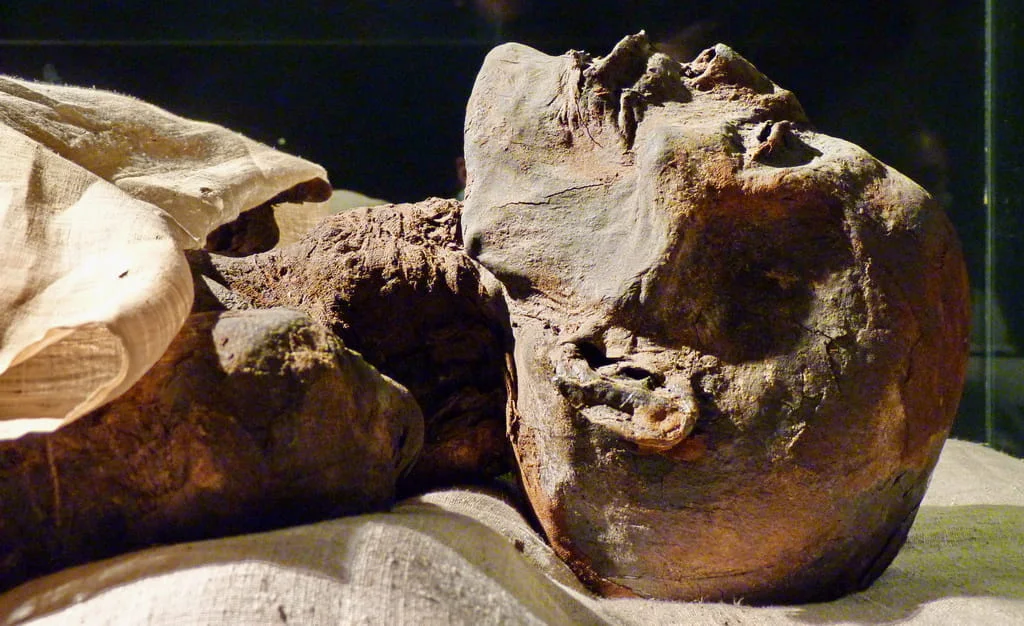
For over a century, the founding father of the Ramesside era sat completely unrecognized in a quirky, private museum in Niagara Falls, Canada. The museum displayed him simply as an anonymous “Egyptian mummy.” Finally, the museum liquidated its collection in 1999. The Michael C. Carlos Museum in Atlanta, Georgia, acquired the remains. They used advanced CT scans, radiological imaging, and historical cross-referencing to confirm his royal identity. In 2003, the mummy of Ramesses I finally returned to Egypt. The nation welcomed him with full military honors and placed him in the Luxor Museum.

The eye of Horus

The Foundation of a Century of Glory

The Foundation of a Century of Glory

A Powerful Legacy

History must judge Ramesses I by his legacy, not by the brief length of his reign. He was the vital catalyst Egypt required at an existential crossroads. Ramesses I also successfully stabilized the domestic bureaucracy and transferred military authority to his son, Seti I. He also shifted the court’s geopolitical focus toward the strategic frontiers of the Delta. By doing this, Ramesses I effectively rewrote the playbook of Egyptian kingship.

The Dawn of an Empire

The Dawn of an Empire

He proved that leadership was a matter of merit, military competence, and administrative vision. It was not merely a matter of divine birthright. The Senior general spent only 22 months on the throne. Yet, without his rock-solid foundations, the ancient world would have never witnessed the imperial triumphs of Seti I. It would also never have seen the monumental, enduring grandeur of Ramesses the Great. His reign was the quiet dawn that preceded Egypt’s most brilliant imperial noon.


Divider

Well Done

All aspects of the experience were considered and well taken care of. Knowledgeable and friendly guide and organized itinerary.

More »
Souqs and Markets in Egypt - Egypt Fun Tours

Cairo walking tours

After a rocky start (the driver had been in an accident on his way to pick me up,) the company very quickly sent another driver/guide named Mohammed, who was a real pro. Thoroughly enjoyed my first day in Egypt!

More »

Perfect layover Tour

I had a 10 hour layover in Cairo so booked a tour with Hani at Egypt Fun Tours. The tour was brilliant. I saw exactly what I wanted to see during the day which included the pyramids, Sphinx, Egyptian museum and the Bazaar. Hani was very knowledgeable and was the

More »

One of the best tours I have ever had!

I was thoroughly impressed by the professionalism of this tour company. I emailed to inquire about the Cairo layover tour about 30 hours before my flight was scheduled to leave from New York. I was pleasantly surprised to get a quick response confirming the tour and assuring that a guide

More »
God_Anubis_Icon

Top-rated Tour Packages

God_Anubis_Icon
WhatsApp
Email
Print