

Nineteenth Dynasty of Egypt: Imperial Triumph & Monumental Might

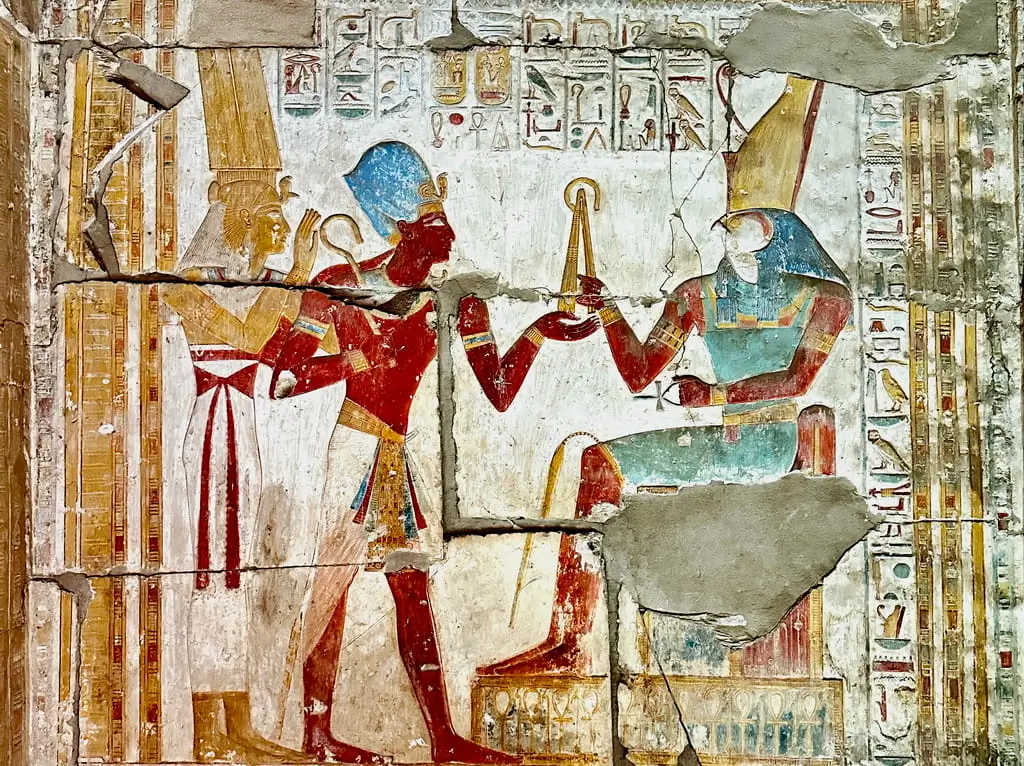
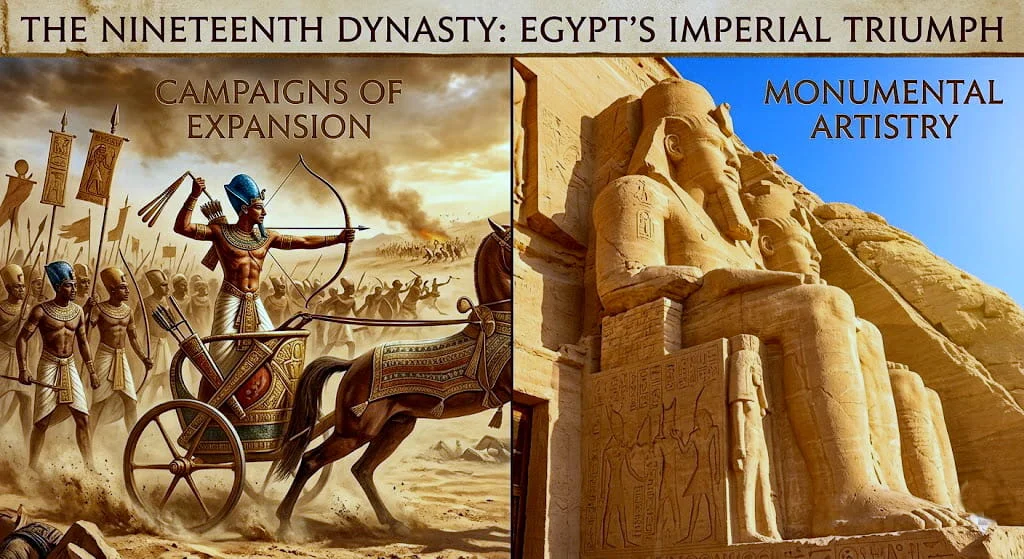
The Nineteenth Dynasty of Egypt marks a triumphant era that rescued the nation from the political and religious chaos of the late Eighteenth Dynasty by placing power in the hands of a battle-tested military family. Led by iconic warrior-pharaohs like Seti I and Ramesses II, the dynasty rejected isolationism in favor of aggressive foreign conquest, famously clashing with the Hittite Empire at the Battle of Kadesh and signing the world's oldest surviving international peace treaty. Ultimately, these pharaohs used the immense wealth gained from their military victories to fund an unprecedented renaissance of monumental architecture—including the Great Hypostyle Hall at Karnak and the rock-cut temples of Abu Simbel—permanently defining the ultimate historical image of pharaonic majesty.
The eye of Horus
WhatsApp
Email
Print

The Nineteenth Dynasty of Egypt: The Dawn of a New Imperial Era

The transition into the Nineteenth Dynasty marks a dramatic turning point for ancient Egypt. Previously, the nation had suffered through decades of intense political confusion and religious division during the late Eighteenth Dynasty. Specifically, the radical reforms of Akhenaten had fractured the traditional government. Furthermore, his actions deeply damaged the power of the Amun priesthood. Consequently, when the royal lineage finally ended without an heir, a massive power vacuum opened up.

Because of this crisis, the responsibility of saving the empire fell to the military elite. A veteran vizier and general stepped forward to establish a brand-new ruling house. Therefore, the Nineteenth Dynasty quickly swept away the lingering shadows of the past. Instead of isolation, these new leaders chose a bold path of absolute global dominance. Ultimately, they used powerful military campaigns to secure the borders and fund a magnificent renaissance of monumental art.

A Century of Icons and Imperial Might

To explore this dynasty is to witness ancient Egypt at its most confident and magnificent. Over nearly two centuries, the Ramesside pharaohs systematically rebuilt the image of the divine king. In order to project absolute power, they constructed massive monuments and commanded giant standing armies. In addition, this golden era featured some of the most famous rulers in history:

  • Ramesses I: First, this veteran military commander stabilized the nation and successfully secured the new dynastic line.
  • Seti I: Next, this brilliant strategist successfully reclaimed the northern frontiers and built breathtaking architectural wonders.
  • Ramesses II (The Great): Meanwhile, this famous king ruled for over six decades, fought at the Battle of Kadesh, and covered the Nile Valley with colossal statues.
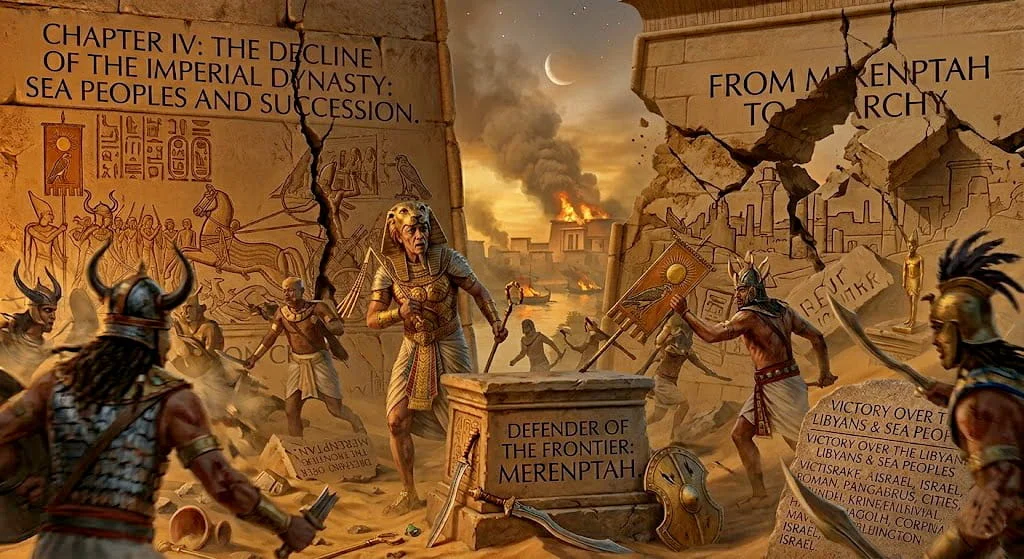
  • Merenptah: Finally, this steadfast defender protected the Egyptian borders against the mysterious Sea Peoples during the dynasty’s twilight.

Unlocking Egypt’s Supreme Legacy

This comprehensive guide serves as your definitive portal into the political, military, and artistic history of the Ramesside age. By analyzing primary historical sources, we will carefully separate true history from royal propaganda. For example, we will examine the grand inscriptions at Karnak and the ancient diplomatic archives of the Mediterranean. From the strategic relocation of the capital city to the signing of the world’s oldest peace treaty, you will discover exactly how these warrior-pharaohs elevated Egypt to the absolute peak of imperial triumph.
Divider

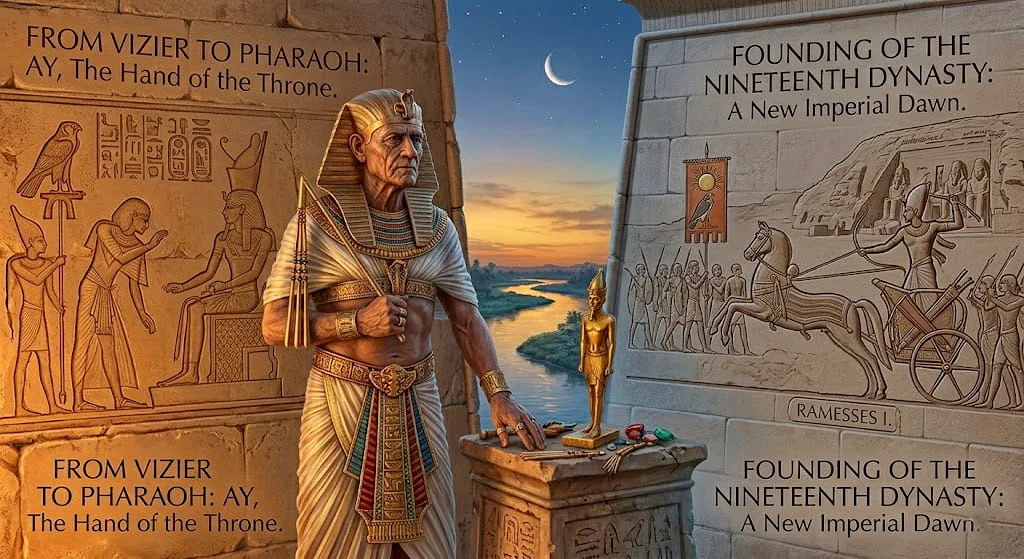
From Vizier to Pharaoh: The Founding of the Nineteenth Dynasty

From Vizier to Pharaoh The Founding of the Nineteenth Dynasty

The Post-Amarna Landscape

To understand the birth of this new dynasty, we must first examine the chaos that came before it. The late Eighteenth Dynasty had left Egypt in a highly fragile state. Specifically, the radical religious experiment of the pharaoh Akhenaten had deeply fractured the country. By forcing the nation to worship a single sun disk, the Aten, he neglected foreign diplomacy and disrupted internal trade. Furthermore, his sweeping changes closed traditional temples and stripped the powerful Amun priesthood of their wealth.

Consequently, these actions created widespread economic instability and bitter political resentment. After Akhenaten passed away, his young successor Tutankhamun successfully restored the traditional gods. However, the boy-king died suddenly without leaving a direct heir to the throne. This sudden loss left the royal lineage completely broken, and a dangerous power vacuum threatened to destroy the stability of Egypt once again.

Horemheb’s Critical Intervention

Because the royal family had vanished, the survival of the state fell upon the shoulders of the military. A powerful general named Horemheb stepped forward to take control of the government. First, he worked tirelessly to stabilize the internal economy. Next, he systematically removed the remaining officials from the Amarna era to restore public confidence.

Although Horemheb ruled successfully as pharaoh for over two decades, he faced a major problem. He did not have a son to inherit his crown. Therefore, he needed to choose a successor who could maintain strict order over the empire. Instead of picking a traditional nobleman, Horemheb wisely looked toward his own trusted military inner circle.

He ultimately selected his top general and grand vizier, a battle-tested commander named Paramessu. This strategic choice was highly unusual because Paramessu did not possess a single drop of royal blood. Instead, he came from a non-royal military family based in the northeast Nile Delta. However, Horemheb knew that this man possessed the exact leadership skills, administrative experience, and strategic vision needed to protect Egypt.

A Bold New Military Focus

When Horemheb finally passed away, Paramessu ascended the throne and took the royal name Ramesses I. This historic moment officially marks the true foundation of the Nineteenth Dynasty. Even though Ramesses I was already an old man when he became pharaoh, his rise completely transformed the future of Egyptian statecraft.

Most importantly, the new Ramesside pharaohs completely rejected the isolationist policies of the past. Instead of focusing heavily on internal religious debates, they instantly prioritized direct military action and aggressive foreign conquest. They understood that a superpower must project absolute strength to its neighbors.

Furthermore, Ramesses I had a significant advantage that the previous dynasty lacked: a clear, secure line of succession. He already had a mature, brilliant son named Seti, as well as a young grandson named Ramesses. This strong family structure meant that the government would remain stable, even during a transition of power.

As a result, Ramesses I spent his brief, sixteen-month reign preparing his family to reclaim Egypt’s lost empire. He appointed his son Seti as the head of the elite army units. By doing this, he ensured that the state was fully ready to launch an era of unmatched imperial expansion.

Golden Scarab

Seti I: The Warrior Pharaoh and Reclaiming the North

The Temple of Seti I A Masterpiece in Stone

Securing the Throne and Divine Legitimacy

Following the brief reign of his father, Seti I ascended the throne with a clear and urgent mission. First, he needed to establish absolute legitimacy for his non-royal family line. Because his ancestors were military officers rather than kings, he had to prove his divine right to rule. Therefore, Seti I immediately launched a massive, nationwide campaign to rebuild what the Amarna Period had broken.

Most importantly, he chose the royal name Menmaatre, which means “Eternal is the Justice of Ra.” This choice signaled a total return to traditional values. Next, he systematically restored the ancient temples that had fallen into deep neglect. He showered the powerful Amun priesthood with wealth and land to win their crucial political support. By fiercely defending the traditional pantheon, Seti I successfully positioned his family as the ultimate protectors of Egypt’s divine cosmic order.

The Syrian Campaigns: Restoring the Empire

Once he secured his position at home, Seti I instantly turned his attention toward foreign policy. During the late Eighteenth Dynasty, Egypt had lost significant influence in the Levant. Meanwhile, the aggressive Hittite Empire had expanded southward, capturing key territories. To counter this dangerous threat, Seti I personally led his elite armies into Asia during his very first year as pharaoh.

First, he marched his troops along the northern coast of Sinai to secure vital water wells. Next, he crushed nomadic rebel groups that threatened Egyptian trade routes. After securing these paths, Seti I launched a series of brilliant military campaigns into Syria. For the first time in decades, an Egyptian pharaoh successfully clashed with Hittite forces in open battle.

He marched his veteran army north and successfully recaptured the highly strategic cities of Amurru and Kadesh. To celebrate this triumph, Seti I erected giant victory monuments across the conquered lands. Although these border territories remained unstable, his aggressive campaigns successfully restored Egypt’s status as a dominant global superpower.

The Great Hypostyle Hall: Setting the Monumental Standard

In addition to his military victories, Seti I completely transformed the landscape of Egyptian architecture. He understood that a pharaoh must display his power in stone to make it permanent. Consequently, he initiated some of the most complex engineering projects in human history.

His greatest architectural achievement was the construction of the magnificent Great Hypostyle Hall at the Temple of Karnak. Although his father started the initial plans, Seti I executed the vast majority of the work. He erected a forest of 134 colossal sandstone columns that stood up to 69 feet tall. Furthermore, he covered these massive structures with incredibly detailed, deep-cut reliefs.

These beautiful carvings depicted his successful military campaigns, showing the pharaoh trampling his enemies under the protection of the gods. This breathtaking hall instantly set a brand-new standard for imperial architecture. Ultimately, it created the grand, monumental template that his brilliant son, Ramesses II, would later use to cover the entire Nile Valley.

The eye of Horus

Ramesses II: The Living God-King and the Height of Imperial Power

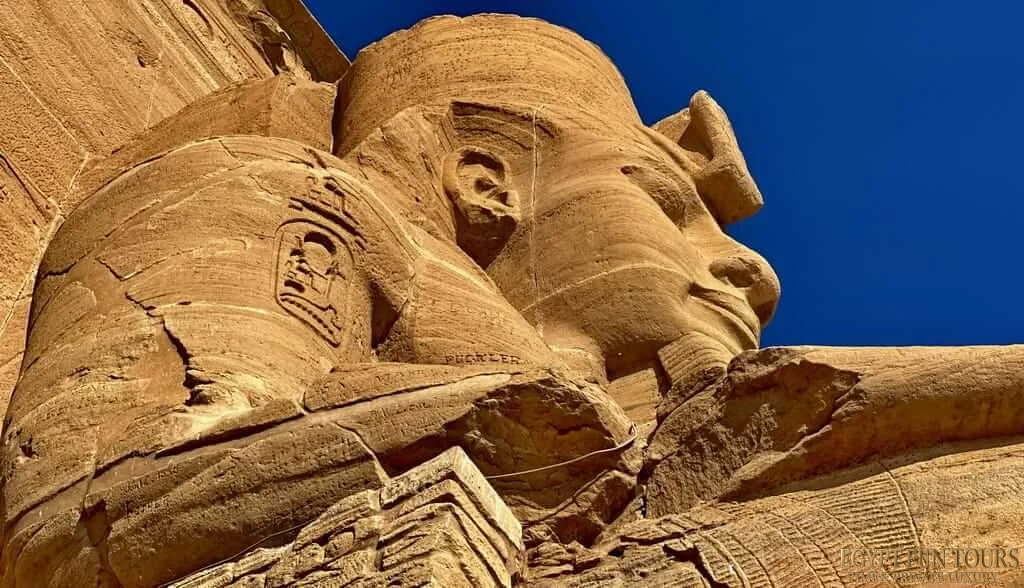
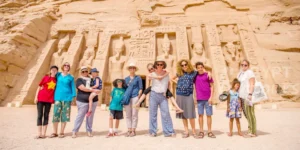
Private Abu Simbel Day Trip from Cairo by Flight; The colossus of King Ramesses II

The Clash of Titans: The Battle of Kadesh

When Seti I passed away, his brilliant young son ascended the throne as Ramesses II. He would eventually become known to history as Ramesses the Great. From the very start of his over sixty-year reign, he sought to surpass every pharaoh who came before him. Most of all, he wanted to eliminate the Hittite threat along Egypt’s northern frontier.

Consequently, in the fifth year of his reign, Ramesses II assembled a massive force of over twenty thousand warriors. He divided his elite army into four grand divisions, each named after a major Egyptian deity: Amun, Ra, Ptah, and Set. He then marched this immense force north toward the heavily fortified city of Kadesh, located in modern-day Syria.

However, as the Egyptian troops neared the city, Hittite spies deliberately fed Ramesses II false information. They falsely claimed that the Hittite army was far to the north. Believing these lies, Ramesses II confidently rushed ahead with only his single Amun division, leaving the rest of his army miles behind.

This tactical error created a terrifying trap. The Hittite king, Muwatalli II, was actually hiding just behind the city walls with thousands of heavy, three-man chariots. Suddenly, the Hittites launched a devastating ambush. They crashed directly through the marching Ra division and surrounded Ramesses II’s isolated camp.

According to primary historical sources, including the famous Poem of Pentaur and the Bulletin, the situation seemed utterly hopeless. Yet, face-to-face with total disaster, Ramesses II displayed unbelievable personal courage. He single-handedly rallied his personal guard, leaped into his royal chariot, and charged fiercely into the Hittite lines.

Fortunately, at that exact moment, an elite force of Egyptian reinforcements arrived from the coast. Together, they successfully pushed the Hittites back across the Orontes River.

The next day, both empires realized that neither could achieve a total military victory. Therefore, after years of continued minor skirmishes, they chose a path of brilliant diplomacy. In the twenty-first year of Ramesses’ reign, they officially signed the Treaty of Kadesh. This historic document is celebrated today as the world’s oldest surviving international peace treaty. It established a permanent alliance, secured the borders, and brought a golden era of wealth and stability to the entire region.

The Ramesseum and Abu Simbel: Concrete Legitimacy

With peace successfully secured, Ramesses II shifted his immense energy toward monumental architecture. He understood that building on a giant scale was the ultimate way to project his divine status. Therefore, he covered Egypt in stone monuments that were larger and grander than anything built before.

His ultimate masterpiece is the magnificent temple complex of Abu Simbel, carved directly into the solid sandstone cliffs of deep Nubia. To intimidate foreign visitors and demonstrate his absolute power, he commissioned four colossal, sixty-seven-foot seated statues of himself at the entrance. Furthermore, the temple interior was engineered with unmatched astronomical precision. Twice a year, the morning sun rays pierced deep into the mountain, perfectly illuminating the statues of the pharaoh and the gods inside the hidden sanctuary.

Meanwhile, back in the capital city of Thebes, he constructed his giant mortuary temple, known today as the Ramesseum. This massive complex featured a colossal, thousand-ton seated statue of the king. It also served as a vast administrative archive and treasury, proving that his monumental projects were designed to highlight both religious devotion and economic supremacy.

Pi-Ramesses: A New Capital in the Delta

To manage his expanding empire more efficiently, Ramesses II made a highly controversial political decision. He chose to move the main imperial capital away from traditional Thebes. Instead, he built a brand-new, glittering metropolis named Pi-Ramesses in the eastern Nile Delta.

This move was a brilliant strategic masterstroke. First, the new location was situated right next to the major military highways leading into Asia. This allowed his armies to deploy rapidly against any foreign threats. Next, the city featured massive weapon factories, grand royal palaces, and sprawling military stables.

Finally, Pi-Ramesses connected directly to vital Mediterranean trade routes. This geographic advantage turned the new capital into a bustling, international hub of trade and diplomacy. Ultimately, this move cemented the Nineteenth Dynasty’s reputation as a forward-looking, global superpower.

Divider

The Decline of the Imperial Dynasty: Sea Peoples and Succession

The Decline of the Imperial Dynasty Sea Peoples and Succession

The Long Reign of Ramesses II and Succession Crises

Although the reign of Ramesses II brought unmatched glory to Egypt, its extreme length eventually created severe political complications. He ruled for an astonishing sixty-six years. Consequently, he managed to outlive his first twelve eldest sons. When the great pharaoh finally passed away, the crown didn’t pass to a young, energetic prince. Instead, it went to his thirteenth son, Merenptah, who was already an old man in his late sixties.

This delay in succession weakened the centralized authority of the throne. Furthermore, Ramesses II had fathered over one hundred children during his lifetime. This massive royal family tree created a complex web of competing lines. In the years following Merenptah’s death, these rival factions would clash openly, fracturing internal stability just as major foreign dangers appeared on the horizon.

Merenptah and the First Threat of the Sea Peoples

Despite his advanced age, Merenptah proved to be an incredibly capable and aggressive military leader. In the fifth year of his reign, Egypt faced a massive national security crisis. A dangerous coalition of Libyan groups marched on the western Delta. More alarmingly, they allied themselves with the Sea Peoples—a mysterious, seafaring group of warriors displaced from the Aegean and Mediterranean regions.

Merenptah acted with absolute speed and tactical brilliance. First, he rapidly mobilized the elite Ramesside army. Next, he confronted the invading coalition in a massive, six-hour battle in the western Delta. The disciplined Egyptian archers and infantry completely routed the invaders, slaughtering thousands of enemy warriors.

To celebrate this monumental defense, the pharaoh erected the famous Merenptah Stele at Thebes. This giant granite monument details his complete victory over the foreign coalitions. Most notably, it contains a poetic list of defeated Near Eastern entities, featuring the first and only mention of “Israel” in ancient Egyptian records. Through this single campaign, Merenptah successfully delayed the total collapse of the eastern Mediterranean for a generation.

Internal Chaos and the End of the Nineteenth Dynasty

Unfortunately, Merenptah’s decisive military victory could not save his dynasty from internal decay. Following his death, the secure line of succession that had built the Ramesside Golden Age completely shattered. The throne rapidly changed hands between weak, rival claimants who fought bitterly for power.

First, a mysterious usurper named Amenmesse seized control of Upper Egypt, splitting the nation in two. Although the rightful heir, Seti II, eventually reclaimed the entire country, his victory was short-lived. Next, the throne fell to a frail child-king named Siptah, who was controlled by a powerful, foreign-born chancellor named Bay.

Finally, after Siptah passed away, Seti II’s widow, Queen Twosret, stepped forward to rule Egypt as pharaoh. She became one of the very few women in history to claim full kingly titles. However, her short reign was plagued by civil unrest and economic collapse. By the time her rule ended, the grand state apparatus of the Nineteenth Dynasty had totally broken down, leaving the nation in a state of anarchy until the Twentieth Dynasty rose to take its place.

The eye of Horus

The Enduring Legacy of the Ramesside Kings

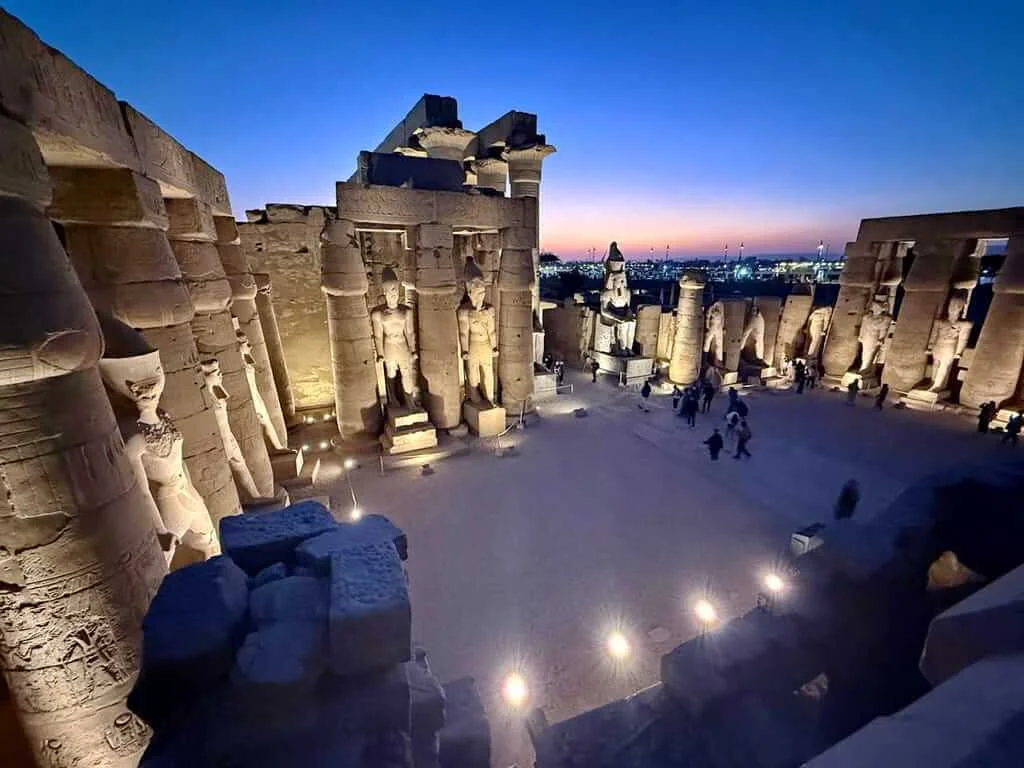
Visiting the Temple of Luxor at Night

The Triumphant, Flawed History of the Nineteenth Dynasty

In summary, the Nineteenth Dynasty of Egypt remains one of the most spectacular eras in human history. It successfully arose during a period of deep national crisis and religious division. By placing the security of the state into the hands of a battle-tested military family, Egypt completely transformed itself into a dominant, forward-looking global superpower.

Furthermore, these rulers perfectly understood the direct relationship between geopolitical power and architectural expression. As established in our opening analysis, their aggressive military campaigns successfully secured rich foreign trade routes. Consequently, this immense international wealth directly funded an unprecedented renaissance of monumental art. From the towering sandstone columns at Karnak to the breathtaking rock-cut temples of Abu Simbel, the Ramesside pharaohs carved their absolute authority into the very bedrock of the Nile Valley.

The Permanent Blueprint of Pharaonic Majesty

Ultimately, the true triumph of the Nineteenth Dynasty was how it permanently redefined the concept of kingship. Before this era, pharaohs were often viewed primarily as divine, distant administrators. However, the Ramesside rulers successfully created the definitive, modern image of what a pharaoh should be: a brave warrior, an unmatched builder, and a living god on earth.

Although internal family rivalries and succession crises eventually weakened the throne during its twilight, the sheer scale of their achievements could never be erased. Their strategic innovations, such as moving the imperial capital to the Delta and signing the world’s first international peace treaty, set a brilliant blueprint for survival. Even as the state shifted into the Twentieth Dynasty under Ramesses III, the new rulers could do nothing less than model themselves after the monumental standard of the nineteenth-dynasty titans.

Divider

Great layover Tour!!

I had an excellent layover tour with Hani. He is knowledgable, fun, and passionate about his city. I went for a tour of the pyramids, sphinx, and to a papyrus factory which were all great. Ask him any question about Egyptian history and he will surely know the answer! Also

More »

Great guided tour of pyramids

We travelled to Cairo on Friday, May 3, 2019, from Toronto. We landed at 0530 and were met by a representative of Fun Tours at the departure gate. We were only on a layover of 6 hours, and the tour company came with a private van, water, a driver, and

More »
13-day Egypt guided tour package - Egypt Fun Tours

Easily the best two days of the year!

We were doing the 14-day Mediterranean cruise and were in Egypt for two days. I was searching the internet for about 4 days and finally found Egypt Fun Tours as my guide in Egypt. It ended up being the best 2 days of the entire cruise trip. Since this is

More »

7 night Egypt Experience Cairo, Aswan, Luxor

Trip of a lifetime!! COVID SAFE!! Knowledgeable guide who loves to share the magic of Egypt with tourists. Friendly and accommodating. This company goes to the extreme to make clients feel welcome and help them. A family company that takes good care of its support staff. Must book the 7-night

More »
God_Anubis_Icon

Top-rated Tour Packages

God_Anubis_Icon
WhatsApp
Email
Print