Legend of Westcar Papyrus: Royal Magic and the Prophecies of Khufu

The Westcar Papyrus is a masterpiece of Ancient Egyptian literature that weaves together historical legend, royal magic, and political prophecy. Set in the court of Pharaoh Khufu, the narrative follows his sons as they recount the miraculous deeds of past magicians—ranging from the animation of wax crocodiles to the parting of lake waters. However, the text’s true power lies in its climax: a prophecy delivered by the sage Djedi regarding the divine birth of the 5th Dynasty. By framing the transition of power as a plan orchestrated by the Sun God Ra, the papyrus serves as a sophisticated manifesto that justifies a new royal lineage while preserving the dignity of the Pyramid-age kings.

The Westcar Papyrus is Ancient Egypt’s most famous collection of “wonder tales.” Written during the Second Intermediate Period but set in the majestic Old Kingdom, it pulls back the curtain on the court of Pharaoh Khufu, the builder of the Great Pyramid. This document is far more than a simple storybook. Instead, it is a sophisticated piece of political propaganda designed to justify the divine origins of Egypt’s kings.

Through a series of miraculous deeds, the papyrus explores the power of magic (Heka) and the inevitability of fate. Furthermore, it provides a rare, humanizing look at the royal family, depicting princes entertaining their father with tales of the impossible. To understand the spiritual and political landscape of the Pyramid Age, one must first master the secrets of the Westcar Papyrus.

The Frame Narrative: Boredom in the Court of Khufu
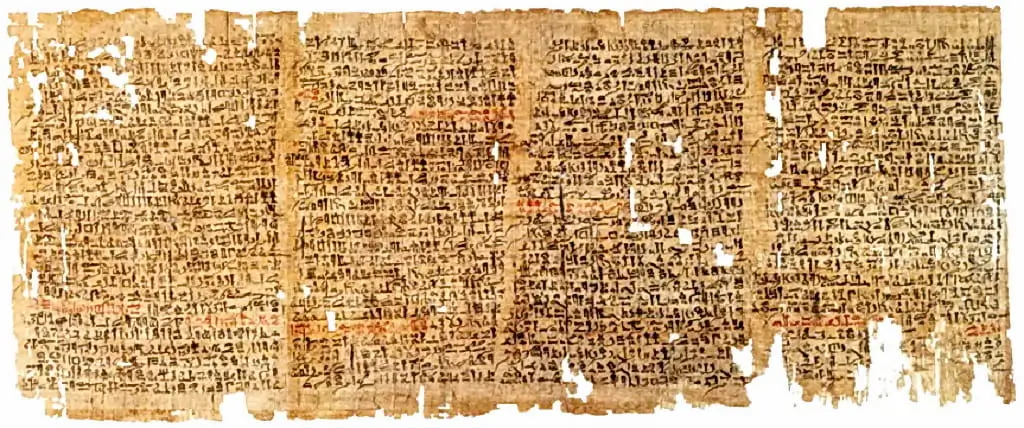
The Legend of the Westcar Papyrus; Royal Magic and the Prophecies of Khufu

The papyrus begins with a “frame story,” a literary technique where one main plot contains several smaller ones. Initially, we find Pharaoh Khufu sitting in his palace, seeking a cure for his boredom. He calls upon his sons—the princes of Egypt—to tell him stories of the great wonders performed by magicians in the past.

A Royal Competition

Because Khufu is a demanding sovereign, his sons compete to see who can tell the most impressive tale. Each prince stands before the Pharaoh and describes a miracle from a previous reign. This structure allows the reader to travel back in time, visiting the courts of Kings Djoser, Nebka, and Sneferu.

However, the narrative is not just about entertainment. Specifically, it builds a hierarchy of power. Each story proves that the Pharaoh’s authority is supported by the “lector-priests”—the master magicians who could manipulate the very fabric of reality.

The Transition from History to Prophecy

As the princes finish their historical accounts, the mood of the papyrus shifts. The final story, told by Prince Hordjedef, does not look to the past. Instead, it introduces a living magician named Djedi.

Consequently, the Westcar Papyrus moves from being a collection of legends to a prophetic document. This shift is vital for SEO and historical context, as it leads directly to the “Divine Birth” story that legitimized the 5th Dynasty. By framing the stories this way, the author proves that the magic of the past was merely a precursor to the divine events of the future.

FUN

The Tales of Webaoner and Sneferu: Justice and Joy

The Tales of Webaoner and Sneferu Justice and Joy

Initially, the sons of Khufu recount miracles from the reigns of past kings. These tales serve as a “legal precedent” for the power of the priesthood. Specifically, they show how magic maintains the balance of the world.

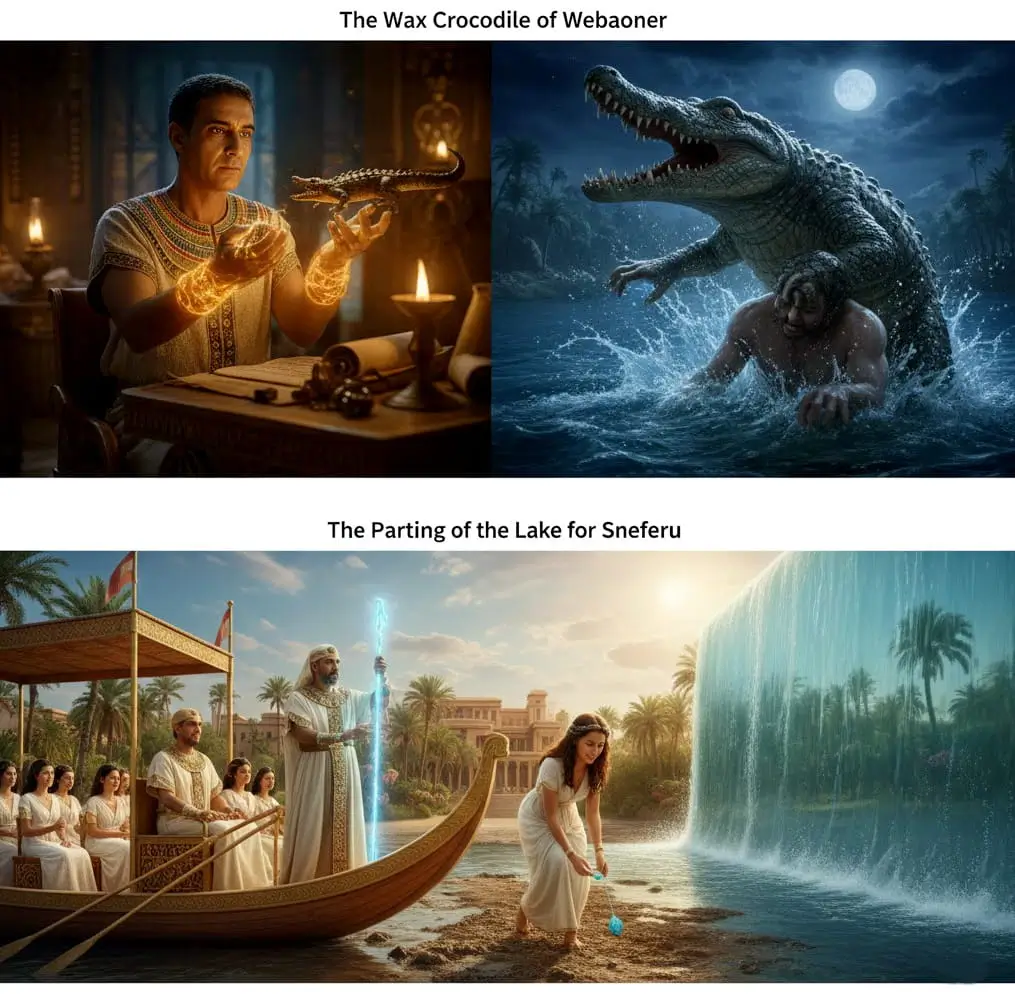
The Wax Crocodile of Webaoner

Prince Khafre tells the story of Webaoner, a chief lector-priest under King Nebka. Because Webaoner’s wife had been unfaithful with a commoner, the priest sought a magical form of retribution. First, he fashioned a tiny crocodile out of wax and recited a powerful enchantment over it.

When the lover went to bathe in a lake, the wax figure transformed into a living, seven-cubit-long predator. Consequently, the crocodile dragged the man into the depths for seven days. Ultimately, the king himself witnessed the miracle and ordered the crocodile to devour the man permanently. This story taught the court that magic was the ultimate enforcer of moral law.

The Parting of the Lake for Sneferu

Next, Prince Baufra tells a lighter story regarding Khufu’s father, Sneferu. The King was feeling listless and bored. To solve this, his magician, Djadjamankh, suggested a rowing trip. During the excursion, a young woman dropped a precious turquoise pendant into the lake.

To retrieve it, the magician did the impossible. He spoke a word of power and “folded” the waters of the lake, placing one half of the water on top of the other. Because he exposed the dry floor of the lake, he easily found the pendant. Then, he returned the water to its original state. This tale reinforced the idea that the Pharaoh’s magicians held total command over the natural elements.

FUN

The Sage Djedi: Mastery over Life and Death

The Sage Djedi Mastery over Life and Death

However, the narrative reaches its peak when Prince Hordjedef stands. He does not tell a story of the past. Instead, he introduces a living legend: an old man named Djedi who is 110 years old. According to the Prince, Djedi knows how to restore life to severed heads.

The Decapitation Test

Intrigued, Khufu has Djedi brought to the palace. Immediately, the Pharaoh wants to see the miracle. He orders a prisoner to be executed for the demonstration. But Djedi refuses, arguing that “human cattle” should not be treated with such cruelty.

Instead, Djedi performs the feat on a goose. First, he cuts off the bird’s head and places it at the opposite end of the hall. Then, he recites a spell. The body and the head waddle toward each other and fuse back together perfectly. Following this, he repeats the miracle on an ox.

The Secret Chambers of Thoth

Beyond the magic, Khufu seeks something more. He asks Djedi about the secret number of the “chambers of the sanctuary of Thoth.” Khufu wants to build his tomb—the Great Pyramid—according to these divine blueprints. In response, Djedi reveals that he does not know the number, but he knows who will find it.

The Unification Battle by King Narmer

The Unification Battle by King Narmer The unification battle of King Narmer is shown on...

Related post
FUN

The Prophecy of the Divine Birth

The Prophecy of the Divine Birth, Westcar Papyrus

This leads to the most important part of the Westcar Papyrus: the prophecy of the 5th Dynasty. Djedi tells Khufu that three children will be born to Redjedet, the wife of a priest of Ra.

The Triplet Kings

Significantly, these children are not of human seed. Rather, the god Ra himself is their father. Consequently, they are destined to become the first three kings of the next dynasty.

  • Userkaf: The first divine son.
  • Sahure: The second divine son.
  • Neferirkare: The third divine son.

While Khufu is initially saddened by the news that his own line will eventually end, Djedi reassures him. He explains that the shift will not happen until after his son and grandson have ruled. Thus, the prophecy provides a “soft landing” for the 4th Dynasty while validating the 5th.

The Climax: The Birth of the Gods

Eventually, the papyrus describes the birth of these children. The goddesses Isis, Nephthys, Meskhenet, and Heqet arrive at Redjedet’s house disguised as dancing girls. Because they are goddesses, the birth is a divine event. The children are born with “limbs of gold” and “headdresses of real lapis lazuli.”

By recording this, the Westcar Papyrus creates a “Divine Right of Kings.” It proves that the 5th Dynasty did not seize the throne through force. Instead, they were placed there by the Sun God himself.

Horus vs Seth: The Epic 80-Year Battle for the Throne of Egypt

The Horus vs Seth saga represents the ultimate legal and cosmic struggle of Ancient Egypt,...
Related post
FUN

Archaeological Context: The Discovery of the Westcar

Archaeological Context The Discovery of the Westcar

While the stories are set in the Old Kingdom (c. 2500 BCE), the physical papyrus dates to the Second Intermediate Period (c. 1600 BCE). This 900-year gap is crucial. Initially, many believed the papyrus was a collection of simple folk tales. However, modern scholars now view it as a bridge between two eras of Egyptian thought.

The Identity of “Westcar”

The papyrus bears the name of Henry Westcar, a British traveler who acquired it in 1824. Because the original provenance (the exact location of discovery) is unknown, archaeologists must rely on internal clues. The handwriting is a fluid Hieratic script, typical of the late Middle Kingdom or early Hyksos period.

Consequently, this tells us that the legend of Khufu and his “magical court” remained a powerful cultural memory for nearly a millennium. The Egyptians of 1600 BCE looked back at the Pyramid Age as a time of supreme, lost magic—much like how we view the Middle Ages today.

Linguistic Importance: The Birth of “Middle Egyptian”

Beyond the plot, the Westcar Papyrus is a linguistic treasure. Specifically, it serves as one of the primary texts used by students today to learn the Middle Egyptian language.

A Transition in Language

The text sits at a unique crossroads. First, it preserves the formal grammar of the “Classical” Middle Egyptian period. Second, it introduces elements of the “Late Egyptian” vernacular.

  • Verb Usage: The papyrus shows an early shift toward the more conversational “active” voice that would dominate later dynasties.
  • Direct Speech: Unlike the rigid, ritualistic texts found in tombs, the Westcar Papyrus uses vibrant dialogue. The interactions between Khufu and the sage Djedi feel “human” and immediate.

As a result, the papyrus is not just a record of magic; it is a record of the evolution of the Egyptian mind and its expression through speech.

The Complete Guide to Ancient Egyptian Tombs: Houses of Eternity

Explore the ultimate guide to ancient Egyptian tombs! Discover why these "Houses of Eternity" were...
Related post
FUN

Political Revisionism: The 5th Dynasty Manifesto

Political Revisionism The 5th Dynasty Manifesto

Why would a writer in the Second Intermediate Period record a prophecy about the birth of the 5th Dynasty? To answer this, we must look at the theme of Legitimacy.

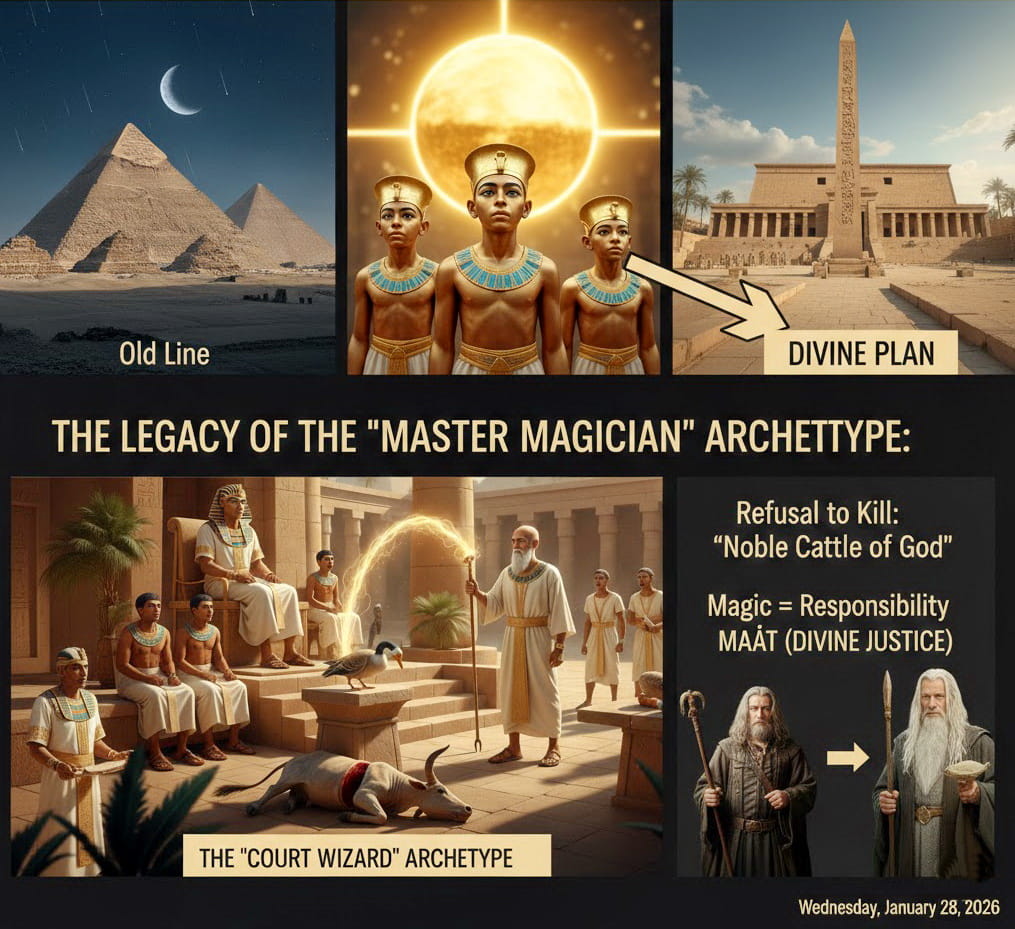
Ra vs. The Old Line

The 4th Dynasty (Khufu, Khafre, Menkaure) built the massive pyramids at Giza. However, the 5th Dynasty shifted the religious focus toward the Sun God Ra, building smaller pyramids and massive Sun Temples.

By claiming that the first three kings of the 5th Dynasty (Userkaf, Sahure, and Neferirkare) were the literal “triplets of Ra,” the Westcar Papyrus provides a divine excuse for the change in the royal bloodline.

  • It validates the change: The transition wasn’t a coup; it was a divine plan.
  • It preserves the dignity of the 4th Dynasty: Khufu is not overthrown; he is told that his sons will rule before the change occurs.

The Legacy of the “Master Magician” Archetype

Ultimately, the Westcar Papyrus created the archetype of the “court wizard” that persists in literature today. Whether we look at Merlin in Arthurian legend or Gandalf in modern fantasy, the “wise sage who advises the king” finds his roots in the character of Djedi.

The Refusal to Kill

One of the most profound moments in the text is Djedi’s refusal to decapitate a human. This highlights a shift in Egyptian ethics. Because Djedi views humans as the “Noble Cattle of God,” he sets a moral boundary for the Pharaoh.

Thus, the Westcar Papyrus teaches that magic is not just power; it is a responsibility. The “Royal Magic” of Khufu’s court was bound by the laws of Ma’at, ensuring that even the builder of the Great Pyramid was subject to divine justice.

In summary, the Westcar Papyrus is the ultimate intersection of magic, history, and politics. Because it combines entertaining “wonder tales” with a profound political prophecy, it remains the most significant literary work from the Old Kingdom era. Whether you are interested in the engineering of the pyramids or the magic of the lector-priests, the Westcar Papyrus provides the “missing link” that connects the Pharaohs to the gods.

FAQs: The Westcar Papyrus

1. Is the Westcar Papyrus real or fiction?

The physical papyrus is a real archaeological artifact housed in the Egyptian Museum in Berlin. However, the stories within it are considered “literary fiction” or legends written centuries after the events they describe.

2. Who was the most powerful magician in the papyrus?

Most scholars consider Djedi to be the most powerful. Specifically, he is the only one who performs a miracle in front of the living Pharaoh Khufu and provides a prophecy about the future of Egypt.

3. What is the “Stone Boat” in the Westcar Papyrus?

The “Stone Boat” race is actually found in the Horus vs Seth myth, but the Westcar Papyrus features a similar theme of “material transformation” where a wax crocodile becomes real, and water is “folded” like a cloth.

Miracles trove Egypt group experience....
Experience the classical grandeur and allure of Egypt....

Egypt Fun Tours – Does it All!

My husband and I visited Egypt in March 2013. First, let me say, ‘Go, go, go!’ – it’s safer and definitely friendlier than many places we’ve visited. Tourism is drastically down – thanks mostly to media misinformation – so it’s a great time to visit to avoid line-ups and crowds

More »
Tailored Services for Corporate Business Transportation Needs

On time, adaptable, and fun!

My friend and I planned a whirlwind trip to Dubai, the Dead Sea, Petra, Cairo, Luxor, and Sharm el Sheikh for early November 2011 – 6 cities in 10 days! We allotted one afternoon and evening for Cairo, and we wanted to see as much as we could! We drove

More »
Souqs and Markets in Egypt - Egypt Fun Tours

Cairo walking tours

After a rocky start (the driver had been in an accident on his way to pick me up,) the company very quickly sent another driver/guide named Mohammed, who was a real pro. Thoroughly enjoyed my first day in Egypt!

More »

Pyramids in the Mist, Egypt Adventure

Our long drive from Cairo turned into a terrifying flight through Alexandria’s impossibly crowded streets. Our minivan miraculously avoided hitting pedestrians, donkey carts, and old Lada cars. We arrived at the port gates with only 10 minutes to spare. But the guards ignored our U.S. passports, and they refused to

More »
Isis with wings

Top-rated Tour Packages

Isis with wings