
The First Nation-State: How Ancient Egypt Invented Modern Government

The concept of the first nation-state marks the pivotal moment in human history when scattered, tribal societies consolidated into a single, unified political entity. Emerging in the Nile Valley around 3100 BCE, Ancient Egypt broke the mold of the ancient world by establishing a centralized government that exerted authority over a vast geographic territory. Unlike the isolated city-states of Mesopotamia, this first nation-state utilized a shared language, a divine monarchy (the Pharaoh), and a sophisticated bureaucracy to create a sense of national identity. It pioneered the administrative "source code" we still use today—including systematic taxation, a professional judiciary, and large-scale national infrastructure—proving that millions could be organized under one laws and a single vision of order.

History often looks at the ruins of Rome or the philosophies of Athens as the birthplace of organized society. However, the true blueprint for the modern world was drafted 3,000 years earlier in the Nile Valley. Ancient Egypt did not just build monuments; it invented the concept of a country. Before the unification of the Two Lands, the world was a collection of warring groups and scattered chiefdoms. Egypt broke this mold, establishing the first nation-state—a centralized entity with a single law, a unified language, and a sophisticated bureaucracy.

This transformation changed the trajectory of human history. Consequently, understanding the Egyptian state is the key to understanding the “source code” of modern governance. From the collection of taxes to the establishment of professional courts, the Pharaonic system created the administrative tools we still use today. To explore Egypt is to witness the moment humanity first learned how to manage millions of people under a single vision.

The Geographic Engine of Governance

The Geographic Engine of Governance - The first nation-state

Why did the first nation-state emerge in Egypt rather than the open plains of Europe or the forests of Asia? The answer lies in the unique geography of the Nile. Egypt was a “closed system”—a fertile strip of land protected by vast deserts and a predictable river. This environment acted as a natural pressure cooker for social evolution.

The Nile as a Physical Unifier

The Nile River provided the world’s first high-speed communication highway. Unlike other early civilizations that struggled with treacherous terrain, the Egyptians used the river to move troops, officials, and information with incredible speed. Because of this, a leader in the capital could send a decree to a distant province in days rather than weeks. This connectivity allowed for the first “long-distance” governance in human history, binding the North and the South into a single political body.

The Necessity of Irrigation

Individual villages could farm the riverbanks, but they could not control the massive annual floods. Therefore, survival required massive cooperation. The people had to build thousands of miles of canals, dikes, and reservoirs to capture the floodwaters. No single family or group could manage such a project. As a result, the state was born out of a collective need for water management. The necessity of engineering gave birth to the necessity of leadership, turning a community of farmers into a unified national workforce.

The Desert Walls

Egypt’s borders were defined by “The Red Land”—the harsh Sahara and Sinai deserts. These natural barriers prevented constant tribal migration and invasion. In addition, they forced the population to stay concentrated along the river. This concentration made it easier for a central government to count, tax, and organize the people. While other civilizations were constantly shifting their borders, Egypt’s boundaries remained remarkably stable for millennia, allowing the first nation-state to perfect its internal structure without external interference.

FUN

The Divine Executive: The Pharaoh as the Living State

The Divine King; Horus and the Pharaoh - The first nation-state

In the modern era, we separate the individual from the office of the presidency or the crown. However, in the first nation-state, the person and the institution were inseparable. The Pharaoh was not merely a political figure; he was the physical manifestation of the state’s soul. This concept of “Divine Kingship” served as the ultimate psychological tool for national unity.

The Myth of Absolute Stability

The Egyptians believed that without a Pharaoh, the universe would descend into Isfet (chaos). Therefore, the King’s primary duty was to maintain Ma’at—the cosmic order of truth and balance. By framing governance as a religious necessity, the Egyptian state achieved a level of internal compliance that modern governments struggle to reach. Citizens did not just obey the law because of the threat of punishment; they obeyed because the stability of the world depended on it.

The Dual Crown: Symbol of Unification

The Pharaoh wore the Pschent, a crown that combined the White Crown of Upper Egypt and the Red Crown of Lower Egypt. This was not just a piece of jewelry; it was a powerful political statement. Consequently, it reminded every citizen that two distinct geographical regions were now one single body. This was the first time in history that a leader used branding and iconography to cement the identity of a unified nation.

The Vizier and the World’s First Civil Service

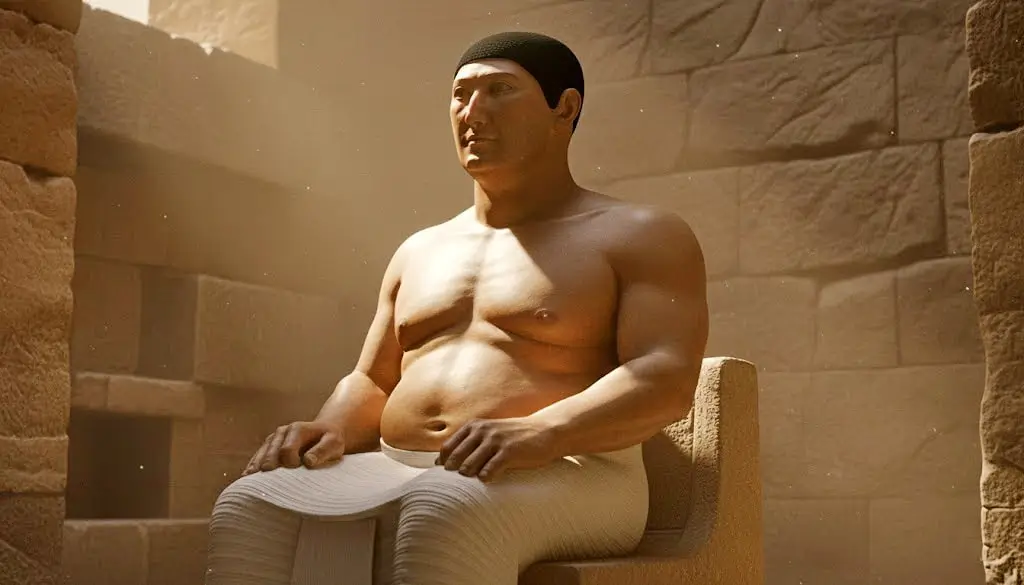
The Vizier in Ancient Egypt as Supreme Judge and Keeper of Ma'at

While the Pharaoh was the divine head of the state, the Vizier was the administrative engine. If the Pharaoh provided the vision, the Vizier provided the logistics. This office represents the birth of the “Prime Minister” and the world’s first professional bureaucracy.

The Master of the “Double House”

The Vizier oversaw the “Double House,” which included the treasury and the national archives. In addition, he was the final authority on all civil engineering projects and the distribution of land. This centralized control meant that for the first time, a single office had a bird’s-eye view of an entire nation’s resources. As a result, the state could move grain from a surplus region in the North to a starving region in the South with surgical precision.

The Professional Scribe Class

A nation-state cannot function without records. To solve this, the Egyptians created the Scribe class. These were the “Information Technology” specialists of the ancient world. To become a scribe, one had to master a complex writing system and advanced mathematics.

  • The Census: Scribes conducted a regular “counting of the cattle” and a census of the population.
  • The Archive: Every decree, legal contract, and tax receipt was filed in the state archives.
  • The Blueprint: Scribes calculated the exact number of stone blocks needed for a temple before the first shovel hit the ground.

Because of this class, the Egyptian state possessed a “memory.” Unlike oral-based groups, the Egyptian government could look back at records from 200 years before solve a current land dispute. This continuity is what allowed the first nation-state to survive for three thousand years.

Heb-Sed Festival: The First “National Performance Review”

While we often view the Pharaoh as an absolute dictator, the first nation-state actually possessed a sophisticated mechanism for “renewing” the leader’s mandate. This was the Heb-Sed Festival. Historically celebrated after a King had ruled for 30 years (and every three years thereafter), it served as a ritualistic “election” where the King had to prove his worthiness to the people and the gods.

The Ritual of Physical Fitness

In a modern democracy, we look at policy; in Ancient Egypt, they looked at vitality. Consequently, the centerpiece of the Heb-Sed was a physical race. The Pharaoh had to run a prescribed course between two sets of boundary markers representing the borders of Egypt. By completing this race, the King proved he still possessed the strength to defend the borders and lead the military. If he was too frail to run, it was a signal that Ma’at (order) was fading, and his right to rule was spiritually compromised.

Re-Unification as a Campaign

The festival was not just a private ceremony. Instead, it was a massive national event where governors (Nomarchs) and priests from every corner of the country traveled to the capital. In effect, this was a ceremonial re-election. The Pharaoh would be “re-crowned” first as the King of the South and then as the King of the North. This served to remind the administrative elite that the state was not a static object, but a living contract that had to be renewed through the King’s personal effort.

A Democracy of Spirit

While there were no voting booths, the Heb-Sed acted as a vital “check and balance.” It reminded the King that his power was not for his own benefit, but was a tool to ensure the nation’s survival. Because of this festival, the Egyptian state avoided the stagnation that often kills empires. It forced the “CEO of the State” to periodically demonstrate his competence to the entire national bureaucracy.

FUN

The Economy of the First Nation State

The Ancient Egyptian Economy, Barter, Trade, and the Central Role of the State

Modern economies rely on currency, but the Egyptians built a superpower using a “Grain Economy.” This required a level of logistical planning that would intimidate a modern supply-chain manager.

The State as a Central Bank

In Egypt, grain was gold. The state built massive granaries in every province. Moreover, these granaries acted as the first national banks. Farmers “deposited” their grain as taxes, and the state “withdrew” it to pay workers, feed the army, and provide emergency relief during droughts. This system allowed the first nation-state to bypass the volatility of barter trade and create a stable, government-backed economy.

The Nilometer: Scientific Taxation

The government’s primary income came from the land. Consequently, they invented a scientific way to calculate taxes. They built Nilometers—stone pillars or staircases that measured the river’s rise.

  1. Low Nile: The state anticipated famine and deferred taxes to keep the population alive.
  2. High Nile: The state anticipated wealth and increased taxes to fund new infrastructure.

This was the first instance of a government using environmental data to drive fiscal policy. It proved that the Egyptian state was not a predatory entity, but a sophisticated partner in the people’s survival.

The Hall of Ma’at: The First Professional Judiciary

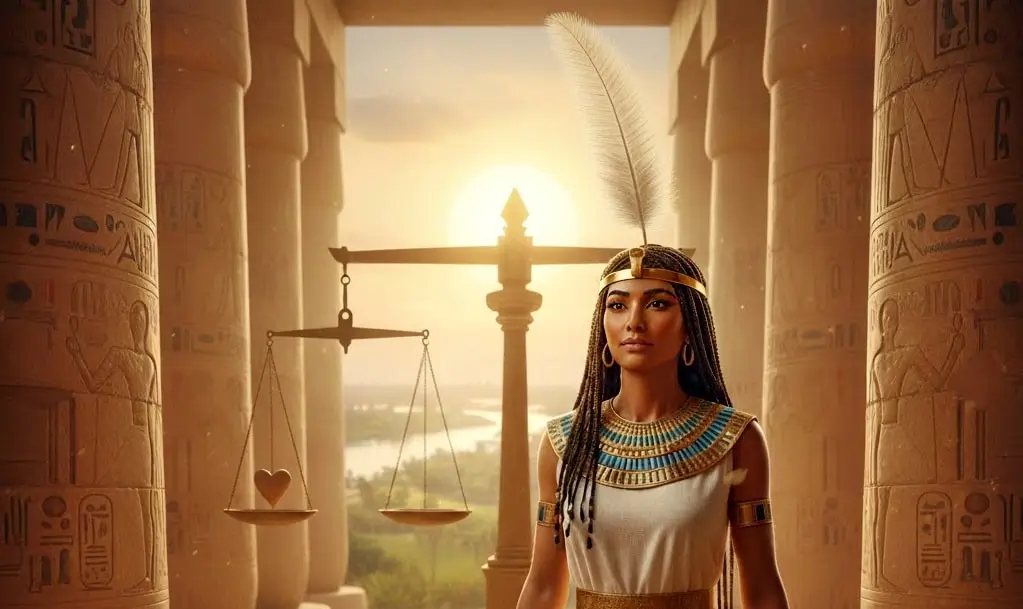
Ma'at; Harmony, Order, and Cosmic Balance in Ancient Egypt

While many ancient societies relied on “eye-for-an-eye” tribal vengeance, the first nation-state established a centralized legal system. This system ensured that the law was an instrument of the state, not a tool for private vendettas. At the heart of this was the concept of Ma’at, which transformed the law from a set of rules into a cosmic duty.

The Code of the Vizier

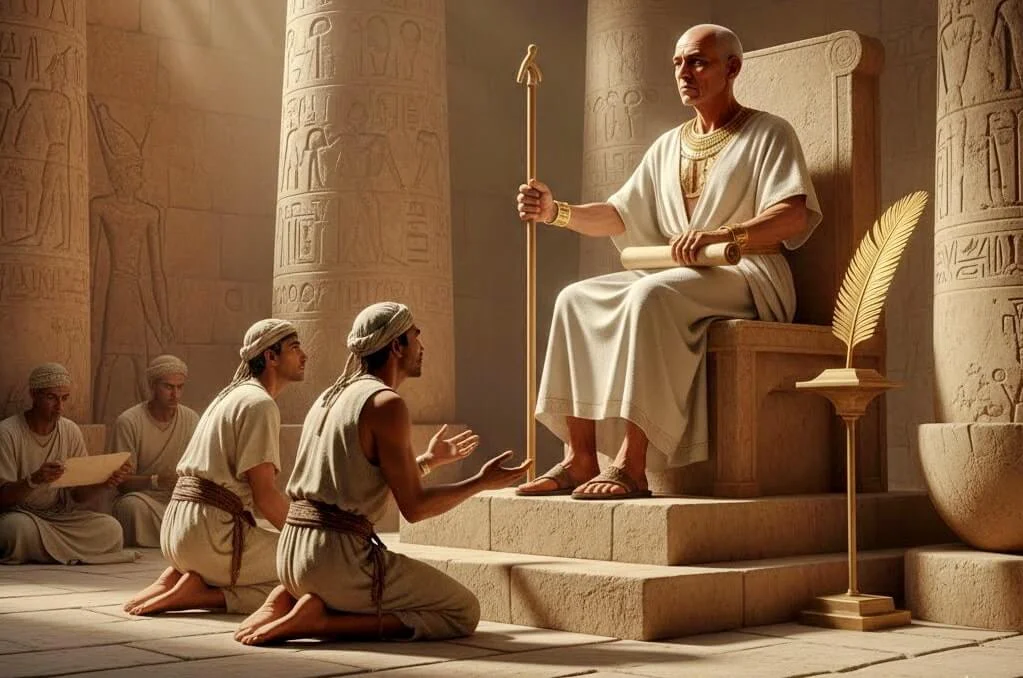
The Vizier served as the Chief Justice. Every morning, he sat in the “Hall of the Vizier” to hear petitions from any citizen. In fact, history records that even the humblest peasant could bring a case against a powerful official. The state provided a standardized legal framework, often referred to as the “Forty Scrolls of Law.” While these scrolls acted as the constitution, the judges were instructed to use common sense and equity to reach a fair verdict.

The Kenbet: Local Justice

Governance was not just a top-down affair. The state organized local councils called Kenbet. These were composed of village elders and local officials who settled disputes over land boundaries, water rights, and petty theft. As a result, the central government did not need to micromanage every village. The Kenbet acted as a franchise of the national legal system, ensuring that the “Rule of Law” reached every corner of the kingdom.

Legal Documentation and Property Rights

Egyptians were the first to treat property as a legal entity. Consequently, they invented the deed. If you bought a house or a field, a scribe recorded the transaction on papyrus and filed it in the local “House of Records.” Because of this documentation, the state could protect property owners from fraud. This legal stability encouraged investment in the land, which fueled the nation’s agricultural wealth.

The First National Military and Police Force

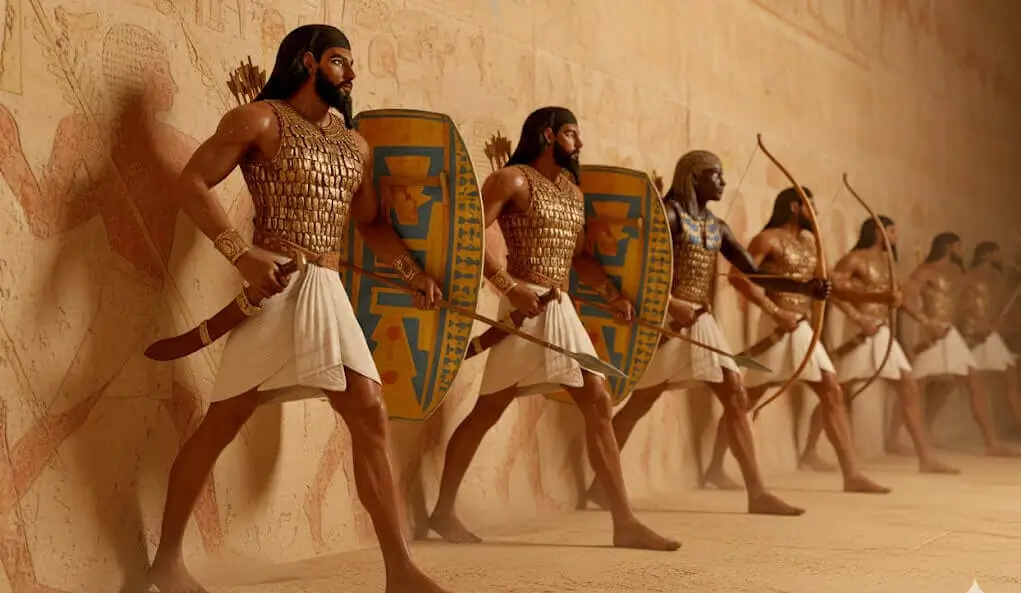
The Ancient Egyptian Army Organization, Weapons, and Warfare

A nation-state is only as strong as its ability to enforce its borders and its laws. Ancient Egypt developed the first professionalized security apparatus to protect the “Cradle of Civilization” from both external and internal threats.

The Medjay: The World’s First Police

Originally an ethnic group from Nubia, the Medjay were eventually integrated into the Egyptian state as a professional paramilitary police force. They were not soldiers in a foreign war; they were domestic peacekeepers.

  • Patrolling the Borders: They guarded the desert frontiers against nomads.
  • Protecting the Capital: They served as the elite guard for royal palaces.
  • Maintaining Order: They monitored markets and protected the tombs in the Valley of the Kings.

By creating the Medjay, the Egyptian state proved it had moved beyond tribal militias. It now possessed a specialized force dedicated solely to the enforcement of state law.

The Standing Army and Logistics

For much of its early history, Egypt relied on a national conscription system. During the “off-season,” when the Nile was not being farmed, the state called up men to serve in the military. Moreover, the state provided standardized equipment: shields, bows, and spears manufactured in state-run workshops.

This was the first time in history that an army was backed by a national supply chain. The state-run granaries we discussed earlier did not just feed the people with low income; they fed the troops. This logistical advantage meant that the Egyptian army could stay in the field longer and travel further than any rival force.

The Secrets of Ancient Egyptian Mummification: Engineering the Afterlife

Forget the Hollywood myths of cursed scrolls and magical incantations; the true story of mummification...
Related post
FUN

The Scribe Class: The First Information Technology

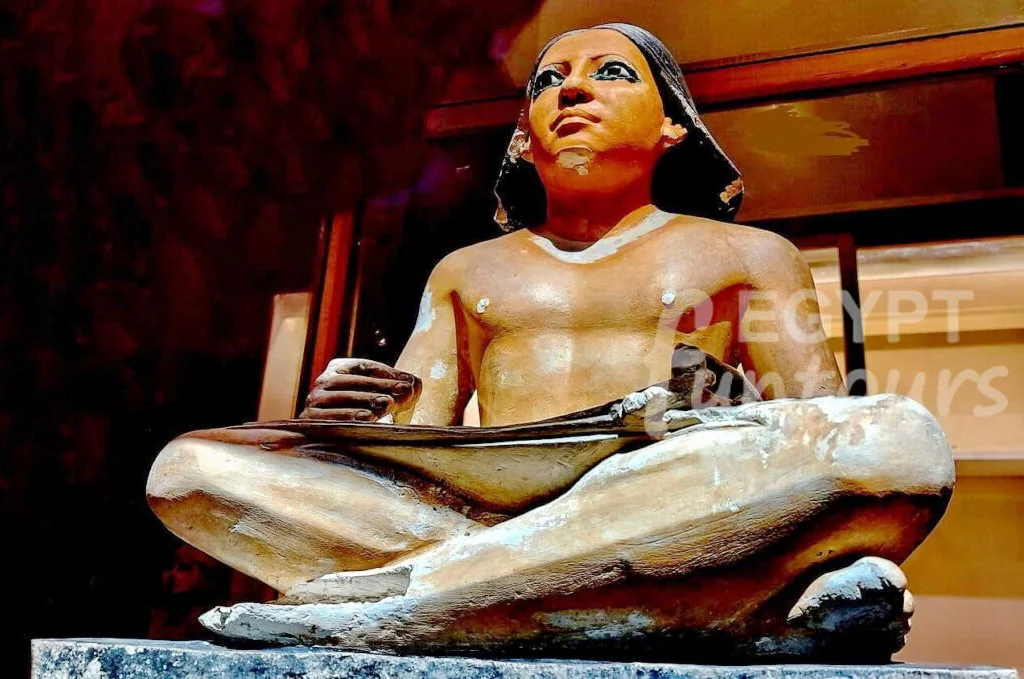
royal seated scribe Egyptain museum treasures - Egyptian Museum Half-Day Tour

In the first nation-state, knowledge was the ultimate currency. The ability to record, transmit, and archive information was what truly separated Egypt from its neighbors. This was made possible by the invention of the Scribe class.

The Power of Literacy

To be a scribe was to be part of the elite. However, it was one of the few roles in Egypt that allowed for social mobility. A gifted child from a poor family could attend a temple school, learn to read and write, and rise to become a high-ranking government official. Because of this meritocracy, the Egyptian bureaucracy remained efficient and filled with the brightest minds of the age.

Papyrus: The Portable State

Before Egypt, records were carved into stone or pressed into heavy clay. Instead, the Egyptians invented Papyrus. This lightweight, durable material allowed the government to be mobile. A scribe could carry the tax records of an entire province in a single leather satchel. Consequently, the “State” was no longer a fixed location; it was a portable system that could follow the Pharaoh wherever he went.

The State as Architect: The Logistics of the Pyramids

Hemiunu, The Vizier and Architect Who Built the Great Pyramid of Khufu

Nothing proves the power of the first nation-state more than the Great Pyramids of Giza. While popular culture often portrays these as the work of slaves, the historical reality is much more impressive: they were the world’s first “National Public Works” projects. The pyramids were a demonstration of the state’s ability to mobilize and sustain a massive, specialized workforce over decades.

The World’s First Project Management

Building a pyramid required a level of logistical planning that was unheard of in the ancient world. Consequently, the state had to coordinate several moving parts simultaneously:

  • The Quarry Teams: Thousands of workers cutting limestone in Tura and granite in Aswan.
  • The Transport Fleet: Hundreds of barges moving massive stones up the Nile.
  • The Support Staff: Bakers, doctors, brewers, and tailors are required to keep the labor force healthy.

Because of this complexity, the Egyptians invented the first recognizable “Middle Management.” We find records of “Directors of Works” and “Overseers of the King’s Projects” who managed the timelines and budgets for these massive monuments.

The Workers’ Village: A Microcosm of the State

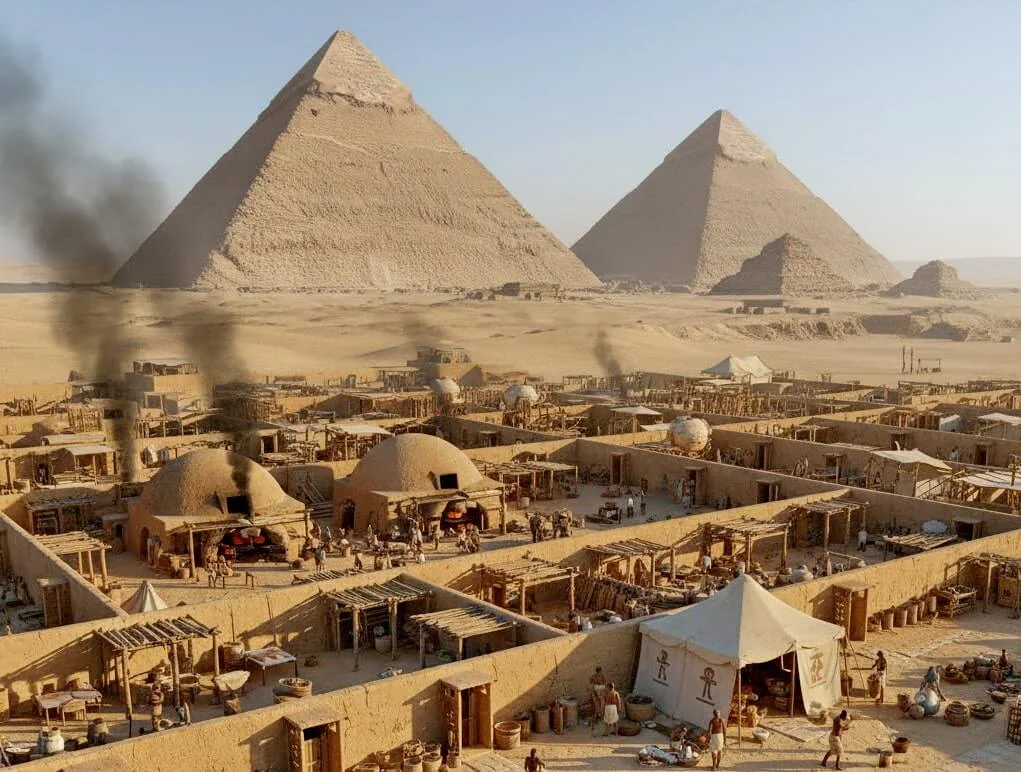
The Pyramid Workers' Village; Home on the Giza Plateau - The first nation-state

Excavations at the Giza workers’ village reveal a highly organized social structure. In addition, the state provided high-quality rations, including meat and beer, which were luxuries for the average ancient human. The state also provided the first form of “Workers’ Compensation”—archaeologists have found skeletons of workers who underwent successful brain surgery and bone setting, paid for by the Pharaoh’s treasury. As a result, the pyramid projects functioned as a school for national unity, bringing men from every province together to work for a single, divine goal.

The Architecture of the Gods: Unlocking the Ancient Egyptian Engineering Secrets

The Great Pyramid of Giza stands as the ultimate testament to Ancient Egyptian engineering secrets,...
Related post
FUN

The State as International Player: The First Diplomacy

battle kadesh political peace treaty - The first nation-state

As the first nation-state matured, it began to project its power beyond its borders. This led to the birth of international law and diplomacy.

The World’s First Peace Treaty

Centuries after the initial unification, Egypt entered a stalemate with the Hittite Empire. Instead of continuing an endless war, the two superpowers drafted the Treaty of Kadesh. This is the oldest known peace treaty in existence. It did not just end the fighting; it established a “mutual defense pact” and rules for the extradition of criminals.

The Amarna Letters: A State Department in Clay

We have found archives of “The Amarna Letters,” which were the diplomatic correspondence between Egypt and the kings of Babylon, Assyria, and the Mittani. Moreover, these letters show a complex system of “brotherhood” and gift-exchange. This proves that the Egyptian state had a sophisticated “Foreign Ministry” that managed global geopolitics long before the rise of the Persian or Roman Empires.

The Legacy: The Blueprint for Future Empires

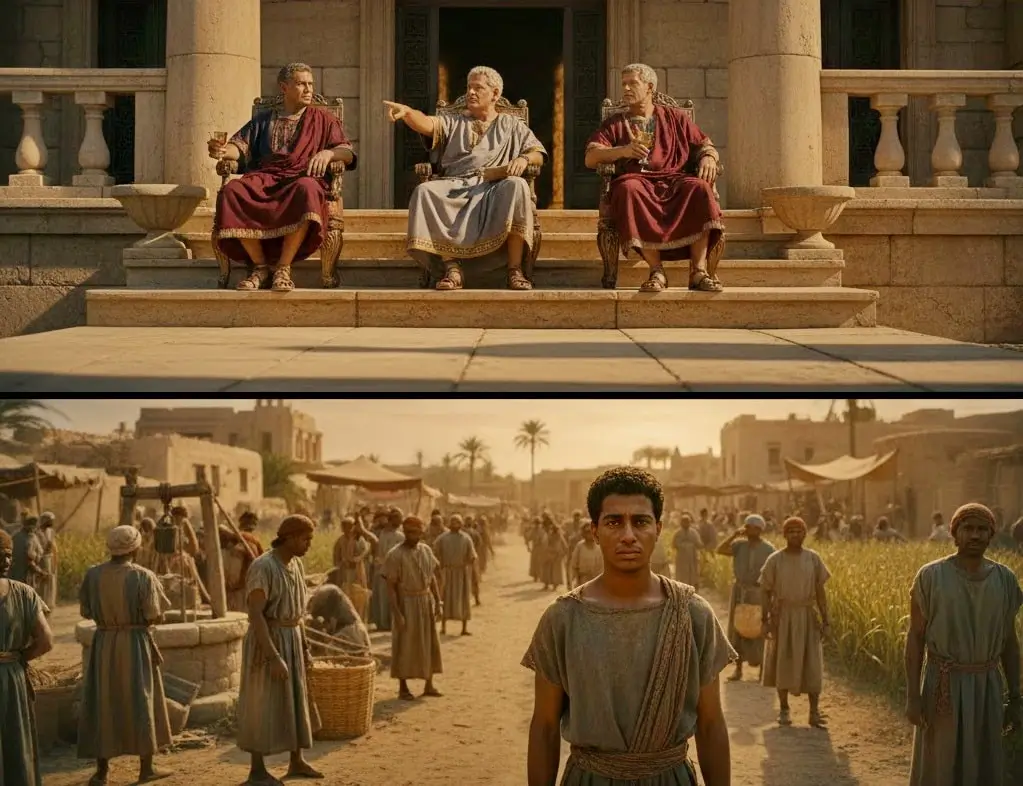
Society of Egypt During the Roman Era - The first nation-state

The Egyptian experiment with the first nation-state was so successful that it became the template for every civilization that followed. When the Greeks arrived under Alexander the Great, they did not dismantle the Egyptian system. Instead, they adopted it.

The Greco-Roman Adoption

Alexander realized that the Pharaoh’s system of “Divine Kingship” was the most effective way to rule a large territory. Consequently, he and the subsequent Ptolemies took on the titles and ceremonies of the Pharaohs. Later, the Roman Empire treated Egypt as its most important province, not just for its grain, but for its administrative expertise. The Roman “Prefect” of Egypt was essentially a modern version of the Egyptian Vizier.

Why the Egyptian System Endured

The reason the Egyptian state lasted for over 3,000 years—longer than any other civilization in history—was its balance of centralization and local autonomy. By providing a national identity, a stable legal system, and a “Grain-backed” economy, the state proved itself useful to its citizens. It was a social contract written in stone and papyrus.

The Architecture of the Gods: Unlocking the Ancient Egyptian Engineering Secrets

The Great Pyramid of Giza stands as the ultimate testament to Ancient Egyptian engineering secrets,...
Related post
FUN

Returning to the Cradle

To study Ancient Egypt is to study the origins of our own social structures. We still use the concepts they pioneered: the census, the tax bracket, the court of law, and the civil service. They were the first to prove that millions of people could live in harmony if a single vision of order bound them.

As we continue this series on “Understanding Ancient Egypt and the Cradle of Civilization,” we will move from the Macro (the State) to the Micro (the Human Spirit). In our next pillar, we will explore the spiritual engine that drove this massive bureaucracy: the Egyptian concept of the Afterlife and the evolution of Monotheism.

The Cradle Comparison: Why Egypt Was Unique

While Mesopotamia and the Indus Valley were contemporaries of Ancient Egypt, their political and social structures evolved differently. Use the table below to understand the distinct administrative advantages that allowed the Egyptian state to endure for three millennia.

Feature Ancient Egypt Mesopotamia (Sumer/Babylon) Indus Valley (Harappa)
Political Structure Unified Nation-State: A single king (Pharaoh) ruled the entire length of the river. City-States: Independent, often warring cities (Ur, Uruk) with separate rulers. Urban Confederations: Highly organized cities with no clear evidence of a single king.
Geographic Security Natural Fortress: Protected by vast deserts on both sides and cataracts to the south. Open Floodplains: Easily invaded from all sides, leading to frequent regime changes. Riverine Plains: Relying on the Indus, but vulnerable to tectonic shifts and climate change.
Legal Philosophy Ma’at (Universal Balance): Law was a cosmic duty overseen by a central Vizier. Retributive Law: Focus on specific punishments (e.g., Code of Hammurabi). Standardized Civics: Focus on urban planning and sanitation rather than central decrees.
Economic Engine Centralized Grain Bank: The state controlled all surplus through national granaries. Market-Based Trade: heavy reliance on private merchant guilds and long-distance trade. Trade Guilds: Economy driven by standardized weights and maritime commerce.
Continuity 3,000+ Years: Remarkable stability with very few changes to the core language or religion. Fractured: Constant cycles of rise and fall between Sumerians, Akkadians, and Babylonians. Abrupt Decline: The civilization vanished or migrated after roughly 600-800 years of its peak.

Final Authoritative Note

As the table illustrates, the first nation-state was not just a title; it was a survival strategy. By centralizing power and resources, Egypt avoided the infighting that plagued Mesopotamia and the mysterious dissolution that ended the Indus Valley civilization. Egypt’s ability to turn a river valley into a “corporation of the divine” is why its monuments—and its administrative legacy—still stand today.

Discover the wonders of ancient and modern Egypt in Cairo, Aswan, Luxor, and Alexandria...
Experience the rich culture and breathtaking landscapes of Egypt in style....

AMAZING Layover Tour

We had the MOST amazing layover tour with Egypt Fun Tours. Hanni was amazing, and we loved every moment. Pyramids, authentic food, and Islamic Cairo – amazing!

More »

Excellent Layover Tour

I would recommend Egypt Fun Tours to everyone who is looking for either a cultural or relaxing trip in Egypt. I was recently on a private layover tour and could not have been any happier with my day in Cairo. My tour guide, Hani was waiting just outside immigration and

More »

Very Considerate and Helpful

Guide and driver were on time, open to my requests and took care that I felt safe and saw the Pyramids and parts of old cairo during my less than 24 hour stay between flights. Office staff were great in communicating by email before and during the trip.

More »
hani ahmed 1

Hani Was our Awesome Tour Guide!

We had an 11-hour layover in Cairo on 12/15/2011. We wanted to go to see the Pyramids, Tahrir Square, and possibly the museum. We were so lucky to have a guide, Hani from Egypt Fun Tour, who made it possible to see all the above, plus the Bazaar, and time

More »

Great one day tour in Cairo

My husband and I had a long layover in Cairo on our way to Kenya in 2010. Since we had never been to Egypt, we decided to sign up for a one-day tour with Egypt Fun Tours Day Trips. Our guide was there when we arrived and quickly guided us

More »
Isis with wings

Top-rated Tour Packages

Isis with wings