The Tomb of Pabasa (TT279): A Masterpiece of Ancient Industry and Art

The Tomb of Pabasa (TT279) stands as a premier example of the Saite Renaissance, where 26th-dynasty officials revived the elegance of Egypt’s distant past. As the Chief Steward of the God’s Wife of Amun, Pabasa built a monument that rivaled royal structures in both scale and detail. While its open-air Sun Court and massive siltstone sarcophagus highlight his immense political power, the tomb’s true fame lies in its intimate "Daily Life" reliefs. Specifically, the beekeeping scene remains one of archaeology's rarest glimpses into ancient industry, proving the sophistication of Egyptian apiculture. For modern visitors, TT279 offers a quiet, high-definition look at a civilization expertly blending tradition with administrative mastery.

Tucked away in the shadow of the cliffs at El-Asasif, just steps from the majestic Temple of Hatshepsut, lies one of the most intellectually fascinating monuments of the Theban Necropolis: The Tomb of Pabasa (TT279). While the grand royal valleys nearby often steal the spotlight, this 26th Dynasty treasure offers something the golden masks of kings cannot—a vivid, detailed window into the sophisticated daily life and industrial ingenuity of the Saite Period.

Pabasa was no ordinary official. As the Chief Steward of the God’s Wife of Amun, Nitocris I, he held the keys to the most powerful religious and economic institution in Upper Egypt. His final resting place is a testament to that status, blending architectural grandeur with a rare artistic movement known as “archaism.”

Why TT279 is a Must-Visit for Historians

The Tomb of Pabasa is most famously recognized for a single, delicate relief that has captivated archaeologists for decades: the Beekeeping Scene. This rare depiction of ancient honey production is one of the few pieces of evidence showing how the Egyptians managed apiculture nearly 2,600 years ago. But beyond the bees, the tomb reveals a wealth of information about:

  • Ancient Egyptian Logistics: From winemaking to fishing and weaving.
  • The Saite Renaissance: A period where artists looked back 2,000 years to the Old Kingdom for inspiration.
  • Political Powerhouses: The unique role of the “God’s Wife of Amun” during the 26th Dynasty.

In this comprehensive guide, we will journey through the sun-drenched courtyards of TT279, decode the intricate reliefs of the pillared halls, and explore the legacy of the man who managed the wealth of Thebes. Whether you are an armchair Egyptologist or planning a private tour of Luxor’s West Bank, this deep dive into the Tomb of Pabasa will reveal the hidden layers of Egypt’s last great indigenous dynasty.

FUN

Who Was Pabasa? The Man Behind the Monument

Who Was Pabasa The Man Behind the Monument

To understand the grandeur of TT279, you must first understand the man who built it. Pabasa lived during the 26th Dynasty (c. 664–525 BCE). Historians call this era the Saite Renaissance. During this time, Egypt reclaimed its independence from Assyrian occupiers. The nation felt a new wave of pride. Artists and officials stopped looking outward and began looking back at Egypt’s golden ages for inspiration.

The Power of the Chief Steward

Pabasa held a massive title: “Chief Steward of the God’s Wife of Amun.” In the Late Period, this role carried immense political weight. The God’s Wife of Amun (the princess Nitocris I) functioned as the high priestess and the practical ruler of Thebes.

As her Chief Steward, Pabasa managed her vast estates. He acted as the supreme administrator. His daily responsibilities included:

  • Managing Wealth: He controlled the massive revenues and lands of the Amun cult.
  • Political Diplomacy: He served as the vital link between the Pharaoh in the North and the religious leaders in Thebes.
  • Overseeing Industry: He directed the workforce that produced temple offerings—including the famous honey shown on his tomb walls.

A Leader in the Saite Renaissance

Pabasa served under Pharaoh Psamtik I. This king wanted to return Egypt to its roots. Pabasa followed this vision. He chose a burial plot in El-Asasif for a specific reason. This valley sits at the gateway to Deir el-Bahari. By building here, Pabasa physically linked his legacy to great rulers like Hatshepsut.

The Legacy of Nitocris I

Pabasa’s career depended on Nitocris I. Pharaoh Psamtik I sent her to Thebes to consolidate his power. Pabasa ensured her success. The sheer scale of his tomb—which rivals royal structures—proves his status. He was likely the most influential “commoner” in Egypt during the 7th century BCE.

Expert Insight: Pabasa is a central figure in the “Saitic restoration.” His tomb is more than a grave. It is a political statement about Egypt’s strength and the efficiency of its government.

FUN

Inside the Tomb: An Architectural Masterpiece

Inside the Tomb An Architectural Masterpiece

The Tomb of Pabasa is one of the largest private funerary monuments in Egypt. Its design reflects the “archaizing” trend of the 26th Dynasty. The architects borrowed styles from the Old Kingdom (2,000 years prior) to create a sense of timeless authority.

1. The Entrance Ramp and Gate

Your journey begins with a steep limestone ramp. This leads down into a massive mud-brick gateway. Most tombs in this era were built underground to protect them from grave robbers. Pabasa followed this tradition but kept the scale monumental.

2. The Open-Air Sun Court

After passing through the entrance, you enter a magnificent open-air courtyard. This is the heart of TT279.

  • The Pillars: Heavy square pillars surround the court.
  • The Light: Sunlight floods this area, illuminating the detailed reliefs on every wall.
  • The Themes: This court acts as a transition. It moves from scenes of the living world above to the religious mysteries of the afterlife below.

3. The Pillared Hall and Daily Life Reliefs

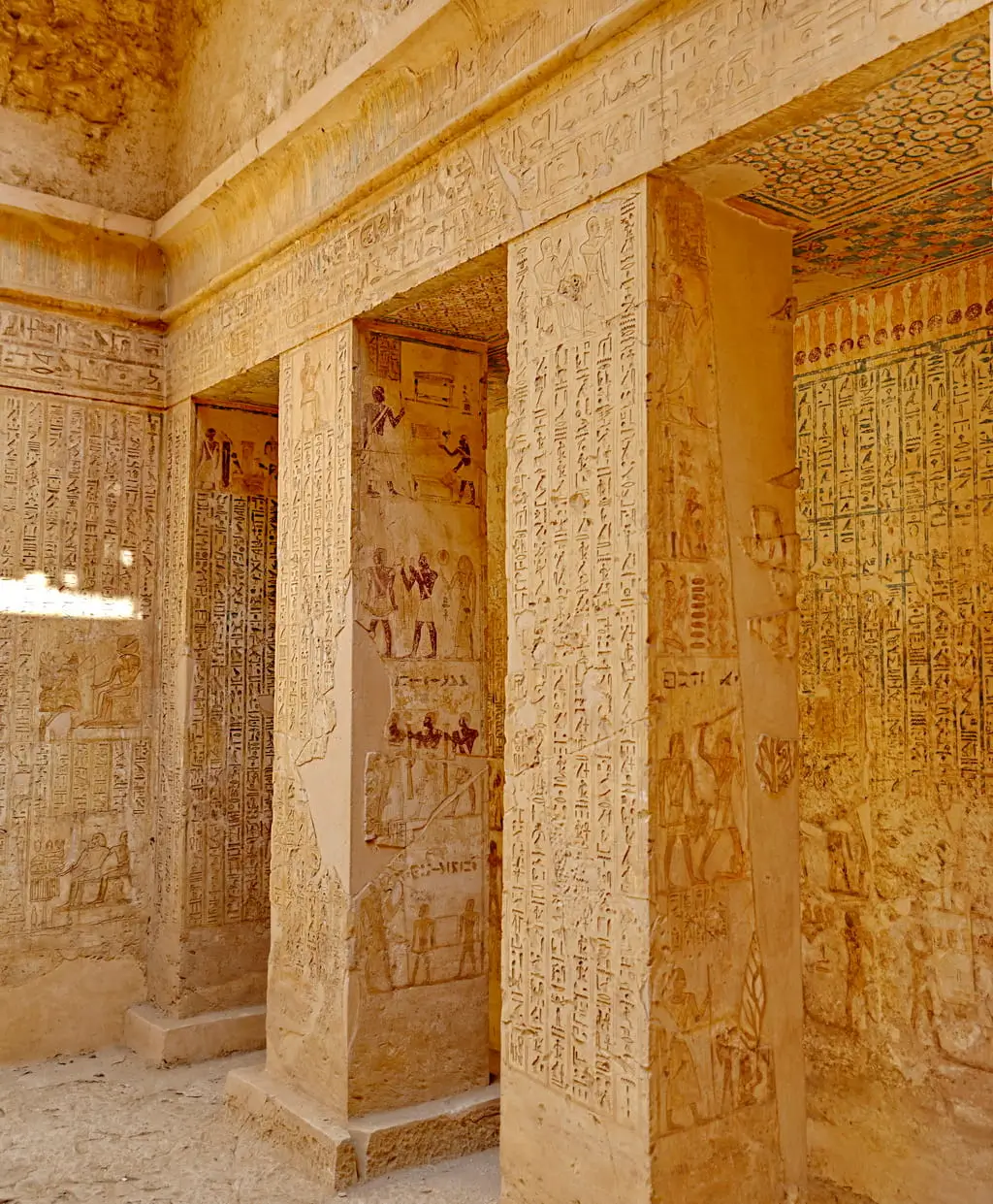
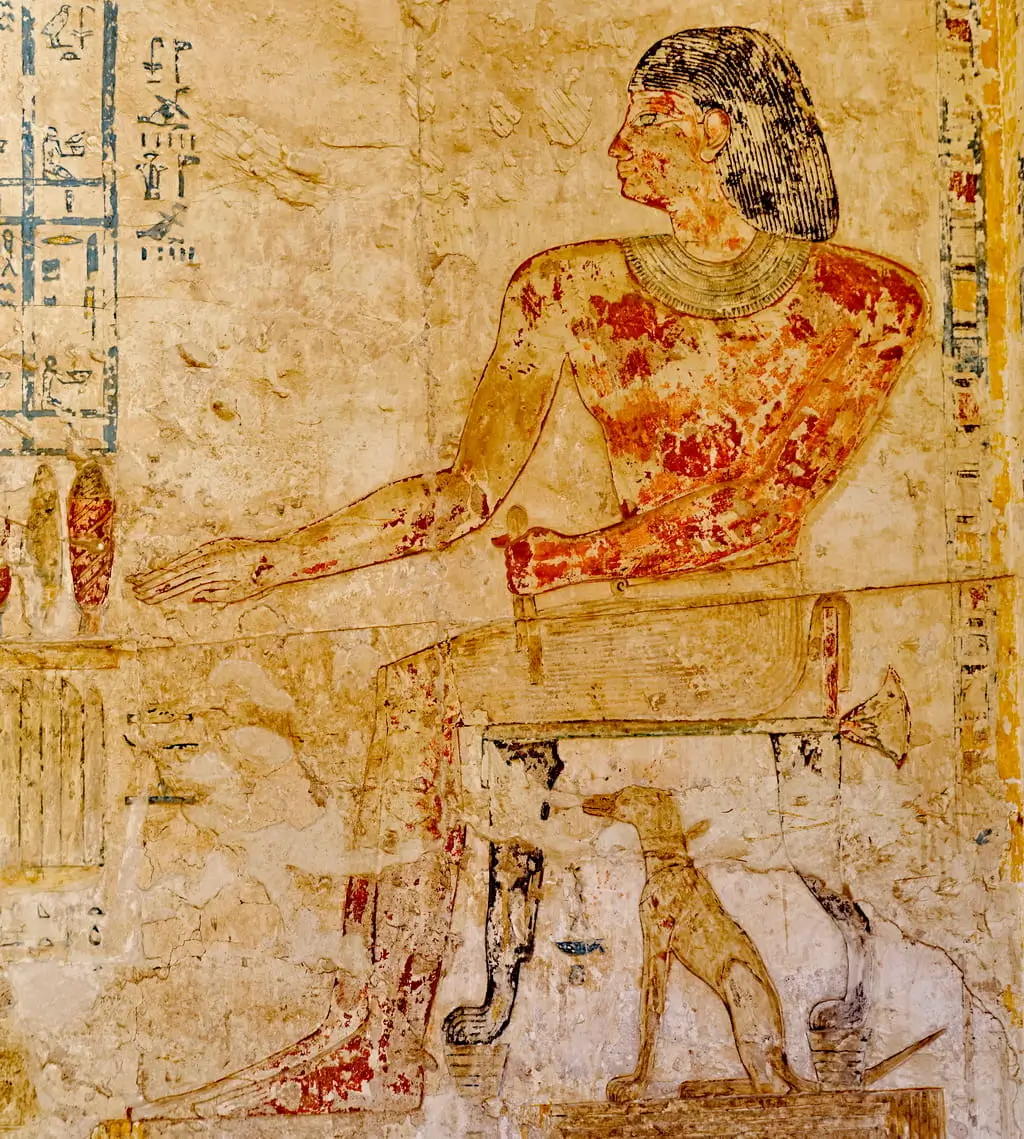
Beyond the courtyard lies the first pillared hall. This is where the artistry truly shines. Instead of focusing only on gods and prayers, Pabasa chose to document his earthly success.

On these walls, you will find incredibly detailed scenes of:

  • Agriculture: Workers harvesting fruit and tending to grain.
  • Viticulture: The entire process of winemaking, from picking grapes to pressing them.
  • Fishing and Fowling: Men catching Nile fish and birds with intricate nets.
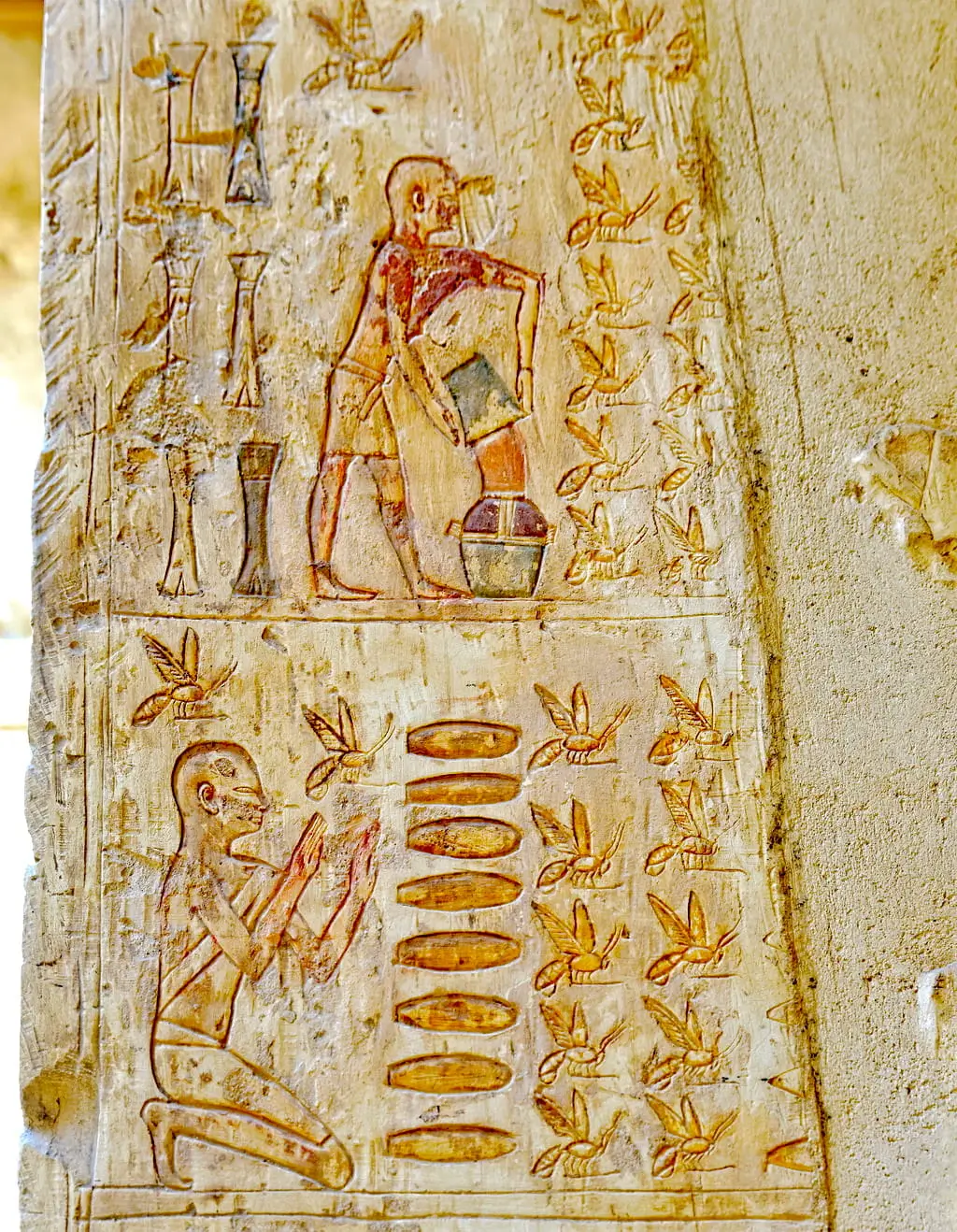
  • The Famous Beekeeping: Located on the eastern side of the hall, this scene shows the meticulous care of ancient hives.

4. The Burial Chamber and Sarcophagus

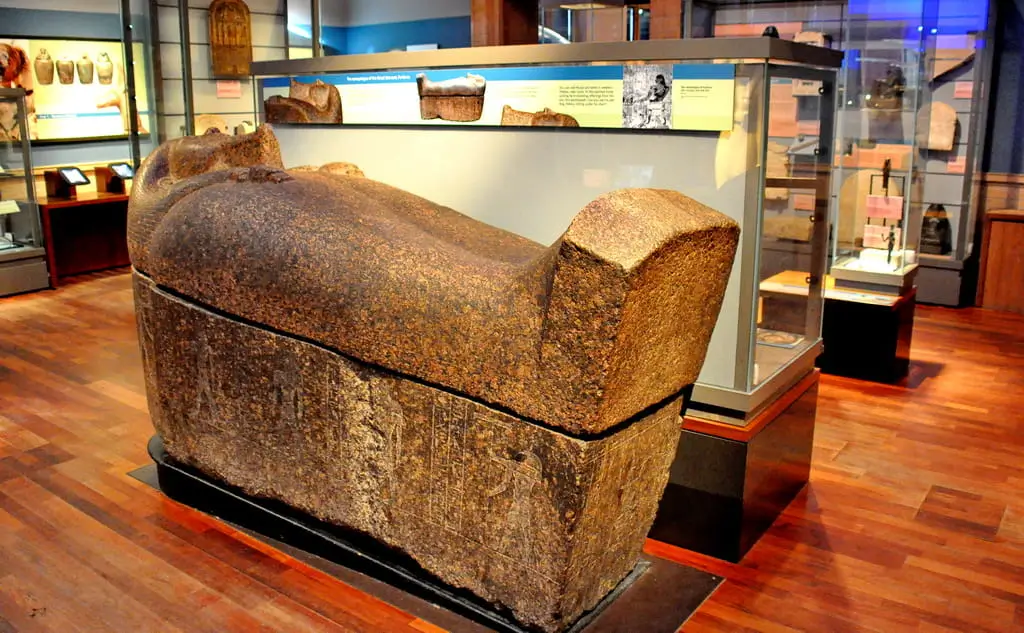
Deep beneath the pillared hall lies the burial chamber. Originally, this room held Pabasa’s massive stone sarcophagus.

  • The Sarcophagus: It was carved from heavy siltstone.
  • The Journey: In the 1800s, explorers moved the sarcophagus. It now sits in the British Museum in London.
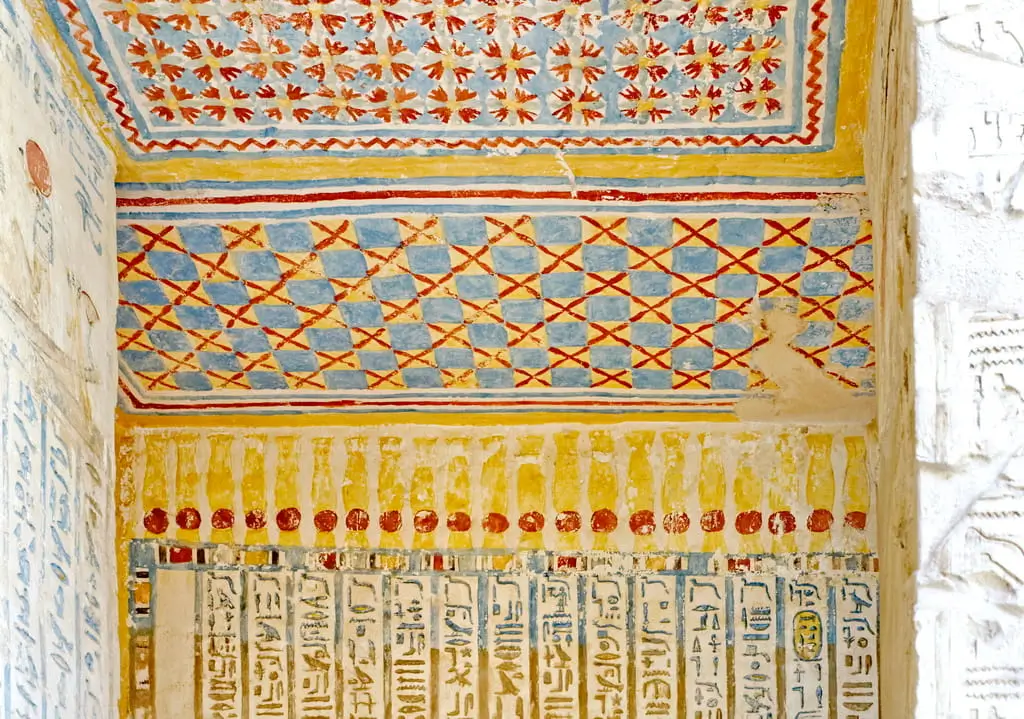
  • The Decoration: The chamber walls feature the Book of the Dead, intended to guide Pabasa through the underworld.

The Catacombs of Kom Esh-Shokafa: Roman-Egyptian Underworld

Descend into one of the "Seven Wonders of the Middle Ages" at the Catacombs of...
Related post
FUN

The Famous Beekeeping Scene: Ancient Industry in Detail

The Famous Beekeeping Scene Ancient Industry in Detail

The “Beekeeping” relief in TT279 is a rare treasure. While thousands of scenes depict farming or hunting, very few show the delicate art of honey production. This specific relief proves that ancient Egyptians were master beekeepers as early as the 7th century BCE.

What the Relief Shows

The scene is located on the door jamb of the first pillared hall. It captures a moment of quiet, professional labor:

  • The Hives: You can see a stack of horizontal, cylindrical tubes. These were ceramic or mud-clay pipes. They resemble the traditional hives still used in some parts of rural Egypt today.
  • The Beekeeper: A man kneels in front of the hives. He raises his hands in a gesture of work or perhaps a prayer for a successful harvest.
  • The Process: Workers are shown removing the honeycombs and placing them into large storage jars.
  • The Bees: Tiny, carved bees hover around the hives and the jars. The level of detail is so fine that you can distinguish the wings and bodies of the insects.

Why Honey Was “Liquid Gold”

In the time of Pabasa, honey was not just a sweetener. It was a strategic resource managed by the state.

  1. Medicine: Physicians used honey as a natural antiseptic. They applied it to wounds and burns to prevent infection.
  2. Religion: Honey was a “Food of the Gods.” Pabasa’s workers produced this honey specifically for the temples of Amun.
  3. Economy: Since sugar did not exist in ancient Egypt, honey was the primary sweetener. It was expensive, rare, and used as a form of currency or tribute.

The Symbolism of the Bee

In ancient Egyptian culture, the bee (the bit) was more than an insect. It was the symbol of Lower Egypt. The Pharaoh held the title “He of the Sedge and the Bee,” representing the unification of the North and South. By including this scene, Pabasa signaled his control over a vital national symbol and a lucrative industry.

Fun Fact: The Egyptians believed that bees were created from the tears of the Sun God, Ra. As his tears fell to the earth, they transformed into honeybees to serve humanity.

Tomb of Neferhotep (TT49): The Chief Scribe & Ancient Karnak

The Tomb of Neferhotep (TT49) stands as one of the most significant architectural archives of...
Related post
FUN

The Saite Renaissance: Why the Art Looks “Old”

The Saite Renaissance Why the Art Looks Old

When you walk through the Tomb of Pabasa, you might feel like you are standing in a tomb from the Pyramid Age. This is not an accident. Pabasa and his contemporaries led a movement called Archaism.

A Return to the Golden Age

During the 26th Dynasty, Egypt had just regained its independence. To celebrate this new era, the ruling class looked back at the Old Kingdom (2,000 years earlier). They viewed the era of the Pyramid builders as the “True Egypt.”

Pabasa’s artists intentionally copied styles from that distant past. You can see this in:

  • The Proportions: Figures have the muscular, balanced proportions seen in 4th Dynasty monuments.
  • The Relief Depth: The carving is low and delicate, mimicking the elegance of the early Mastaba tombs at Saqqara.
  • The Themes: Instead of focusing only on complex underworld demons, they returned to “Daily Life” scenes like fishing, hunting, and (of course) beekeeping.

The Innovation of the Late Period

While the style was “old,” the technique was new. Saite artists refined their tools and methods. The limestone in TT279 is carved with incredible precision.

  • Details: Look closely at the fish in the nets or the texture of the fruit baskets. The level of detail exceeds almost anything found in the earlier eras they were trying to copy.
  • Portraiture: Unlike the idealized faces of the Old Kingdom, Saite art began to show realistic features. Pabasa’s face shows a specific, dignified personality.

Practical Tips for Visiting the Tomb of Pabasa (TT279)

If you are planning a trip to the West Bank of Luxor, adding the Asasif tombs to your itinerary is a smart move. They are often quieter than the Valley of the Kings.

1. Location and Access

The tomb is located in the El-Asasif necropolis. It sits directly in front of the causeway leading to the Temple of Hatshepsut (Deir el-Bahari). You can easily walk here after visiting the temple.

2. The Entry Ticket

You cannot buy a ticket at the tomb entrance. You must purchase your tickets at the main West Bank Ticket Office (near the Colossi of Memnon).

  • The Bundle: Usually, the ticket for TT279 includes entry to the neighboring Tomb of Kheruef and the Tomb of Ankh-hor.
  • Photography: Most sites now allow mobile phone photography with a standard ticket, but always check the current local regulations upon arrival.

3. What to Bring

  • A Flashlight: While the tomb has modern lighting, a small torch helps you see the fine details of the beekeeping relief and the hidden corners of the sun court.
  • Water: The walk from the parking area to the Asasif tombs is completely exposed to the sun.

4. Best Time to Visit

Arrive early in the morning (around 7:00 AM) or late in the afternoon (after 3:30 PM). The sun court is an open-air structure. Midday heat can be intense, and the low-angle light of the morning or evening makes the wall reliefs “pop” for better photos.

The Pyramid of Hawara: Amenemhat III’s Mud-Brick Marvel

Discover the Pyramid of Hawara, the 12th Dynasty tomb of Pharaoh Amenemhat III, located in...
Related post
FUN

Frequently Asked Questions about TT279

What happened to Pabasa's sarcophagus

Where is the beekeeping scene located exactly?

You can find the beekeeping relief on the east side of the first pillared hall. It is carved onto the door jamb. It is smaller than many visitors expect, so look closely at the lower sections of the wall.

Why is the Tomb of Pabasa called TT279?

“TT” stands for Theban Tomb. This is the standard numbering system for the hundreds of private tombs located in the Theban Necropolis on Luxor’s West Bank.

Is the Tomb of Pabasa open to the public?

Yes, it is generally open to visitors. However, it requires a specific ticket for the Asasif Tombs. This ticket is separate from the ones used for the Valley of the Kings or the Valley of the Queens.

What happened to Pabasa’s sarcophagus?

The sarcophagus was removed from the tomb in the 19th century. Today, it is part of the permanent collection at the British Museum in London. It is famous for its intricate hieroglyphic inscriptions.

A Legacy Carved in Stone

The Tomb of Pabasa (TT279) is more than just an ancient grave. It is a monument to a period of national revival. From the unique beekeeping reliefs to the grand Sun Court, every inch of this site tells a story of pride, industry, and artistic mastery.

For travelers, it offers a peaceful and profound alternative to the crowded royal valleys. For historians, it provides an irreplaceable link to the Saite Renaissance. When you visit, take a moment to stand in the sun-drenched courtyard. Look at the details of the harvest. You aren’t just looking at art; you are looking at the daily heartbeat of a civilization that refused to be forgotten.

Experience the amazing Sanctuary Nile cruise for 4,5,8 days around the historical landmarks in Luxor and Aswan...
Explore Giza pyramids, Egyptian museum, and Coptic Cairo in-depth...
FUN
God_Anubis_Icon

Lenka Traverlers

Egypt Fun Tours was contracted by our travel agency, Lenka Travelers, to arrange and guide us through parts of Egypt and Jordon. They did a fabulous job. The hotels, restaurants, places we visited, and transportation were the best. Our guide in Egypt, Mohammad, was very knowledgeable, spoke perfect English, and

More »
9-day tour package - Egypt Fun Tours

You’re in “GREAT HANDS” with Egypt Fun Tours!

We first went to Egypt in July 2010. We were to pass through Cairo on our way to Africa, and we had arranged to be picked up from the Cairo airport and shown around the city during our 6-hour layover. This was arranged through emails with Hamada, of Egypt Fun

More »

Great layover tour

First things first…I was in Cairo about a week before the protests of 2011 started. As far as the tour was concerned, I was very pleased. I was met at the airport by a knowledgeable guide (Sara) who spoke great English and a driver. They took me to Giza first,

More »
God_Anubis_Icon

Top-rated Tour Packages

God_Anubis_Icon