El Ashmunein Guide: Hermopolis Magna & The Temple of Thoth

El Ashmunein, once known as Hermopolis Magna, is a spiritually significant site in Middle Egypt that served as the primary cult center for Thoth, the god of wisdom. The city is famous for its Ogdoad cosmology, a creation myth involving eight primordial deities who brought order to the universe. Visitors can explore unique architectural layers, including the massive New Kingdom colossi of Thoth in baboon form and the ruins of a grand Roman Basilica. Located near Tuna el-Gebel, El Ashmunein offers a profound look into the "Intellectual Heart" of ancient Egypt and the origins of its philosophical traditions.

El Ashmunein: The Cosmic Cradle of Hermopolis Magna

El Ashmunein, known in antiquity as Hermopolis Magna, is a vital spiritual site in Middle Egypt. This ancient city sits in the Minya Governorate and served as the primary cult center for Thoth. He was the ancient god of wisdom, writing, and the moon. While many sites focus on Pharaonic might, El Ashmunein explores the foundations of ancient Egyptian thought. Indeed, priests here developed the Ogdoad cosmology. This creation myth involved eight primordial deities who brought order to a chaotic universe.

El Ashmunein: The City of Eight

Furthermore, the name “El Ashmunein” preserves a grand ancient legacy. It derives from the Coptic Shmun and the ancient Egyptian Khemenu. Both names translate to “The City of the Eight.” In addition to its deep roots, the site presents a unique architectural landscape. It is a place where Pharaonic grandeur meets Greco-Roman sophistication.

El Ashmunein: Architectural Layers and Wisdom

The city features towering New Kingdom colossi of Thoth in his baboon form. It also contains the sprawling ruins of a Roman Basilica. These structures reflect the diverse cultural layers that shaped the Nile Valley over thousands of years. Because travelers often visit El Ashmunein with its nearby necropolis, Tuna el-Gebel, it offers a complete story of life and divine wisdom.

Ultimately, this guide delves into the ruins of the “City of the Eight.” It explains why this site remains essential for understanding the intellectual heart of Egypt. A walk through these columns is more than a simple excursion. Consequently, it is a journey into the origins of time itself.

FUN

The Colossi of Thoth: Giants of the New Kingdom

The Colossi of Thoth Giants of the New Kingdom

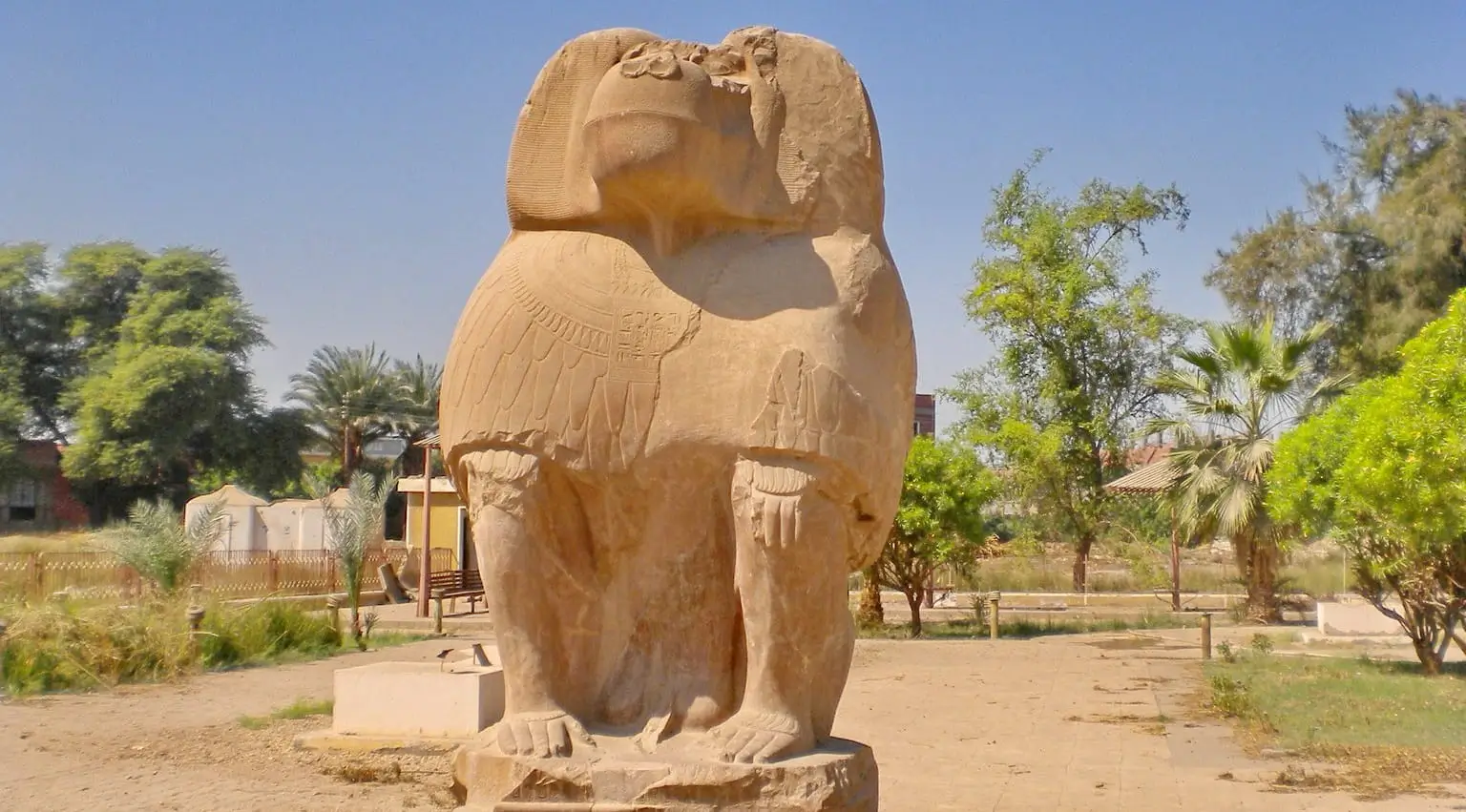
The most striking feature of El Ashmunein today is the pair of colossal baboon statues. These massive monuments date back to the reign of Amenhotep III in the 18th Dynasty. They stand as the largest representations of baboons ever discovered in Egypt. Each statue measures approximately 4.5 meters in height. They originally flanked the entrance to the Temple of Thoth.

El Ashmunein: Symbolism of the Baboon

In ancient Egyptian belief, the baboon was a sacred animal of Thoth. These primates often appear in art, greeting the rising sun with their cries. Consequently, the priests linked them to solar cycles and the measurement of time. These statues served as guardians of wisdom. They protected the sacred knowledge kept within the temple walls.

El Ashmunein: Artistic Mastery and Scale

The detail on these statues remains remarkably clear despite thousands of years of erosion. Sculptors carved them from massive blocks of quartzite. This stone was difficult to work with but extremely durable. Indeed, the use of such high-quality material reflects the immense wealth of the New Kingdom. Visitors can still see the stylized fur and the powerful posture of the animals.

Furthermore, these colossi provide a vital link to the Amarna period. Because Amenhotep III was the father of Akhenaten, these statues predate the religious revolution nearby. Ultimately, they stand as silent witnesses to the shifting sands of Egyptian theology. They offer a perfect subject for photography and a deeper understanding of animal worship in the Nile Valley.

FUN

The Ogdoad: The Primordial Eight of Creation

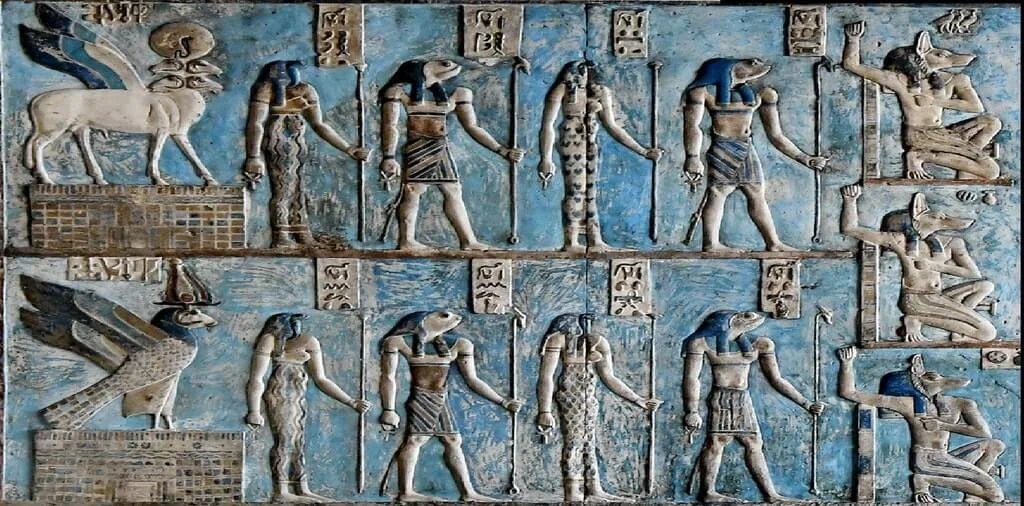
The Theological Foundation The Hermopolis Creation Story - Ogdoad

To understand El Ashmunein, one must grasp the Ogdoad cosmology developed by its ancient priesthood. This system centered on four pairs of deities who represented the primeval forces of the universe before the world began. Each pair consisted of a male god, depicted as a frog, and a female goddess, depicted as a snake.

The Elements of Chaos

These eight deities worked in harmony to bring forth the sun god and create order from chaos. The pairs represented specific abstract concepts:

  • Nun and Naunet: These deities embodied the primordial, infinite waters.
  • Heh and Hauhet: This pair represented the concept of infinity or boundless space.
  • Kek and Kauket: These figures symbolized the darkness that existed before light.
  • Amun and Amaunet: This pair represented the “hiddenness” or the invisible power of the air.

The Spiritual Heart of the City

The priests of Hermopolis believed that the “Island of Flame” rose from the waters of El Ashmunein as the first piece of land. Furthermore, they taught that the cosmic egg was laid here, hatching the sun to illuminate the world. Indeed, this deep philosophical tradition made the city a center for pilgrims and scholars for centuries.

In addition to its religious weight, the Ogdoad myth influenced later Greco-Roman philosophies. Because the Greeks associated Thoth with their god Hermes, they renamed the city Hermopolis Magna. This connection allowed the ancient wisdom of the “City of the Eight” to survive and merge with the Hellenistic world.

Ain Sokhna: Your Quick Guide to Cairo’s Red Sea Paradise

Discover Ain Sokhna, Cairo's closest Red Sea paradise, located just 1.5 hours away. This stunning...
Related post
FUN

The Greco-Roman Legacy: The Basilica and the Agora

The Greco-Roman Legacy The Basilica and the Agora

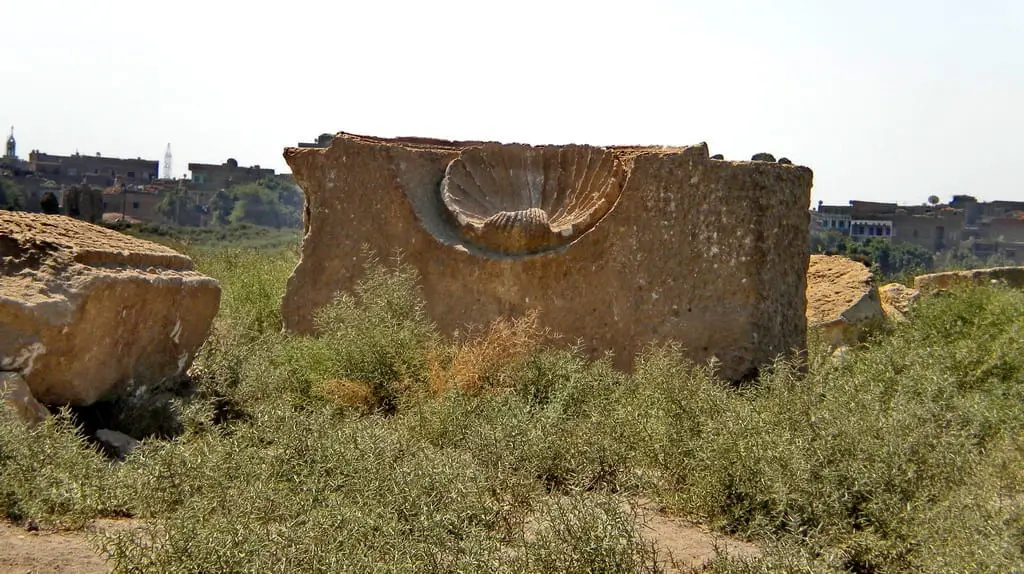
As the centuries passed, El Ashmunein evolved from a Pharaonic cult center into a thriving Greco-Roman metropolis. This era left behind some of the most impressive ruins on the site today, including the massive Roman Basilica. Architects built this grand structure using stones from earlier Pharaonic temples, a common practice that blended different historical layers.

A Masterpiece of Classical Architecture

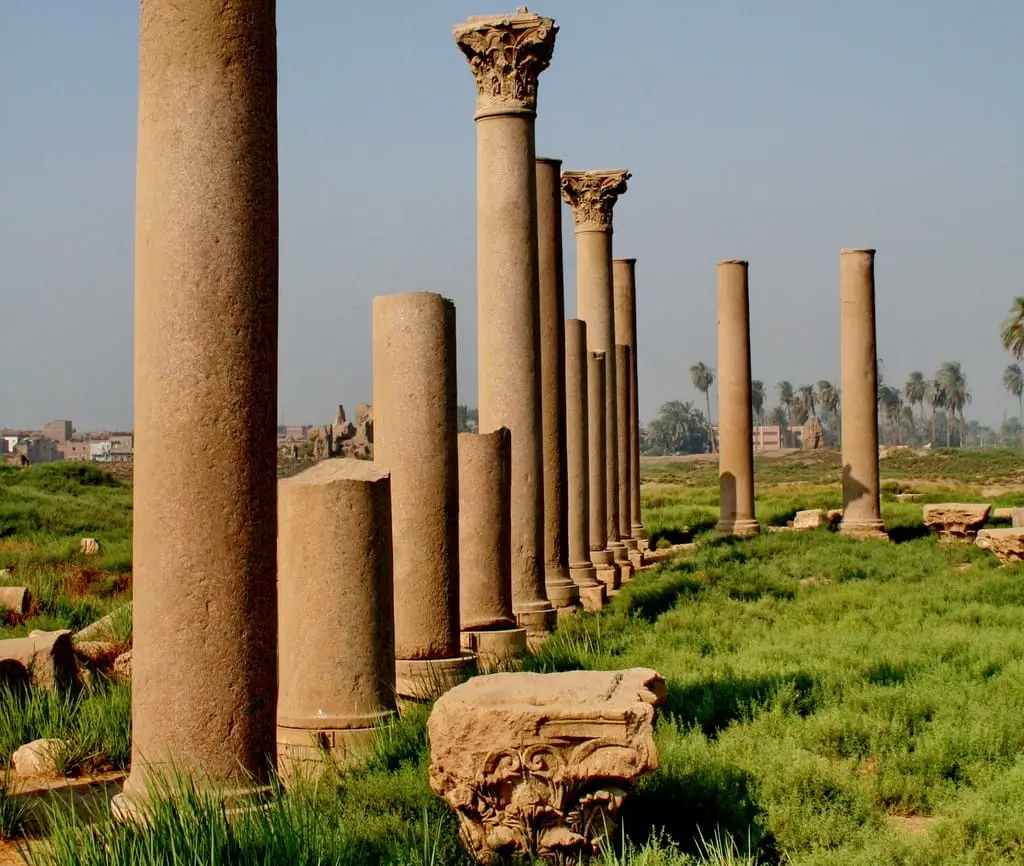
The Basilica stands as one of the best-preserved examples of Christian architecture in Middle Egypt. It features towering granite columns that once supported a massive roof, reflecting the city’s wealth during the late Roman period. Furthermore, the presence of such a large church highlights the transition from the worship of Thoth to the rise of Christianity in the region.

The Agora and Civic Life

Adjacent to the religious structures lay the Agora, or the central marketplace. This area served as the heart of public life in Hermopolis Magna. Residents gathered here to trade goods, discuss philosophy, and manage the city’s administration. Indeed, the layout of the Agora reveals how the Greeks and Romans integrated their civic traditions into the ancient Egyptian landscape.

Because these ruins sit near the Pharaonic baboon statues, visitors can literally walk through time. You can see how the “City of the Eight” adapted to new rulers while maintaining its status as a center of learning. Ultimately, the Greco-Roman remains ensure that El Ashmunein remains a critical site for understanding the late history of the Nile Valley.

Amarna: The Complete Guide to Akhenaten’s Ancient Sun City

Amarna was the revolutionary capital of King Akhenaten during the 14th century BCE. Specifically, it...
Related post
FUN

The Boundary Stela: A Bridge to Amarna

The Boundary Stela A Bridge to Amarna

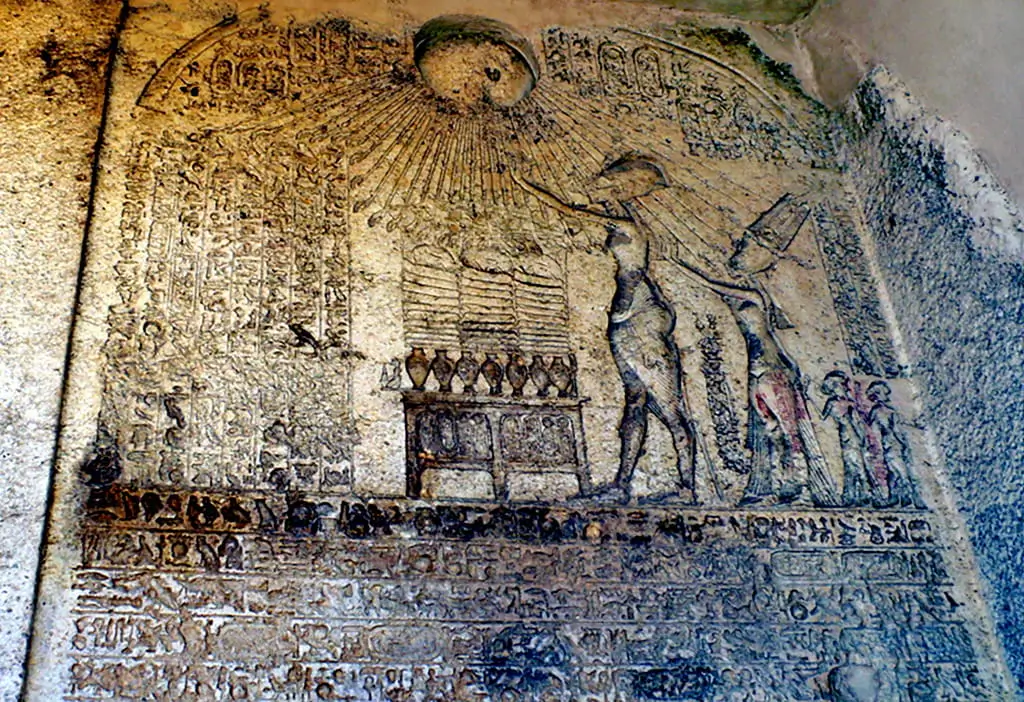
A significant historical marker near El Ashmunein is one of the Boundary Stelae of Akhenaten. This monument serves as a crucial link between the city of Thoth and the religious revolution of the Amarna period. These stelae were carved into the limestone cliffs to mark the official borders of Akhetaten, the “Horizon of the Aten”.

Marking the Sacred Limits

The stela near Hermopolis is part of a series that defined the sacred territory of Akhenaten’s new capital. Indeed, it stands as a physical record of the Pharaoh’s decree to abandon traditional gods in favor of the sun disc, the Aten. The inscriptions often depict Akhenaten and his family offering to the Aten, showcasing the radical shift in art and theology.

Historical Significance

Furthermore, this stela highlights the geographic importance of the region during the 18th Dynasty. Because El Ashmunein sat so close to the borders of Amarna, it witnessed the tension between the ancient priesthood of Thoth and the royal court. Ultimately, exploring this boundary marker provides a broader perspective on the political and spiritual landscape of Middle Egypt.

Farafra Oasis: Egypt’s Most Isolated and Traditional Oasis

Discover Farafra, the most isolated and least populated oasis in Egypt's Western Desert. This guide...
Related post
FUN

Planning Your Visit: Logistics for El Ashmunein

Planning Your Visit Logistics for El Ashmunein

Integrating El Ashmunein into a Middle Egypt itinerary requires careful planning to maximize the experience. This site is best visited as part of a day trip from the city of Minya. Most travelers combine it with the nearby necropolis of Tuna el-Gebel due to their close historical and geographic connection.

The Best Time to Visit

The climate in Middle Egypt can be intense, especially during the summer months. Consequently, the best time to explore the ruins is between October and April. During this window, the weather is mild enough for walking through the open-air sites. Aim to arrive in the early morning to capture the best light on the colossal baboon statues and avoid the midday heat.

Getting There and Transportation

Because El Ashmunein is located approximately 45 kilometers south of Minya, private transportation is the most efficient option. Professional tour operators typically organize air-conditioned vehicles for the journey. The drive takes about an hour, passing through scenic agricultural landscapes along the Nile Valley.

Professional Tour Tip

In addition to the main ruins, ensure your guide explains the transition between the Pharaonic and Greco-Roman sections. Understanding the “recycled” stones in the Roman Basilica adds a layer of depth to the visit. Ultimately, providing your clients with a clear narrative of the Ogdoad before they arrive will make the physical ruins of the “City of the Eight” much more meaningful.

Explore the Giza pyramids, the Step Pyramid, the Egyptian museum, and the citadel, then catch your flight back....
Experience a magical 15-day Egypt Christmas holiday, exploring ancient wonders and vibrant culture along the Nile! Book now!...
FUN
God_Anubis_Icon

The best holiday ever!

The Nile cruise, Luxor, and Aswan were amazing sites to see, especially when you have the best tour guide in Egypt. Hamada was absolutely fantastic, lots of information, and some of it not spoken by others. This guy was not only a simple tour guide for us, but he also

More »

Well Done

All aspects of the experience were considered and well taken care of. Knowledgeable and friendly guide and organized itinerary.

More »

AMAZING Layover Tour

We had the MOST amazing layover tour with Egypt Fun Tours. Hanni was amazing, and we loved every moment. Pyramids, authentic food, and Islamic Cairo – amazing!

More »
Amazing Egypt Tours Vacations in December Egypt Fun Tours

Amazing trip with Egypt Fun Tours

We had the time of our lives on a trip to Egypt and the Bahariya/White Desert with Egypt Fun Tours, too. I would highly recommend this company. They are very familiar with organizing this trip, and this means they are well-connected in the desert area. This was invaluable to us

More »
God_Anubis_Icon

Top-rated Tour Packages

God_Anubis_Icon