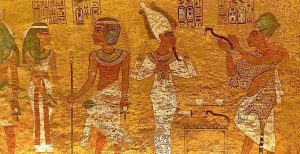
The Ultimate Guide to Qena: Egypt’s Heart of Ancient Wonders

Situated at a dramatic bend in the Nile, Qena serves as the vital bridge between Egypt’s prehistoric dawn and its Greco-Roman architectural peaks. While often overlooked by those rushing toward the monuments of Luxor, this province holds some of the most impeccably preserved treasures in the world. From the Dendera Temple Complex, where 2,000-year-old astronomical ceilings still glow with their original Egyptian Blue pigment, to the ancient grounds of Naqada, the archaeological cradle of Pharaonic civilization, Qena offers a journey through time that is both deep and vividly colorful. Whether you are exploring the mysterious "Dendera Light" in subterranean crypts or witnessing the living heritage of Sufi traditions at the Sidi Abdel Rahim Mosque, Qena provides an authentic, immersive look at the soul of Upper Egypt. This guide explores the monuments, history, and local secrets that make Qena an essential destination for every serious explorer.

The Heart of Upper Egypt: An Introduction to Qena and Dendera

When travelers think of the Nile, their minds often drift immediately to the colossal ruins of Luxor or the golden dunes of Aswan. Indeed, many bypass the province of Qena entirely, seeing it only as a blur of palm trees from a train window. However, for those who seek the true soul of Egyptian history—where the colors of antiquity still glow on temple ceilings and the roots of civilization reach back to the dawn of time—Qena is the ultimate destination.

Situated at a strategic bend in the Nile, Qena serves as more than just a modern administrative hub. It is a gateway between worlds. To the west lies the Dendera Temple Complex, a site so perfectly preserved that it feels as though the priests of Hathor only recently departed. To the south lies Naqada, the archaeological cradle where the very concept of “Ancient Egypt” began to take shape thousands of years before the first stone of the Great Pyramid was laid.

Furthermore, Qena offers a rare glimpse into the living heritage of Egypt. From the spiritual majesty of the Sidi Abdel Rahim Al-Qenawi Mosque to the traditional pottery workshops that have fueled the region’s economy for millennia, the city represents a continuous thread of human story. Whether you are a dedicated Egyptologist, a spiritual seeker, or a family of explorers, Qena provides an immersive experience that is both ancient and vibrantly alive.

Why Qena is the “Pillar” of Middle Egypt

Qena’s importance stems from its unique geography. Because the Nile takes a sharp turn here, the city historically controlled the most direct routes to the Red Sea via the Wadi Hammamat. This made it a wealthy center of trade, gold mining, and artistic exchange. Ultimately, this wealth allowed for the construction of monuments like the Temple of Hathor, which stands today as a testament to the sheer artistic brilliance of the Ptolemaic and Roman eras.

In this guide, we will journey through the vivid blue astronomies of Dendera, uncover the prehistoric mysteries of Naqada, and explore the bustling streets of a city that remains one of Egypt’s best-kept secrets.

FUN

The Crown Jewel: The Dendera Temple Complex

The Crown Jewel The Dendera Temple Complex

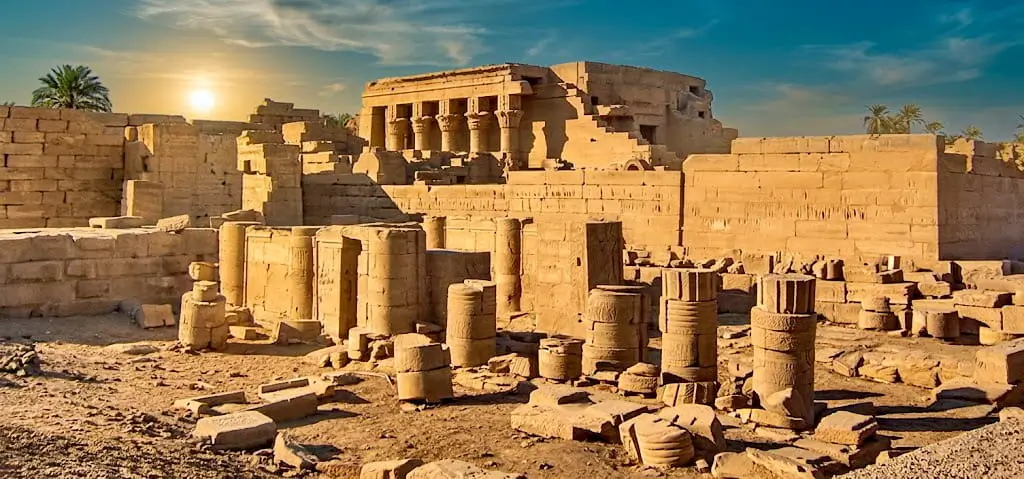
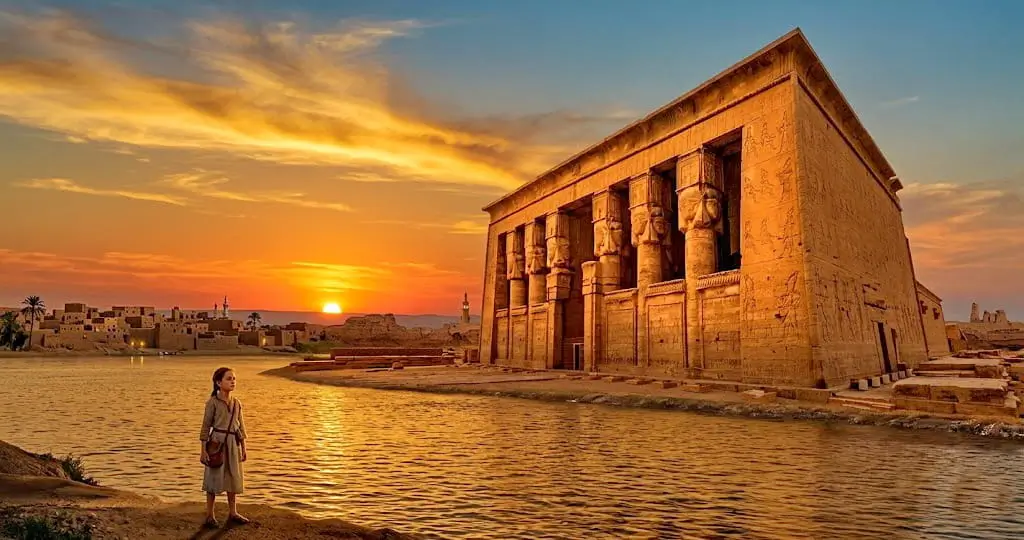
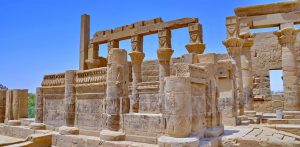
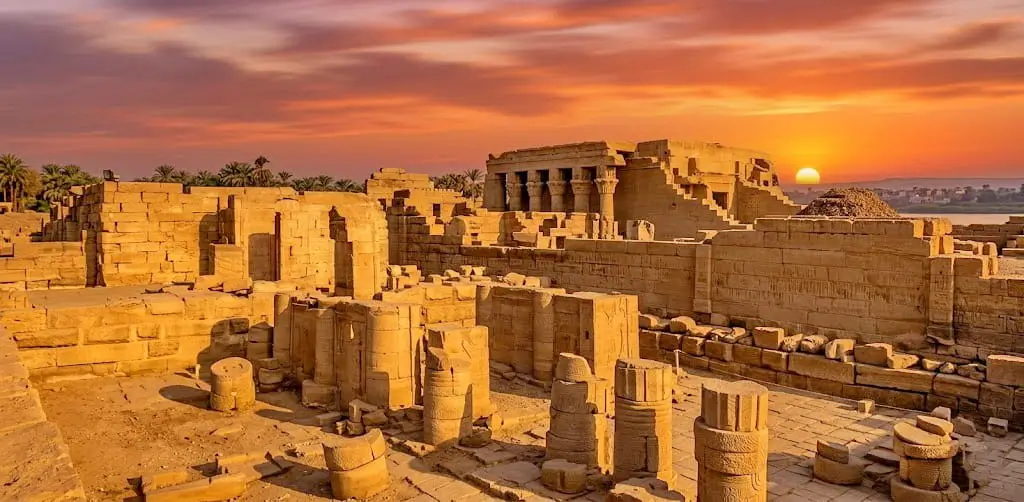
The Dendera Temple Complex stands as one of the most significant archaeological sites in the Nile Valley, largely because it escaped the heavy erosion and destruction that weathered other ancient structures. While the site contains several shrines and a sacred lake, the centerpiece remains the spectacular Temple of Hathor. This temple honors the goddess of love, beauty, and music, and its architecture reflects her joyful nature through towering columns topped with her serene, cow-eared face.

The Temple of Hathor: A Masterpiece of Color

Stepping into the great hypostyle hall of the Temple of Hathor often takes a visitor’s breath away. Unlike the bleached stone found at many other sites, the ceilings here vibrantly showcase the “Egyptian Blue” pigment that has survived for over two millennia. Indeed, a massive cleaning project recently removed centuries of soot and debris to reveal astronomical scenes that appear almost as fresh as the day they were painted. These ceilings depict the sky goddess Nut swallowing the sun at night and giving birth to it at dawn, surrounded by the boats of the hours and celestial bodies.

Reading the Stars: The Dendera Zodiac

On the roof of the temple, within a small chapel dedicated to Osiris, travelers find one of the most famous artifacts in the world: the Dendera Zodiac. This circular map of the stars represents a fascinating blend of Egyptian and Greco-Roman astronomy. Furthermore, it contains the recognizable signs of the zodiac we use today, such as Taurus and Scorpio, mixed with ancient Egyptian constellations. While the original stone map now resides in the Louvre Museum in Paris, the high-quality replica in the temple allows visitors to see exactly how the ancients viewed their place in the universe.

The Mystery of the Dendera Light and Hidden Crypts

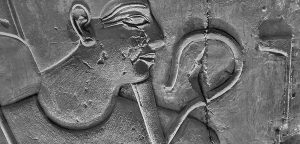
For those who enjoy a bit of mystery, the hidden subterranean crypts of Dendera offer a unique experience. Unlike many temples where the lower chambers are closed to the public, here you can descend into narrow, beautifully carved passages. Because these rooms were used to store precious ritual objects and statues, the carvings are incredibly detailed. In one of these crypts, you will find the famous reliefs that some call the “Dendera Light.” These carvings show a lotus flower giving birth to a snake inside a transparent bubble, which represents the renewal of the sun, though its strange shape continues to spark the imagination of modern visitors.

Cleopatra VII and the Legacy of the Queens

Cleopatra VII and the Legacy of the Queens

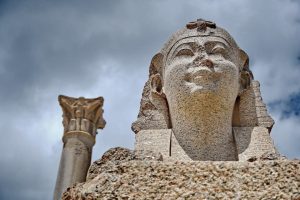
The exterior rear wall of the temple holds a massive historical treasure: a giant relief of Cleopatra VII and her son, Caesarion. This is one of the few places in Egypt where you can see a definitive depiction of the famous queen carved during her lifetime. She appears here in her role as a traditional pharaoh, offering incense to the gods to ensure the prosperity of her kingdom. Ultimately, this wall serves as a final, powerful image of the Ptolemaic dynasty before Egypt became a province of Rome.

FUN

Spiritual Majesty: The Sidi Abdel Rahim Al-Qenawi Mosque

Spiritual Majesty The Sidi Abdel Rahim Al-Qenawi Mosque

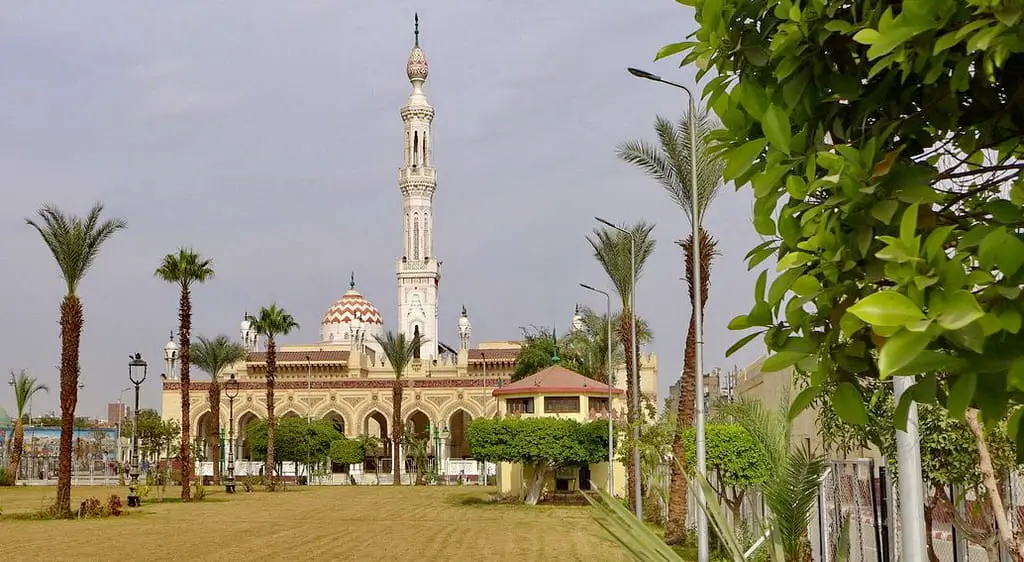
While the ancient temples draw many to the outskirts of the city, the heart of Qena beats within its vibrant Islamic heritage. The most significant landmark in the modern city is the Sidi Abdel Rahim Al-Qenawi Mosque. This architectural masterpiece serves as a spiritual anchor for the region and stands as a testament to Qena’s long-standing importance as a center for Sufism and religious scholarship.

The Legacy of a Sufi Saint

The mosque honors Sidi Abdel Rahim Al-Qenawi, a 12th-century Moroccan scholar and Sufi saint who settled in Qena after a long journey through the Islamic world. He became beloved by the local population for his wisdom and piety, eventually becoming the city’s patron saint. Because of his lasting influence, his tomb within the mosque remains a major site of pilgrimage. Every year, thousands of people gather for his Moulid (festival), a celebration filled with traditional music, chanting, and a shared sense of community that brings the streets of Qena to life.

Architectural Splendor and Design

The mosque itself is a beautiful example of Islamic design, featuring a large, ornate dome and soaring minarets that define the city’s skyline. Inside, the prayer hall contains intricate geometric patterns and fine woodwork that reflect the artistic dedication of the craftsmen. The atmosphere provides a quiet, cool refuge from the desert heat, allowing visitors to appreciate the peaceful side of Egyptian life. Furthermore, the large plaza surrounding the mosque acts as a gathering place for locals, emphasizing the role of the mosque as both a religious site and a social hub.

Ain Sokhna: Your Quick Guide to Cairo’s Red Sea Paradise

Discover Ain Sokhna, Cairo's closest Red Sea paradise, located just 1.5 hours away. This stunning...
Related post
FUN

The Archaeological Roots: Naqada and Deir el-Ballas

The Archaeological Roots Naqada and Deir el-Ballas

To understand the full depth of history in the Qena Governorate, one must travel a short distance from the city center to the sites of Naqada and Deir el-Ballas. These locations offer a starkly different experience from the towering stone walls of Dendera, as they represent the very beginnings of Egyptian statehood and the survival of a royal dynasty during times of war.

Naqada: The Cradle of Civilization

Naqada is one of the most important archaeological sites in the world for understanding the “Pre-Dynastic” period. Long before the unification of Egypt under a single Pharaoh, the people of Naqada developed complex burial customs, unique pottery, and social structures that would eventually become the hallmarks of Pharaonic culture. Indeed, archaeologists use the “Naqada I, II, and III” classifications to map the evolution of Egyptian society. Visitors and scholars alike find Naqada fascinating because it reveals the “blueprint” of Egypt, showing how early people transitioned from small farming communities into a powerful, organized empire.

Deir el-Ballas: The Palace of the Liberators

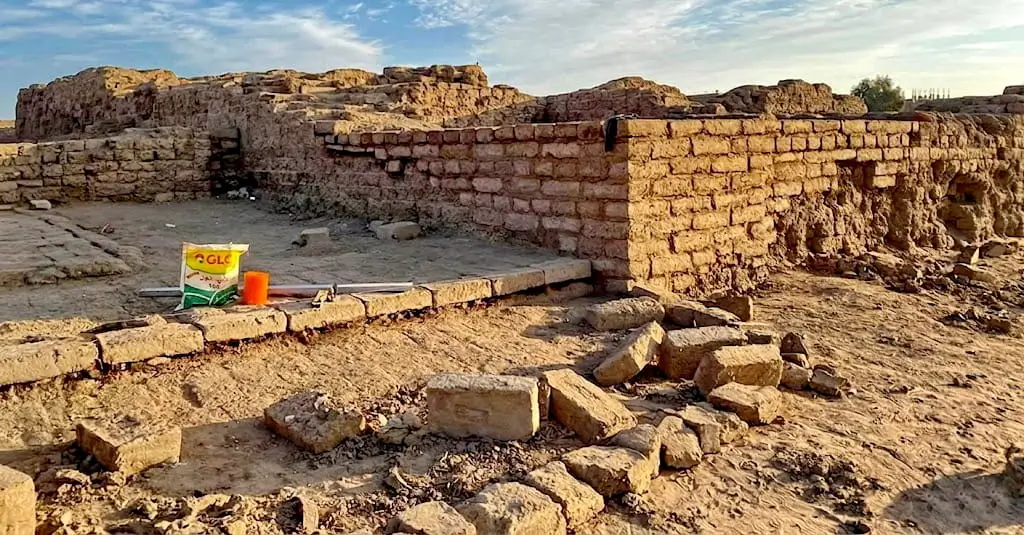
Located north of Qena, Deir el-Ballas served a critical role during the Second Intermediate Period. This site contains the ruins of a royal palace used by the Theban kings, such as Seqenenre Tao and Ahmose I, during their campaign to expel the Hyksos invaders from Egypt. Unlike the eternal stone temples, Deir el-Ballas consists largely of mud-brick structures, including the remains of a “North Palace” and worker settlements. Exploring this area provides a rare look at domestic and military life during one of Egypt’s most turbulent and heroic eras. Ultimately, these ruins remind us that Qena was often at the front lines of the struggle to keep Egypt united and free.

The Anfushi Tombs: Alexandria’s Subterranean Art Gallery

The Anfushi Tombs represent a rare artistic bridge where the Greek spirit met the Egyptian...
Related post
FUN

Cultural Heritage and Local Life in Qena

Cultural Heritage and Local Life in Qena

Beyond the ancient stones and sacred sites, Qena offers a rich tapestry of living culture that connects the modern city to its historic roots. Engaging with the local lifestyle provides a deeper understanding of how the people of Upper Egypt have thrived for generations, utilizing the natural resources of the Nile and the traditions passed down through their ancestors.

The Artisans of Qena: Traditional Pottery

Qena is famous throughout Egypt for its unique “Qenawi” pottery. For centuries, local craftsmen have used a specific type of porous clay found in the region to create traditional water jars known as kolal. These jars are a marvel of ancient engineering; the clay allows a tiny amount of water to evaporate through the surface, which naturally cools the liquid inside. Even in the height of the summer heat, a kolla keeps water refreshingly cold without the need for electricity.

Visiting a local pottery workshop allows you to see the incredible speed and skill of the potters as they shape the clay on spinning wheels. Because this craft remains a vital part of the local economy, it serves as a beautiful example of how ancient techniques still solve modern problems.

The Nile Corniche: The City’s Social Heart

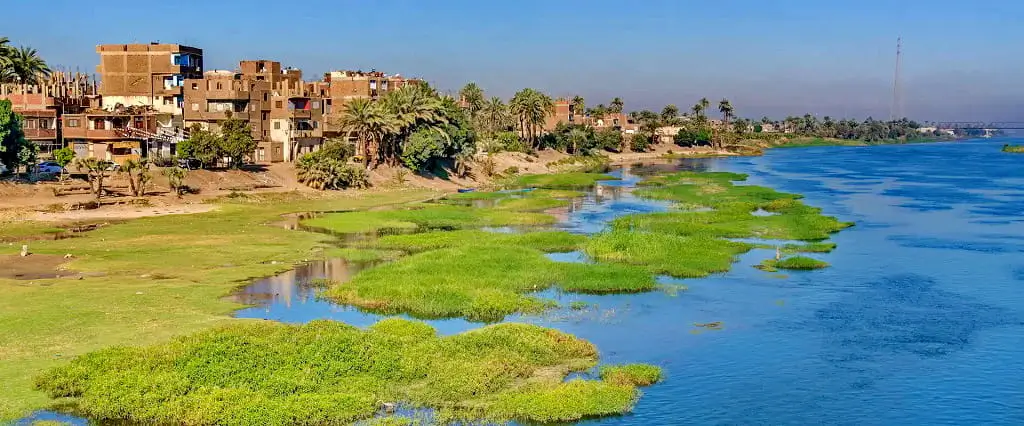
The Nile River remains the centerpiece of life in Qena. The city has developed a beautiful, landscaped Corniche—a long walkway along the riverbank that serves as the primary social destination for families and travelers alike. In the late afternoon, as the sun begins to set, the Corniche comes alive with people enjoying the cool breeze.

Taking a ride in a traditional felucca (a wooden sailing boat) is one of the best ways to experience the river. As you glide along the water, you can view the lush green agricultural land that lines the banks, providing a sharp and beautiful contrast to the golden desert cliffs in the distance. Indeed, the Corniche offers a peaceful space to reflect on the city’s history while watching the timeless flow of the Nile.

Alexandria: The Pearl of the Mediterranean

Discover Alexandria, the "Pearl of the Mediterranean." This legendary city, founded by Alexander the Great...
Related post
FUN

Practical Travel Tips: Visiting Qena and Dendera
Practical Travel Tips Visiting Qena and Dendera

Planning a successful trip to Qena requires a bit of strategy to ensure you see everything while staying comfortable in the Upper Egyptian climate. Whether you are arriving from Luxor or Hurghada, these tips will help you navigate the region like an expert.

Getting There and Around

Qena is exceptionally well-connected to other major Egyptian cities. The train station in the city center is a major stop for the Nile Valley railway, making it easy to reach from Cairo or Luxor. Furthermore, many travelers choose to visit Qena as a day trip from Luxor, which is only about an hour’s drive away.

Once you arrive in the city, taxis and microbuses are the most common ways to get around. To reach the Dendera Temple Complex, which is located on the west bank of the Nile opposite the city, you can hire a private car or take a short taxi ride across the Qena Bridge.

The Best Time to Visit

The climate in Qena is typical of the desert, with very hot summers and mild, pleasant winters. To get the most out of your visit, plan your trip between October and April. During these months, the temperatures are perfect for exploring the unshaded ruins of Dendera and Naqada without the intense heat of the midday sun. Because the Temple of Hathor has an intact roof, it remains surprisingly cool inside, but the walk between the different monuments in the complex still requires sun protection and plenty of water.

What to Wear and Carry

When visiting religious sites like the Sidi Abdel Rahim Al-Qenawi Mosque, it is important to dress modestly out of respect for local customs. For the archaeological sites, comfortable walking shoes are a must, as the terrain can be uneven and sandy. Additionally, always carry small change in Egyptian Pounds for entrance fees or local purchases at the pottery stalls. Ultimately, a little preparation ensures that your journey through Qena is as smooth and rewarding as the history it holds.

FAQs: Exploring Qena and Dendera

To wrap up this comprehensive guide, we have gathered the most common questions travelers ask when planning a visit to this historic region. These insights will help you fine-tune your itinerary and ensure you don’t miss any of the hidden details that make Qena so special.

Is the Dendera Temple better than the temples in Luxor?

While “better” is subjective, Dendera offers an experience that Luxor cannot: incredible preservation. Because the main temple has an intact roof, you get a true sense of the enclosed, mystical atmosphere ancient worshippers felt. The colors in Dendera are also significantly more vivid than those at Karnak or Luxor Temple. If you love photography and astronomical art, Dendera is unmissable.

Can you visit the “Dendera Light” crypts?

Yes, the crypts are generally open to the public. However, they are very narrow and require crouching to enter. If you are claustrophobic, you may want to skip the descent, but for everyone else, seeing the mysterious “lightbulb” reliefs in person is a highlight of the trip.

How much time do I need in Qena?

A dedicated day trip is usually enough to see the Dendera Temple and the Sidi Abdel Rahim Mosque. However, if you are a deep history enthusiast wanting to explore Naqada and Deir el-Ballas, we recommend staying overnight or planning two separate day trips from Luxor.

Is it safe to travel to Qena?

Qena is a very safe city for international travelers. Like much of Upper Egypt, the local population is exceptionally hospitable. You will often find that because Qena sees fewer tourists than Cairo or Luxor, the locals are even more welcoming and curious to share their culture with you.

What is the significance of the blue paint in Dendera?

The “Egyptian Blue” used on the ceilings was a synthetic pigment made from a mixture of silica, lime, copper, and alkali. It was highly prized because it did not fade easily. At Dendera, the lack of exposure to direct rain and the protection provided by the roof kept these pigments from oxidizing, allowing us to see the exact shades used by ancient artists.

The Timeless Allure of Qena

Qena remains a place where the layers of time are visible to the naked eye. From the prehistoric foundations of Naqada to the Greco-Roman artistic peaks of Dendera, and into the thriving spiritual and artisan traditions of today, the city offers a complete narrative of the human experience in Egypt.

By stepping off the beaten path and dedicating time to this province, you gain more than just photos of ruins; you gain an understanding of the continuity of life along the Nile. Whether you are looking up at the ancient stars on a temple ceiling or watching a potter shape the local clay, Qena reminds us that the past is never truly gone—it is simply the foundation for the present.


Discover Egypt in Cairo, Luxor, and Abu Simbel in 5 Days....
15 Days Deluxe Comprehensive Tour Package....
FUN
God_Anubis_Icon

Cairo Day Trip

Great trip organised. I had a 12-hour layover in Cairo and had a great time with Sherif, who answered every question I had on ancient Egypt. Highly recommend.

More »

Egypt Fun Tours makes the most out of your layover!

I had a really short layover in Cairo and didn’t want to be stuck in the Cairo Airport for several hours. It was like Mission Impossible: Egypt Fun Tours’ mission was to show me around Cairo during my short 5 hour layover which was made even shorter because my plane

More »

11 Wonderful Hours in Cairo

I had an 11 hour layover in Cairo, and it couldn’t have been better spent than with Manal from Egypt Fun Tours. I was able to adjust my tour once we left the airport and Manal had some really great suggestions when I told her what it was I wanted

More »
God_Anubis_Icon

Top-rated Tour Packages

God_Anubis_Icon