
The Fourth Dynasty of Egypt: The Golden Age of the Pyramid Builders

The Fourth Dynasty of Egypt (c. 2613–2494 BC) stands as the pinnacle of ancient architectural and administrative achievement, famously known as the "Age of the Pyramids." During this transformative era, pharaohs including Sneferu, Khufu, and Khafre perfected the construction of the true, smooth-sided pyramid, creating monumental wonders like the Great Pyramid of Giza. Beyond their engineering marvels, these rulers solidified a centralized state and the concept of divine kingship, leaving a legacy of artistic, cultural, and technological innovation that remains the definitive standard of Ancient Egyptian civilization.
The eye of Horus
WhatsApp
Email
Print

The Fourth Dynasty of ancient Egypt (c. 2613–2494 BC) represents the peak of pharaonic architectural ambition. Historians often call this era the “Age of the Pyramids.” It witnessed a massive shift in human engineering. The Third Dynasty laid the conceptual groundwork with the Step Pyramid of Djoser. However, the monarchs of the Fourth Dynasty—Sneferu, Khufu, Khafre, and Menkaure—perfected the form. They moved from terraced stone designs to the smooth-sided geometric giants that define the Giza Plateau.

These rulers created more than just stone monuments. They solidified divine kingship. The Pharaoh evolved from a powerful earthly ruler into a living god. Consequently, he became the cosmic pivot point responsible for maintaining Ma’at (order and harmony). Below, we explore how this civilization reached the height of its administrative, logistical, and religious power.

A Legacy of Grandeur: Defining the Fourth Dynasty of Egypt

To understand the Fourth Dynasty, we must view it as a concentrated burst of cultural and technical evolution. This period featured absolute centralization. Because the king controlled the nation’s immense resources, he could mobilize labor forces on a massive scale.

Historical Context: The Transition from the Third Dynasty

The transition between these two dynasties marked a shift in royal focus. Imhotep, Djoser’s architect, mastered stone architecture during the Third Dynasty. Yet, his successors continued to experiment with shape and structural integrity. King Sneferu began the Fourth Dynasty. He inherited a stable, wealthy kingdom that lacked a standardized architectural vision. Eventually, the dynasty created a permanent “formula” for the pyramid complex. This included the temple, the causeway, and the towering monument.

The Political and Social Landscape of the Old Kingdom

The Fourth Dynasty relied on a highly organized bureaucracy. The king appointed members of the royal family as viziers and high officials. This familial control ensured that the state managed resources with ruthless efficiency. Contrary to popular myths, the workforce likely consisted of highly skilled artisans and seasonal farmers. They viewed their work on the king’s tomb as a vital civic duty.
Divider

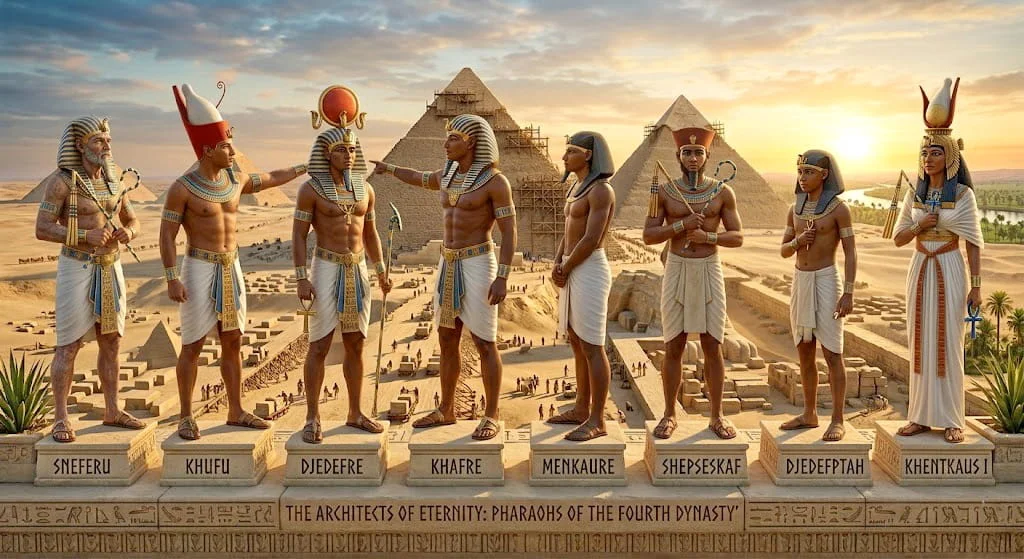
The Architects of Eternity: Pharaohs of the Fourth Dynasty

The Architects of Eternity Pharaohs of the Fourth Dynasty

We can track the trajectory of this dynasty through the monuments left by its kings. Each ruler attempted to surpass his predecessor. This “pyramid race” pushed the limits of limestone and granite.

Sneferu: The “Bringer of Beauty” and Father of the True Pyramid

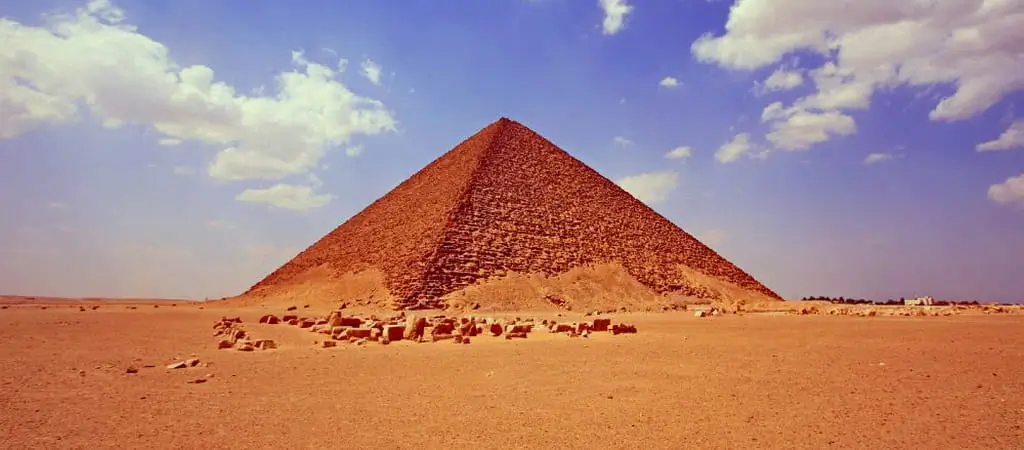
The Red Pyramid of Dahshur The World’s First Successful True Pyramid

Sneferu remains the most prolific builder in Egyptian history. He constructed at least three major pyramids: the pyramid at Meidum, the Bent Pyramid at Dahshur, and the Red Pyramid. Through trial and error, he successfully pioneered the “true” smooth-sided pyramid. Furthermore, his reign brought stability. He established trade routes for cedar from Lebanon and reinforced Egypt’s borders.

Khufu: Engineering the Great Pyramid of Giza

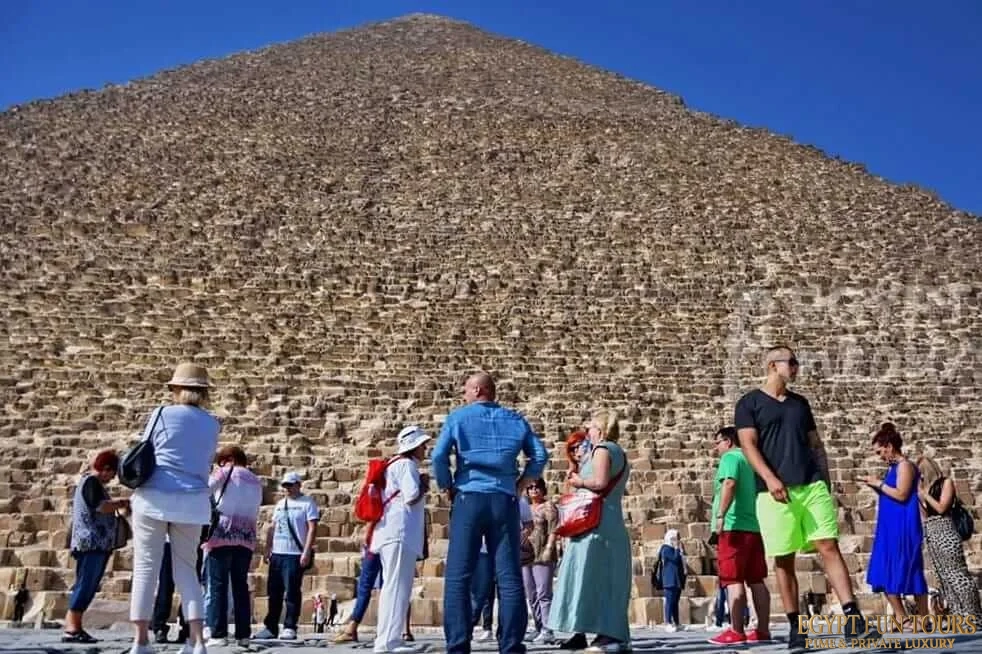
Full-Day Cairo Expedition; Giza Great Pyramid

Khufu, the son of Sneferu, applied his father’s lessons to the ultimate canvas: the Giza Plateau. The Great Pyramid reaches a height of nearly 147 meters. It serves as a testament to extraordinary precision. Its perfect orientation to true north and its massive scale demonstrate a sophistication in mathematics and logistics that still fascinates scientists today.

Djedefre: A Brief Interlude and Solar Theology

Khufu’s successor, Djedefre, often receives little attention due to his short reign. Nevertheless, he introduced a vital ideological shift. He was the first king to adopt the title “Son of Ra.” This title cemented the solar nature of the monarchy. He built his pyramid at Abu Rawash, signaling a new focus on the sun god’s cult.

Khafre: The Sphinx and the Second Giza Complex

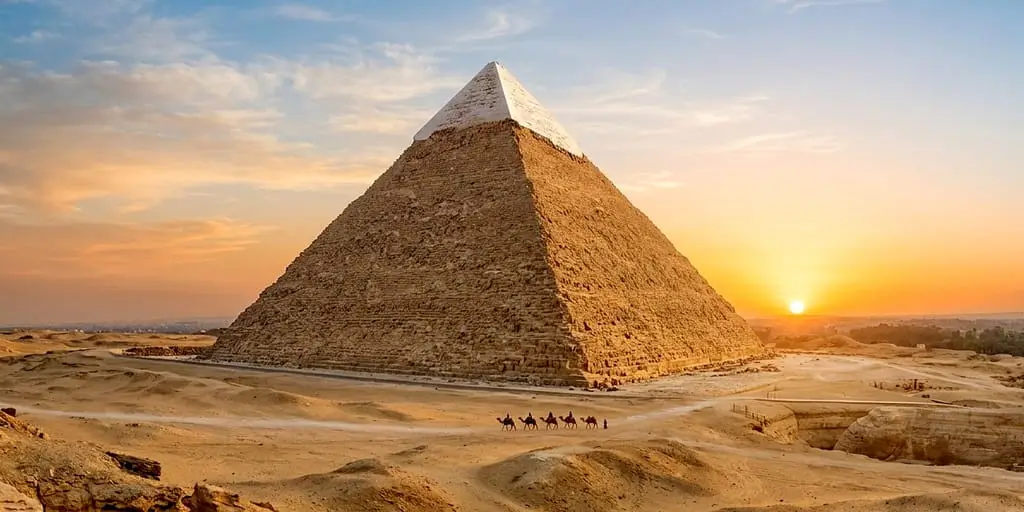
The Pyramid of Khafre; Discovering Giza’s Second Wonder

Khafre brought the royal focus back to Giza. We remember him for the second-largest pyramid and the Great Sphinx. This massive guardian statue was carved directly from a limestone outcrop. His complex features an intricate valley temple. Here, architects carefully orchestrated the transition from the mundane world to the sacred sphere of the dead.

Menkaure: The Final Monumental Pyramid

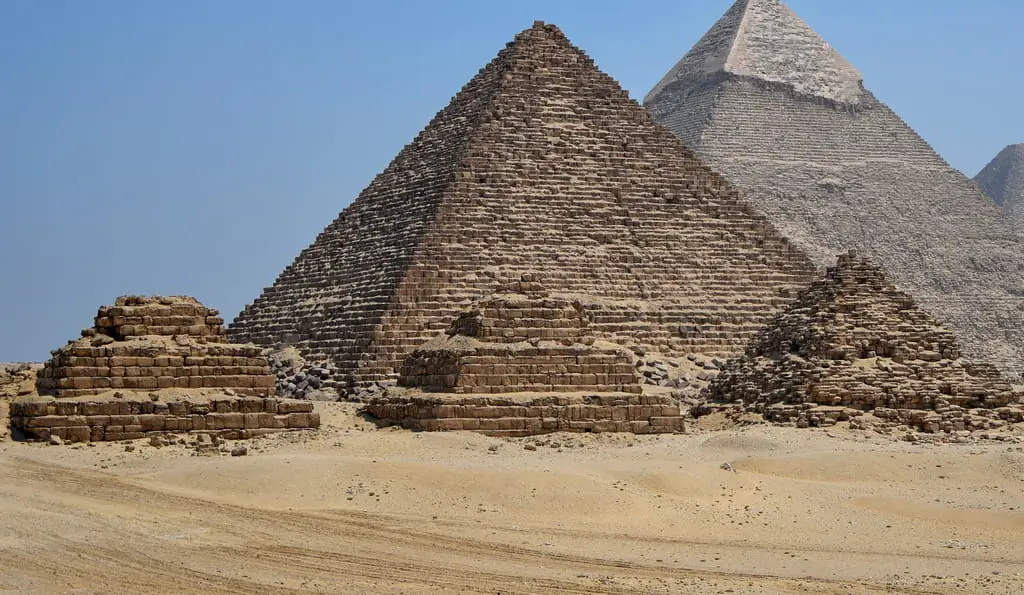
The Three Queens; The Satellite Pyramids of Menkaure

Menkaure’s pyramid at Giza is smaller than those of his predecessors. However, it remains famous for its exquisite craftsmanship, especially the red granite casing stones. His reign marks the end of the era of massive construction. At this point, the economic demands of these projects began to strain the state.

Shepseskaf: The Shift Toward the Mastaba

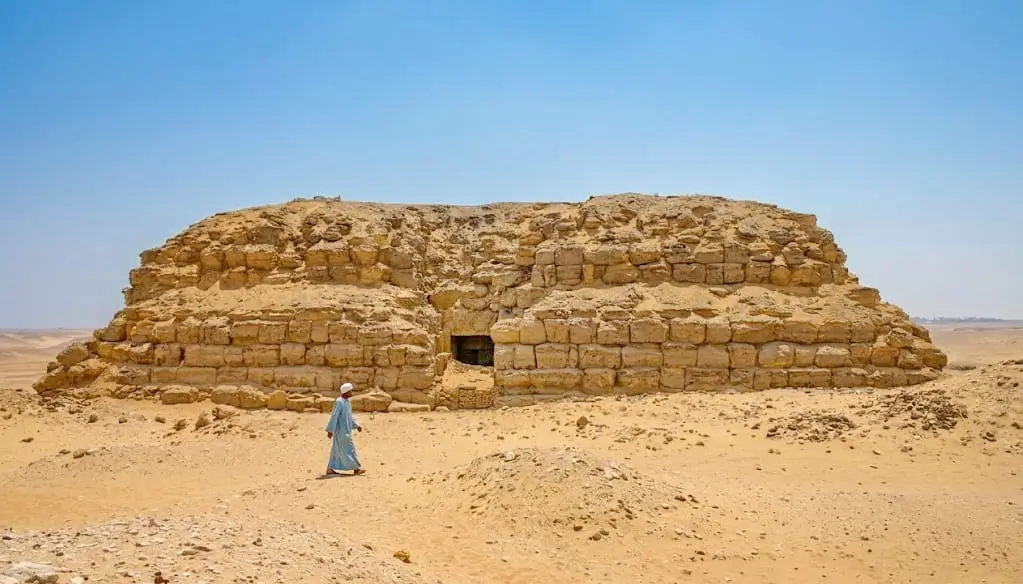
The Mastaba of Shepseskaf; A Deep Dive into Egypt’s Most Unique Royal Monument

Shepseskaf, the final ruler of the dynasty, broke the tradition of pyramid building. Instead, he built a massive, sarcophagus-shaped tomb called the Mastabat al-Fira’un at South Saqqara. This decision signifies a profound change in religious priorities. Effectively, it drew the curtain on the “Golden Age” of the Fourth Dynasty.

Golden Scarab

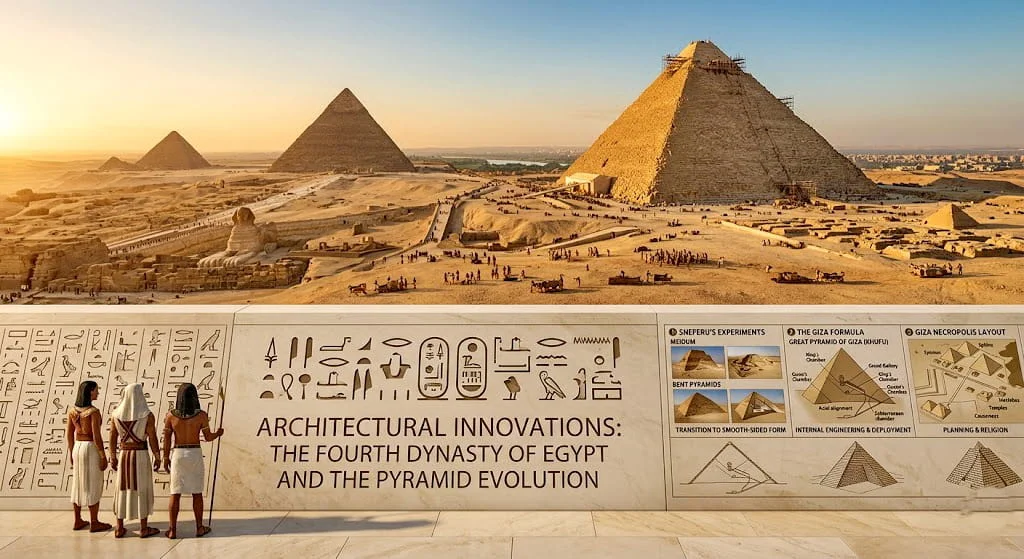
Architectural Innovations: The Fourth Dynasty of Egypt and the Pyramid Evolution

Architectural Innovations The Fourth Dynasty of Egypt and the Pyramid Evolution

The Fourth Dynasty of Egypt transformed the landscape of the Nile Valley. Architects moved beyond simple stone structures to achieve geometric perfection. This shift required unprecedented innovation in engineering, logistics, and planning.

From Step Pyramids to Smooth-Sided Masterpieces

Early builders utilized the step pyramid design. However, Fourth Dynasty architects desired a more symbolic shape. They aimed to represent the rays of the sun. Sneferu’s experiments at Dahshur proved crucial. His engineers learned how to adjust the angle of the walls to prevent collapse. Eventually, these refinements allowed them to build the first true, smooth-sided pyramids. This evolution represents a milestone in ancient civil engineering.

Engineering Feats: Materials, Labor, and Logistics

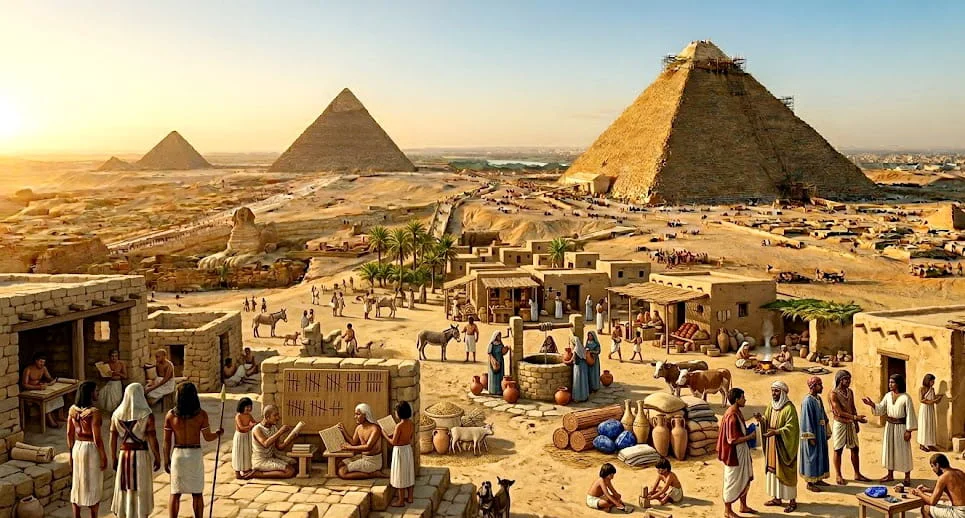
Constructing a pyramid required immense planning. First, officials sourced high-quality limestone from local quarries. For interior chambers, they transported massive granite blocks from Aswan, hundreds of miles away. A vast, seasonal workforce performed the labor. These workers lived in purpose-built settlements near the construction sites. They relied on a sophisticated supply chain to provide food and tools. Consequently, the state managed to coordinate thousands of people simultaneously.

The Giza Necropolis: A Blueprint for the Afterlife

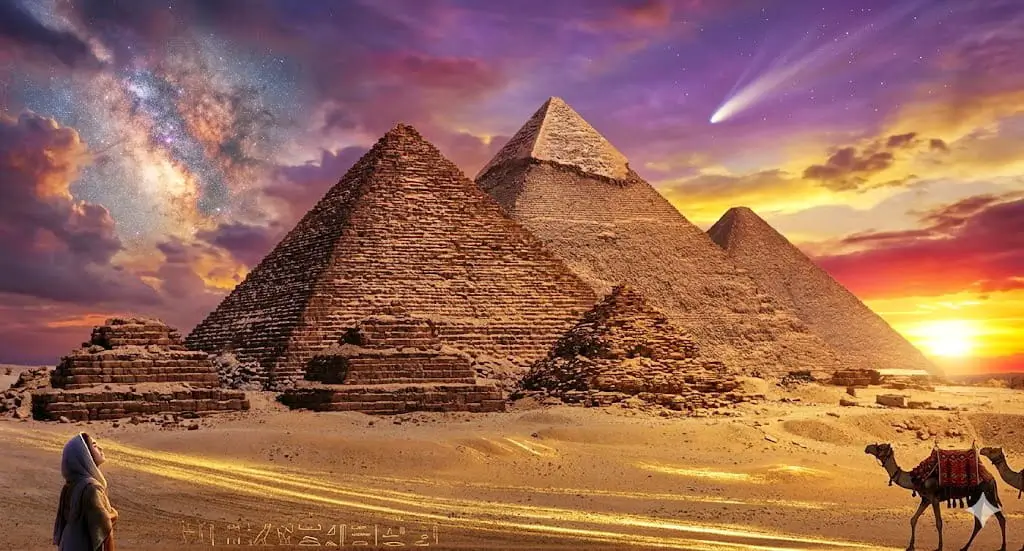
The Giza Plateau serves as the greatest architectural legacy of the Fourth Dynasty of Egypt. Kings designed these complexes as integrated units. Each complex included a pyramid, a mortuary temple, and a valley temple connected by a long causeway. These structures facilitated the king’s journey into the afterlife. Furthermore, they positioned the monuments to align with specific astronomical events. This layout reflects the deep connection between the monarchy and the divine cosmos.

Religious Shifts and Divine Kingship under the Fourth Dynasty of Egypt

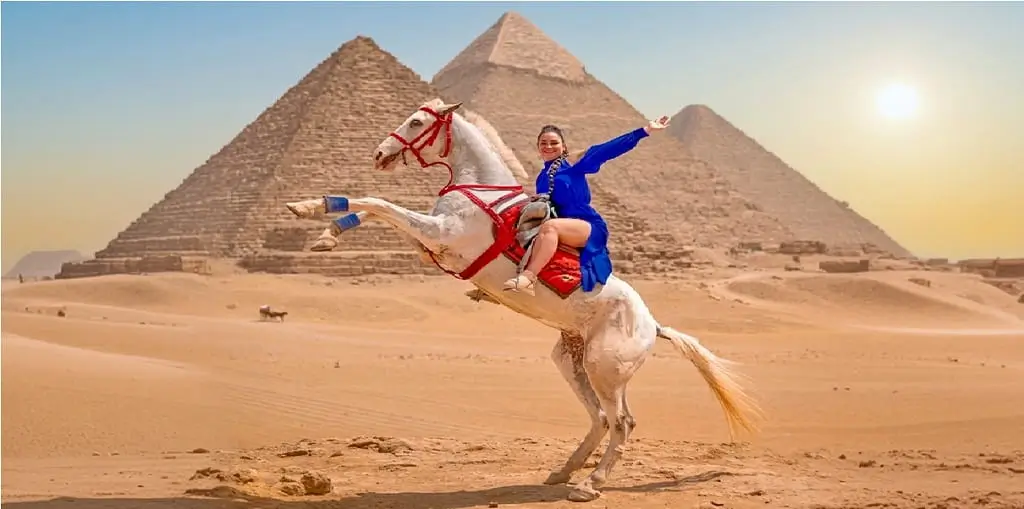
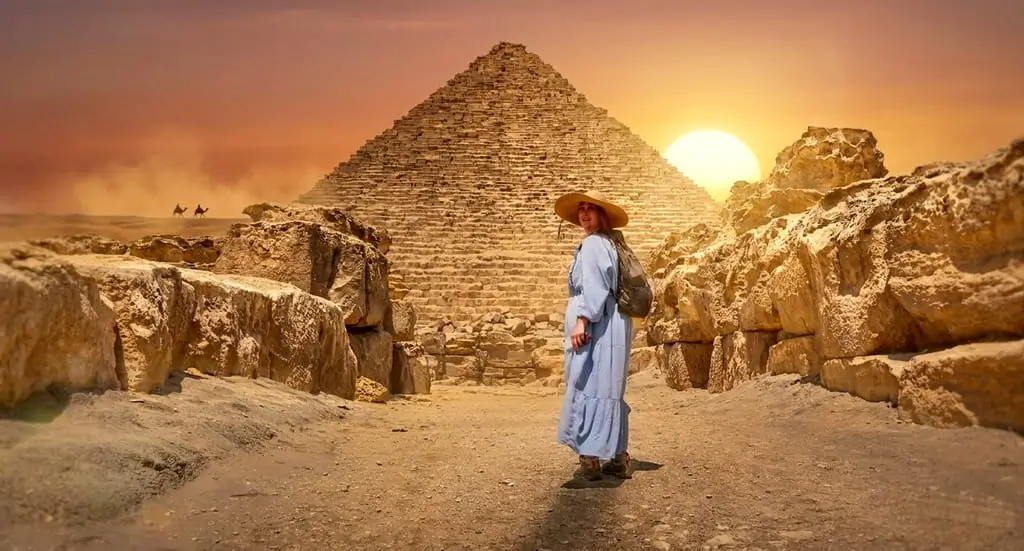
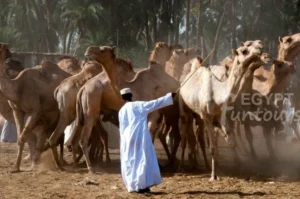
Giza Pyramids Private Tour, Sphinx, Camel, and Inside the Pyramid

The religious landscape evolved rapidly during this era. The state bureaucracy and the royal cults became inseparable.

The Rise of the Sun God Ra

The king’s status changed significantly during this period. Initially, monarchs were seen as powerful rulers. By the middle of the dynasty, they claimed a direct lineage to the sun god, Ra. This change influenced architecture and daily worship. The pyramid itself likely symbolized a ladder to the heavens, allowing the king to join the solar cycle.

The Changing Concept of the Afterlife for the Elite

Only the king achieved true divinity at first. However, the royal family and high officials soon sought their own place in eternity. They built elaborate mastaba tombs around the royal pyramid. These tombs were decorated with scenes of daily life. The elite hoped that these depictions would sustain them in the next world. Therefore, the Fourth Dynasty of Egypt established a pattern of burial that persisted for centuries.

The eye of Horus

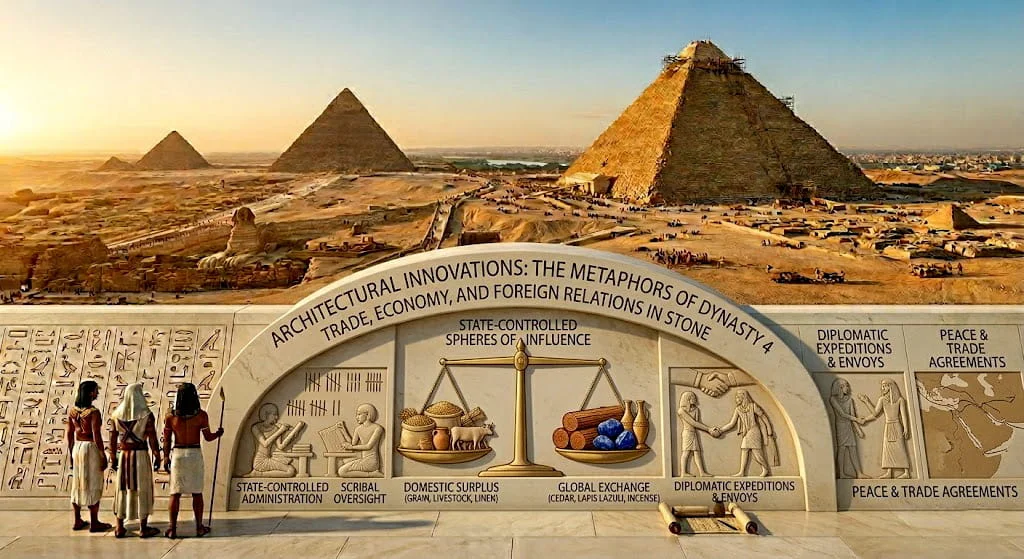
Trade, Foreign Relations, and the Economy of the Fourth Dynasty of Egypt

Trade, Foreign Relations, and the Economy of the Fourth Dynasty of Egypt

The Fourth Dynasty of Egypt was not an isolated kingdom. It was a thriving, expansionist power. To fuel their massive building projects, the monarchs required resources that the Nile Valley could not provide. Consequently, they established complex trade networks and military outposts that stretched far beyond their borders.

Expanding Borders: Expeditions to Nubia, Libya, and the Sinai

The Pharaohs frequently sent expeditions into neighboring territories. They sought precious materials to honor their gods and decorate their tombs. For example, they sent mining missions into the Sinai Peninsula to extract turquoise and copper. Meanwhile, they targeted the south for gold and unfamiliar goods from the African interior. These expeditions also served a strategic purpose. They maintained a buffer zone around Egypt, which ensured long-term security. These military and commercial ventures demonstrated the strength of the Egyptian state under the Fourth Dynasty of Egypt.

Resource Management and Centralized Administration

The government operated as a highly efficient machine. The royal court managed a central granary system to store surplus grain. This surplus effectively acted as the nation’s currency. It allowed the king to pay specialized laborers, architects, and administrators throughout the year. Because the administration was so centralized, the state could redirect national wealth toward royal projects at will. This economic control remains one of the most remarkable aspects of this era.

Life and Culture under the Fourth Dynasty of Egypt

Life and Culture under the Fourth Dynasty of Egypt

Behind the colossal monuments, a vibrant society flourished. We can learn about this life through the tomb paintings and artifacts left behind by the courtiers of the time.

The Role of Viziers and the Royal Court

The Vizier served as the king’s right-hand man. This official managed the justice system, the treasury, and the construction projects. Usually, the king appointed a family member to this role. This practice kept power within the royal bloodline and prevented competing factions from rising. Consequently, the court remained stable for several generations, which allowed for the continuous, multi-generational construction of the Giza monuments.

Art, Sculpture, and Statuary in the Old Kingdom

Fourth Dynasty artists set the standards for Egyptian art for the next two millennia. They favored realism, symmetry, and idealization. You can see this in the famous statue of Khafre with the falcon god Horus behind his head. The artists carved these statues from incredibly hard stone, such as diorite and schist. These pieces convey an aura of eternal stillness. They were not just decorations; they were “vessels” intended to house the ka, or spirit, of the deceased for all of eternity.

The Status of Women: Khentkaus I and Royal Influence

Women in the Fourth Dynasty of Egypt held significant, though often quiet, power. Queens and princesses held influential titles. Queen Khentkaus I is perhaps the most famous example. Archaeologists sometimes call her the “Mother of Two Kings.” She lived at the end of the dynasty and likely played a pivotal role in maintaining the succession. Her own tomb, located near Giza, reflects a status usually reserved only for pharaohs. This confirms that royal women were vital players in the power structure of the Old Kingdom.

Divider

The Enduring Legacy of the Fourth Dynasty of Egypt

The Pyramid of Menkaure; Unlocking the Mystery of Giza’s Third Wonder

The Fourth Dynasty of Egypt left a mark on the world that time has failed to erase. These rulers did not just build tombs; they created an architectural language that defined the concept of civilization.

Why the Fourth Dynasty Remains the Peak of Ancient Egyptian History

Historians often view this dynasty as the “Gold Standard” of the Old Kingdom. No other period in Egyptian history attempted such ambitious projects on such a consistent scale. The sheer mathematical precision and the logistical mastery required to build the Giza complex remain unparalleled. This era established the blueprint for what we consider “Ancient Egypt”—a blend of divine mystery, extreme wealth, and monumental art.

Modern Archaeological Discoveries and Ongoing Research

The story of the Fourth Dynasty of Egypt is far from finished. Archaeologists continue to make groundbreaking discoveries in the area surrounding Giza and Dahshur. Recent excavations have uncovered the remains of the workers’ settlements, providing us with a clearer picture of the people who built the pyramids. Additionally, new technologies like ground-penetrating radar reveal hidden chambers and forgotten structures beneath the sand. Every discovery adds a new layer to our understanding of how these ancient masterminds operated.

Fourth Dynasty of Egypt (FAQs)

How long did the Fourth Dynasty of Egypt last?

The dynasty lasted for approximately 120 years, from roughly 2613 BC to 2494 BC.

Who was the most important ruler of the Fourth Dynasty?

While all rulers played a role, Sneferu is often considered the most significant due to his architectural innovations. He built more pyramids than any other king in the dynasty.

Was the Great Pyramid of Giza built by slaves?

Contrary to popular belief, modern evidence suggests that free, skilled workers built the pyramids. They lived in state-provided housing and received rations for their labor.

Why did pyramid building stop after this dynasty?

The cost of building such massive monuments eventually strained the national economy. Subsequent dynasties shifted their focus toward smaller pyramids and more elaborate temple complexes.

The eye of Horus

A Timeless Architectural Triumph

The Illusion of Height; Why the Pyramid of Khafre Dominates Giza

The Fourth Dynasty of Egypt remains a testament to human ingenuity. From the experimental slopes of the Bent Pyramid to the flawless geometry of the Great Pyramid of Giza, these monarchs changed the world forever. They successfully merged divine authority with practical engineering, creating a legacy that continues to draw millions of visitors and researchers to Egypt every year.

By studying this era, we gain more than just historical facts. We witness the birth of monumental architecture and the enduring human desire to achieve immortality. As we continue to uncover the secrets of the sands, the Fourth Dynasty will undoubtedly remain the cornerstone of our fascination with the ancient world.

Are you looking for more resources on Egyptian history? Check out our other guides on the Third Dynasty’s transition or our deep-dive into the religious rites of the Old Kingdom.

Recommended Readings

The Complete Pyramids” by Mark Lehner

  • This is considered the essential handbook for anyone studying the Giza Plateau. Lehner provides unmatched architectural details and site plans that explain how the pyramids were constructed.

The Oxford History of Ancient Egypt” by Ian Shaw (Editor)

  • For a broader historical context, this volume offers a comprehensive overview of the Old Kingdom. It is highly regarded for its synthesis of archaeological evidence and historical narrative.

Ancient Egypt: Anatomy of a Civilization” by Barry Kemp

  • Kemp’s work is vital for understanding the social and economic foundations of Egypt. He delves into how the state administration supported such massive projects, providing a perfect complement to the architectural focus of your article.

The Rise and Fall of Ancient Egypt” by Toby Wilkinson

  • Wilkinson’s narrative style is excellent for readers who enjoy a more dramatic, “story-driven” history of the pharaohs. His sections on the Old Kingdom perfectly highlight the absolute power exercised by the Fourth Dynasty monarchs.

The Pyramids: The Mystery, Culture, and Science of Egypt’s Great Monuments” by Miroslav Verner

  • Verner offers a deep, expert-level analysis of the pyramid-building process, from the initial quarrying of stones to the final placement of the capstone.
Divider

Excellent Tour

Really excellent tour from Mohamed, and we learned so much about Egypt and went to places we never would have found as tourists at home. My girlfriend had a 12 hour stop over on the way to Ethiopia and it was the perfect way to see Cairo. I hope people

More »

Great layover Tour!!

I had an excellent layover tour with Hani. He is knowledgable, fun, and passionate about his city. I went for a tour of the pyramids, sphinx, and to a papyrus factory which were all great. Ask him any question about Egyptian history and he will surely know the answer! Also

More »
Cairo belly dance show - Egypt Fun Tours

The BEST tour – a dream come true

I’ve been dreaming of going to Egypt since I was 7 years old. At 37, I finally made it. Even with the warnings that it’s not safe for Americans. Thankfully, Egypt Fun Tours quickly put any worry aside. Hamada, the owner, was recommended by a friend. He was our personal

More »
God_Anubis_Icon

Top-rated Tour Packages

God_Anubis_Icon
WhatsApp
Email
Print