The King Lists of Ancient Egypt: Sources of Pharaonic Chronology

The King Lists of Ancient Egypt are the primary sources for reconstructing the nation's 3,000-year chronology, yet they function as complex political and religious documents rather than objective history. The lists fall into three main categories: the early Annals (like the Palermo Stone), the Canonical Lists (like Abydos and Karnak, which establish the official, legitimate sequence by intentionally omitting heretics and usurpers), and the Chronological Lists (like the fragmented Turin Papyrus and the later structural work of Manetho, which prioritize reign lengths and historical structure). By cross-referencing these varied and often conflicting sources, modern Egyptology pieces together the sequence of pharaohs, recognizing that the act of listing kings was as much an exercise in dynastic propaganda and ancestor veneration as it was a record of the past.

Dating the years of Ancient Egypt is a monumental task. The names, dates, and sequences of pharaohs present a chaotic, complex puzzle. The kingship transitioned through multiple dynasties, periods of collapse, and foreign rule. Consequently, modern Egyptology relies upon a handful of crucial documents known collectively as the King Lists. These lists provide the essential backbone for our chronological understanding.

The King Lists are not just simple historical records. They are complex documents of ritual, political ideology, and historical revisionism. Each list offers a unique, yet incomplete, perspective on the royal succession. By meticulously analyzing them together, scholars build a comprehensive and nuanced picture of Egyptian history, resolving conflicts and filling chronological gaps. Furthermore, the intentional omissions in these lists often tell us more about the political climate than the inclusions do.

This pillar content will analyze the five foundational sources: the Palermo Stone, the Abydos King List, the Karnak King List, the Turin King List, and the historical account of Manetho. We will examine how each source functions, what information it contains, and why pharaohs used them to define their own legitimacy. We begin by examining the oldest surviving examples of these chronological records.

FUN

The Earliest Records: The Palermo Stone

The Palermo Stone-Ancient Egypt King Lists

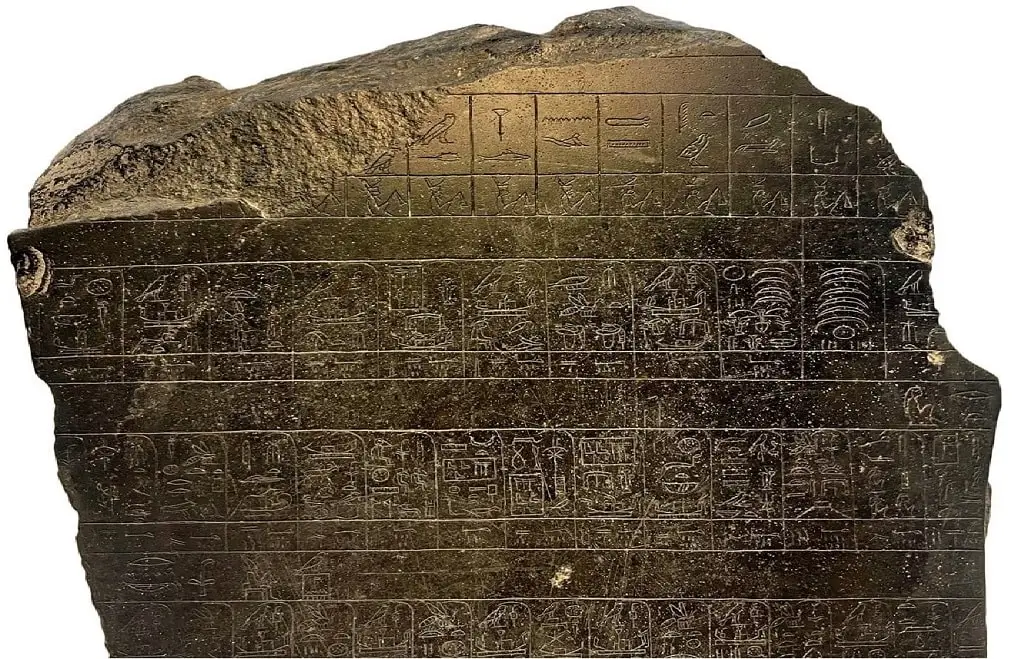
The earliest fragments of Egyptian historical record are the Annals, the most famous example of which is the Palermo Stone. This stone offers a direct glimpse into royal history far older than the great dynasties.

Physical Context and Discovery

The Palermo Stone is a large fragment of a black basalt slab, or stele. Its size suggests the original monument must have been massive, possibly standing over two meters tall. Significantly, it remains the oldest surviving fragment of a royal annal, dating to the 5th Dynasty (circa 2400 BCE). It derives its name from the Palermo Archaeological Museum in Italy, which houses the largest portion. However, the evidence is scattered; other smaller fragments of the same original stele exist, including pieces in the Cairo Museum and the Petrie Museum in London. This scattered nature immediately highlights the fragility of the historical record.

Content and Scope: The Annual Record

The stone details a continuous register of rulers from the predynastic era up to the 5th Dynasty. Crucially, it does much more than just list names. The stone records annual events year by year for each pharaoh. It provides valuable metrics, including:

  • The height of the Nile inundation
  • Records on the construction of temples and statues
  • Details of military campaigns and foreign tribute
  • Religious festivals and ritual events

For example, a sample entry for a specific regnal year might state the exact measurement of the Nile’s height and note the dedication of a specific copper statue to a god. This meticulous detail provides concrete insights into the early state administration, economy, and religious life of the Old Kingdom.

Theological and Historical Value

The Palermo Stone provides foundational data on the early kings. Its unique annual entries establish a vital, original framework for the earliest period of Egyptian history. The act of recording the Nile’s height every year demonstrates a crucial link between the King and the nation’s prosperity. The pharaoh asserted control over the inundation—the lifeblood of Egypt—thereby linking his rule directly to the nation’s fertility and survival. Furthermore, the meticulous detail proves that Egyptian scribes already valued and documented historical events from the very beginning of the unified state.

While the Palermo Stone records annual events, later lists focused exclusively on the unbroken sequence of royal names.

FUN

The New Kingdom Ritualistic Lists

The Abydos King List (Rewriting History)

During the New Kingdom, pharaohs created large, highly visible stone King Lists. These lists served a powerful, intentional purpose: they established an unbroken, legitimate spiritual lineage for the reigning dynasty. They represented a political and religious canon, focusing on who the current pharaoh chose to honor as a legitimate ancestor.

1. The Abydos King List (Canonical and Selective)

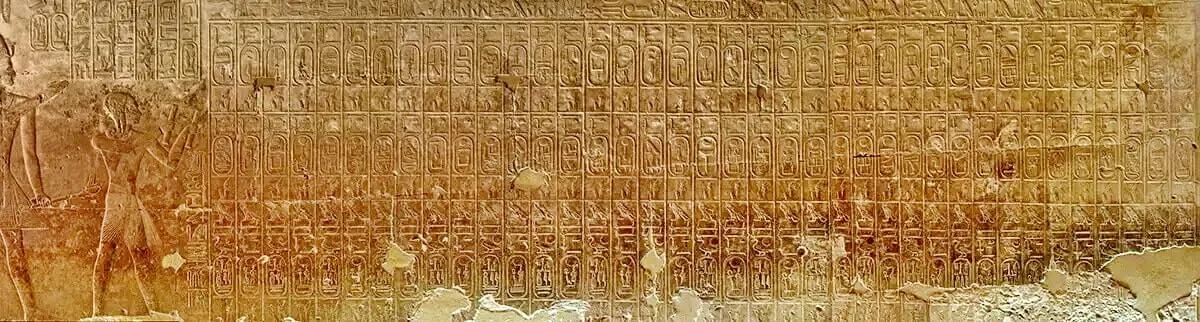
The Abydos King List stands as the most famous and canonical source, a masterpiece of religious propaganda. Seti I inscribed it on the walls of his temple at Abydos.

  • Location: Temple of Seti I. The list resides in a corridor leading to a chamber dedicated to the cult of the ancestors.
  • Purpose: Ritualistic. Its primary function was to establish the official, legitimate lineage of the Ramesside Dynasty. The relief vividly shows Seti I and his son, Ramesses II, making offerings to the 76 deceased ancestors whose names appear in three columns above them. This ritual affirmed their current power by linking it to the divine past.
  • Crucial Omissions: The Political Rationale: The list is highly selective. It omits any pharaoh of the 19th Dynasty considered illegitimate, heretical, or disruptive to the established order.
    • The Amarna Heretics: The list skips the four pharaohs associated with the Aten heresy (Akhenaten, Smenkhkare, Tutankhamun, and Ay). Seti I needed to completely erase the memory (damnatio memoriae) of the Atenists to restore order. He asserted his lineage jumped directly from Amenhotep III to Horemheb.

    • Female Rulers: The list also often omits female pharaohs like Hatshepsut and Sobekneferu. Their rule challenged the established patriarchal succession, even though they commanded immense power.

    • Conclusion: The Abydos List is a Theological Canon; it shows who the reigning king wanted to honor, not necessarily who did rule.

2. The Karnak King List (Inclusiveness and Antiquity)

The Karnak King List (now in the Louvre Museum) offers a different, earlier perspective on ancestor worship. Thutmose III created it during the 18th Dynasty.

  • Location: Temple of Amun at Karnak.
  • Key Difference: It is noticeably more inclusive than the later Abydos List. It incorporates some names from the chaotic First and Second Intermediate Periods that Abydos skips entirely. Consequently, the Karnak List provides unique names of obscure local kings whom Thutmose III apparently honored as part of his ancestry. This demonstrates variations in dynastic piety and historical interpretation between the 18th and 19th Dynasties.

3. The Saqqara King List (The Priest’s View)

The Saqqara King List reinforces the ubiquity of ancestor worship. Ramesses II had it inscribed in the tomb of his chief priest, Tjuneroy.

  • Focus: It lists 58 pharaohs. Ultimately, this smaller, private list shows that the practice of venerating a line of legitimate predecessors extended beyond the royal temples. High officials adopted the official royal canon to legitimize their own positions within the state bureaucracy.

While these stone monuments recorded the official spiritual truth, another document prioritized pure historical data.

The Profound Egyptian Influence on Greek Civilization

Egypt profoundly influenced ancient Greek civilization in various aspects. Key influences include religious syncretism, with...
Related post
FUN

The Historical and Chronological List: The Turin King List

The Historical and Chronological List

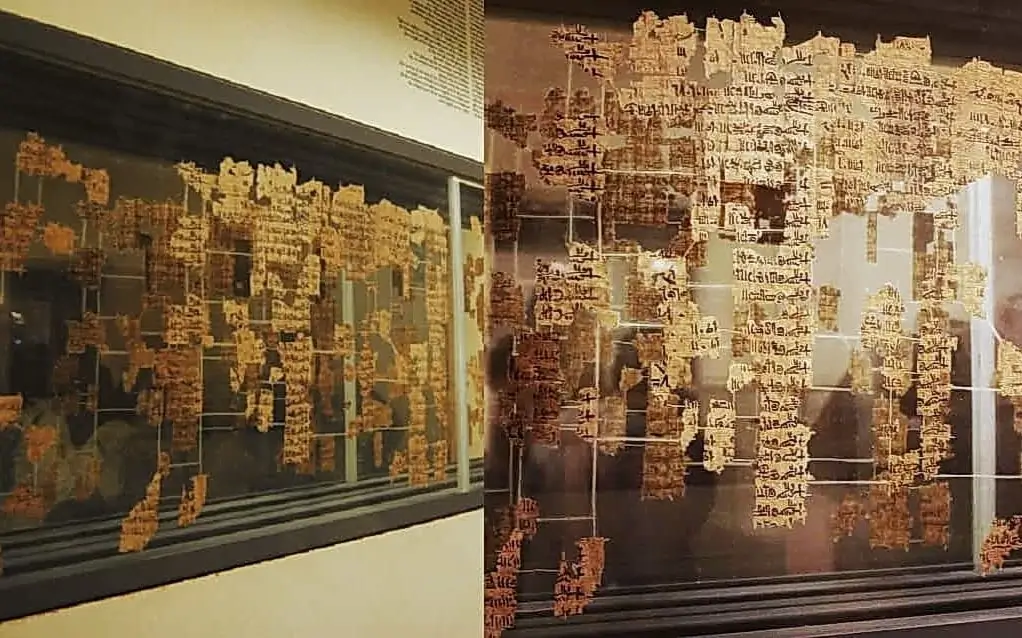
The Turin King List (TKL) provides a stunning contrast to the selective, religious stone lists. It is arguably the most important surviving document for constructing the raw chronological data of Ancient Egypt.

Physical State and Content

The Turin King List (TKL) is a fragile papyrus scroll written in hieratic script, dating to the reign of Ramesses II. Unfortunately, its state is tragic. It is severely damaged and exists in numerous fragments. Early 19th-century attempts to reconstruct it mistakenly placed the fragments in the wrong sequence. Consequently, scholars like Jean-François Champollion and later analysts like Hans Gödicke and Alan Gardiner faced a monumental sorting task to piece together the original order. This fragility immediately highlights the immense difficulty historians face when working with primary evidence.

Historical Importance: Chronological Data

The TKL’s historical value is immense because of its methodology. Crucially, it records the exact length of reigns—often including years, months, and even days—for many rulers. This unique feature is absent from the stone lists and gives modern historians the essential data they need to build the chronological framework. Furthermore, the TKL includes rulers from every period, regardless of their political standing.

TKL Inclusions (Historical) Stone List Omissions (Canonical)
Ephemeral Kings (Ruled for short periods) Foreign Rulers (Hyksos, listed by their family name)
Kings of the Second Intermediate Period Kings associated with the Amarna Heresy
Mythological Gods (First section of the list) Unbroken, politically approved line

Political and Mythological Scope

The TKL is also significant for what it included that the temple lists did not.

  • Hyksos Inclusion Analysis: The list included the despised Hyksos, or “Shepherd Kings,” the foreign invaders who ruled Egypt during the Second Intermediate Period. By including these names, the TKL shows it served a different, less politically censored audience than the temple walls, prioritizing historical documentation over dynastic propaganda.
  • Mythological Time: The TKL begins its sequence with the mythical reigns of the gods (Ptah, Thoth, Horus) before listing human pharaohs. Therefore, the TKL offers a complete history framework, tracing the royal line from the mythological creation of the cosmos to the 19th Dynasty, framing human rule within a divine timeline.

Centuries after these lists were inscribed, an Egyptian priest working in a new empire compiled the final, indispensable source.

The Sun God Political Role: A 3000-Year History of Kingship and Solar Deities

The Sun God's political role in Ancient Egypt was not static, but a dynamic, 3000-year...
Related post
FUN

The Hellenistic Source: Manetho’s Aegyptiaca

The Hellenistic Source Manetho’s Aegyptiaca

The final, essential piece of the chronological puzzle comes not from a temple wall, but from the library of the Hellenistic period.

Context and Author

Manetho was an Egyptian priest and historian writing in Greek under the Ptolemaic Dynasty (3rd Century BCE). His work, Aegyptiaca (History of Egypt), aimed to present Egyptian history to the Greek-speaking world, combining Egyptian records with Hellenistic historical methods. He provided a bridge between the ancient native sources and the emerging Greco-Roman world.

Significance of Dynasties

Manetho’s primary contribution remains revolutionary. He organized the pharaohs into the 30 ruling families or dynasties that modern Egyptology still uses today. Before Manetho, Egyptian records (like the Turin Papyrus) listed kings sequentially without grouping them into politically meaningful familial eras. Manetho created a coherent, structured chronology where centuries of scribal records had provided only a list. Consequently, his system allows scholars to categorize major shifts in power, capital, and family lineage instantly.

Reliability and Transmission: The Filter Problem

However, we encounter a major problem with Manetho: his original text is lost. We know his work only through later historians and chroniclers who quoted or summarized his work. This process created the “Filter Problem.”

  • The Chroniclers: Later writers like the Jewish historian Josephus, the Christian chronographers Africanus and Eusebius, and the Byzantine scholar Syncellus all relied on Manetho. Unfortunately, each chronicler selectively quoted, paraphrased, or inserted their own theological or political biases.
  • Consequence: Manetho’s list comes to us filtered through multiple historical interpretations, often conflating names, simplifying complex successions, and providing different dynasty totals. Therefore, scholars treat Manetho as a secondary source, using him for structure but verifying his names and dates against the physical primary lists (Abydos, Turin).

Having examined the five great sources, we can now compare their contributions and limitations.

Canopic Jars: The Sacred Vessels of the Egyptian Afterlife

Ancient Egyptian Canopic jars were four sacred vessels essential for the afterlife. Used during mummification,...
Related post
FUN

Synthesis and Comparative Analysis

Analyzing the five major King Lists together immediately reveals their unique, complementary roles in preserving Egyptian history. No single list provides the whole picture; instead, they force modern historians to engage in a complex process of cross-referencing and verification.

The Three Categories of Lists

The King Lists logically fall into three distinct categories based on their primary function:

List Type Examples Primary Function Historical/Political Insight
Annals Palermo Stone Records annual events (Nile height, building projects). Shows the ritualistic duties of the early king.
Canonical Abydos, Karnak, Saqqara Establishes political and ritual legitimacy for a reigning dynasty. Reveals dynastic propaganda and historical revisionism.
Chronological Turin, Manetho Prioritizes chronological sequence and provides reign durations. Provides the raw data for modern chronological dating.

The Value of Omission

The intentional selectivity of the stone lists is a key historical insight. The omission of the Amarna pharaohs on the Abydos List, for instance, reveals the deep political animosity of the Ramesside Dynasty toward religious heresy. Conversely, the inclusion of every minor, ephemeral king in the Turin List shows that the scribes responsible for that document adhered to a strictly academic or administrative mandate. Ultimately, the lists’ discrepancies prove that history is always recorded with an agenda.

Modern Chronology

Modern Egyptology relies heavily on a composite methodology.

  • Scholars use Manetho for the core 30-dynasty structure.
  • They use the Turin List to calculate reign lengths and verify the existence of short-term or obscure rulers.
  • They use the Abydos List to verify the official sequence of the New Kingdom and the major pharaohs of the first 18 dynasties.

This painstaking process of combining the canonical truth with the detailed records allows scholars to resolve conflicts. For example, the Turin List’s reign lengths help date the pharaohs whose names are only preserved on the magnificent but selective Abydos List.

Ultimately, the King Lists offer a rich, multifaceted view of Ancient Egyptian history, shaped by both piety and politics.

The Final Word on Succession

The King Lists of Ancient Egypt are profound, indispensable documents. They are not merely cold archives of names and dates. They are living artifacts of political ideology, sacred ritual, and chronological ambition.

The selection of names on the Abydos wall defined legitimacy for the Ramesside Dynasty. The inclusion of precise reign lengths on the Turin Papyrus enabled modern chronological dating. Therefore, each list provides a unique lens through which we view the complex, evolving story of pharaonic succession.

The very act of creating these lists demonstrates the Egyptian belief that to write history was to enact ritual. By controlling the list of ancestors, the pharaoh controlled the present and secured his place in the eternal future. Ultimately, the combined analysis of the King Lists remains the cornerstone of modern Egyptology, a critical tool that allows us to reconstruct the political and religious life of one of the world’s longest-lasting civilizations.

Spend a short Christmas & New Year holiday in Egypt exploring the great legacy of the pharaohs....
The best of Cairo, Alexandria, and the Red Sea....

7 night Egypt Experience Cairo, Aswan, Luxor

Trip of a lifetime!! COVID SAFE!! Knowledgeable guide who loves to share the magic of Egypt with tourists. Friendly and accommodating. This company goes to the extreme to make clients feel welcome and help them. A family company that takes good care of its support staff. Must book the 7-night

More »

Big tick off our bucket list!

Booked the evening before and were able to do everything we hoped to in a day, with a knowledgeable guide & at a reasonable price! Lunch was included and absolutely delicious! Learnt about the history of Egypt, which was the most important part of sightseeing in Cairo/Giza. Hamada also gave

More »

Valley of Whales – Wadi El Hitan and Wadi El Rayan

What a blast! It was an amazing day and a 5-star day trip. Everything was organised from A to Z by Hamada and Mohamed at Egypt Fun Tours in a timely manner. Pick up/drop off from/to the hotel, exquisite lunch and snacks, 4×4 jeep. Everything was as advertised. Also, the

More »
Transit tours in Cairo

One of the best tours I have ever had!

I was thoroughly impressed by the professionalism of this tour company. I emailed to inquire about the Cairo layover tour about 30 hours before my flight was scheduled to leave from New York. I was pleasantly surprised to get a quick response confirming the tour and assuring that a guide

More »
Isis with wings

Top-rated Tour Packages

Isis with wings