Temples of the South: Architecture and Significance of the Nubian Temples

The Egyptian Nubian Temples represent an extraordinary collection of ancient monuments constructed by pharaohs—such as Ramesses II and the Ptolemies—along the Nile River in what was historically known as Nubia (Southern Egypt and Northern Sudan). These temples, including the world-famous Abu Simbel and the beautiful Philae Temple Complex, served as crucial outposts of Egyptian power, religion, and cultural assimilation, reflecting unique architectural blends of Egyptian and Nubian styles. Their legacy is defined not only by their history but also by their miraculous preservation: in the 1960s, a monumental UNESCO international campaign physically dismantled and relocated these structures piece-by-piece to higher ground, saving them from being permanently submerged by the creation of Lake Nasser following the construction of the Aswan High Dam.

There are so many ancient Egyptian Nubian temples everywhere around the world. Nubia is the land of gold, the land of the ruins of those who came before us, a civilization that reached the horizons of the sky, not only expressing the Egyptian culture that dazzled the globe but also telling the tale of the Nubians and their contribution to it over thousands of years.

FUN

Ancient Egyptian Nubian Temples

1. The Kalabsha Temple

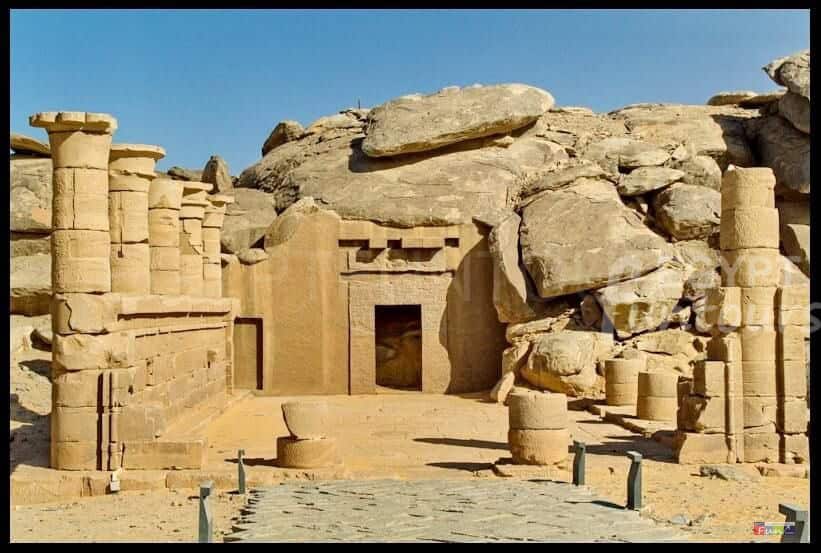
kalabsha temple aswan - Nubian Temples

The Kalabsha Temple is the largest sandstone temple among all the ancient Egyptian Nubian temples and the most complete in its architectural aspects. On the walls are inscriptions from the eternal mythology that tell the story of Isis and Osiris. It is located 56 kilometers south of the Aswan Reservoir. Builders constructed the Kalabsha Temple during the reign of the Roman Emperor Octavius Augustus (30 BCE), and it still has its original shape. It is a temple dedicated to the worship of the goddess Mandulis, the Nubian sun god.

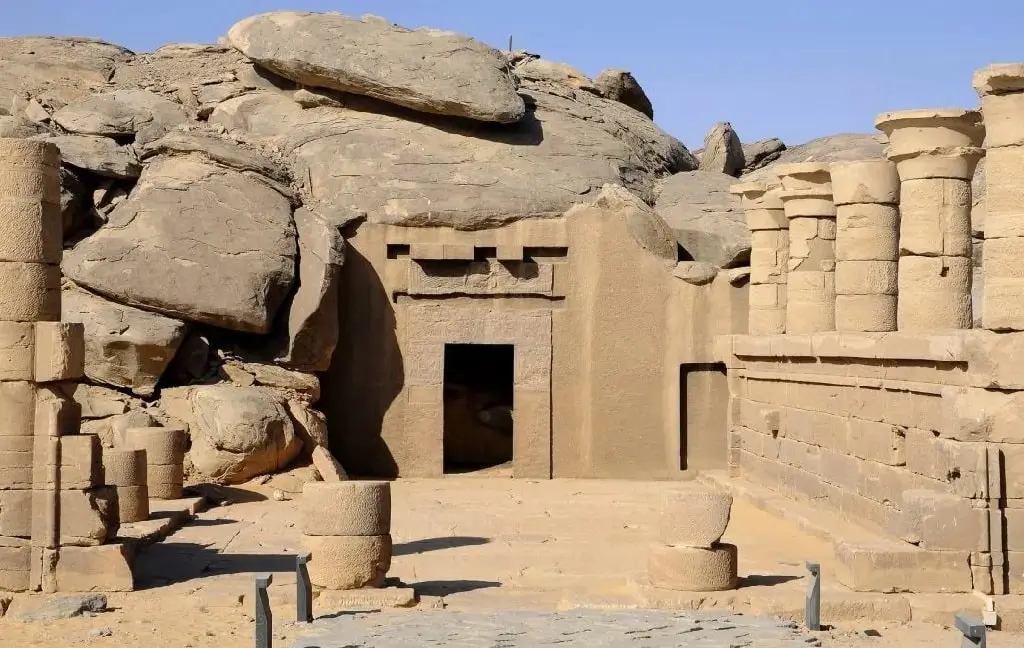
2. Beit el Wali Temple

Temple-of-Bait-el-Wali - Nubian temples

Mesui, the ruler of Kush during King Ramses II’s reign, carved the governor’s residence temple into the rock. Ramses II also ordered the construction of five more temples in Nubia. This temple, Ramses II’s oldest, lies 55 kilometers south of Aswan. They relocated it in 1960 AD during the construction of the high dam. The temple features a courtyard and a hall of columns. Its walls show drawings, paintings, and religious depictions of Isis breastfeeding King Ramses II, the king’s fights against Asians and Libyans, and his wars against the Nubians. The shrine also has inscriptions depicting the king on the battlefield, images of him presenting a cup to Horus, offering and burning incense to Amun-Ra, and a portrait of the goddess Anqat nursing King Ramses II.

FUN

3. Temples of Abu Simbel

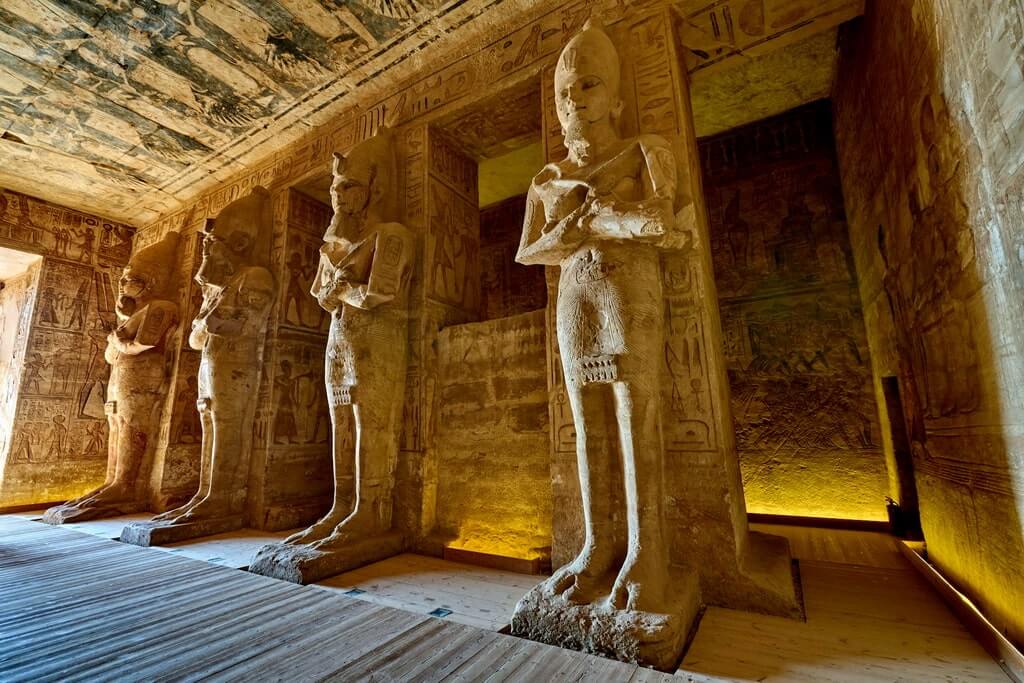
Luxor and Aswan Nile Cruises - Abu Simbel temple interior - 3-Night Family Nile Cruise

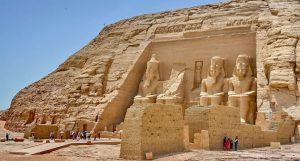
The Great Temple of Abu Simbel is one of Nubia’s most popular ancient sites. It sits on the western shore of Lake Nasser. The Egyptians carved the temple out of the mountains during the reign of King Ramses II in the thirteenth century BCE. They built the large temple for King Ramses II and the smaller temple for his wife, Queen Nefertari, as a lasting tribute to them and their triumph in the Battle of Kadesh.

The main temple of King Ramses II features four massive pharaoh statues. The statues stand up to 25 meters tall and 35 meters wide. They all show Ramses II seated on the throne and wearing the double crown for Upper and Lower Egypt. Statues of his wives and daughters stand near the huge statue’s legs. Twenty-two baboons who worship the sun guard the gate. The Egyptians cut the massive figures out of solid rock.

A statue, no taller than the pharaoh’s knees, depicts Queen Nefertari as his principal wife and the queen mother, Mutai, who has two sons. A tiny inscription caps the entrance, depicting two images of the king. He adores a falcon, and he holds a hieroglyphic necklace in his right hand and the goddess of truth and justice (Maat) in his left. The architects designed the interior of the temple in the same triangle pattern as all Egyptian temples.

The Profound Egyptian Influence on Greek Civilization

Egypt profoundly influenced ancient Greek civilization in various aspects. Key influences include religious syncretism, with...
Related post
FUN

4. Wadi el Sebua: The Valley of Lions

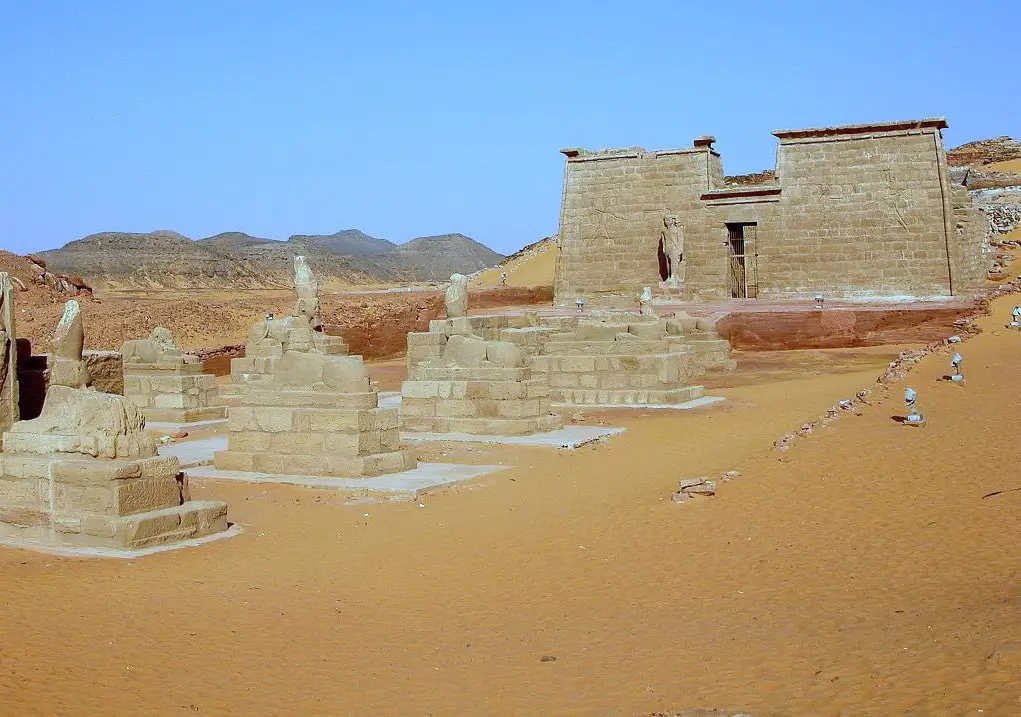
Wadi el Sebua, The Valley of Lions

Wadi al-Sebua, or “Valley of the Lions,” is a site with two temples in modern Egyptian Nubia. The name comes from the path of ram-headed lion statues at the entrance.

The First Temple

The first temple was built by the Eighteenth Dynasty pharaoh Amenhotep III. Ramses II later restored it. In its early phase, the temple consisted of a rock sanctuary, a brick edifice, an antechamber, and a fresco-painted hall. The Egyptians may have dedicated it to a local form of Horus, but they later changed its dedication to Amun. During the Amarna period, attackers defaced images of Amun, and the temple’s decorations deteriorated.

The Second Temple

The 19th Dynasty pharaoh Ramses II built the second temple in Lower Nubia. Ramses II also reconstructed and expanded the temple of Amenhotep III by building additional structures in front of its original edifice.

5. Philae Temple

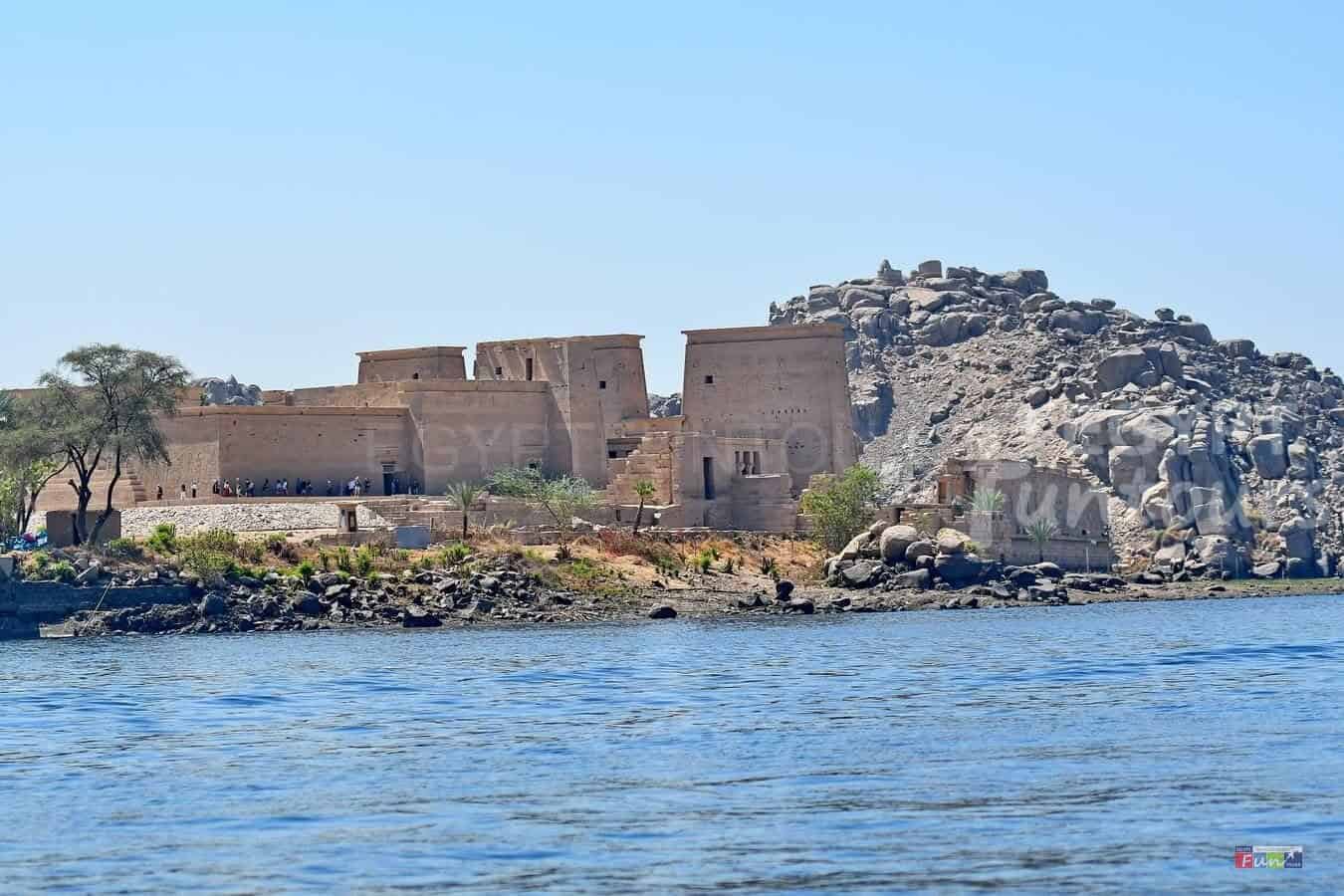
Aswan tour to philae temple high dam unfinished obelisk Egypt Fun Tours

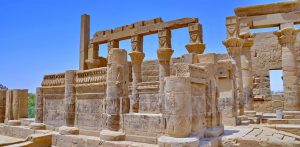
The ruins of Philae have many buildings. They date back to the Ptolemaic period. The most prominent one is the Temple of Isis. Ptolemy II Philadelphus started it. It was dedicated to Isis, the mother of Horus. A scene in the Mammisi shows Isis breastfeeding her son Horus. The Temple of Isis is a very enduring temple. It continued to function until the reign of the Byzantine King Justinian. He ordered all pagan temples closed. A priest inscribed the last hieroglyphic text there. This text dates to 394 AD. The temple was then converted into a Christian church. Many of its reliefs were destroyed.

Next to the Temple of Isis is a temple that Ptolemy IV and Augustus built for Hathor. The Kiosk of Trajan still stands, and its magnificent columns attracted travelers who described and photographed it. Although its roof is gone, reliefs show the emperor making offerings to Isis, Osiris, and Horus. A UNESCO campaign moved all these antiquities from the original island of Philae to the nearby island of Agilkia in the 1960s. The move saved the sites from flooding by the Aswan High Dam.

Ancient Egyptian Language: Hieroglyphs, Hieratic, & Demotic

The Ancient Egyptian Language spanned over 4,000 years, evolving significantly through five main phases: Old,...
Related post
FUN

6. Qasr Ibrim Fortress

Qasr Ibrim, positioned on a rock above the Nile, was once a stronghold and a great city. The fortress is now situated on a rocky island in the middle of the Nile River, thanks to the dam’s construction. Tourists are unable to come because it is not open to the public.

7. Temple of Dakka

The Romans extended the Temple of Dakka, originally a tiny shrine dedicated to Thoth, and utilized it as a stronghold along the Nile River during their empire.

8. Temple of Maharraqua

Maharraqua Nubian Temple is a modest and incomplete temple with no recorded history. Scholars have been stumped as to who and why this temple was created. It is one of the Nubian temples that has one distinctive feature, however: a spiral staircase leading to the roof. This is the only Nubian monument with this characteristic.

Ancient Egyptian Festivals: A Complete Guide to Sacred Celebrations

Discover the vibrant heart of ancient Egyptian culture through its sacred festivals. These massive celebrations...
Related post
FUN

9. Temple of Amada

Historians consider the Amada Temple the oldest among all the Nubian temples in Egypt. Pharaoh Thutmose III of the 18th dynasty dedicated it to Amun and Re-Horakhty. Ramesses II was one of several pharaohs who contributed to the temple over time.

10. Temple of Derr

One of the ancient Egyptian Nubian temples is the temple of Derr. With six columns, it’s a little Roman Kiosk. While the pylon is still unfinished, what can be seen of it is stunning.

DIscove the UNESCO worls' heritage sites of Egypt....
Discover the extraordinary attractions & landmarks in Egypt....

Outstanding layover tour

I had the opportunity to do a layover tour with Egypt Fun Tours this Friday, and it was amazing. I had a 10-hour layover tour in Cairo, and I was met by Mohamed on time at the airport. He picked me up in a clean, new, safe, and comfortable van.

More »
12 Days Solo Woman Tour Package (Queen Cleopatra)

Mohamed is Very Kind Person

Mohamed. I just want to thank you again for your kindness. You made our trip memorable. Give your family and the Egypt Fun Tours crew all my love and thank them again for me. Take care. Enjoy the season! Love. Linda

More »

Great guided tour of pyramids

We travelled to Cairo on Friday, May 3, 2019, from Toronto. We landed at 0530 and were met by a representative of Fun Tours at the departure gate. We were only on a layover of 6 hours, and the tour company came with a private van, water, a driver, and

More »
Amir review, October, 2025

BEST EGYPT VISIT EVER

My entire family enjoyed every day of our EGYPT 🇪🇬 vacation.. Our tour guide helped us set up the entire trip from beginning to end .. He helped us in every way .. Transportation, meals , shopping , museum , history , just everything .. and my kids love him

More »
Transit tours in Cairo

One of the best tours I have ever had!

I was thoroughly impressed by the professionalism of this tour company. I emailed to inquire about the Cairo layover tour about 30 hours before my flight was scheduled to leave from New York. I was pleasantly surprised to get a quick response confirming the tour and assuring that a guide

More »
Isis with wings

Top-rated Tour Packages

Isis with wings