The Tomb of Petosiris: A Unique Blend of Greek and Egyptian Art

The Tomb of Petosiris at Tuna el-Gebel is a premier example of Greco-Egyptian art from the late 4th century BCE. Specifically, it features a unique blend of traditional Pharaonic religion and Mediterranean artistic realism. This guide explores the "Daily Life" reliefs, the genealogy of the High Priest, and the surrounding catacombs of Thoth. For travelers in 2026, it remains an essential off-the-beaten-path destination in Middle Egypt. Consequently, it is a vital site for understanding the cultural transitions of the Late Period.

Tomb of Petosiris: A Sanctuary of Two Worlds

The Tomb of Petosiris stands as one of the most enigmatic and visually stunning monuments in the Egyptian desert. Located in the necropolis of Tuna el-Gebel, this structure serves as the final resting place for a powerful High Priest of Thoth. Specifically, Petosiris lived during a period of immense political and cultural upheaval in the late 4th century BCE. This was a time when the ancient traditions of the Pharaohs began to merge with the rising influence of the Greek world. Consequently, the tomb is not merely a burial site. Instead, it is a revolutionary architectural statement that captures the exact moment two great civilizations collided.

The High Priest Petosiris was a man of significant status and wisdom. He served the god Thoth in the nearby city of Hermopolis during the transition from Persian rule to the arrival of Alexander the Great. Therefore, he had access to the finest craftsmen of his era. These artists did not simply follow the old ways. Furthermore, they experimented with a new, hybrid style that combined traditional Egyptian themes with Greek artistic realism. For this reason, walking into the tomb feels like stepping into a living laboratory of cultural exchange. The result is a masterpiece that remains unparalleled in the entire Nile Valley.

Tomb of Petosiris: The Architectural Vision of a High Priest

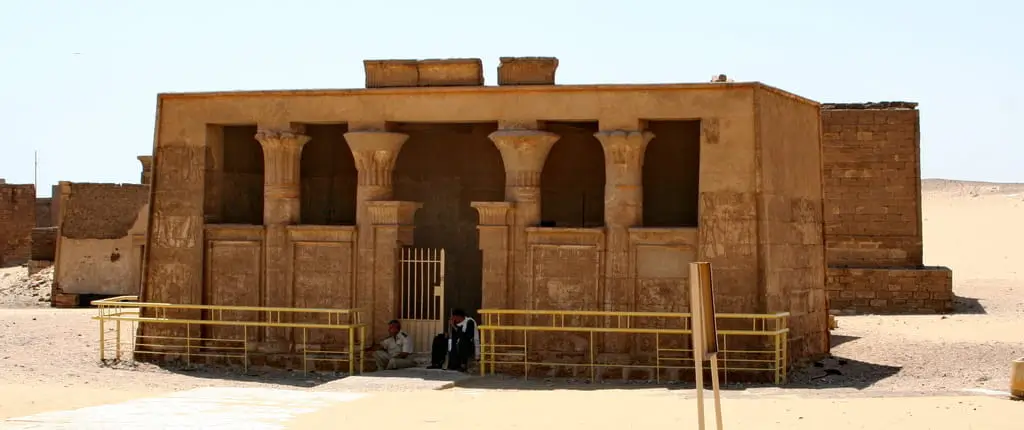
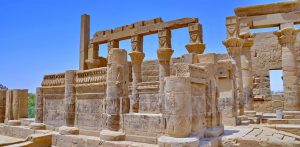
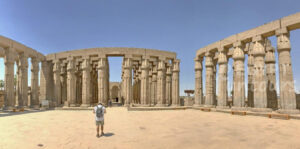
Architecturally, the tomb is designed to resemble a miniature temple rather than a standard funerary chapel. It features a grand entrance portico supported by elegant, fluted columns. Moreover, the facade is decorated with scenes that showcase the High Priest’s devotion to his family and his gods. Unlike the dark and hidden chambers of earlier dynasties, this tomb was built to be seen and admired. Specifically, the outer walls are covered in reliefs that depict the agricultural and industrial life of Middle Egypt. Consequently, the tomb acts as a vibrant archive of ancient society.

Furthermore, the location of the tomb within Tuna el-Gebel adds to its mystical atmosphere. It sits at the edge of the desert, overlooking the vast catacombs where millions of sacred animals were once buried. For the modern visitor, the tomb serves as the primary gateway to understanding the Late Period. It proves that Egyptian culture was not static or dying. Instead, it was evolving and absorbing new ideas with remarkable grace. Nonetheless, it preserved its core identity. In the following sections, we will explore the specific “genre” scenes and the technical innovations that make the Tomb of Petosiris a cornerstone of world art history.
FUN

The Daily Life Reliefs: A Window into Ancient Industry

The Daily Life Reliefs A Window into Ancient Industry - tomb of Petosiris

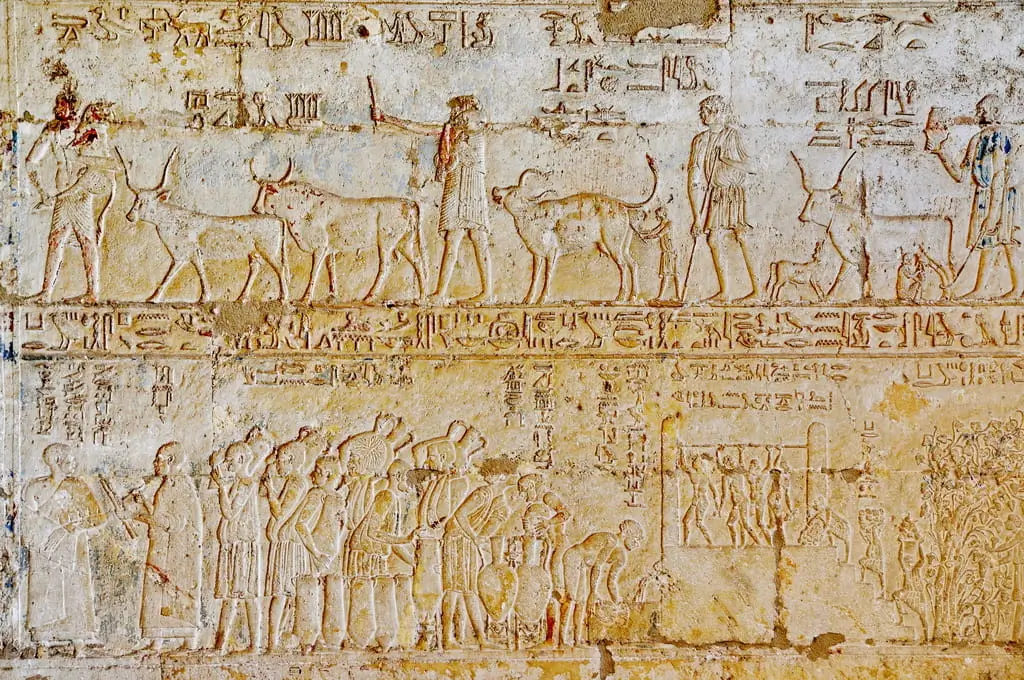
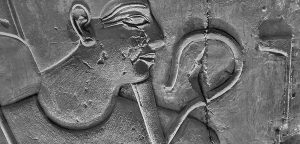
The most captivating feature of the Tomb of Petosiris is the extensive series of “genre” scenes found in the pronaos. Specifically, these reliefs depict the everyday activities of the people living in Middle Egypt. Unlike the purely religious art of the New Kingdom, these scenes focus on the physical world. For instance, we see laborers working in the fields, herdsmen tending to cattle, and craftsmen in their workshops. Consequently, the tomb provides a vivid record of the regional economy during the 4th century BCE.

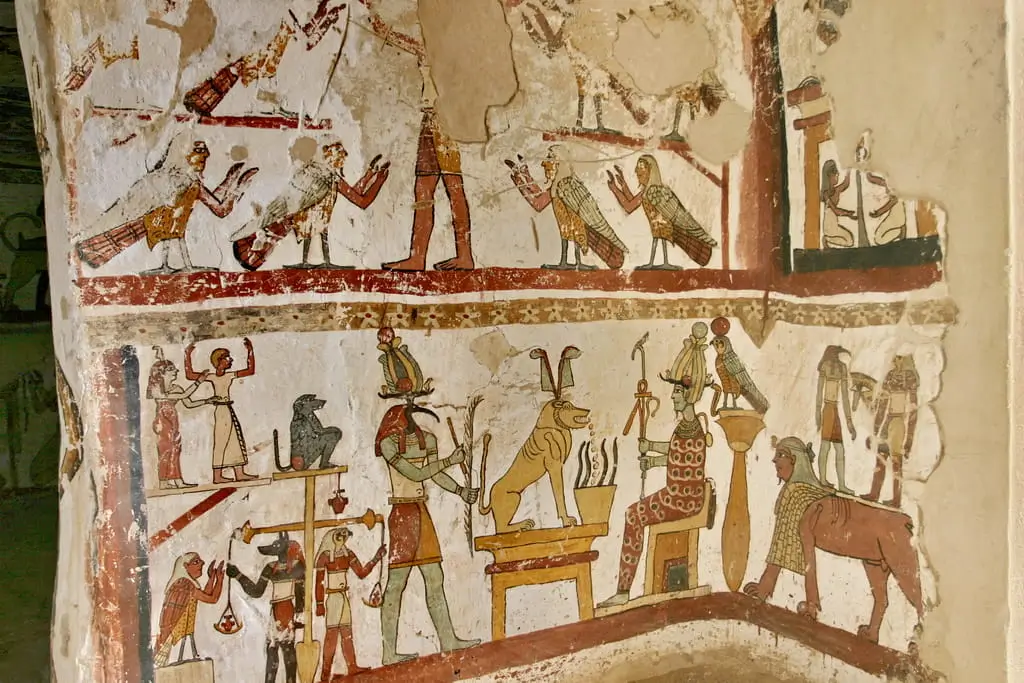
Furthermore, the style of these carvings is truly revolutionary. While the subjects are traditional, the execution shows a strong Greek influence. Specifically, the figures are carved with a sense of depth and rounded musculature. This is a major departure from the flat, two-dimensional style of earlier periods. For this reason, many scholars refer to these reliefs as “Greco-Egyptian” masterpieces. Therefore, the tomb acts as a visual bridge between two distinct artistic worlds.

Tomb of Petosiris: Agriculture and the Cultivation of the Land

The agricultural scenes are particularly detailed and provide a wealth of information. Specifically, we see farmers plowing the land and sowing grain under the watchful eye of supervisors. Moreover, the artists captured the movement of the animals with incredible realism. You can see the strain on the oxen as they pull the plows through the soil. Consequently, these scenes prove that the High Priest took great pride in the fertility of his estate.

Furthermore, the vineyard scenes are among the most famous in the tomb. We see workers harvesting ripe grapes and treading them in large vats to produce wine. This process is depicted in a sequence of frames, almost like a modern comic strip. Therefore, the reliefs are not just decorative; they are educational. They show exactly how wine was produced for the temple of Thoth. By including these scenes, Petosiris ensured that his earthly success would be remembered forever in the afterlife.

Tomb of Petosiris: Craftsmanship and the Industrial Arts

Beyond the fields, the tomb also highlights the skill of ancient craftsmen. Specifically, there are scenes showing carpenters, metalworkers, and incense makers at work. Each worker is shown using specific tools that are historically accurate. For instance, the carpenters are seen using saws and adzes to shape wood for furniture. Furthermore, the metalworkers are shown heating and hammering bronze into decorative objects.

These industrial scenes serve a dual purpose. On one hand, they demonstrate the wealth and resources controlled by the High Priest. On the other hand, they celebrate the human labor that built the civilization. Consequently, the tomb offers a much more inclusive view of society than many royal monuments. It honors the common worker alongside the powerful priest. For this reason, the Tomb of Petosiris remains one of the most human and relatable sites in all of Egypt.

FUN

The Family Legacy and the Sacred Inner Chambers

The Family Legacy and the Sacred Inner Chambers - tomb of Petosiris

While the outer sections of the tomb celebrate earthly life, the inner rooms focus on the eternal legacy of the High Priest’s family. Specifically, the tomb was not built for Petosiris alone. It was a communal funerary monument for his father, Sishu, and his brother, Zed-Thoth-ef-ankh. Consequently, the inscriptions provide a detailed genealogy of this powerful priestly line. This family governed the temple of Thoth for generations. Therefore, the tomb serves as a historical record of the religious elite in Middle Egypt during the transition to Greek rule.

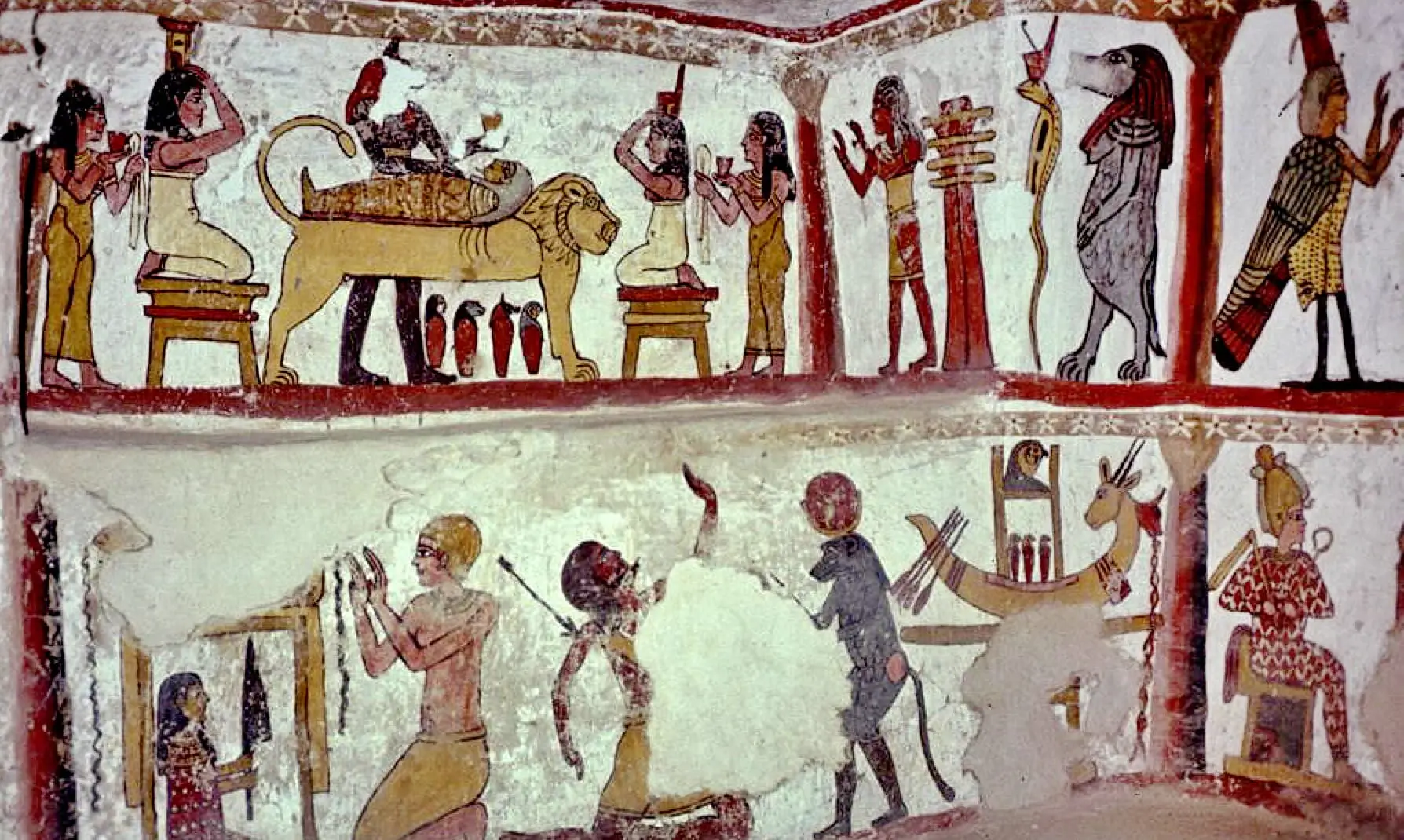
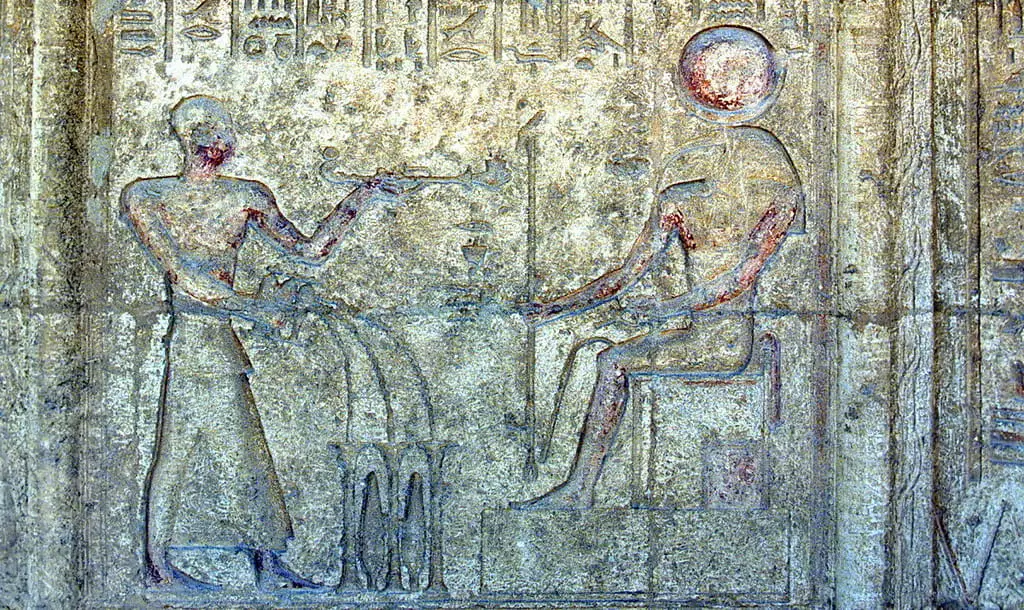
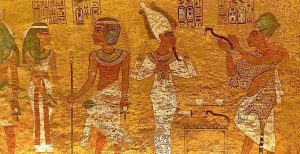
The reliefs in these inner rooms shift toward a more traditional Egyptian style. Unlike the Greek-influenced “daily life” scenes, the depictions of the gods remain strictly Pharaonic. For instance, we see the family making offerings to Osiris, Isis, and Thoth. This was a deliberate choice. Specifically, Petosiris wanted to prove that his family remained loyal to the ancient gods despite the changing political tides. Furthermore, the texts include moralizing speeches where the High Priest reflects on his virtuous life. For this reason, the tomb is a masterpiece of both art and ancient literature.

The Burial Shaft and the Journey to the Underworld

At the rear of the chapel lies the entrance to the burial shaft. This vertical passage leads deep into the bedrock to the actual sarcophagus chamber. Historically, this area was strictly off-limits to the public. However, modern visitors can now appreciate the engineering required to protect the remains of the High Priest. The burial chamber itself is modest in decoration compared to the upper chapel. Nonetheless, its isolation emphasizes the transition from the world of the living to the realm of the dead.

Furthermore, archaeologists discovered a magnificent stone sarcophagus within this chamber. It is carved from dark basalt and covered in intricate protective spells. These inscriptions are taken from the Book of the Dead and the Book of Gates. Consequently, they were intended to guide Petosiris safely through the dangers of the afterlife. Moreover, the quality of the carving is exceptional. It proves that even in the Late Period, Egyptian stone-cutters maintained the highest standards of their ancestors. Therefore, the burial chamber is the spiritual heart of the entire complex.

The Catacombs of Kom Esh-Shokafa: Roman-Egyptian Underworld

Descend into one of the "Seven Wonders of the Middle Ages" at the Catacombs of...
Related post
FUN

The Tragic Tale of Isadora: A Roman Legend

The Tragic Tale of Isadora A Roman Legend - tomb of Petosiris

Just a short walk from the Tomb of Petosiris lies another significant monument: the Tomb of Isadora. Although it dates to the 2nd century CE, it is an essential part of the Tuna el-Gebel experience. Isadora was a wealthy young woman who tragically drowned in the Nile while crossing to meet her lover. Her father was so heartbroken that he built an elaborate tomb-house for her. Furthermore, her mummified remains are still visible today within the glass case of her chapel.

This site offers a fascinating contrast to the Tomb of Petosiris. While Petosiris reflects the fusion of Egypt and Greece, Isadora represents the Roman era. Specifically, the poems inscribed on her tomb walls are among the most touching examples of ancient funerary literature. They speak of love, loss, and the cruelty of fate. For this reason, visiting both tombs allows for a complete understanding of how the necropolis of Hermopolis evolved over five centuries. Consequently, the story of Isadora adds a layer of human emotion to the grand historical narrative of the site.

The Subterranean World: The Catacombs of Tuna el-Gebel

The Subterranean World The Catacombs of Tuna el-Gebel - tomb of Petosiris

Directly adjacent to the Tomb of Petosiris lies one of the most vast and mysterious archaeological sites in Egypt. These are the Catacombs of Tuna el-Gebel. Specifically, these underground galleries stretch for kilometers beneath the desert floor. They served as the sacred burial place for millions of animals dedicated to the god Thoth. Because Thoth was the god of wisdom, his sacred animals were the Ibis and the Baboon. Consequently, the tunnels are filled with thousands of small stone niches containing mummified remains.

The scale of these catacombs is staggering. For centuries, pilgrims traveled from all over Egypt to offer a mummified bird or primate to the god. Therefore, the site represents a massive industry of ancient piety. Furthermore, the tunnels contain hidden shrines and altars where priests performed daily rituals. Specifically, archaeologists have found rare wall paintings and inscriptions deep within the maze. These provide a unique look at how the cult of Thoth functioned on a massive scale. For this reason, exploring the catacombs is a perfect atmospheric companion to the refined art of the Tomb of Petosiris.

Beni Hasan: The Masterpieces of Middle Kingdom Art

The Beni Hasan Tombs Middle Kingdom represent the pinnacle of 12th Dynasty provincial art and...
Related post
FUN

Traveler’s Guide: Visiting Tuna el-Gebel

Traveler’s Guide Visiting Tuna el-Gebel

For those planning a journey to Middle Egypt, the Tomb of Petosiris is a mandatory highlight. Because the site is located about 7 kilometers from the town of Mallawi, it offers a peaceful and scholarly atmosphere. Most travelers use the city of Minya as their base. From there, it is a scenic 45-minute drive through the lush agricultural lands of the Nile Valley. When you arrive, you should plan for at least two hours to see both the tomb and the nearby catacombs.

Furthermore, the site is exceptionally photographer-friendly. The open-air portico of Petosiris’s tomb provides soft, natural light that highlights the “Greco-Egyptian” details. However, you must remember that the site is in a remote desert location. Consequently, you should carry plenty of water and wear comfortable walking shoes. Specifically, the tunnels of the catacombs can be quite dusty and narrow. Therefore, travelers with claustrophobia should stick to the main galleries near the entrance.

Expert Tips for the Expedition

  • The Best Time to Visit: Arrive at 8:00 AM. The morning light hitting the facade of the tomb is perfect for high-quality architectural photos.
  • Logistics & Transport: Hire a private car and a driver who is familiar with the security checkpoints in Middle Egypt.
  • The Combined Tour: For a full day of history, combine your visit with the Boundary Stelae of Amarna and the tombs at Beni Hasan.
  • Documentation: Ensure your guide has a strong understanding of the “Late Period.” This is essential for distinguishing the Greek influences from the traditional Egyptian carvings.

The Tomb of Ptahhotep: The Masterpiece of Old Kingdom Sculpture in Saqqara

The Tomb of Ptahhotep stands as a crowning achievement of 5th Dynasty craftsmanship. As a...
Related post
FUN

Tomb of Petosiris: The Eternal Synthesis of Art

The Eternal Synthesis of Art

The Tomb of Petosiris is a monument that defies simple categorization. It is not purely Egyptian, nor is it purely Greek. Instead, it is a brilliant synthesis of both. By building this tomb, Petosiris ensured that his legacy would survive the fall of empires and the change of gods. Furthermore, the site reminds us that Ancient Egypt was a vibrant, evolving culture until its very last days. For the modern visitor, it offers a rare chance to see a “Renaissance” that happened over 2,000 years ago.

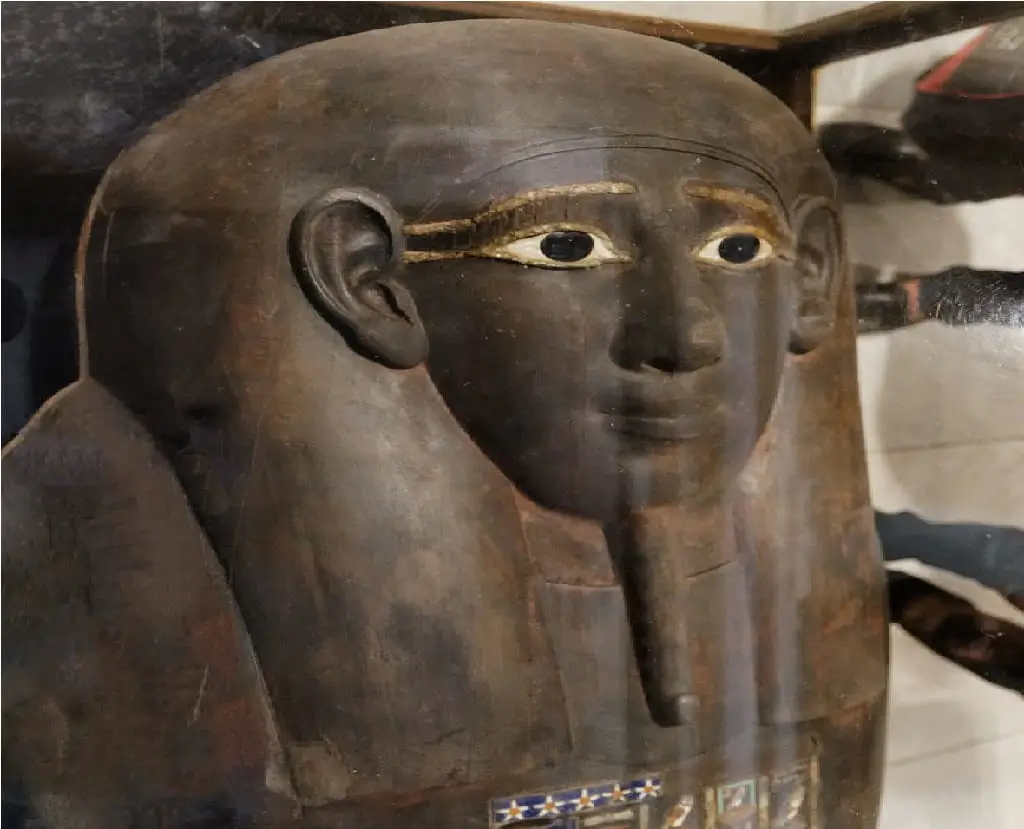
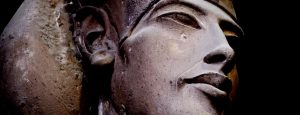
Consequently, a visit to Tuna el-Gebel is an essential chapter in any Egyptian odyssey. It provides the necessary context to bridge the gap between the greatness of the New Kingdom and the opulence of the Ptolemaic era. Therefore, as we look upon the serene face of the High Priest carved into the stone, we are reminded of the enduring power of human creativity. In summary, the Tomb of Petosiris is more than a burial place; it is a timeless masterpiece of cultural harmony.

All Classic Egypt in only 6 Days...
Discover the beauty of classic Egypt tour with a professional tour guide....
FUN
God_Anubis_Icon
4-day-christmas-nile-cruise

Hossam Rashwan Tour Guide

We took this trip with Hossam Rashwan as our tour guide, and I must say that Hossam was the greatest tour guide in Luxor who showed us around. Our tour guide’s tales transported us to Luxor’s past, and we felt as if we were living in ancient Egypt. We really

More »
Amazing Egypt Tours Vacations in December Egypt Fun Tours

Amazing trip with Egypt Fun Tours

We had the time of our lives on a trip to Egypt and the Bahariya/White Desert with Egypt Fun Tours, too. I would highly recommend this company. They are very familiar with organizing this trip, and this means they are well-connected in the desert area. This was invaluable to us

More »

Early Layover Tour in Cairo

My husband, 2 sons – aged 9 & 11 – and I landed in Cairo at 5:15am on Saturday 12 January 2013. We had booked an early layover tour with Egypt Fun Tours after reading the great reviews in TripAdvisor. As promised he and his driver awaited us in a

More »

Amazing one day tour

Fantastic tour. We were picked up at the airport early in the morning (6 am), and were dropped off in the evening after discovering amazing Cairo. The guide was knowledgeable and took us to many hidden places, which we wouldn’t have found without him. Thank you!

More »
God_Anubis_Icon

Top-rated Tour Packages

God_Anubis_Icon