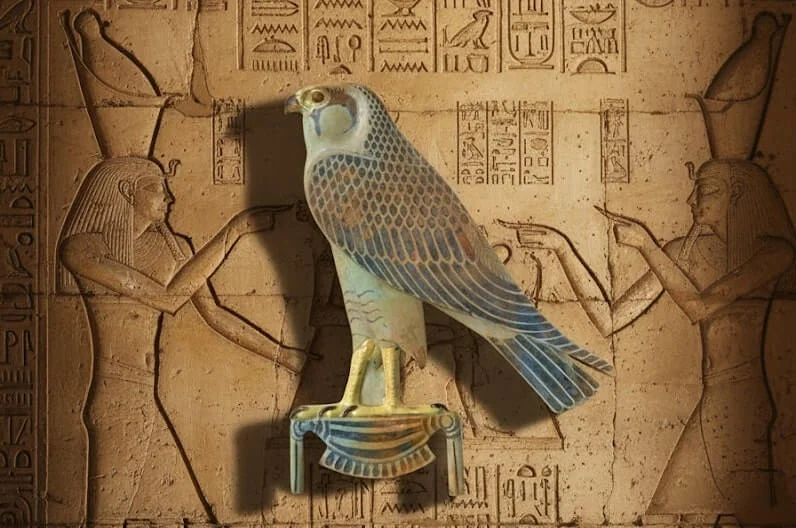
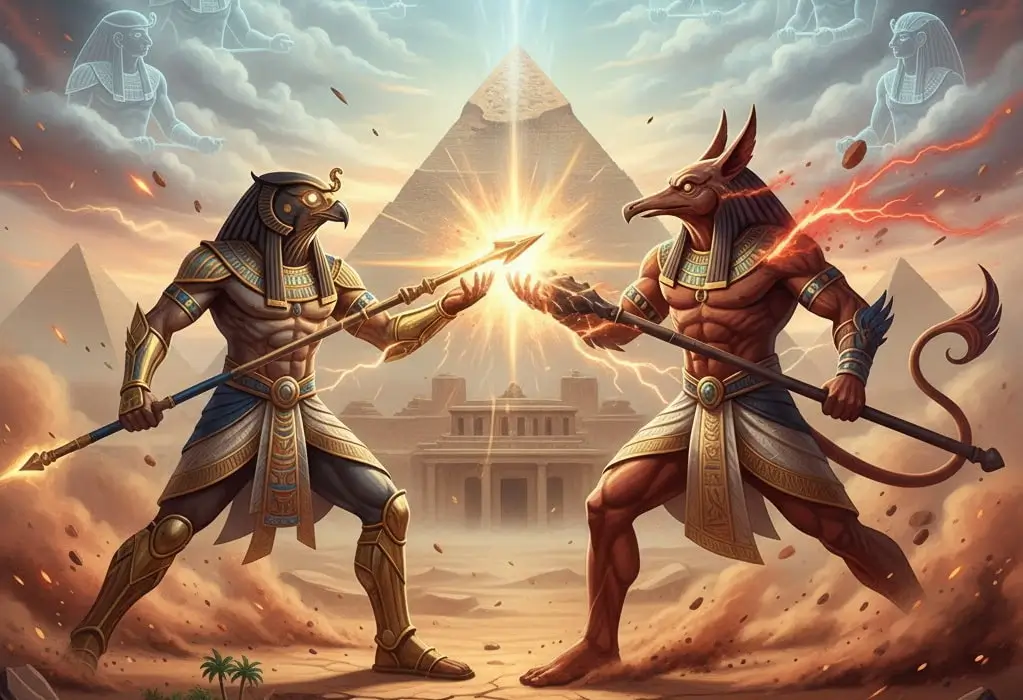
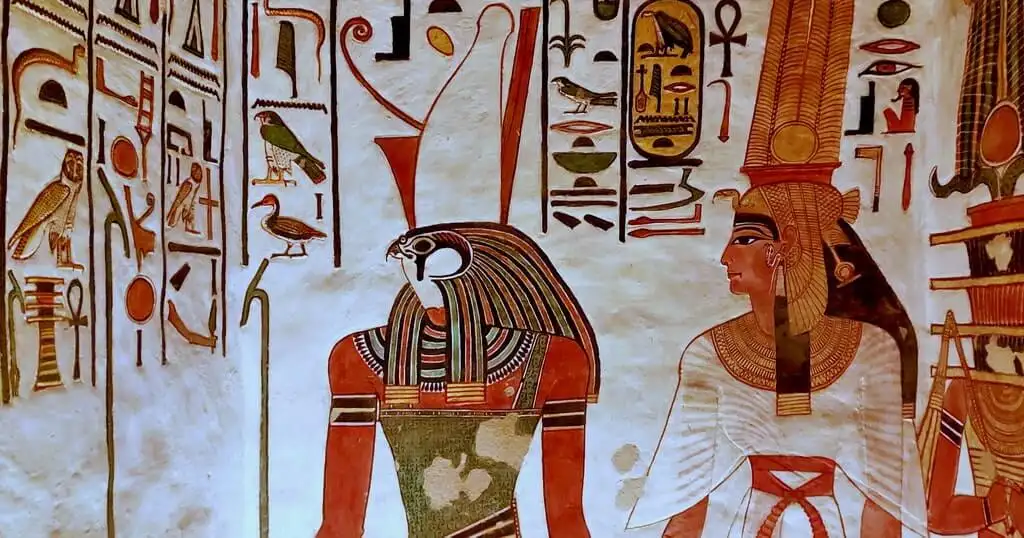
The story of Horus vs Seth is the most significant legal drama in human history. It is not just a myth about gods; it is the blueprint for how civilization survives chaos. For eighty years, a nephew and an uncle fought a bitter war—both in the courtroom and on the battlefield—to decide who would lead the world.
Today, this saga remains a masterclass in political strategy, divine law, and the eternal struggle between order (Ma’at) and chaos (Isfet). To understand the Pharaohs, you must first understand the trial of Horus vs Seth.
The Origins of the Horus vs Seth Conflict
Every great war starts with a grievance. In Ancient Egyptian theology, the conflict began with a brutal act of betrayal that split the divine family and the cosmos itself.
The Murder of Osiris
The roots of the Horus vs Seth feud lie in the death of Osiris, the first king of Egypt. Osiris was a wise and just ruler who brought agriculture and law to the Nile Valley. His brother, Seth, grew consumed by jealousy.
Seth represented the harsh, unpredictable nature of the desert. In a bid for power, Seth murdered Osiris, hacked his body into pieces, and scattered them across Egypt. This act of violence created a “power vacuum” that threatened to plunge the universe back into darkness.
The Birth of a Challenger
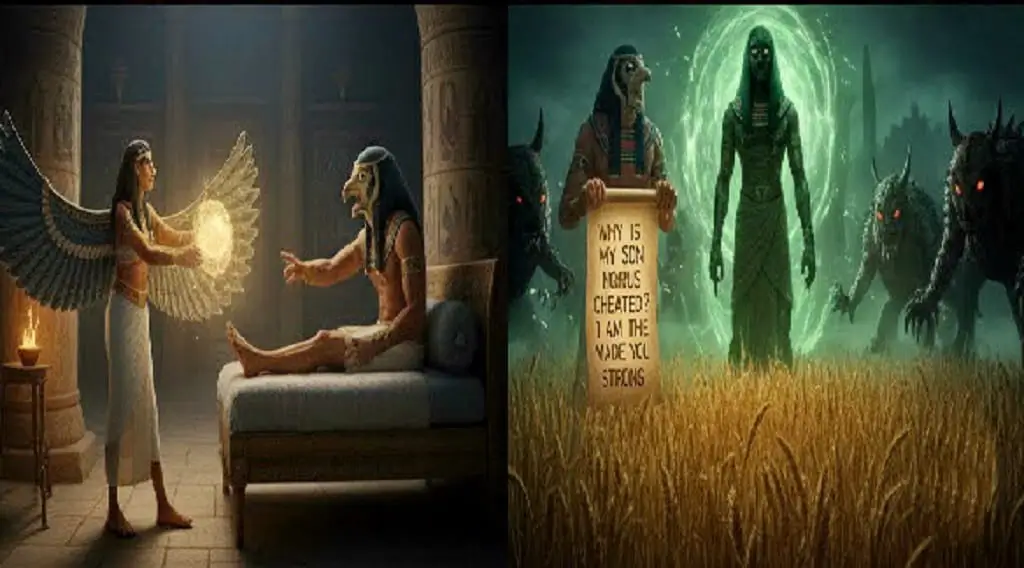
While Seth claimed the throne by force, he ignored the power of Isis, Osiris’s wife. Through high magic, Isis recovered the pieces of her husband and posthumously conceived a son: Horus.
From his birth in the papyrus marshes of the Delta, Horus was hidden away. He was raised with a single, burning purpose: to avenge his father and reclaim the “Office of the King.” Consequently, when Horus reached adulthood, he stepped out of the shadows to challenge his uncle. This marked the official beginning of the Horus vs Seth struggle.
Primogeniture vs. The Right of the Strong
The core of the Horus vs Seth debate was a legal one. It forced the gods to ask a difficult question that still resonates in modern law: Who has the right to lead?
- The Argument for Horus: As the biological son of the previous king, he represented Patrilineal Succession. In his view, the throne was a piece of property to be inherited.
- The Argument for Seth: As the elder brother and a seasoned warrior, he represented Seniority and Might. Seth argued that a “mere boy” like Horus could not protect the world from the chaotic forces that lurked at the borders of Egypt.
Because neither side would back down, the dispute was taken before the Ennead, the supreme council of the nine great gods of Heliopolis. This set the stage for eight decades of cosmic litigation.