
Moving Mountains: The Epic Relocation of the Abu Simbel Temples
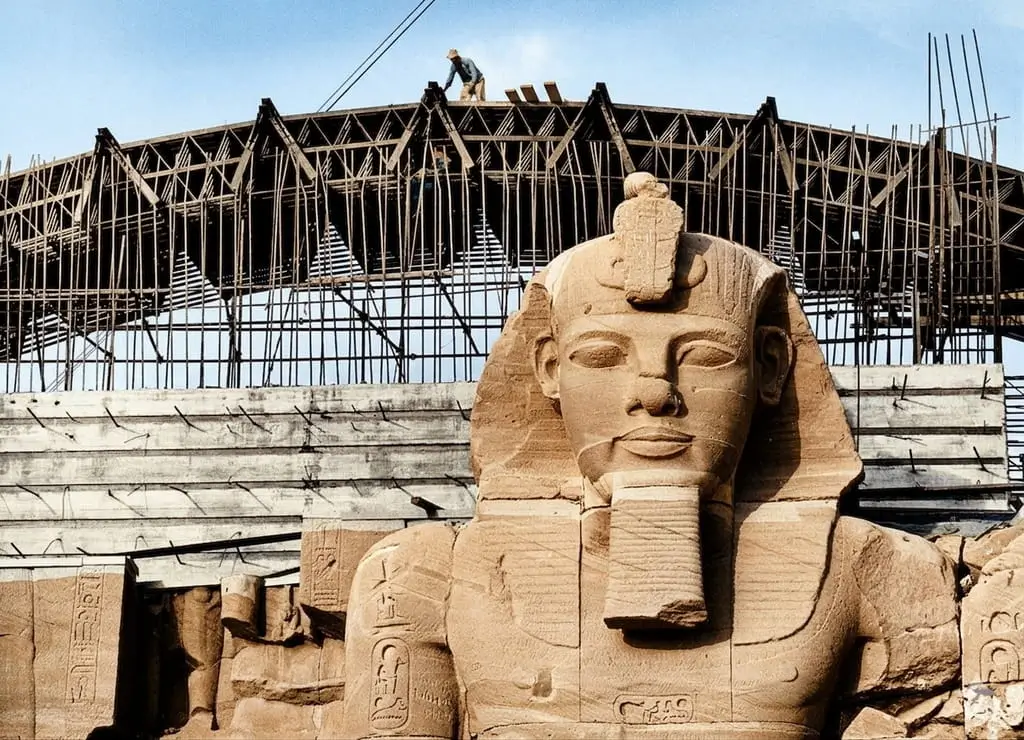
The relocation of the Abu Simbel temples was a massive international engineering feat carried out between 1964 and 1968 to save the ancient monuments from the rising waters of Lake Nasser. This project involved meticulously cutting the entire temple complex, including the colossal statues of Ramses II, into thousands of precision blocks weighing up to 30 tons each. These segments were then transported to a new site approximately 200 meters further inland and 65 meters higher than the original location. To preserve the site’s historical appearance and structural integrity, a giant reinforced concrete dome was constructed to support the artificial hill over the temples, ensuring that the alignment with the sun—a key architectural feature—remained intact.
The Great Temple of Ramesses II: The Eternal Glory of the Sun King
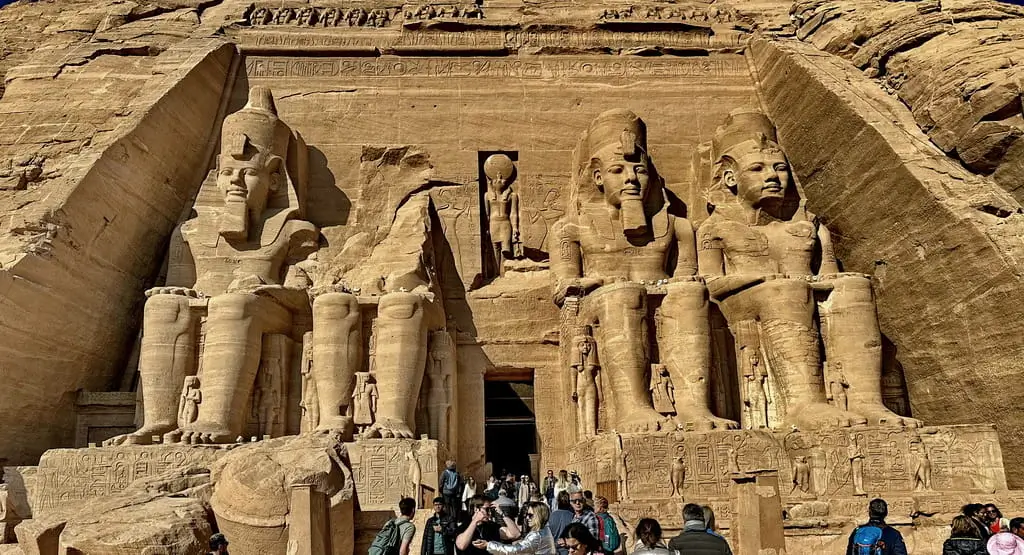
The Great Temple of Ramesses II at Abu Simbel stands as the definitive monument of the 19th Dynasty, embodying the absolute power and divine status of Egypt’s most famous Pharaoh. Carved directly into the Nubian cliffs, its façade is dominated by four colossal 20-meter statues that have guarded the southern frontier for over three millennia. Inside, the temple reveals a complex narrative of military triumph through the Battle of Kadesh reliefs and a profound mastery of science through its biannual solar alignment. Following its historic relocation by UNESCO in the 1960s, the temple remains an enduring symbol of human ingenuity, bridging the gap between ancient engineering and modern preservation.
The Temple of Nefertari: A Monument to the Queen of the Two Lands
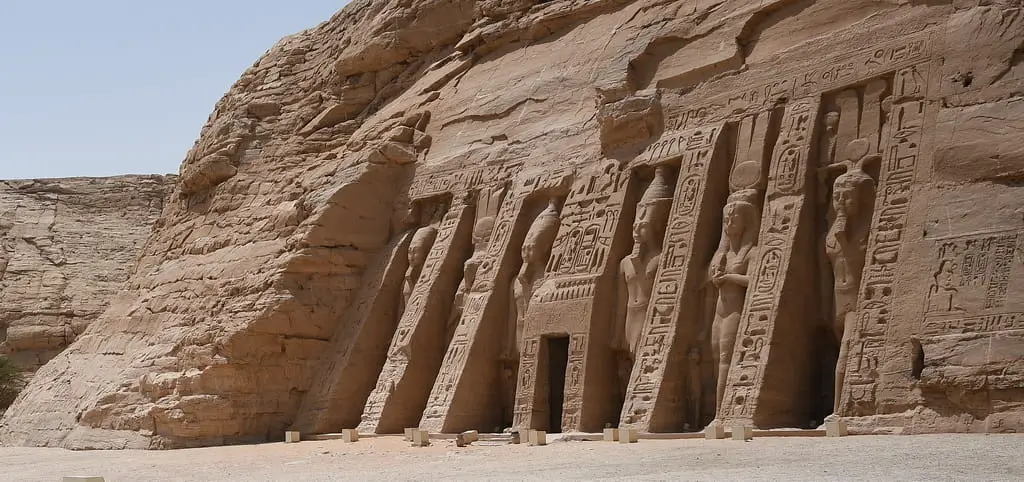
The Temple of Nefertari at Abu Simbel is a unique masterpiece of the 19th Dynasty, serving as a monument to both divine power and royal devotion. Dedicated to the goddess Hathor and Ramses II’s favorite wife, Nefertari, it famously defies tradition by carving the Queen’s statues at the same scale as the Pharaoh’s on its massive façade. Inside, the hall features “Hathoric” pillars and refined reliefs that depict Nefertari participating in sacred rituals as a divine equal. Following its dramatic 1960s rescue by UNESCO, this “Small Temple” remains a definitive symbol of the woman “for whom the sun shines” and a vital link in Egypt’s architectural history.
The Mortuary Temple of Mentuhotep II: The Architectural Pioneer of Deir el-Bahari
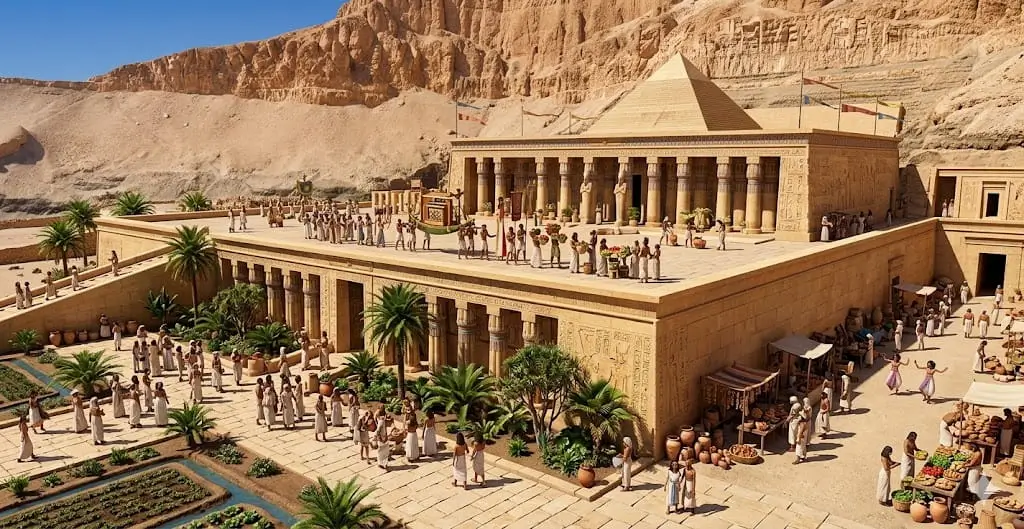
The Mortuary Temple of Mentuhotep II stands as a revolutionary masterpiece of Middle Kingdom architecture, dramatically set against the limestone cliffs of Deir el-Bahari. As the first terraced temple in the Theban Necropolis, it bridged the gap between the monumental pyramids of the Old Kingdom and the hidden, rock-cut tombs of the New Kingdom. This sanctuary served as a powerful political manifesto for Mentuhotep II, the “Second Founder of Egypt,” who commissioned the complex to celebrate the reunification of the Two Lands and the birth of the Middle Kingdom. Today, the site remains a profound “missing link” in Pharaonic history, having served as the direct architectural blueprint for the neighboring Temple of Hatshepsut built five centuries later.
The Temple of Isis at Shenhur: The Hidden Sanctuary of the Roman East
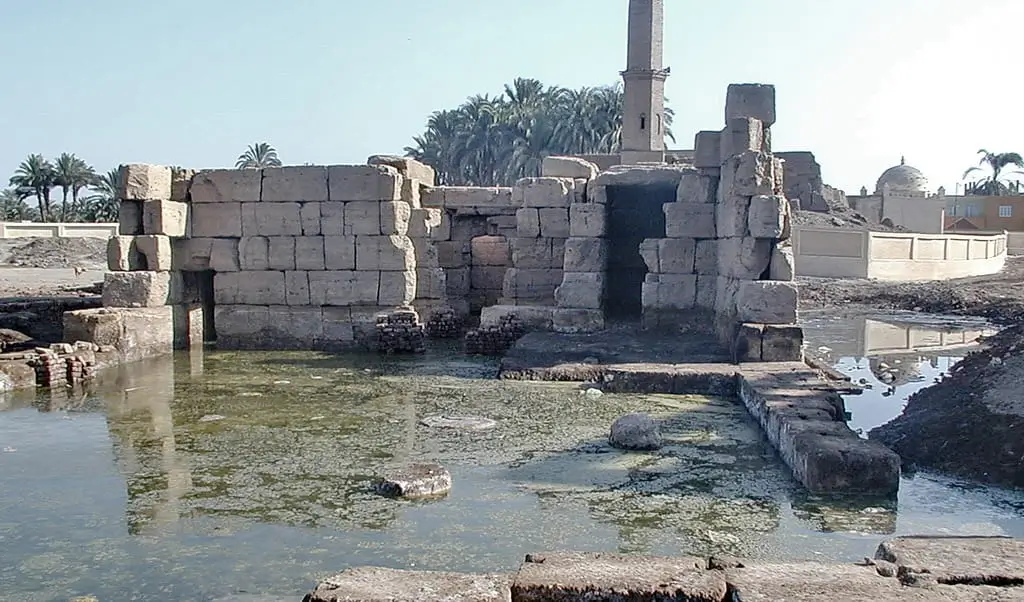
The Temple of Isis at Shenhur is a vital archaeological site located between Luxor and Koptos. Built during the Roman period (30 BCE – 117 CE), it reveals how emperors like Augustus and Trajan adopted Pharaonic roles to legitimize their rule. The temple functioned as a theological bridge, merging the religious traditions of Upper Egypt while centering on the goddess Isis and the local child-god Horudja. Its limestone walls feature remarkably preserved reliefs that transition from sacred Pharaonic art to evidence of Byzantine domestic life. Today, Shenhur stands as a critical “missing link” that preserves the final, vibrant flourish of ancient Egyptian culture.
The Temple of El-Tod: A Guide to the Forgotten Sanctuary of Montu
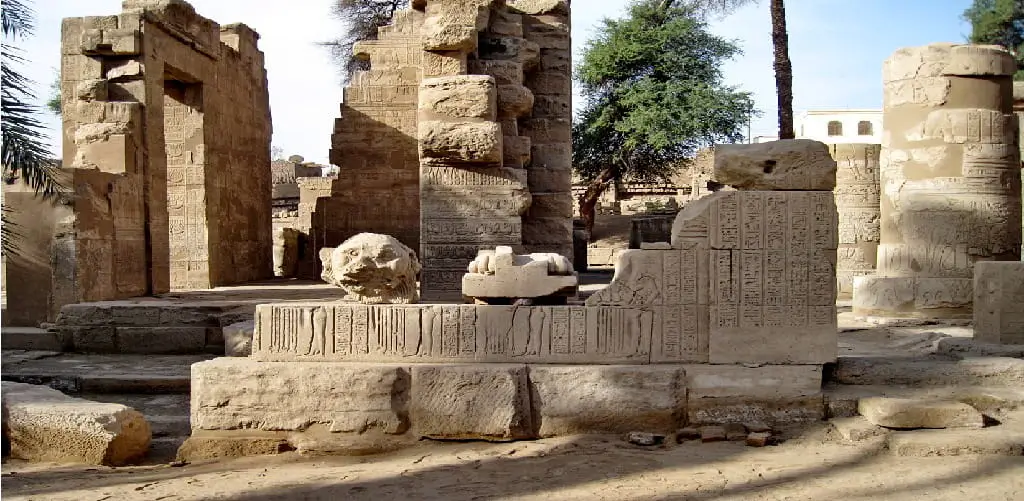
The Temple of El-Tod serves as a vital chronological bridge in Egyptian history, marking the southern boundary of the “Theban quadrilateral” dedicated to the war god Montu. While the site features significant additions from the Ptolemaic and Roman eras, its true value lies in its Middle Kingdom foundations and the legendary Tod Treasure—a cache of Aegean silver and Mesopotamian lapis lazuli discovered in 1936. Today, El-Tod offers a serene, off-the-beaten-path experience for those looking to explore the evolution of Egyptian religious architecture and the international trade reach of the 12th Dynasty.
Tomb of Neferhotep (TT49): The Chief Scribe & Ancient Karnak
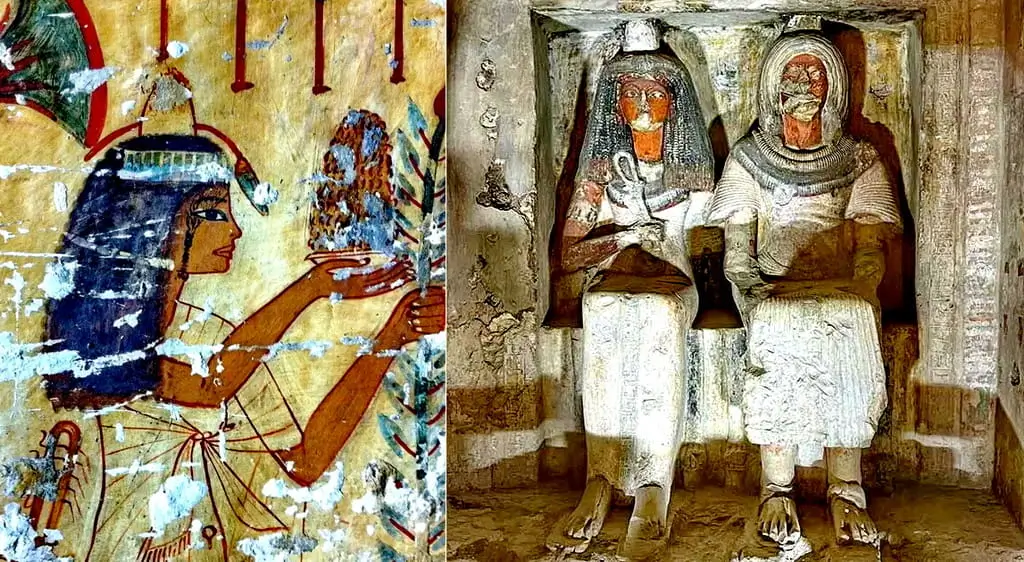
The Tomb of Neferhotep (TT49) stands as one of the most significant architectural archives of the late 18th Dynasty. Serving as the Chief Scribe of Amun under King Ay, Neferhotep documented the physical grandeur of the Temple of Amun at Karnak with unparalleled precision, preserving a visual blueprint of pylons and sacred lakes as they appeared over 3,300 years ago. His tomb famously captures the “Gold of Honor” ceremony, depicting Neferhotep receiving royal rewards from the palace’s Window of Appearance. Ultimately, TT49 offers a critical bridge between the spiritual and the administrative, immortalizing the man responsible for the records, rituals, and infrastructure that defined the transition back to traditional Theban power.
Tomb of Neferronpet (TT178): Gold, Metalworking & The Treasury of Amun
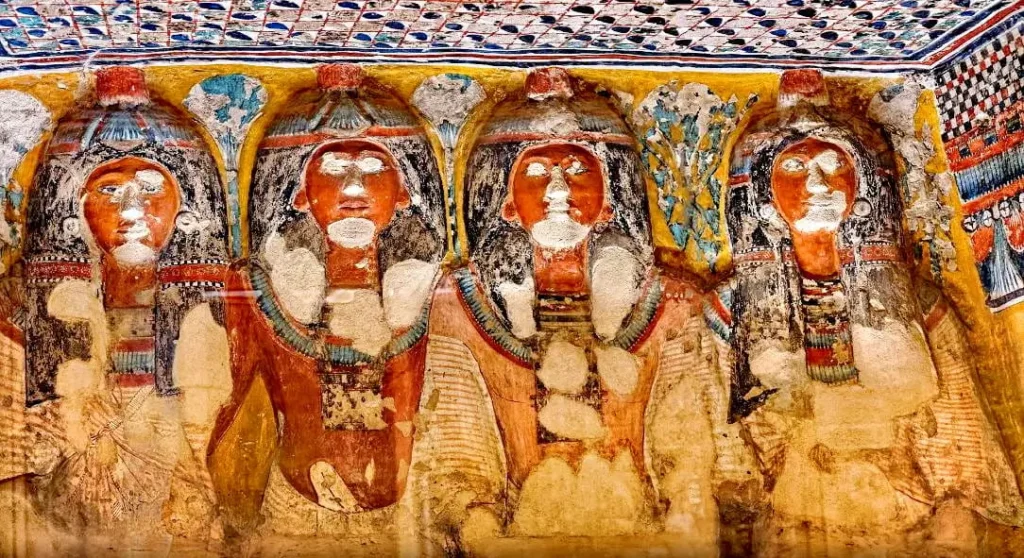
The Tomb of Neferronpet (TT178) provides an essential look at the internal mechanics of the 19th Dynasty. As Scribe of the Treasury under Ramesses II, Neferronpet managed the immense wealth of the Temple of Amun. His tomb acts as a visual manual of ancient industry, featuring rare scenes of gold weighing and metalworking workshops. Beyond these professional records, the artwork offers a humanizing glimpse into the elite lifestyle, famously depicting Neferronpet playing the strategic game of Senet. Ultimately, while the Tomb of Huy (TT40) documents how Egypt acquired its wealth, TT178 immortalizes the sophisticated administration and craftsmanship required to process it.
Tomb of Huy (TT40): The Gateway to the Pharaoh’s Southern Empire
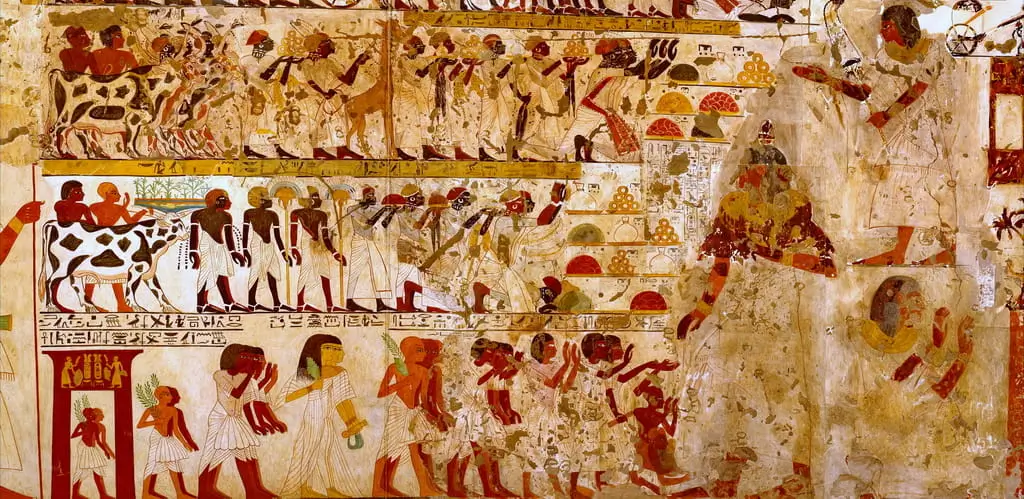
The Tomb of Huy (TT40) serves as a vital historical archive of Egypt’s southern empire during the reign of Tutankhamun. As Viceroy of Kush, Huy managed the logistics and diplomacy that fueled the 18th Dynasty’s wealth. His tomb is famous for its vibrant “tribute scenes,” featuring rare depictions of African wildlife (giraffes) and massive quantities of Nubian gold. Historically and artistically, TT40 marks a critical transition point, blending the naturalism of the Amarna Period with the restored grandeur of traditional Theban art, offering a rare glimpse into the administrative power behind the boy-king’s throne.
The Tomb of Ankh-Hor (TT414): A Sprawling Monument to the Saite Revival
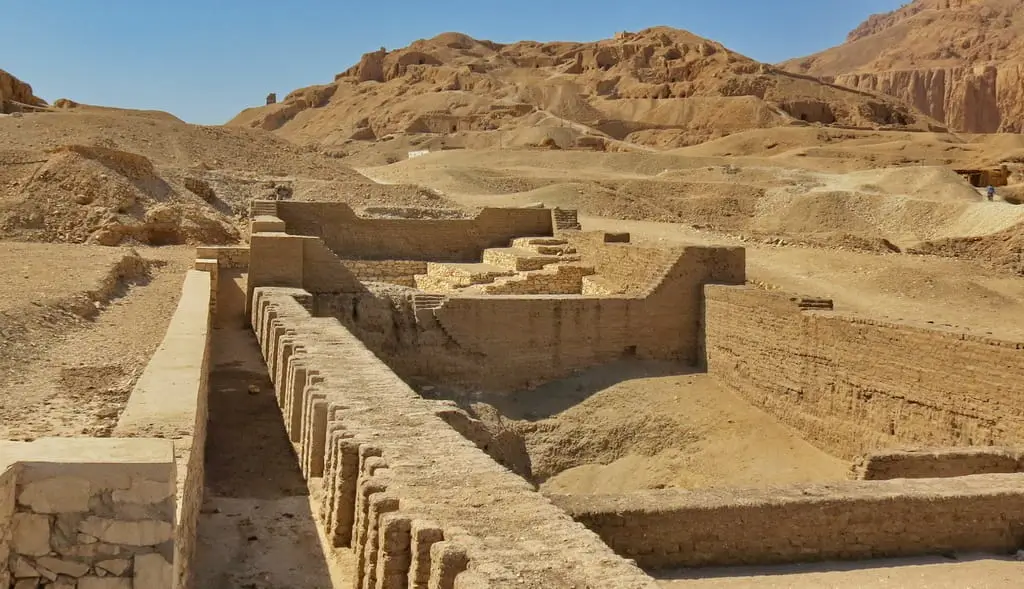
The Tomb of Ankh-Hor (TT414) serves as a monumental tribute to the Saite Renaissance, showcasing the immense wealth of the 26th Dynasty. As the Steward of the Divine Adoratrice, Ankh-Hor designed a subterranean labyrinth that prioritized scale and classical elegance over traditional New Kingdom layouts. The complex is a masterpiece of archaism, where artists precisely revived the proportions and delicate low-relief styles of the Old Kingdom. Beyond its initial construction, the tomb’s four centuries of continuous use—stretching into the Ptolemaic Era—offers a unique archaeological timeline of ancient Theban funerary traditions. Today, it remains an essential site for understanding how Egypt’s Late Period elite used architectural grandeur to reclaim their national identity.
The Tomb of Pabasa (TT279): A Masterpiece of Ancient Industry and Art
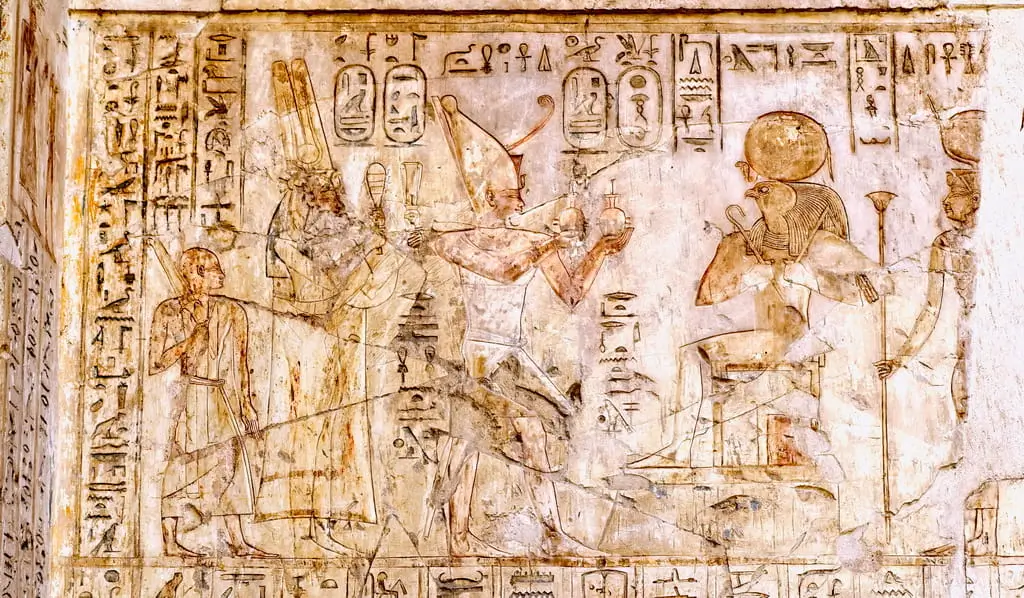
The Tomb of Pabasa (TT279) stands as a premier example of the Saite Renaissance, where 26th-dynasty officials revived the elegance of Egypt’s distant past. As the Chief Steward of the God’s Wife of Amun, Pabasa built a monument that rivaled royal structures in both scale and detail. While its open-air Sun Court and massive siltstone sarcophagus highlight his immense political power, the tomb’s true fame lies in its intimate “Daily Life” reliefs. Specifically, the beekeeping scene remains one of archaeology’s rarest glimpses into ancient industry, proving the sophistication of Egyptian apiculture. For modern visitors, TT279 offers a quiet, high-definition look at a civilization expertly blending tradition with administrative mastery.
Tomb of Kheruef (TT192): Guide to Asasif’s Masterpiece
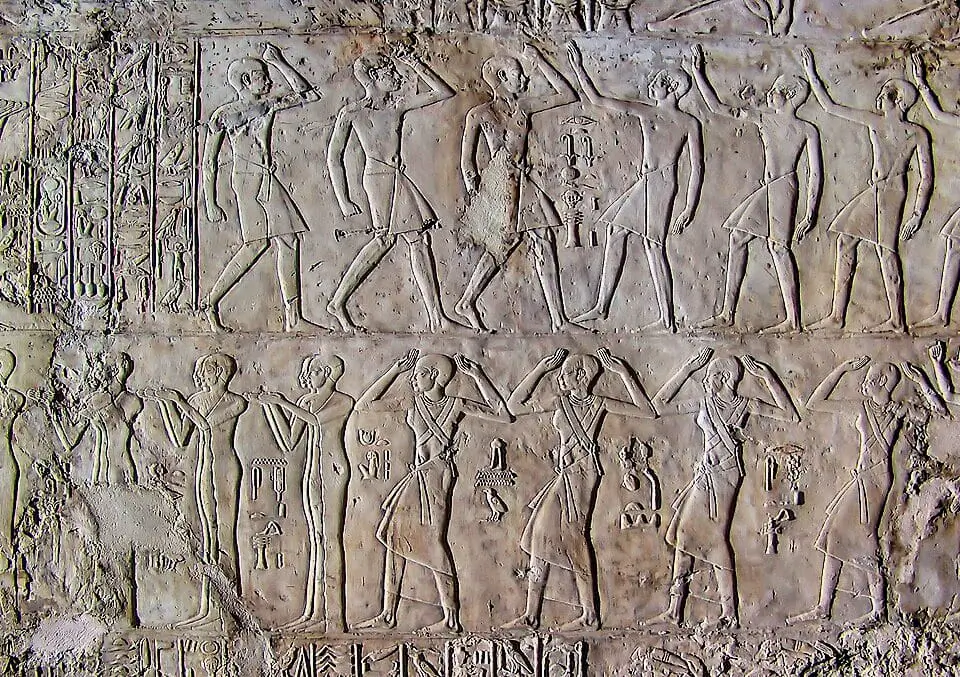
The Tomb of Kheruef (TT192) stands as a monumental bridge between traditional Egyptian aesthetics and the radical naturalism of the Amarna Period. As the largest private burial complex in the Theban Necropolis, it reflects the immense prestige of Kheruef, who served as the powerful Royal Steward to Queen Tiye. The tomb is globally renowned for its masterful low-relief carvings, which provide an unparalleled historical record of Pharaoh Amenhotep III’s royal jubilees and sacred rituals. From its sprawling open courtyard to the fluid, energetic depictions of ritual dancers, TT192 remains an essential site for understanding the peak of 18th Dynasty architectural engineering and artistic sophistication.