
The Twenty-Seventh Dynasty of Egypt: The First Persian Period
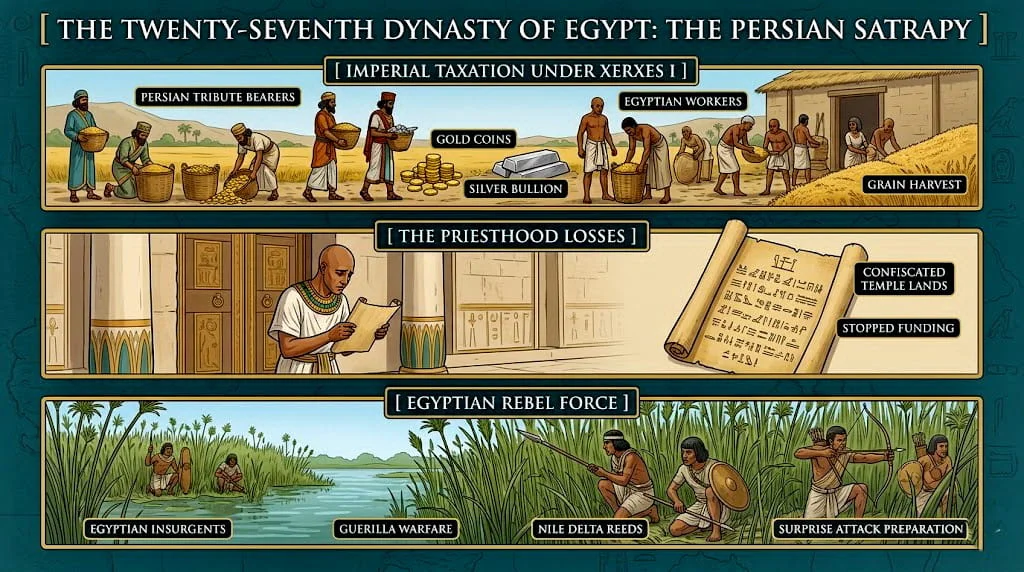
The Twenty-seventh dynasty of Egypt (c. 525–404 BCE) marks the complex era of the First Persian Period, which began following the Achaemenid conquest at the Battle of Pelusium. Rather than ruling strictly as detached foreign occupiers, early Persian emperors like Cambyses II and Darius the Great adopted traditional pharaonic titles, underwent native coronation rituals, and actively collaborated with the local elite. While Darius I successfully integrated his rule by codifying Egyptian laws and investing in major infrastructure projects like the Temple of Hibis and the Red Sea canal, his successor Xerxes I shifted to a harsh policy of heavy imperial taxation and temple suppression. This financial exploitation sparked decades of violent guerrilla warfare in the Nile Delta, ultimately leading to a successful native rebellion under Amyrtaeus that liberated Egypt and brought an end to over a century of Persian dominance.
The Twenty-Sixth Dynasty of Egypt: The Saite Renaissance
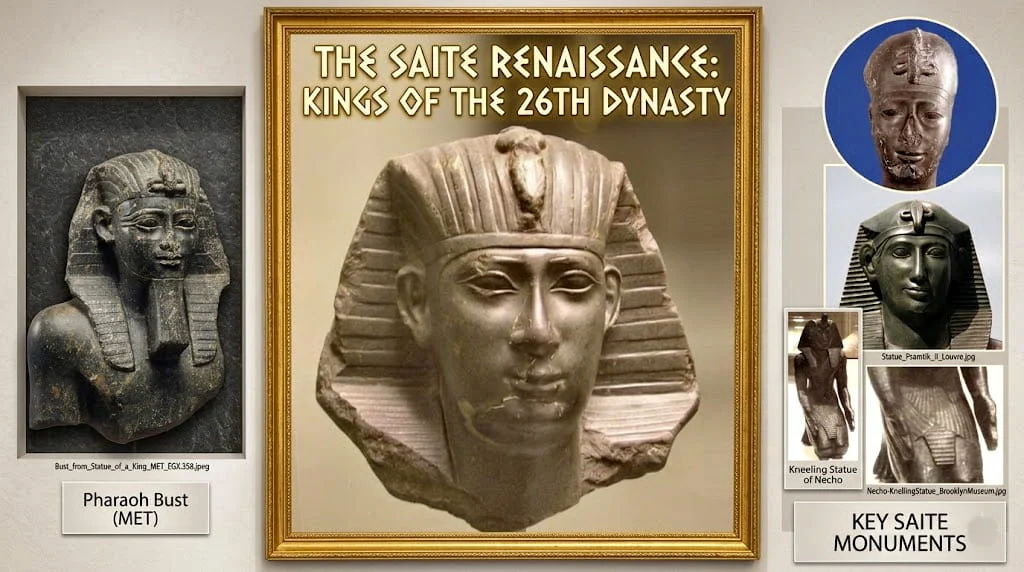
The twenty-sixth dynasty of Egypt (c. 664–525 BCE) marks the definitive beginning of the Late Period, staging a brilliant “Saite Renaissance” that reunited a fractured nation following brutal Assyrian invasions. Based in the western Delta city of Sais, these ambitious pharaohs masterfully blended ancient traditions with modern, globalized strategies. By intentionally copying the classical art, language, and religion of the Old and Middle Kingdoms while simultaneously opening borders to Greek mercenaries and Mediterranean maritime trade through ports like Naukratis, this dynamic lineage restored immense wealth and centralized rule to the Nile Valley, marking the final great flowering of native pharaonic civilization before the Persian conquest.
Twenty-Fifth Dynasty of Egypt: The Complete Guide to the Black Pharaohs
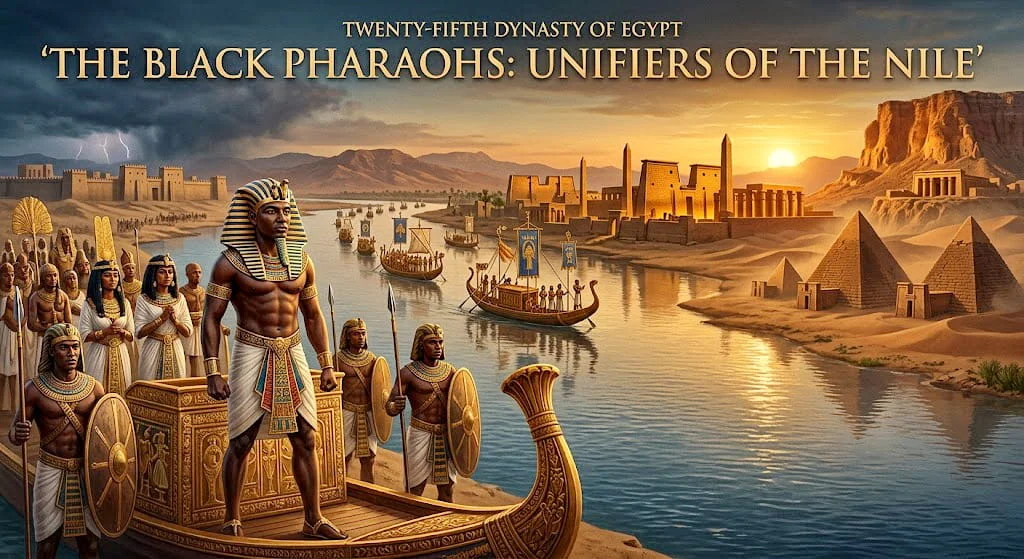
The Twenty-Fifth Dynasty of Egypt, or the “Black Pharaohs,” emerged from the Kingdom of Kush in modern-day Sudan to unify a politically fractured Egypt under a single, strong centralized rule at Memphis. Acting as religious and cultural restorationists rather than foreign occupiers, these Kushite rulers initiated a golden age of classical art, architectural revival—including steep-sided royal pyramids—and religious renewal focused on the state god Amun. Their century-long reign ultimately concluded after a desperate, decades-long geopolitical conflict against the iron-armed military machine of the Neo-Assyrian Empire, which culminated in the catastrophic sack of Thebes and forced the dynasty to retreat permanently southward.
The Twenty-Fourth Dynasty of Egypt: The Rise and Fall of Saite Power
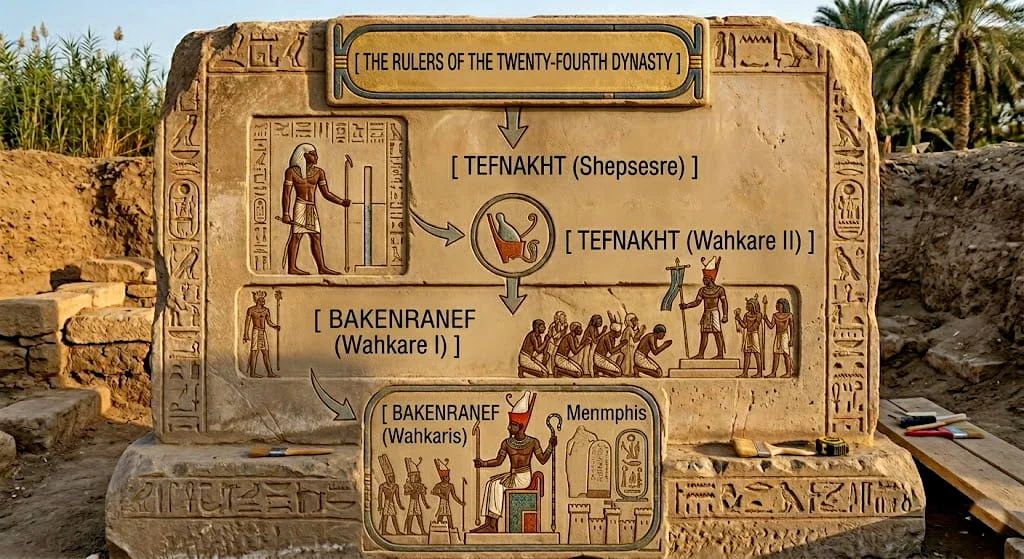
The Twenty-fourth Dynasty of Egypt (c. 732–720 BCE) was a brief but highly volatile twelve-year lineage of Libyan origin based in the western Delta city of Sais. Founded by Tefnakht, the “Great Chief of the West,” the dynasty successfully united the fractured northern principalities into a powerful military confederation that aggressively marched south to capture Memphis and claim Middle Egypt. This expansion triggered a holy war with King Piye of the Kushite 25th Dynasty, who temporarily crushed the alliance, though Tefnakht preserved his local rule by retreating into the Delta marshes. The dynasty reached its tragic end under Tefnakht’s successor, Bakenranef (celebrated in classical tradition as a wise legal reformer), who was captured and reportedly burned alive by the next Kushite pharaoh, Shabaka. Despite its short lifespan, this dynasty permanently shattered the old political order and established the strategic blueprint for the future 26th Dynasty Saite Renaissance.
The Twenty-Third Dynasty of Egypt: Guide to a Fractured Empire

The Twenty-third Dynasty of Egypt (c. 837–728 BCE) represents the peak of political fragmentation during the Third Intermediate Period, characterized by decentralized rule under elite families of Meshwesh Libyan origin. Triggered by the devastating Theban Civil War, this era witnessed the rise of autonomous regional power centers—such as Leontopolis and Thebes—where pharaohs relied on powerful religious institutions like the God’s Wife of Amun to maintain local control. Despite old narratives dismissing this as a cultural dark age, the dynasty experienced a vibrant artistic revival marked by masterful bronze casting and archaistic design. Ultimately, this systemic division left the country vulnerable, culminating in the invasion of the Kushite King Piye, who forced the fractured Delta monarchs into submission and absorbed the remnants of the dynasty into the unified Twenty-fifth Dynasty.
Twenty-second Dynasty: The Libyan Pharaohs and the Revival of Empire
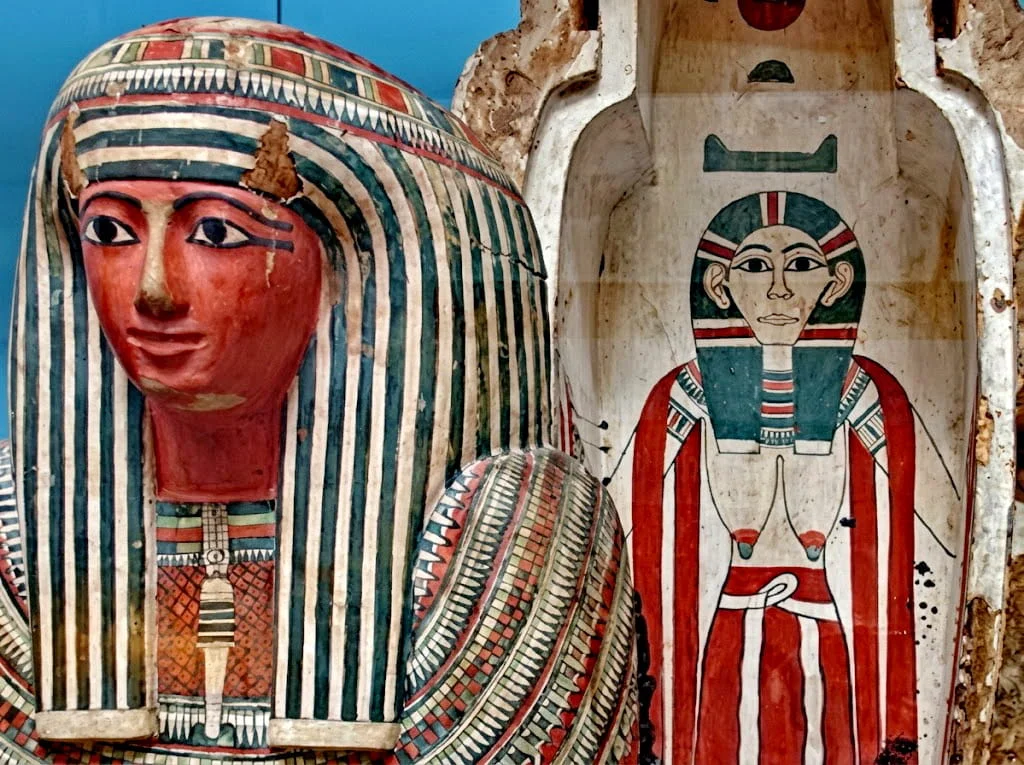
The Twenty-second Dynasty of Egypt (c. 945–711 BCE) began when Meshwesh Libyan military leaders peacefully claimed the throne, choosing to champion traditional Egyptian culture rather than destroy it. Shoshenq I immediately restored Egypt’s international military power by launching a famous campaign into the Levant and carving his victories onto the Bubastite Portal at Karnak. Later pharaohs like Osorkon I and Osorkon II used this vast wealth to fund massive architectural projects and accumulate the breathtaking treasures discovered in the royal tombs at Tanis. Eventually, deep tribal rivalries split the country into competing regional factions, yet the dynasty left a lasting legacy of cultural resilience and artistic revival.
The Twenty-first Dynasty: Guide to Divided Kingdom and Silver Kings
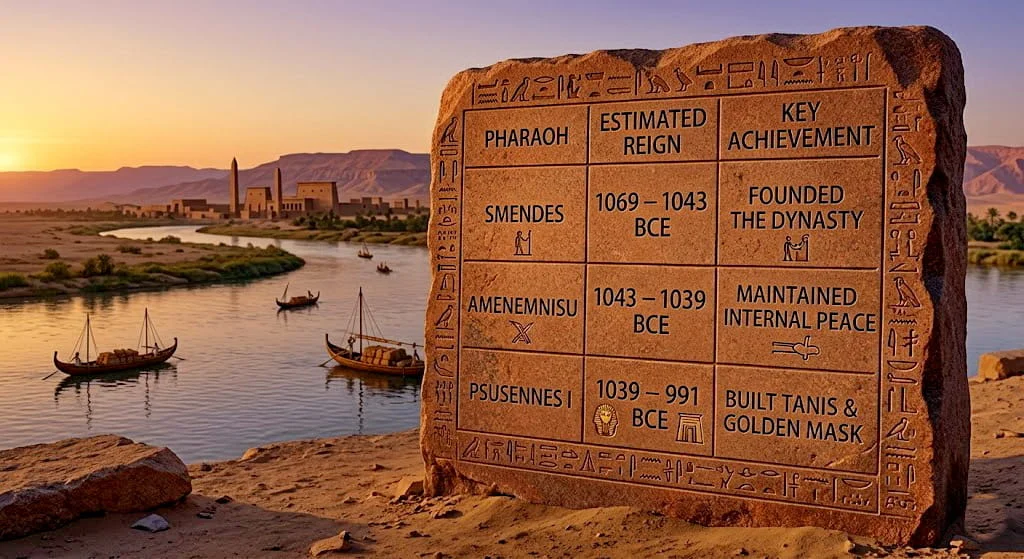
This comprehensive guide explores The Twenty-first Dynasty of Egypt, a fascinating era marking the start of the Third Intermediate Period (c. 1069–945 BCE) that arose following the collapse of the New Kingdom. Rather than a chaotic dark age, this period was characterized by a unique, peaceful dual-power system where the country was split geographically but united ideologically: the secular pharaohs ruled international trade from the northern capital of Tanis, while the High Priests of Amun established a absolute theocracy in southern Thebes. The article profiles the dynasty’s seven rulers—highlighted by the incredible solid silver treasures of the “Silver Pharaoh” Psusennes I discovered by Pierre Montet—and details how these pragmatic leaders creatively recycled older monuments to build their new capital while launch a top-secret rescue mission to protect and cache the looted mummies of Egypt’s greatest historical pharaohs.
The Twentieth Dynasty of Egypt: The Twilight of the Ramesside Empire

The Twentieth Dynasty of Egypt, spanning from its restoration under Setnakhte to its ultimate division under Ramesses XI, represents a turbulent era of imperial twilight that concluded the New Kingdom. While Ramesses III successfully defended the nation from catastrophic invasions by the Sea Peoples, the staggering financial cost of these wars catalyzed an irreversible domestic decline. Plagued by climate disasters, severe economic inflation, the world’s first recorded labor strike, widespread tomb robbing, and deep political fracturing—including the assassination of the pharaoh in the Harem Conspiracy—the centralized authority of the god-king slowly crumbled. This exhaustion of state power culminated in a peaceful geopolitical split, as the High Priests of Amun established a localized theocracy in the south while Smendes founded a new ruling line at Tanis in the north.
Nineteenth Dynasty of Egypt: Imperial Triumph & Monumental Might
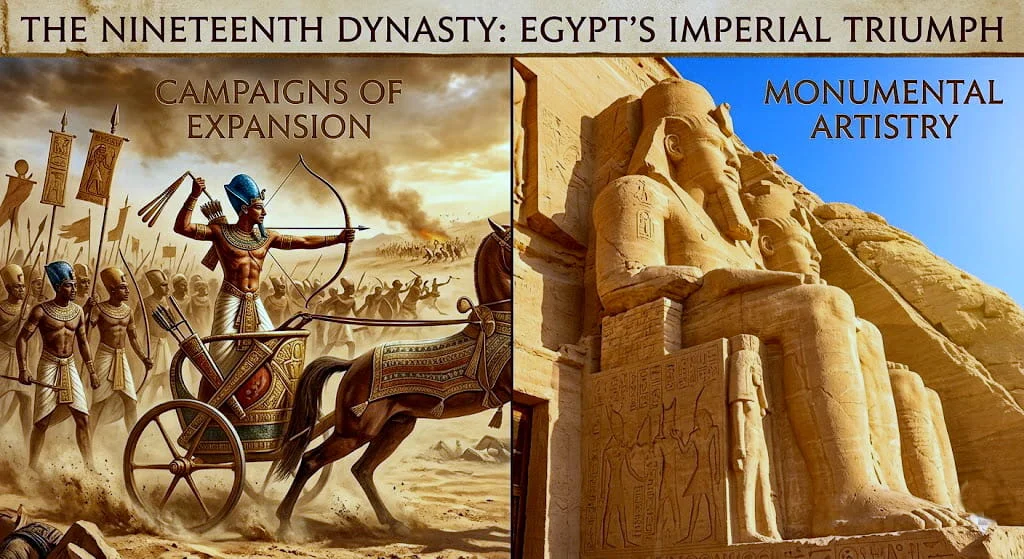
The Nineteenth Dynasty of Egypt marks a triumphant era that rescued the nation from the political and religious chaos of the late Eighteenth Dynasty by placing power in the hands of a battle-tested military family. Led by iconic warrior-pharaohs like Seti I and Ramesses II, the dynasty rejected isolationism in favor of aggressive foreign conquest, famously clashing with the Hittite Empire at the Battle of Kadesh and signing the world’s oldest surviving international peace treaty. Ultimately, these pharaohs used the immense wealth gained from their military victories to fund an unprecedented renaissance of monumental architecture—including the Great Hypostyle Hall at Karnak and the rock-cut temples of Abu Simbel—permanently defining the ultimate historical image of pharaonic majesty.
The Eighteenth Dynasty of Egypt: The Golden Age & Imperial Power
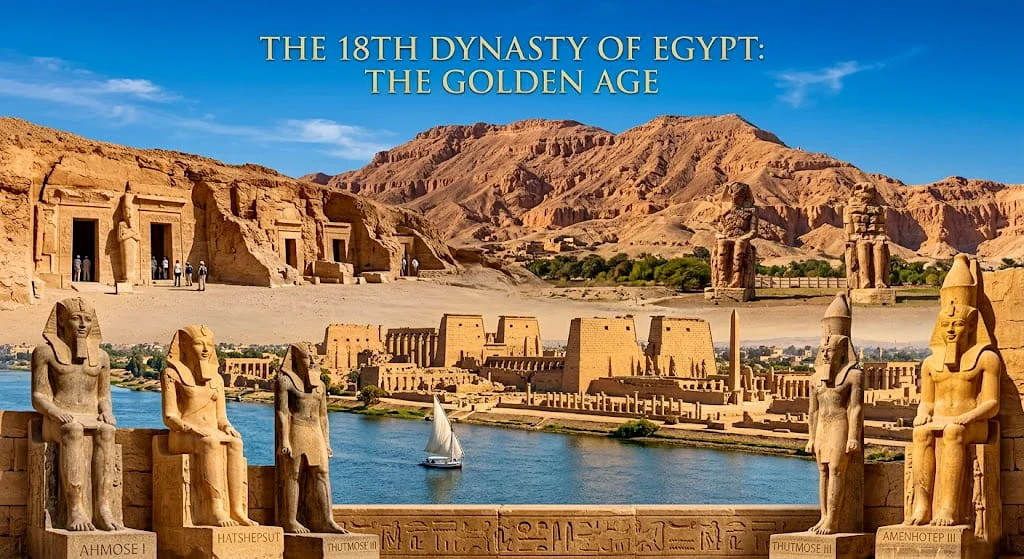
The Eighteenth Dynasty of Egypt (c. 1550–1295 BCE) marks the dawn of the New Kingdom, transforming a once-fractured nation into a dominant global superpower. Founded by Ahmose I after the expulsion of the Hyksos, this “Golden Age” is defined by aggressive military expansion, immense wealth, and unprecedented architectural mastery. The era saw the rise of legendary figures who permanently reshaped history: Hatshepsut expanded empire through lucrative maritime trade, Thutmose III drove military conquests to the Euphrates, and Amenhotep III achieved a pinnacle of luxury and international diplomacy. Even when Akhenaten’s radical monotheistic sun-worship at Amarna plunged the state into religious crisis, the traditional order was swiftly restored by Tutankhamun and consolidated by Horemheb, leaving behind a monumental legacy that remains the ultimate showcase of pharaonic opulence.
The Seventeenth Dynasty: Architects of Liberation
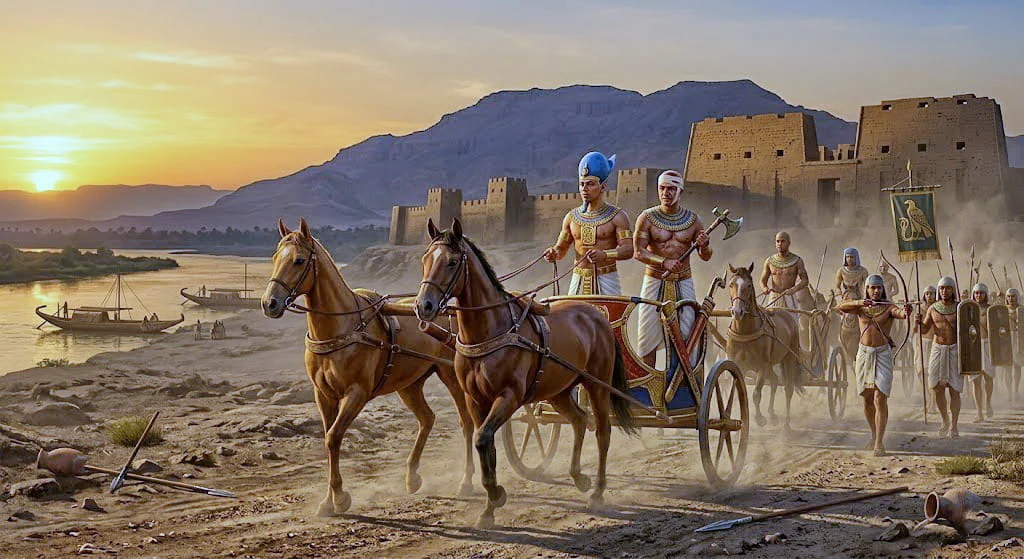
The Seventeenth Dynasty of Egypt serves as the essential bridge between the political fragmentation of the Second Intermediate Period and the imperial glory of the New Kingdom. By systematically consolidating power through administrative reforms and economic stabilization, these Theban rulers transformed a vulnerable region into a capable military force. Through strategic military innovations—most notably the integration of chariot warfare—and the determined, aggressive campaigns of kings like Seqenenre Tao and Kamose, the dynasty effectively broke the Hyksos blockade. This era of liberation, capped by the administrative revitalization of the state, successfully reunified the Nile Valley and provided the stable foundation necessary for Egypt’s future rise as a dominant ancient power.
The Sixteenth Dynasty of Egypt: Survival and Resistance in Fractured Thebes

The Sixteenth Dynasty of Egypt represents a resilient, albeit politically fractured, era of the Second Intermediate Period characterized by its struggle against environmental crises, famine, and the encroaching Hyksos Empire. Despite enduring severe economic isolation, resource shortages, and military setbacks—including the temporary occupation of Thebes—this dynasty successfully preserved core Egyptian religious and administrative institutions. Their enduring resistance in the face of these immense pressures acted as a vital cultural bridge, providing the essential political and organizational foundation for the eventual rise of the Seventeenth Dynasty and the eventual reunification of the Nile Valley under the New Kingdom.