The Mastaba of Prince Unas-Ankh: Exploring the Life of a Fifth Dynasty Prince

The Tomb of Unas-Ankh serves as a vital historical bridge within the Saqqara Necropolis, marking the transition between the Fifth and Sixth Dynasties. As the eldest son of Pharaoh Unas, the Prince built a sophisticated limestone mastaba featuring vivid reliefs of Nile life and elite offering rituals. His premature death triggered a major succession crisis, making this monument a primary source for understanding the political and artistic evolution of the late Old Kingdom.

Hidden within the shadow of the world’s oldest stone “book”—the Pyramid of Unas—lies a structure that tells a more personal story of Old Kingdom royalty. While the Pharaoh Unas secured his immortality through the first-ever recording of the Pyramid Texts, his eldest son, Prince Unas-Ankh, remains a poignant figure of a dynasty at a crossroads. His tomb, a sophisticated mastaba located just north of his father’s monumental causeway, is not merely a funerary monument; it is a vital archaeological record of the late Fifth Dynasty (c. 2375–2345 BC). To understand the Tomb of Unas-Ankh, one must first understand the weight of the name he carried. As the “King’s Son of his Body,” Unas-Ankh was the designated heir to the Horus throne. Yet, the history of Ancient Egypt is often written in the gaps of what didn’t happen. Unas-Ankh never wore the Double Crown. His premature death created a vacuum in the royal lineage, a succession crisis that eventually saw the rise of King Teti and the dawn of the Sixth Dynasty.

FUN

The Silent Prince of Saqqara: The Tomb of Unas-Ankh

The Silent Prince of Saqqara The Tomb of Unas-Ankh

The mastaba itself is a masterclass in Old Kingdom elite architecture. Unlike the austere and cryptic interior of his father’s pyramid, Unas-Ankh’s tomb offers a vivid window into the “Beautiful West.” Through its limestone corridors, we find the artistic transition from the grand solar-focused theology of the early 5th Dynasty to the more personalized, biographical funerary cults that would define the later centuries of Saqqara’s history.

In this comprehensive guide, we will peel back the layers of sand and time to explore:

  • The genealogical mystery of the Prince’s life and sudden death.
  • The architectural layout of the mastaba, from its decorated offering chapel to its subterranean burial vault.
  • The artistic evolution of Saqqara’s reliefs during the transition between the 5th and 6th Dynasties.
  • This tomb functions as a crucial piece of the Saqqara Necropolis puzzle, bridging the gap between the solar kings and the decentralized power of the later Old Kingdom.

Whether you are a scholar of Egyptology or a traveler seeking the hidden gems of the Giza plateau’s southern neighbor, the Tomb of Unas-Ankh offers an intimate look at a prince who lived in the golden age of the Pyramid builders.

The Prince Who Never Ruled: Lineage and the Succession Crisis

Prince Unas-Ankh occupied a unique place in the Fifth Dynasty. He was the eldest son of Pharaoh Unas. His mother was likely Queen Nebet or Queen Khenut. By all accounts, he was the rightful heir to the throne of Egypt.

However, history took a different turn. Unas-Ankh died before his father. This event changed the course of the Old Kingdom. Because he died young, the direct male line of Unas ended. This created a major power vacuum in the royal court.

The Rise of the Sixth Dynasty

The death of the Prince forced a shift in leadership. King Teti eventually took the throne. Teti was not Unas’s son. He likely married Princess Iput I, the sister of Unas-Ankh. This marriage gave Teti the legitimacy he needed to rule.

By studying the Tomb of Unas-Ankh, we see the final days of the Fifth Dynasty. It represents a bridge between two eras. The transition was not just political; it was also cultural.

FUN

The Strategic Location: Saqqara’s Royal “Neighborhood”

The Strategic Location Saqqara’s Royal Neighborhood

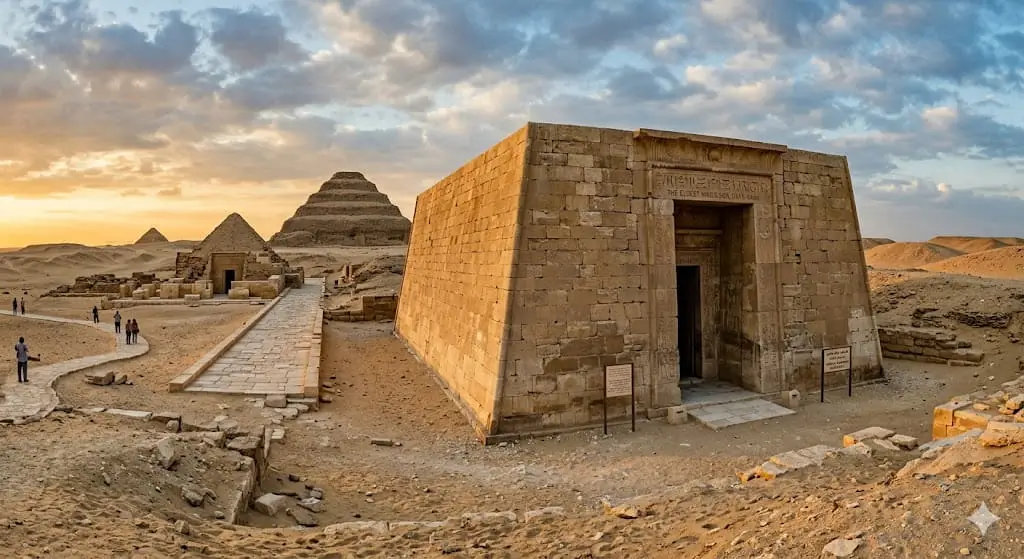
The placement of a tomb was never accidental in Ancient Egypt. The Mastaba of Unas-Ankh sits in a highly prestigious area. It is located just north of the Unas Causeway.

Proximity to Power

Building near the King’s causeway was a mark of extreme favor. This 750-meter path connected the Valley Temple to the Pyramid. By placing his son here, Pharaoh Unas ensured the Prince remained part of the eternal royal ritual.

Surrounding Monuments

The Prince is surrounded by the elite of the Old Kingdom. His neighbors include:

  • The Mastaba of Mehu: A high-ranking vizier from the early 6th Dynasty.
  • The Mastaba of Nebet: His mother’s own burial place.
  • The Pyramid of Unas: The final resting place of his father.

This “royal cluster” highlights the centralization of power at Saqqara. Every stone in this area was placed to reinforce the King’s divinity and the loyalty of his family.

The Catacombs of Kom Esh-Shokafa: Roman-Egyptian Underworld

Descend into one of the "Seven Wonders of the Middle Ages" at the Catacombs of...
Related post
FUN

Architectural Mastery: Inside the Mastaba of Unas-Ankh

The design of the Tomb of Unas-Ankh follows the classic Mastaba style of the late Old Kingdom. “Mastaba” is the Arabic word for “bench.” It refers to the rectangular, flat-roofed shape of these elite tombs. The Prince’s tomb is built primarily from high-quality Tura limestone.

The Entrance and Offering Chapel

The journey begins at the entrance on the eastern side. In Ancient Egypt, the east represented life and the rising sun. You first enter the Offering Chapel. This was the most public part of the tomb.

Here, family members and priests would gather. They left food, drink, and incense for the Prince’s spirit. The walls are thick, designed to protect the “Ka” or soul of the deceased.

The False Door: A Portal to the Afterlife

Inside the chapel, you will find the False Door. This is one of the most important features of the tomb. It is not a real door for humans. Instead, it served as a magical gateway.

The Egyptians believed the Prince’s spirit could pass through this stone door. He would enter the world of the living to receive offerings and then return to the afterlife. The door is covered in fine carvings. These include the Prince’s names and his many honorary titles.

The Serdab and the Ka-Statue

Hidden behind the walls is a small, sealed room called the Serdab. This room usually contained a life-sized statue of Unas-Ankh.

The Serdab had a tiny slit in the masonry at eye level. This allowed the statue to “see” the offerings being made in the chapel. If the physical body of the Prince was damaged, his soul could reside in this statue instead.

The Subterranean Burial Chamber

While the chapel is at ground level, the actual burial took place deep underground. A vertical burial shaft descends from the roof of the mastaba.

  • The Shaft: Usually 10 to 15 meters deep.
  • The Chamber: At the bottom lies the burial room.
  • The Sarcophagus: This room housed the massive stone sarcophagus.

Unlike the decorated walls of the chapel, the burial chamber for a Prince was often simpler than a King’s. It focused on protection and peace rather than the complex inscriptions found in the Pyramid of Unas.

The Tomb of Pay and Raia: A Masterpiece of New Kingdom Art at Saqqara

The Tomb of Pay and Raia is a remarkable "temple-tomb" located in the New Kingdom...
Related post
FUN

Artistic Legacy: The Reliefs and Scenes of Daily Life

Artistic Legacy The Reliefs and Scenes of Daily Life

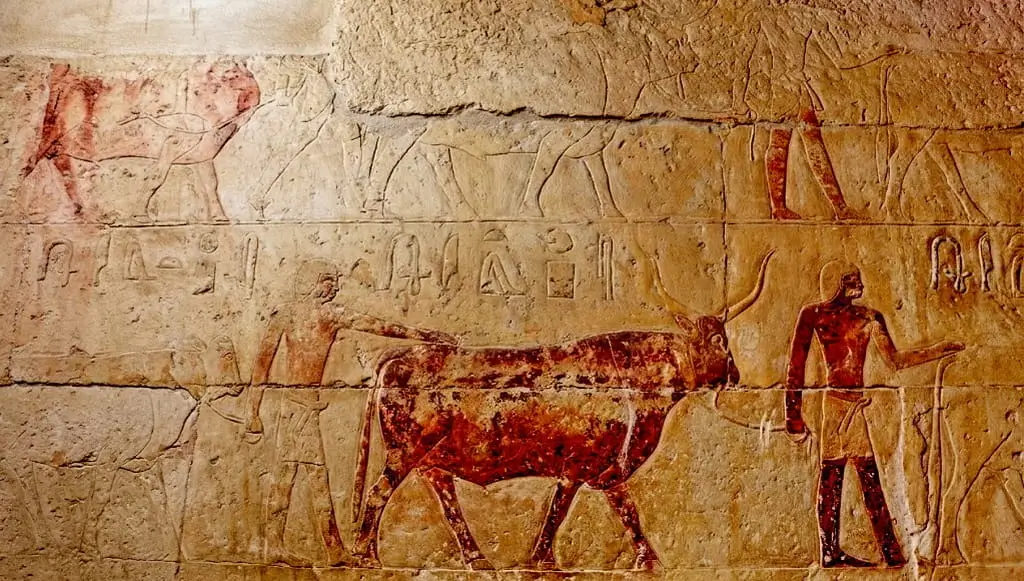
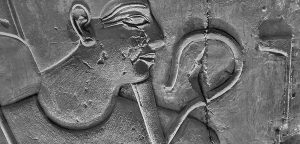
The walls of the Mastaba of Unas-Ankh act as a permanent record of the Prince’s expectations for the afterlife. In the Old Kingdom, art was functional. By carving scenes of abundance onto the walls, the Egyptians believed those items would manifest for the deceased in the next world.

The Scenes of the Marshes

One of the most striking features of this tomb is the depiction of the Egyptian marshes. You can see detailed carvings of:

  • Fishing and Fowling: The Prince is often shown observing or participating in the harvest of the Nile.
  • Papyrus Thickets: The artists captured local wildlife, including hippos, crocodiles, and various species of birds, with incredible botanical and zoological accuracy.

These scenes represent more than just hobbies. They symbolize the triumph of order over the chaos of the wild delta.

The Procession of Offering Bearers

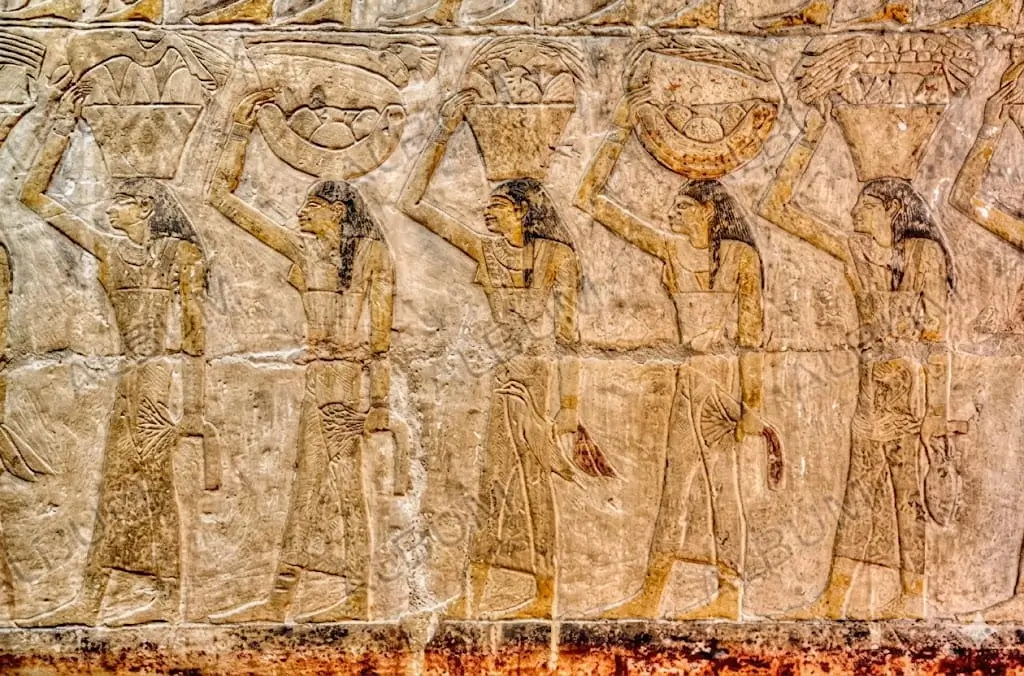
A major portion of the wall space is dedicated to the “Offering Procession.” Long lines of servants are carved in low relief. They carry baskets filled with bread, jars of beer, cuts of meat, and lotus flowers.

These figures represent the various estates owned by the royal family. Each figure is often labeled with the name of a specific village or farm. This provides historians with a “map” of the economic power held by Prince Unas-Ankh during the late Fifth Dynasty.

Artistic Style: The Transition to the Sixth Dynasty

If you look closely at the carvings, you will notice a high level of detail in the musculature and clothing. This reflects the “Saqqara Style” of the late Old Kingdom.

  • Depth: The reliefs are shallow but incredibly precise.
  • Color: While much of the original paint has faded over 4,000 years, traces of red ochre, yellow, and Egyptian blue can still be found in protected corners.

The Tomb of Horemheb in Saqqara: The Temple-Tomb of Egypt’s Greatest General

The Tomb of Horemheb in Saqqara is a pre-royal masterpiece that reflects the General’s immense...
Related post
FUN

Religious Significance: The Cult of the Prince
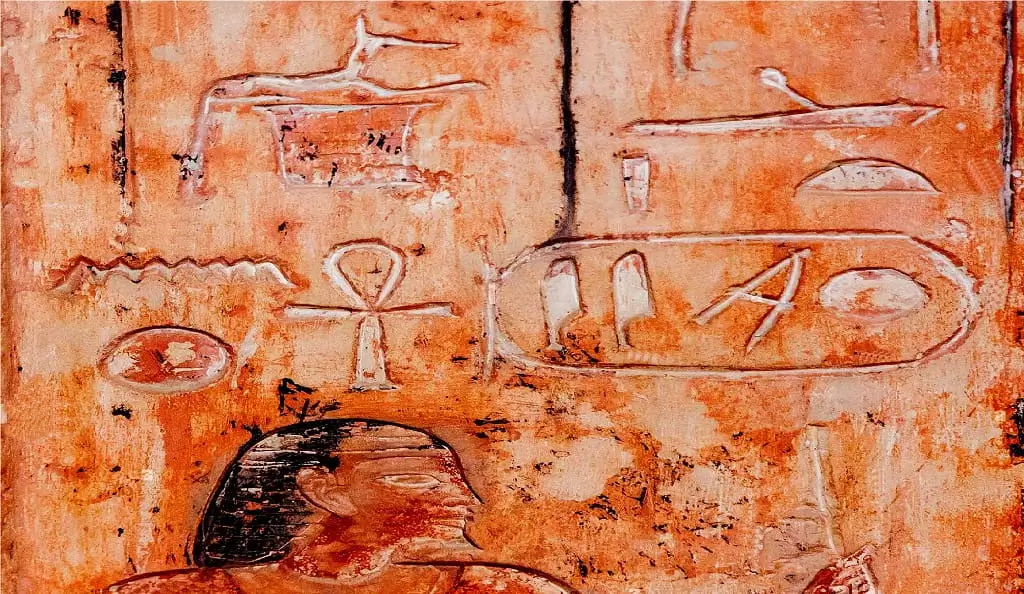
Religious Significance The Cult of the Prince

The Ritual of the “Opening of the Mouth”

Before the tomb was sealed, priests performed the “Opening of the Mouth” ceremony. They used symbolic tools to touch the face of the Prince’s statue and his reliefs. This ritual was believed to allow the Prince to breathe, eat, and speak in the afterlife.

The Role of the Hem-Ka (Soul Priests)

The Prince’s estate would have paid for a dedicated staff of priests, known as Hem-Ka. Their job was to:

  1. Recite offering formulas daily.
  2. Bring fresh water and food to the offering table.
  3. Maintain the physical structure of the mastaba.

Without these rituals, the Egyptians believed the Prince would face a “second death”—total non-existence. By documenting these rituals in your content, you highlight the deep spiritual anxiety and hope of the Fifth Dynasty elite.

The Succession Crisis: How a Prince’s Death Changed History

The death of Prince Unas-Ankh did more than grieve a father. It shattered the direct line of the Fifth Dynasty. Historians often view this moment as a pivotal turning point for the Old Kingdom.

The End of a Golden Era

Pharaoh Unas ruled for approximately 30 years. During his reign, Egypt enjoyed stability and artistic growth. As the eldest son, Unas-Ankh prepared to take the throne. He studied the rituals, managed royal estates, and built his tomb near his father’s pyramid to show his status.

When Unas-Ankh died prematurely, he left no male heir to follow him. This tragedy forced the royal court into a difficult position. Pharaoh Unas reached the end of his life without a clear successor from his “body.”

The Rise of King Teti and the Sixth Dynasty

Nature abhors a vacuum, and so does Egyptian royalty. King Teti eventually seized the opportunity to lead. Most scholars believe Teti lacked royal blood. To bridge this gap, he married Princess Iput I.

Iput was the daughter of Unas and, likely, the sister of Unas-Ankh. By marrying her, Teti “bought” his way into the royal bloodline. This move effectively ended the Fifth Dynasty and birthed the Sixth.

Evidence in the Stones

We see the tension of this transition in the Saqqara necropolis itself. Unas-Ankh’s mastaba sits finished and grand, yet the nearby monuments of the Sixth Dynasty show a power shift. The viziers and high officials began to build even larger tombs. This suggests that while the King’s family struggled with succession, the “bureaucracy” gained more influence.

Visitor’s Guide: Exploring the Tomb of Unas-Ankh Today

For the modern traveler, Saqqara offers a more intimate experience than the crowded Giza Plateau. Visiting the Tomb of Unas-Ankh allows you to step away from the tour groups and see the Old Kingdom up close.

How to Find the Tomb

The mastaba sits in the North Cemetery of Saqqara. It rests on the northern side of the Unas Causeway. Most visitors walk right past it on their way to the Pyramid of Unas, but the discerning explorer knows to stop here first.

Essential Travel Tips

  • Location: Saqqara Necropolis, roughly 30km south of Cairo.
  • Timing: Arrive early at 8:00 AM to beat the heat and the crowds.
  • Photography: Most tombs in Saqqara require a separate photography pass for professional cameras. However, you can often use a mobile phone for a small fee.
  • Footwear: Wear sturdy shoes. The path along the causeway consists of uneven limestone and soft sand.

Why You Should Visit

While the Step Pyramid of Djoser is the “star” of Saqqara, the Tomb of Unas-Ankh provides the context. It shows the human side of royalty. You aren’t just looking at a pile of stones; you are standing in the memorial of a son who never got to fulfill his destiny.

Explore the marvelous historical monuments of Egypt....
Explore Egypt's Metropolitan Cities: 4-Day Private Tour of Cairo & Alexandria...
God_Anubis_Icon

AMAZING Layover Tour

We had the MOST amazing layover tour with Egypt Fun Tours. Hanni was amazing, and we loved every moment. Pyramids, authentic food, and Islamic Cairo – amazing!

More »

11 Wonderful Hours in Cairo

I had an 11 hour layover in Cairo, and it couldn’t have been better spent than with Manal from Egypt Fun Tours. I was able to adjust my tour once we left the airport and Manal had some really great suggestions when I told her what it was I wanted

More »

A great day!!!!

Thank you Hamada for an incredible day! Thank you for the stories and the history, you are so knowledgeable and we didn’t feel rushed at all or like we missed out on things, will definitely be recommending this tour to everyone 🙂

More »

Egypt Fun Tours – Does it All!

My husband and I visited Egypt in March 2013. First, let me say, ‘Go, go, go!’ – it’s safer and definitely friendlier than many places we’ve visited. Tourism is drastically down – thanks mostly to media misinformation – so it’s a great time to visit to avoid line-ups and crowds

More »
God_Anubis_Icon

Top-rated Tour Packages

God_Anubis_Icon