The Mastaba of Kagemni: The Ultimate Guide to Saqqara’s Artistic Masterpiece

The Mastaba of Kagemni is Saqqara’s premier example of 6th Dynasty artistic mastery, featuring the finest high-relief carvings in the Old Kingdom. As Vizier to King Teti, Kagemni commissioned a massive 32-room complex renowned for its lifelike marshland scenes and detailed records of daily life. Today, it remains a vital historical archive, offering a perfectly preserved window into the political power and sophisticated craftsmanship of Egypt’s final "Pyramid Age" before the First Intermediate Period.

The Pinnacle of 6th Dynasty Artistry

The Mastaba of Kagemni stands as the most visually stunning private tomb in the Saqqara necropolis. Located immediately north of the Pyramid of Teti, this funerary complex serves as a vivid window into the height of the 6th Dynasty. While royal pyramids often focus on the king’s celestial journey, the Mastaba of Kagemni provides a rich record of the earthly world through the finest high-relief carvings in Egypt.

Kagemni occupied the most powerful position in the land beneath the Pharaoh: the Vizier. As the Chief Justice and Overseer of the King’s Works, he commanded the empire’s finest craftsmen to build his “House of Eternity.” Consequently, the tomb demonstrates both his immense political influence and the artistic maturity of the era. The walls do not merely depict static scenes; instead, they pulsate with the energy of the Nile, showing hippopotami fighting and birds taking flight with remarkable realism.

In this authoritative guide, we analyze the architectural layout of this massive 32-room complex. Furthermore, we examine Kagemni’s unique relationship with King Teti and why this tomb remains a cornerstone for understanding Old Kingdom social structures. Whether you are a researcher or a traveler visiting, the Mastaba of Kagemni offers an unparalleled encounter with the elegance of ancient Egyptian life.

The Man Behind the Tomb: Vizier Kagemni’s Rise to Power
The Man Behind the Tomb Vizier Kagemni's Rise to Power

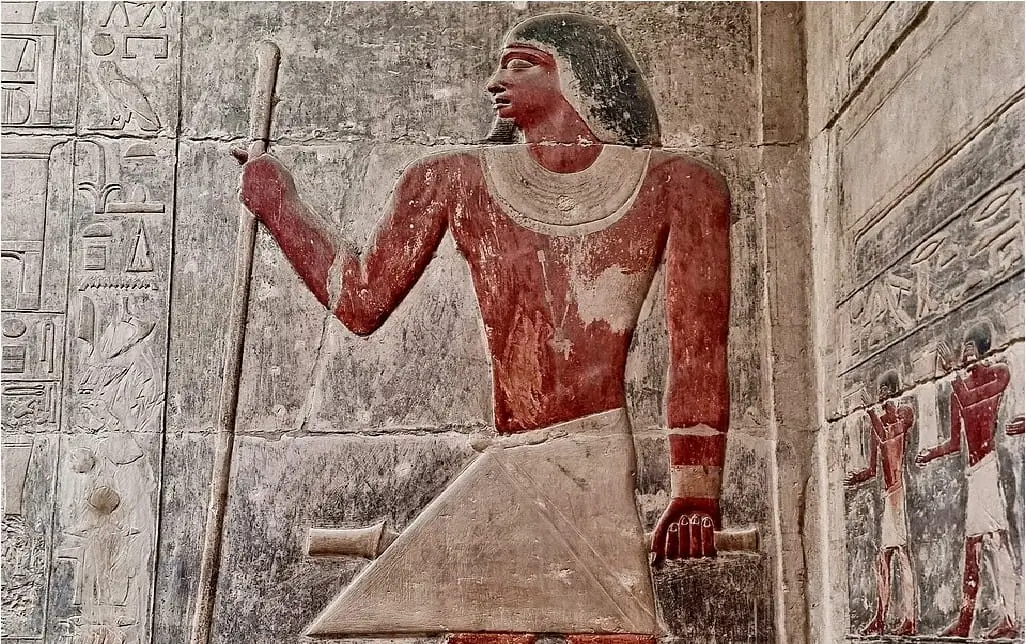
Understanding the magnificence of the site requires a closer look at the man who commissioned it. Kagemni was not merely an official; he was the highest-ranking administrator during the reign of King Teti. Because he held the titles of “Chief Justice” and “Vizier,” he oversaw the entire judicial and executive branches of the Egyptian state.

Initially, Kagemni served under previous monarchs, but he reached the zenith of his career at the start of the 6th Dynasty. His marriage to Nebty-nubkhet, likely a daughter of King Teti, solidified his bond with the royal family. Therefore, his tomb’s proximity to the King’s pyramid reflects his status as a trusted member of the inner circle. This political proximity allowed him the resources to construct a mastaba that rivals royal structures in its complexity.

FUN

Architectural Marvels: Navigating the 32 Chambers of the Mastaba

Architectural Marvels Navigating the 32 Chambers of the Mastaba

The Mastaba of Kagemni is famous for its sheer scale and complexity. Spanning over 1,000 square meters, the layout includes 32 rooms and shrines, making it one of the largest private funerary monuments in Saqqara. This expansive design allowed the Vizier to dedicate specific rooms to different aspects of his life and the rituals required for his transition into the afterlife.

Upon entering the tomb from the east, visitors pass through a majestic doorway into a large vestibule. From here, a series of halls leads deeper into the structure, eventually reaching the pillared courtyard. This architectural progression symbolizes the journey from the public world of the living into the private, sacred space of the spirit. Furthermore, the builders utilized high-quality Tura limestone for the walls, providing a smooth, durable canvas for the master carvers to execute their work.

The Masterpieces of the Mastaba of Kagemni: Analyzing the Reliefs

While the architecture is impressive, the high-relief carvings truly define the tomb’s legacy. Unlike the flatter reliefs found in earlier dynasties, the 6th Dynasty artists at this site utilized a “high-relief” technique. This method gives the figures a three-dimensional quality, allowing light and shadow to play across the limestone surfaces.

Scenes of the Nile and Marshlands

Scenes of the Nile and Marshlands

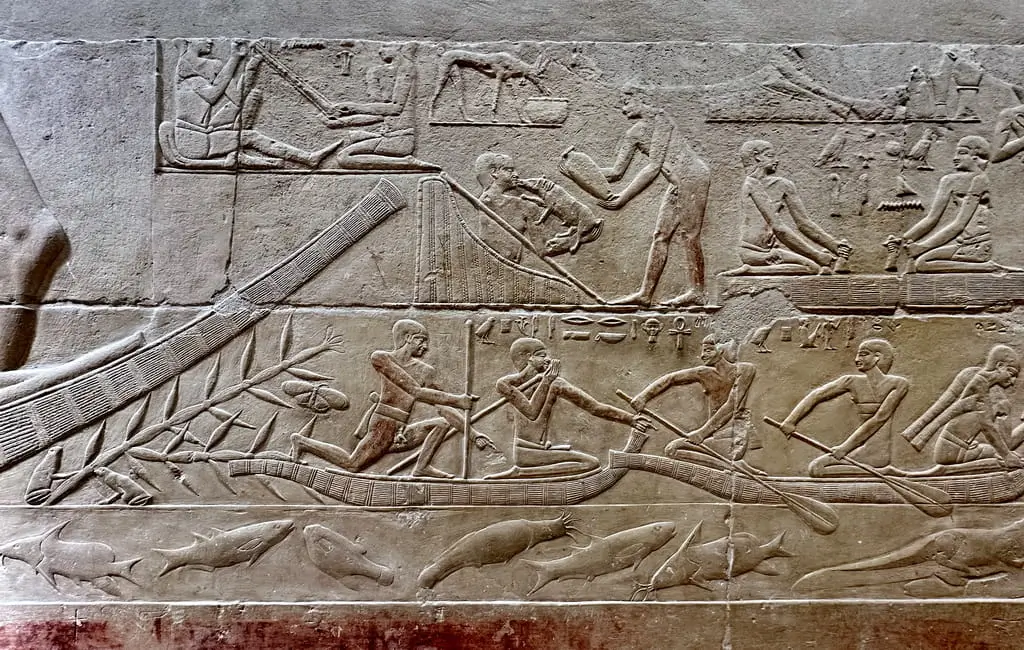
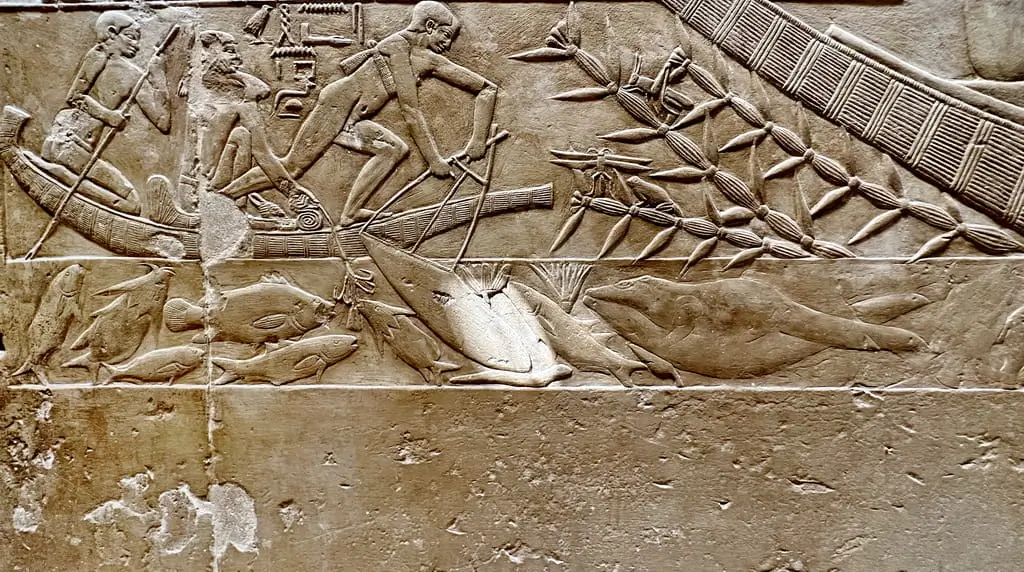
The marshland scenes are perhaps the most celebrated artistic achievements in the Mastaba of Kagemni. One famous relief depicts a group of men in papyrus boats crossing a river. Beneath the boats, the water teems with life; you can clearly see crocodiles, hippopotami, and various species of fish. Because the artists paid such close attention to anatomical detail, modern biologists can still identify the specific types of Nile perch and catfish depicted on these walls.

Agricultural and Daily Life Records

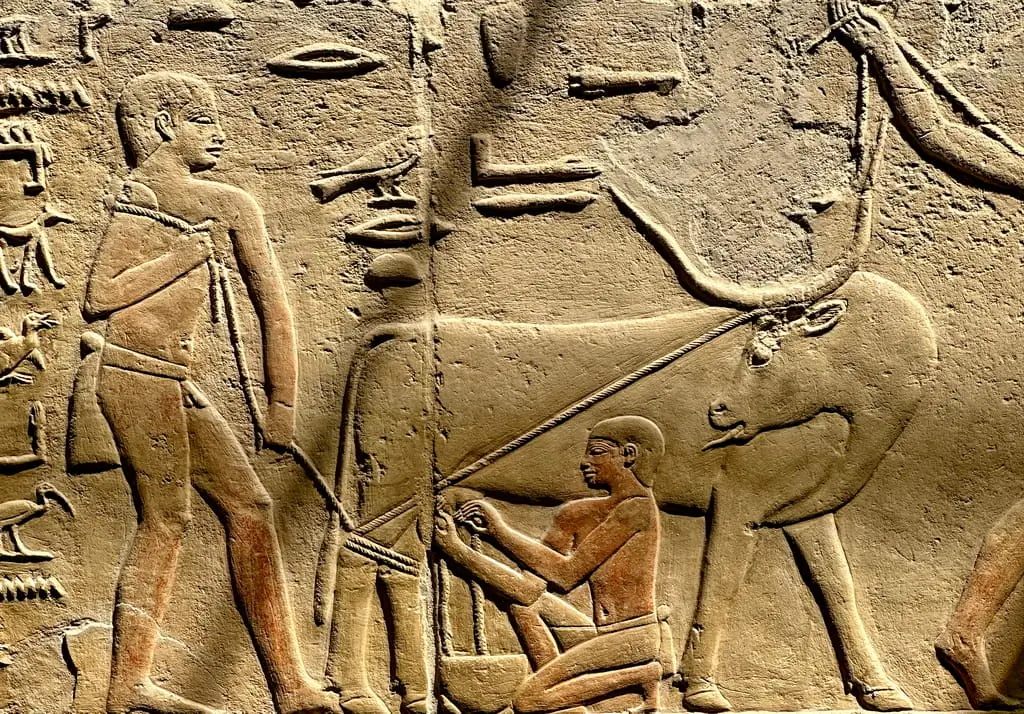
Beyond the river, the reliefs document the complex logistics of a vizier’s estate. You can see detailed sequences of cattle being led across water, goats being fed, and scribes meticulously recording the harvest. These scenes served a dual purpose: they preserved the memory of Kagemni’s earthly success and magically ensured that these resources followed him into the next life. Consequently, the tomb functions as an eternal ledger of the Vizier’s wealth and professional competence.

FUN

The Cult of the Dead: The Pillared Hall and Offering Room

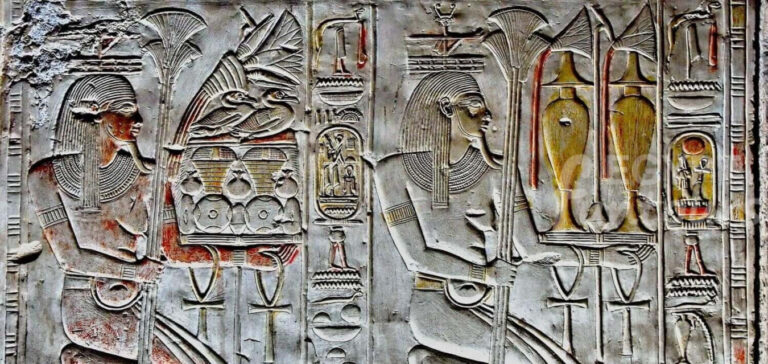
At the heart of the complex lies the pillared hall, featuring three massive square columns. This room acted as a gathering place for the priests who maintained Kagemni’s funerary cult. Because the Egyptians believed the soul required physical nourishment, these priests performed daily rituals and placed food offerings upon a stone altar.

The most sacred area is the offering chamber at the rear of the mastaba. Here, a “False Door” stands as a spiritual portal. The Egyptians believed Kagemni’s Ka (life force) could pass through this stone door to receive the essence of the offerings left by his family. Therefore, every relief and architectural choice in the Mastaba of Kagemni aimed to bridge the gap between the world of the living and the eternal realm of the dead.

The Relationship Between Kagemni and King Teti

The Relationship Between Kagemni and King Teti

To understand the scale of the Mastaba of Kagemni, one must analyze the political climate of the early 6th Dynasty. King Teti, the first pharaoh of this era, faced a kingdom that was gradually shifting toward decentralized power. Consequently, he relied heavily on loyal officials like Kagemni to maintain the authority of the central government.

Kagemni’s status as “Vizier” and “Chief Justice” made him the second most powerful man in Egypt. His marriage to King Teti’s daughter, Nebty-nubkhet, further cemented this bond, effectively making him a member of the royal family. This familial connection explains why his tomb sits in such a prestigious location, immediately north of Teti’s pyramid. By placing his “House of Eternity” in the King’s shadow, Kagemni ensured that his soul would share in the divine protection and offerings provided to the Pharaoh himself.

The Catacombs of Kom Esh-Shokafa: Roman-Egyptian Underworld

Descend into one of the "Seven Wonders of the Middle Ages" at the Catacombs of...
Related post
FUN

Symbolism and Status: Decoding the Vizier’s Titles

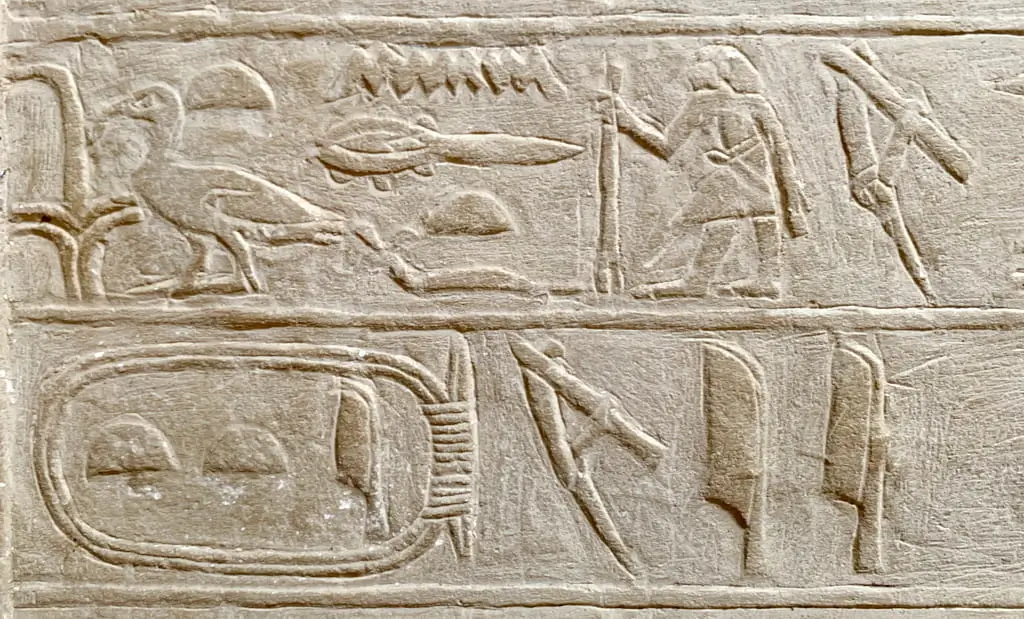
The walls of the Mastaba of Kagemni are inscribed with over 50 different titles, each reflecting a specific responsibility or honor. These inscriptions do more than list a resume; they establish Kagemni’s moral and professional fitness for the afterlife.

  • Overseer of the King’s Works: This title suggests Kagemni likely supervised the construction of Teti’s own pyramid. His expertise in architecture is reflected in the sophisticated design of his own 32-room mastaba.
  • Chief Justice: As the head of the legal system, Kagemni represented Ma’at (divine balance) on earth. Reliefs showing him receiving petitions and overseeing scribes emphasize his role as a fair and orderly administrator.
  • Priest of Ma’at: This title highlights the religious nature of his civil duties. In the Old Kingdom, law and religion were inseparable, and Kagemni’s tomb serves as a monument to his lifelong commitment to social order.

Saqqara: Guide to Egypt’s Eternal Necropolis and the Evolution of the Pyramid

Saqqara is a vast ancient necropolis near Cairo, serving as the burial ground for the...
Related post
FUN

Expert Travel Tips: Visiting the Mastaba of Kagemni

Expert Travel Tips Visiting the Mastaba of Kagemni

For your Egypt Fun Tours guests, the Mastaba of Kagemni is often a highlight because of its incredible preservation. In 2026, new site enhancements have made the experience even more immersive for photography and research.

  • Lighting and Detail: The Ministry of Antiquities recently installed cold-LED lighting. This technology illuminates the high-reliefs without heat damage, allowing you to see the muscle definition on the cattle and the individual scales on the fish.
  • The Burial Chamber: Unlike many private tombs, Kagemni’s burial chamber is accessible via a deep shaft. It contains a massive stone sarcophagus that still rests in its original position.
  • Best Time for Photography: Visit the tomb in mid-morning. The sunlight enters the eastern vestibule at an angle that creates deep shadows in the high-reliefs, making your photos look incredibly three-dimensional.

Final Verdict: Why Kagemni is a “Must-Visit”

The Mastaba of Kagemni is more than just a grave; it is a museum of the Old Kingdom’s daily life. For those seeking to understand the sophistication of Egyptian society before the First Intermediate Period, this tomb offers the most detailed evidence available. From the tension of a crocodile hunt to the quiet precision of a scribe’s hand, the Vizier’s “House of Eternity” remains a living testament to the pinnacle of 6th Dynasty culture.

The Tomb of Queen Nefertari: Egypt’s “Sistine Chapel” in the Valley of the Queens

Prepare to be amazed. The Tomb of Queen Nefertari (QV66) in the Valley of the...
Related post
FUN

FAQs: Visiting the Tomb of Kagemni

1. How does Kagemni’s tomb compare to the Mastaba of Mereruka?

While both are massive 6th Dynasty vizier tombs, Kagemni’s reliefs are often considered more refined and anatomically precise. Mereruka’s tomb is larger in total rooms (33), but Kagemni’s marshland scenes are the benchmark for Old Kingdom high-relief art.

2. Can I take photos inside the tomb?

In 2026, photography with mobile phones is generally allowed under standard site tickets. However, professional equipment or tripods typically require a specialized permit from the Ministry of Antiquities.

3. What are the “boat pits” found near the tomb?

On the roof of the mastaba, there are two boat-shaped pits. These are rare for a non-royal tomb and signify Kagemni’s extraordinary status, allowing him to “travel” through the sky with the sun god, a privilege usually reserved for Pharaohs.

4. Is the tomb accessible for people with limited mobility?

The main 32 chambers are on the ground level and are relatively easy to navigate. However, the burial chamber requires descending a steep, narrow shaft, which is not accessible to those with mobility issues.

5. Why are the reliefs so well-preserved?

The tomb was buried under the desert sands for millennia, protecting the limestone from wind erosion and vandalism. The high-quality Tura limestone used in the construction also resisted the salt damage that has plagued other Saqqara monuments.

Spend a short Christmas & New Year holiday in Egypt exploring the great legacy of the pharaohs....
This comprehensive tour includes 2 days of sightseeing in Cairo, a day trip to Alexandria, and 5 days of exploration in Luxor and Aswan, complete...
God_Anubis_Icon
15-Day Historical Egypt Tour Package

all good!

we took pyramid and Cairo city tours and all went smoothly. The were very flexible to adapt to our requirements. Car, car driver and guide were great. very knowledgable and professional tour. Very recommendable

More »
Amazing Egypt Tours Vacations in December Egypt Fun Tours

Amazing trip with Egypt Fun Tours

We had the time of our lives on a trip to Egypt and the Bahariya/White Desert with Egypt Fun Tours, too. I would highly recommend this company. They are very familiar with organizing this trip, and this means they are well-connected in the desert area. This was invaluable to us

More »

The best holiday ever!

The Nile cruise, Luxor, and Aswan were amazing sites to see, especially when you have the best tour guide in Egypt. Hamada was absolutely fantastic, lots of information, and some of it not spoken by others. This guy was not only a simple tour guide for us, but he also

More »

Excellent Egypt Adventure – All To Ourselves

Excellent trip to historic sites with no one else around. We came to see Egypt while most places still had COVID-19 fears. The staff at Egypt Fun Tours were professional, safe, and great to deal with. Very helpful, knowledgeable, and entertaining. I feel like I just got a year of

More »
God_Anubis_Icon

Top-rated Tour Packages

God_Anubis_Icon