The Pyramid of Teti: A Gateway to the Pyramid Texts of Saqqara

The Pyramid of Teti serves as the spiritual gateway to Egypt's 6th Dynasty and a cornerstone of the North Saqqara necropolis. While its exterior has weathered into a humble mound of limestone, the interior remains a pristine sanctuary of Old Kingdom belief. It houses the world's second-oldest collection of Pyramid Texts, which are sacred spells designed to launch the Pharaoh's soul into the celestial realm. Surrounded by a "city" of elite mastabas and queenly pyramids, Teti's monument stands as a powerful testament to a king who sought eternal life through the revolutionary power of the written word.

The Pyramid of Teti serves as the vital gateway to Egypt’s 6th Dynasty. It stands in the northern fields of Saqqara, just a short walk from the Step Pyramid of Djoser. While the exterior looks like a humble mound of stone today, the interior remains a masterpiece of spiritual engineering. King Teti founded this dynasty around 2345 BCE. He bridged the transition between the 5th Dynasty and the final era of the Old Kingdom. His monument acts as a “Sun,” surrounded by a vast city of the dead.

You will find the second-oldest collection of Pyramid Texts inside this tomb. These sacred spells guided the King’s soul through the dangerous underworld. They also ensured his rebirth among the stars. Consequently, historians consider this site one of the most important religious archives in human history. Teti’s reign was not just about building; it was about securing eternity through the power of the written word.

Furthermore, the site reveals the deep social bonds of the royal court. Teti’s most powerful viziers built their own massive tombs within his shadow. This layout proves his immense political influence over his officials. Because the interior is so well-preserved, visitors can still feel the weight of this ancient authority. You are not just entering a grave; you are entering a machine designed for the afterlife.

FUN

The Exterior Architecture: A Study in 6th Dynasty Engineering

The Exterior Architecture; A Study in 6th Dynasty Engineering

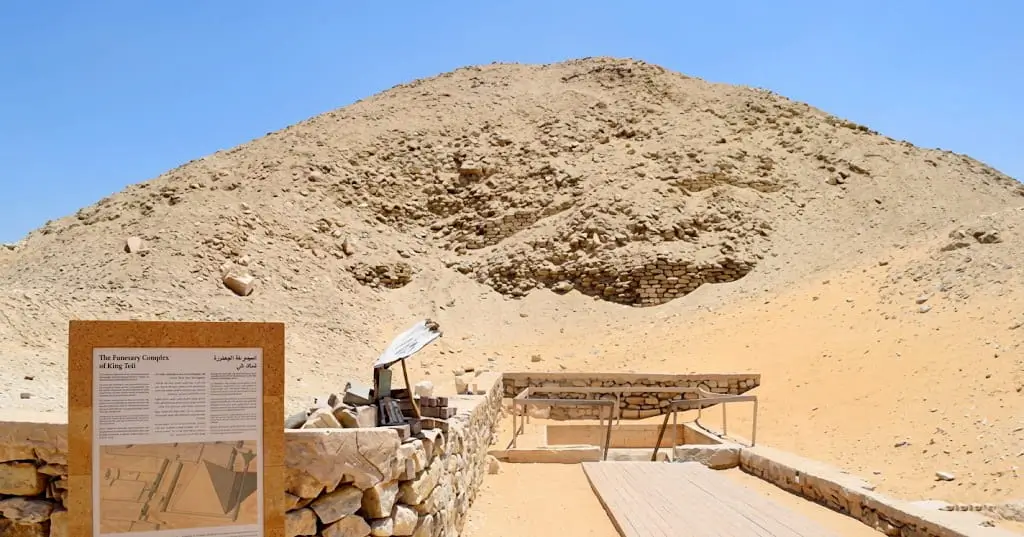
Architects built the Pyramid of Teti using a standard design for the late Old Kingdom. They followed the blueprint of the 5th Dynasty kings. However, they faced different economic and logistical challenges. Today, the pyramid looks like a small hill of rubble. This appearance hides a sophisticated structural core.

The Core and the Casing

The builders used a core of local limestone blocks. They stacked these stones in steps to create a stable frame. Afterward, they filled the gaps with rubble and clay mortar. Finally, they encased the entire structure in fine white Tura limestone. This casing once made the pyramid shine brilliantly in the desert sun. Unfortunately, thieves stripped away this outer layer over the centuries. Without the casing, the inner core began to crumble. This explains the pyramid’s current “soft” shape.

Dimensions and Proportions

  • Original Height: The pyramid originally stood approximately 52.5 meters tall.
  • Base Length: Each side of the base measured about 78.5 meters.
  • Angle of Inclination: The sides rose at a sharp angle of 53 degrees.
  • Precision: Despite the rubble core, the initial measurements were incredibly precise. This shows that Teti still employed the best royal architects of his era.

The Pyramid Chapel and Entrance

You can find the entrance on the north face of the pyramid. A small, simple chapel originally protected this opening. This “North Chapel” served as a place for daily offerings. It also acted as a symbolic gate for the King’s soul. Builders hid the entrance at ground level to discourage grave robbers. Consequently, the passage remained sealed for thousands of years until modern archaeologists rediscovered it.

FUN

The Interior Descent: Entering the Sacred Burial Chambers

The Interior Descent; Entering the Sacred Burial Chambers

You enter the pyramid through a low, narrow opening on the north side. First, you descend a steep passage lined with heavy granite. This granite served as a barrier against ancient tomb robbers. The passage levels out into a horizontal corridor after several meters. Here, the atmosphere changes instantly. The air feels still and ancient.

The Vestibule and the Barrier Stones

The corridor leads you to a small room called the vestibule. In this area, architects installed three massive portcullis slabs. These granite blocks dropped from the ceiling after the burial. They were meant to seal the King’s remains forever. Today, they remain partially visible. They show the incredible effort the 6th Dynasty took to protect their rulers. Furthermore, this transition zone marks the boundary between the physical world and the sacred space of the afterlife.

The Burial Chamber: A House of Eternity

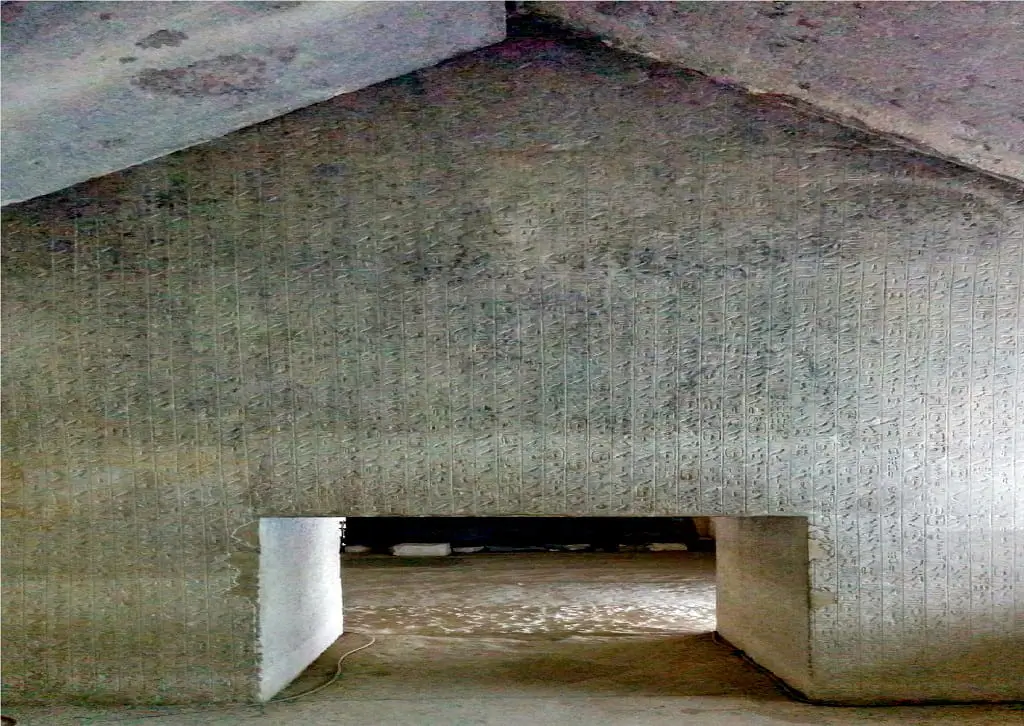
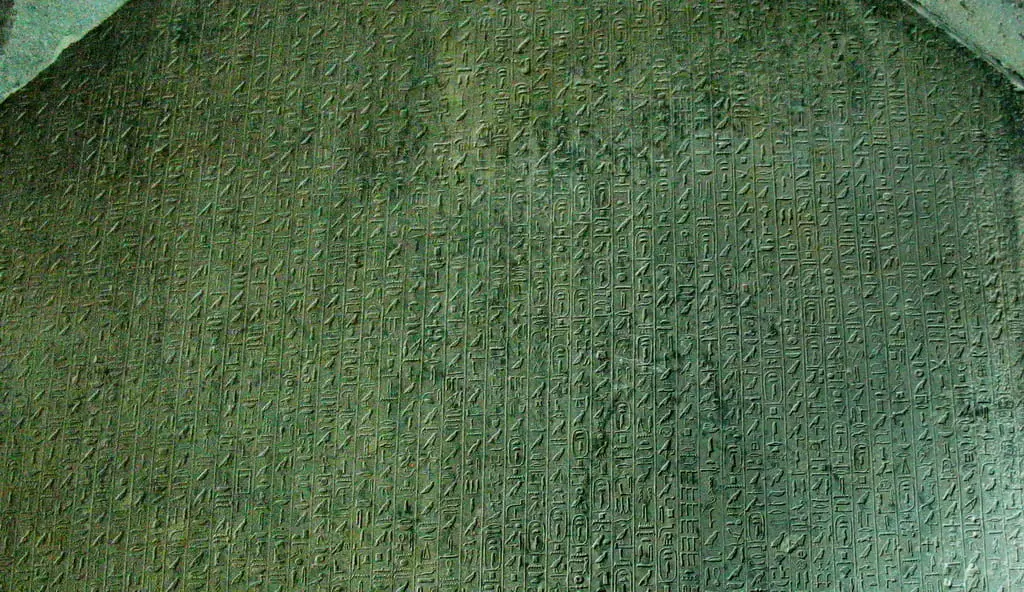
Once you pass the vestibule, you enter the main burial chamber. This room is a masterpiece of religious art. The walls are not bare. Instead, they are covered in vertical rows of hieroglyphs. These are the Pyramid Texts. Every inch of the room serves a magical purpose. Consequently, the chamber functions as a physical script. It speaks of the King’s resurrection into existence.

The Celestial Ceiling

Look up, and you will see a breathtaking sight. The ceiling is not flat; it is a gabled roof decorated with a sea of stars. Carvers cut hundreds of five-pointed stars into the stone. They painted these stars to represent the night sky. This design transformed the burial chamber into a miniature universe. It ensured that Teti would always wake up under a protective, eternal sky. This celestial map gave the King a clear path to join the “Imperishable Stars” in the north.

The Basalt Sarcophagus

The Basalt Sarcophagus

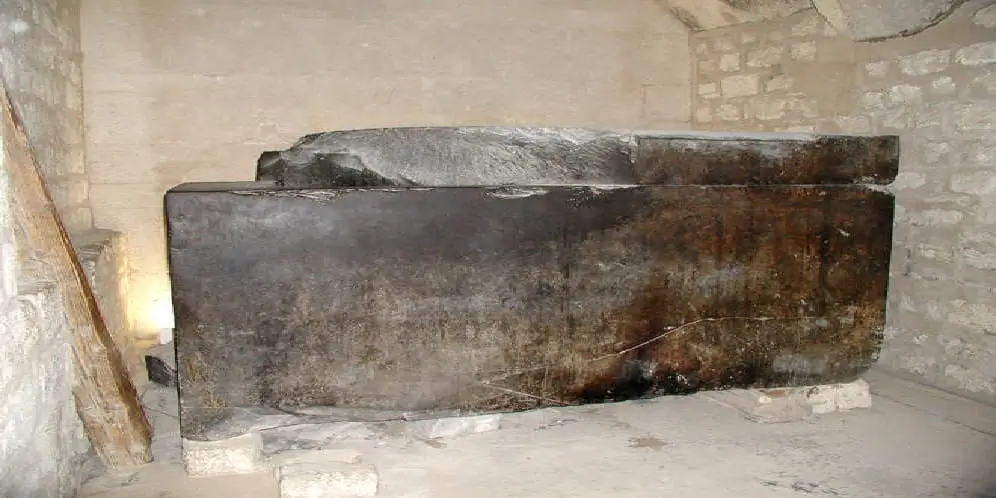
On the western side of the room, you will find Teti’s sarcophagus. It is carved from a single block of dark grey basalt. The stone is incredibly smooth and cold. Interestingly, the sarcophagus contains a single line of inscription. It lists the King’s titles and his relationship to the gods. Even though the pyramid’s exterior has crumbled, this stone box remains perfectly intact. It still stands in its original position, waiting for a king who left four millennia ago.

Dahshur Pyramids: Where Pyramids Were Perfected

Escape the crowds at the Dahshur Pyramids, a true "hidden gem" just south of Saqqara....
Related post
FUN

The Magic of the Pyramid Texts: Spells for the Afterlife

The Magic of the Pyramid Texts; Spells for the Afterlife

The Pyramid Texts are the most significant feature of the Pyramid of Teti. These inscriptions represent the world’s oldest collection of religious literature. They do not tell a story. Instead, they act as a set of magical instructions. The priests carved these spells to ensure the King reached the heavens safely.

The Power of the Written Word

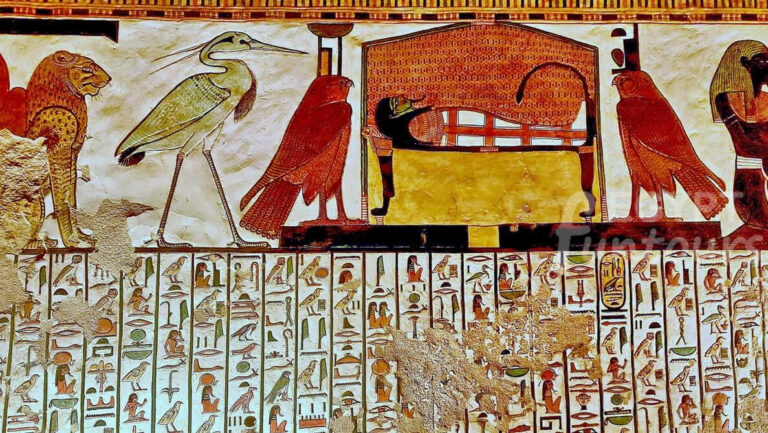
In ancient Egypt, writing was more than communication. It was a creative force. The Egyptians believed that carving a spell made it come alive. Therefore, the walls of Teti’s tomb are literally alive with magic. These texts include hymns, prayers, and protective charms. They were designed to ward off serpents and demons. Furthermore, they gave Teti the secret names of the gods. Knowing these names allowed the King to command the divine forces of the universe.

The Journey to the Stars

Many of these spells focus on the King’s transformation. The texts describe Teti “flying” or “climbing” into the sky. One famous passage says the King becomes a star in the constellation of Orion. By reciting these words, Teti transformed from a mortal ruler into an eternal god. Consequently, the pyramid was not just a house for his body. It was a launchpad for his soul.

The Artistic Style of the 6th Dynasty

The carvings in Teti’s pyramid show a high level of craftsmanship. The hieroglyphs are smaller and more delicate than those found in earlier pyramids. Artists carved them in a shallow relief. Originally, they filled the signs with green pigment. This color symbolized vegetation and rebirth. Today, much of the color has faded. However, the precision of the lines remains perfect. You can still see the individual feathers of birds and the scales of fish in the signs.

The Pyramid of Amenemhat I: The Architectural Rebirth of the Middle Kingdom

Ultimately, the Pyramid of Amenemhat I serves as the perfect bridge between two eras. It...
Related post
FUN

The Complex Layout: Beyond the Main Pyramid

Teti’s monument was the center of a much larger world. A royal funerary complex included several essential buildings. Each building played a role in the King’s cult.

The Mortuary Temple

East of the pyramid stood the Mortuary Temple. This is where priests performed daily rituals. They brought food and drink to the King’s soul. The temple featured a large open courtyard and several storage rooms. These rooms held the vast wealth needed to maintain the cult for centuries. While the temple is now in ruins, you can still trace the foundations of its massive walls.

The Cult Pyramid

A small “satellite” pyramid sits at the southeast corner of the main structure. Scholars call this the Cult Pyramid. It was not used for a burial. Instead, it served as a symbolic home for the King’s Ka, or life force. This ensures that the King’s spirit had a place to reside while his body rested in the main chamber.

The Queens’ Pyramids

Teti also honored his family. To the north and east, he built smaller pyramids for his wives, Queen Iput I and Queen Khuit. These monuments prove that the royal family remained central to the state’s power. Each queen had her own mortuary chapel and burial chamber. This layout shows that the King intended to take his family with him into the eternal afterlife.

The Conspiracy of Teti: A Violent End?

Historical records suggest that Teti’s reign ended in tragedy. The ancient historian Manetho claimed that Teti was murdered by his own bodyguards. If true, this was a shocking event for a civilization that viewed the King as a living god.

Signs of Instability

Evidence in the Saqqara necropolis supports the idea of political tension. After Teti’s death, a mysterious king named Userkare briefly took the throne. He is not listed in the royal family tree. Consequently, many historians believe Userkare was a usurper who led the conspiracy. However, Teti’s son, Pepi I, eventually reclaimed the crown. Pepi I then went to great lengths to erase Userkare’s name from history. This power struggle shows that even in the “Golden Age” of the Old Kingdom, the throne was never entirely safe.

Lahun Pyramid: The Revolutionary Mudbrick Masterpiece of Senusret II

Kahun (or El-Lahun), established during the Middle Kingdom reign of Senusret II around 1895 BCE,...
Related post
FUN

Practical Guide: Visiting the Pyramid of Teti

Visiting the Pyramid of Teti in 2026 is one of the most rewarding experiences in Saqqara. It is often less crowded than the Step Pyramid, allowing for a quiet, respectful visit.

What to Expect

  • The Descent: You will need to crouch as you go down the entrance ramp. It is steep but short. Once you reach the bottom, the chambers open up into high, gabled rooms.

  • Photography: Most visitors can take photos inside using their mobile phones. However, always check with the site guards for the latest rules regarding professional cameras.

  • The Best Time to Visit: Arrive early in the morning (around 8:00 AM). The light in the burial chamber is best when the sun is low, highlighting the depth of the carvings.

Pro Tip for Guides

When standing in the burial chamber, look closely at the basalt sarcophagus. You can see where the ancient masons were still working on the lid. This “unfinished” state is a haunting reminder of the King’s sudden death. It brings the history of the 6th Dynasty to life in a way that no textbook can.

FAQs: The Pyramid of Teti

1. Why does the Pyramid of Teti look like a hill? The pyramid has a mudbrick and rubble core. When the outer limestone casing was stolen, the internal structure collapsed. This is typical for pyramids built during the 6th Dynasty.

2. Who discovered the Pyramid Texts in Teti’s tomb? Gaston Maspero first entered the pyramid in 1882. He discovered the walls covered in spells, changing our understanding of Egyptian religion forever.

3. Is it safe to enter the pyramid? Yes. The Ministry of Tourism and Antiquities has reinforced the interior with modern steel supports. It is one of the most stable and accessible pyramid interiors in Egypt today.

The incredible history and unique culture of Egypt will be in your grasp....
8 Days Wheelchair Tour To Cairo, Nile Cruise & Hurghada...
God_Anubis_Icon

Great shore excursion of Cairo & Giza

We are glad that we arranged our private shore excursion with Egypt Fun tours in last week of October 2012. Booking process was very easy with Hamada and she took care of all our questions promptly just via E-mail. Our group was little worried about safety in Egypt especially because

More »

Big tick off our bucket list!

Booked the evening before and were able to do everything we hoped to in a day, with a knowledgeable guide & at a reasonable price! Lunch was included and absolutely delicious! Learnt about the history of Egypt, which was the most important part of sightseeing in Cairo/Giza. Hamada also gave

More »
9-day tour package - Egypt Fun Tours

You’re in “GREAT HANDS” with Egypt Fun Tours!

We first went to Egypt in July 2010. We were to pass through Cairo on our way to Africa, and we had arranged to be picked up from the Cairo airport and shown around the city during our 6-hour layover. This was arranged through emails with Hamada, of Egypt Fun

More »

Absolutely the best

We visited Cairo over a 15-hour layover. Egypt Fun Tours organized a customized and wonderful experience for us. We could not be happier. The day included a visit to all the great sites, the marketplace, dinner, a boat ride on the Nile, and a host of other special requests. I

More »
God_Anubis_Icon

Top-rated Tour Packages

God_Anubis_Icon