The Tomb of Ptahhotep: The Masterpiece of Old Kingdom Sculpture in Saqqara

The Tomb of Ptahhotep stands as a crowning achievement of 5th Dynasty craftsmanship. As a dual mastaba shared with his son, Akhethotep, the structure showcases a unique family legacy within the Saqqara Necropolis. While Ptahhotep is famous for his philosophical Maxims, his final resting place is equally renowned for its technical "Saqqara School" reliefs. These unpainted limestone carvings reach a level of anatomical precision and daily-life realism—ranging from athletic games to personal grooming—that remains unmatched. For any visitor or historian, the tomb serves as a definitive pillar for understanding the sophisticated aesthetic and intellectual depth of the Old Kingdom elite.

The Saqqara Necropolis holds many secrets, but few are as artistically significant as the Tomb of Ptahhotep. Located just north of the Step Pyramid, this magnificent double mastaba serves as a pinnacle of 5th Dynasty art. While other tombs dazzle with color, Ptahhotep’s sanctuary relies on the sheer elegance of its limestone carvings. It remains a primary destination for those seeking to understand the height of ancient Egyptian craftsmanship.

Tomb of Ptahhotep: A Legacy of Wisdom and Power

Ptahhotep was no ordinary official. He served as the Vizier—the highest-ranking administrator—under the Pharaoh Djedkare Isesi. Beyond his political power, history remembers him for his intellect. He is credited with writing the Maxims of Ptahhotep, a collection of moral advice often cited as the world’s first book of philosophy.

Consequently, his tomb reflects this high status and intellectual depth. This monument is actually a double mastaba, shared with his son, Akhethotep. Together, father and son created a funerary complex that has survived for over 4,300 years.

Why the Tomb of Ptahhotep is Unique

Visitors often rank this tomb as the most beautiful in Saqqara for several reasons:

  • Anatomical Precision: The artists captured every muscle and movement of the human and animal figures.
  • Unpainted Elegance: The lack of paint allows the viewer to focus entirely on the depth and texture of the relief work.
  • Rare Scenes: You will find depictions of daily life, such as gymnastics and personal grooming, that appear nowhere else.

Discover the Tomb of Ptahhotep in This Guide

To help you navigate this sprawling monument, we have structured this authority guide into clear, scannable chapters. We will begin with the architectural layout of the dual chambers. Next, we will decode the symbolism of the reliefs, including the famous banquet and hunting scenes. Finally, we provide expert visitor tips to ensure you capture the best views of these ancient masterpieces.

This guide acts as your digital companion through one of Egypt’s most sophisticated archaeological sites. Let’s start our journey by exploring the structural design of the tomb and how it accommodates two of the Old Kingdom’s most powerful men.

FUN

Architectural Sophistication: The Dual Mastaba Design

Architectural Sophistication; The Dual Mastaba Design

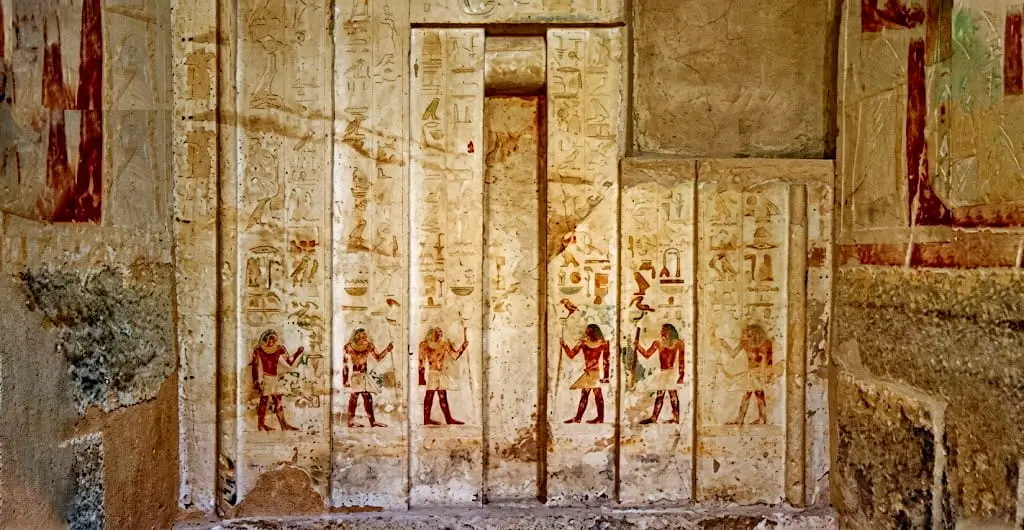
The Tomb of Ptahhotep stands out due to its unusual “dual-occupancy” layout. Unlike standard monuments, this structure serves two generations of the same family. It houses the burial chambers and chapels for both Vizier Ptahhotep and his son, Akhethotep. This shared design provides a fascinating look at the architectural evolution of the 5th Dynasty.

A Strategic Floor Plan

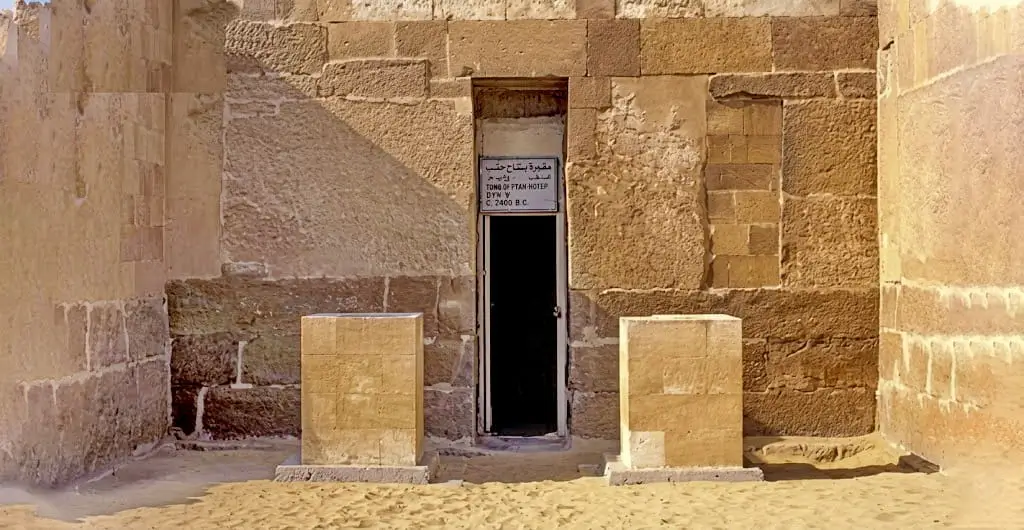
The mastaba follows a complex, multi-room arrangement. While the two men share a single entrance, their individual chapels remain distinct. This separation ensured that both father and son received their own specific offerings and prayers.

  • The Common Entrance: A single doorway on the north side welcomes visitors. This shared space symbolizes the unity of the family line.
  • The Hall of Pillars: After the entrance, you reach a large hall supported by massive stone pillars. This area served as the public face of the monument.
  • The Chapel of Akhethotep: Located to the east, the son’s section is grand and impressive. However, it remains slightly less decorated than his father’s sanctuary.

The Masterpiece: The Chapel of Ptahhotep

The true highlight of the entire complex is the Chapel of Ptahhotep, located at the southwestern corner. Architects designed this room with incredible precision. Here, the walls are made of the finest Tura limestone, which provided a smooth canvas for the master sculptors.

Why the Placement Matters

The Western wall of this chapel holds the most spiritual weight. In Egyptian belief, the West was the home of the setting sun and the entrance to the Afterlife. By placing his most important rituals in the West, Ptahhotep ensured his soul could transition easily into the eternal world.

The Lighting Effect

The builders strategically placed high windows to let in small beams of natural light. Today, this lighting creates a dramatic effect on the walls. Because the reliefs are not painted, the shadows bring the stone figures to life. The muscles of the animals and the texture of the baskets seem to move as the sun shifts across the sky.

FUN

Subterranean Secrets: The Burial Shafts

While the decorated chapels were accessible to priests and family members, the actual bodies lay in total darkness. Two deep vertical shafts descend from the roof of the mastaba into the bedrock.

  1. Depth and Protection: The shafts drop nearly 15 meters below the surface. This depth served as a deterrent for tomb robbers.
  2. The Sarcophagus Chambers: At the bottom of each shaft, the builders carved a burial chamber. Inside, massive stone sarcophagi held the mummified remains.
  3. Isolation: Unlike the chapels above, these rooms were completely plain. Once the burial was complete, workers filled the shafts with rubble to seal them forever.

Artistic Masterpieces: Scenes of Daily Life and High Society

Artistic Masterpieces Scenes of Daily Life and High Society

The Tomb of Ptahhotep serves as a silent documentary of the Old Kingdom. While many tombs focus strictly on religious rituals, this mastaba highlights the vibrant, human side of ancient Egypt. The reliefs here achieve a level of realism that remains unsurpassed in Saqqara.

Tomb of Ptahhotep: The Famous Grooming Scene

One of the most humanizing reliefs in the tomb depicts Ptahhotep’s personal morning routine. This scene provides a rare look at the elite “lifestyle” of a high-ranking Vizier.

  • The Manicure and Pedicure: Artists carved a scene showing specialists working on Ptahhotep’s hands and feet.
  • The Royal Treatment: Ptahhotep sits comfortably while his servants tend to his appearance. This confirms that the ancient Egyptian elite valued hygiene and personal grooming as much as we do today.
  • Symbolism of Status: Such scenes were not just about vanity. They signaled that the Vizier possessed the wealth and power to command a full staff of personal attendants.

The Catacombs of Kom Esh-Shokafa: Roman-Egyptian Underworld

Descend into one of the "Seven Wonders of the Middle Ages" at the Catacombs of...
Related post
FUN

Capturing Movement: Athletics and Games

Capturing Movement; Athletics and Games

In a surprising departure from traditional “static” art, the Chapel of Ptahhotep features dynamic athletic competitions. These scenes prove that the artists of the 5th Dynasty mastered the art of depicting movement.

The Gymnastic Games

On the eastern wall, you will find a series of reliefs showing young men engaged in wrestling and gymnastics.

  1. Wrestling Matches: The figures are shown in complex grapples and locks. The artists successfully captured the tension in their muscles and the balance of their bodies.
  2. Childhood Games: You can see boys playing a game that looks like “tug-of-war” and another involving jumping over obstacles.
  3. The Purpose: These scenes represented the vitality and energy of the Egyptian state. They ensured that Ptahhotep would always be surrounded by the strength and joy of youth in the afterlife.

The Natural World: Hunting and Animal Husbandry

Ptahhotep was a lover of nature, and his tomb reflects a deep fascination with the wildlife of the desert and the Nile.

Desert Hunting

The walls depict Ptahhotep observing a desert hunt. Unlike the marsh scenes in the Tomb of Idut, these focus on the dry lands surrounding the valley.

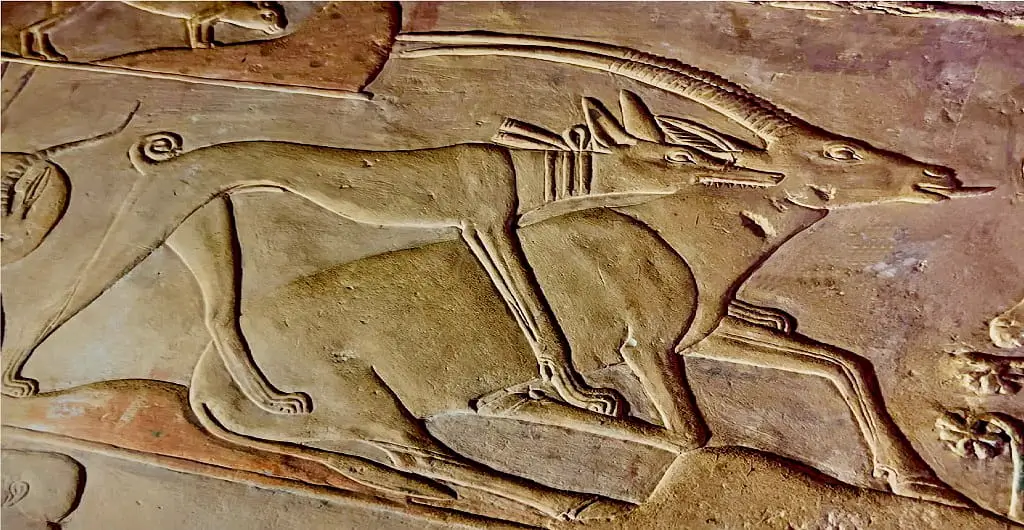
  • Action Scenes: You can see hunting dogs chasing down gazelles and antelopes.
  • Anatomical Detail: The sculptors carved the ribs and muscles of the fleeing animals with incredible precision. Even the texture of the desert terrain is visible under the hooves.

Animal Husbandry

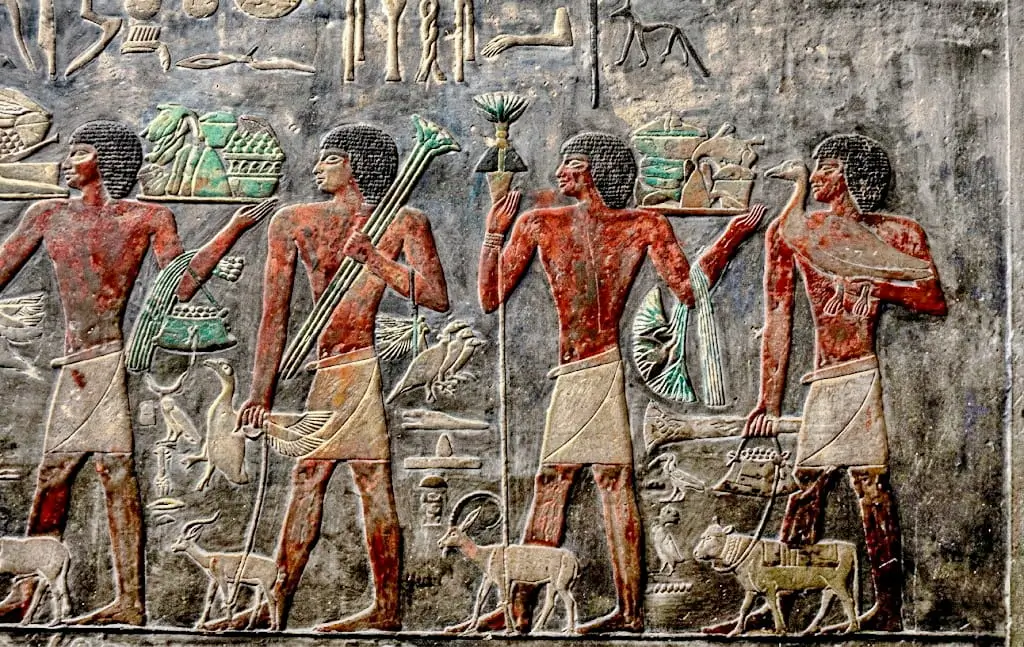
Other reliefs show the daily work of Ptahhotep’s estates. You can witness herdsmen leading cattle across the water. In one famous detail, a herdsman carries a newborn calf on his shoulders to protect it from crocodiles. This “human touch” brings a sense of compassion and realism to the stone walls.

The Tomb of Ptahemwia: A “Dream Discovery” at Saqqara

The Tomb of Ptahemwia at Saqqara is a significant 19th Dynasty discovery belonging to the...
Related post
FUN

The Culinary Arts: Food and Drink

The Culinary Arts Food and Drink

The “economic” scenes in the tomb ensure that Ptahhotep would never want for nourishment. You can follow the entire process of food production, from the fields to the table:

  • Brewing and Baking: Detailed reliefs show workers kneading dough for bread and straining mash for beer.
  • Poultry Farming: Scenes show servants force-feeding geese to fatten them for a banquet.
  • The Final Product: All these efforts culminate in the massive offering scenes where Ptahhotep receives the bounty of his lands.

Technical Perfection: The “Saqqara School” of Carving

The Tomb of Ptahhotep is often cited as the definitive example of the “Saqqara School” of art. During the 5th Dynasty, stone carving reached a level of sophistication that focused on subtle textures rather than bold colors. This section explores why these reliefs are considered the finest in the ancient world.

The Power of the Unpainted Surface

Unlike the Tomb of Idut, which relies on brilliant pigments, Ptahhotep’s chapel remains largely unpainted. This was a deliberate choice by the master craftsmen.

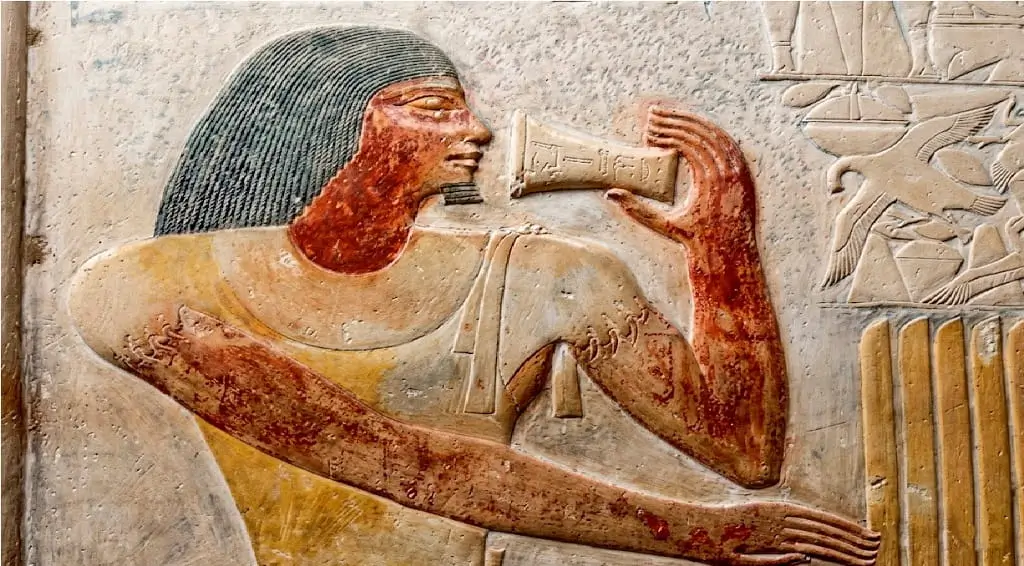
  • Texture over Color: Without paint to hide imperfections, the sculptors had to be flawless. They used the natural grain of the Tura limestone to mimic the appearance of skin, linen, and animal fur.
  • Micro-Relief: The artists used a technique called low relief (bas-relief). They carved away only a few millimeters of the background. This creates a 3D effect that changes as the sun moves, casting soft shadows that define the figures.

The Tomb of Meryneith: A Bridge Between Gods in Saqqara

The Tomb of Meryneith (also referred to as Meryre) at Saqqara is one of the...
Related post
FUN

Tomb of Ptahhotep: Anatomy and Realism

Tomb of Ptahhotep; Anatomy and Realism

The sculptors of Ptahhotep’s tomb possessed an advanced understanding of anatomy. They did not just follow a “template”; they observed the living world with scientific curiosity.

Muscle and Bone

Look closely at the figures of the wrestlers or the hunters. You will see the definition of the kneecaps, the tension in the calves, and the ribcages of the animals. This level of detail was revolutionary for the time. It shifted Egyptian art from purely symbolic to a more realistic representation of the human form.

Overlapping Figures

To create a sense of depth, the artists used overlapping. In scenes showing herds of cattle or rows of servants, one figure partially blocks another. This technique gives the flat wall a feeling of three-dimensional space, making the busy scenes feel crowded and energetic.

Tomb of Ptahhotep: The Master’s Hand

In several areas of the tomb, scholars believe they can identify the work of different artists. Some sections show a “heavier” touch, while others—like the grooming and banquet scenes—display a delicate, ethereal quality.

  • The Lead Artist: Usually, a master artist sketched the outlines in red or black ink.
  • The Apprentice: Junior carvers would then remove the bulk of the stone.
  • The Final Polish: Finally, the master would return to carve the sensitive details, such as the eyes, fingers, and intricate hieroglyphs.

This rigorous process ensured that every centimeter of the Tomb of Ptahhotep met the Vizier’s high standards. The result is a monument that feels like a single, cohesive masterpiece of sculpture.

Tomb of Ptahhotep: The Vizier’s Eternal Masterpiece

The Tomb of Ptahhotep remains a vital pillar of Egyptian history. It combines the political power of a Vizier with the intellectual legacy of a philosopher and the technical brilliance of a master sculptor. Whether you are marvelling at the wrestling matches or the quiet dignity of the grooming scene, the tomb offers an intimate window into a world 4,300 years old.

As you walk through the Hall of Pillars, you aren’t just visiting a grave. You are stepping into the mind of an Old Kingdom elite who valued beauty, wisdom, and the eternal nature of stone.

Discover Egypt in Cairo, Luxor, and Abu Simbel in 5 Days....
Admire the Egyptian Marvels in 6 Days during Xmas and New Year Holidays....
God_Anubis_Icon

Jeep Safari in the Sahara

I contacted Hani two days before I went to Egypt and asked him if it was possible to combine two of their tours as we were short on time. We had planned to stay in Cairo but with the uprising we decided it would be safed outside of the hot

More »
Tailored Services for Corporate Business Transportation Needs

On time, adaptable, and fun!

My friend and I planned a whirlwind trip to Dubai, the Dead Sea, Petra, Cairo, Luxor, and Sharm el Sheikh for early November 2011 – 6 cities in 10 days! We allotted one afternoon and evening for Cairo, and we wanted to see as much as we could! We drove

More »

Cairo Day Trip

Great trip organised. I had a 12-hour layover in Cairo and had a great time with Sherif, who answered every question I had on ancient Egypt. Highly recommend.

More »

Very Considerate and Helpful

Guide and driver were on time, open to my requests and took care that I felt safe and saw the Pyramids and parts of old cairo during my less than 24 hour stay between flights. Office staff were great in communicating by email before and during the trip.

More »
4-day-christmas-nile-cruise

Hossam Rashwan Tour Guide

We took this trip with Hossam Rashwan as our tour guide, and I must say that Hossam was the greatest tour guide in Luxor who showed us around. Our tour guide’s tales transported us to Luxor’s past, and we felt as if we were living in ancient Egypt. We really

More »
God_Anubis_Icon

Top-rated Tour Packages

God_Anubis_Icon