
The Tomb of Khuwy in Saqqara: A Complete Guide to the Fifth Dynasty

The Tomb of Khuwy is a revolutionary Fifth Dynasty discovery in Saqqara, famous for its exceptionally vivid 4,400-year-old pigments. Its unique L-shaped architecture and royal-style substructure reflect the immense influence of the nobleman Khuwy during the reign of Djedkare Isesi. Today, it stands as a premier example of Old Kingdom artistry and a vital link to understanding the shifting social hierarchies of ancient Egypt.

In 2019, the sands of Saqqara yielded one of the most remarkable archaeological finds of the last century: the Tomb of Khuwy. This Fifth Dynasty burial site does more than provide a glimpse into the Old Kingdom; it shatters expectations with startlingly vivid colors and an architectural layout that challenges long-held theories regarding royal and non-royal funerary customs.

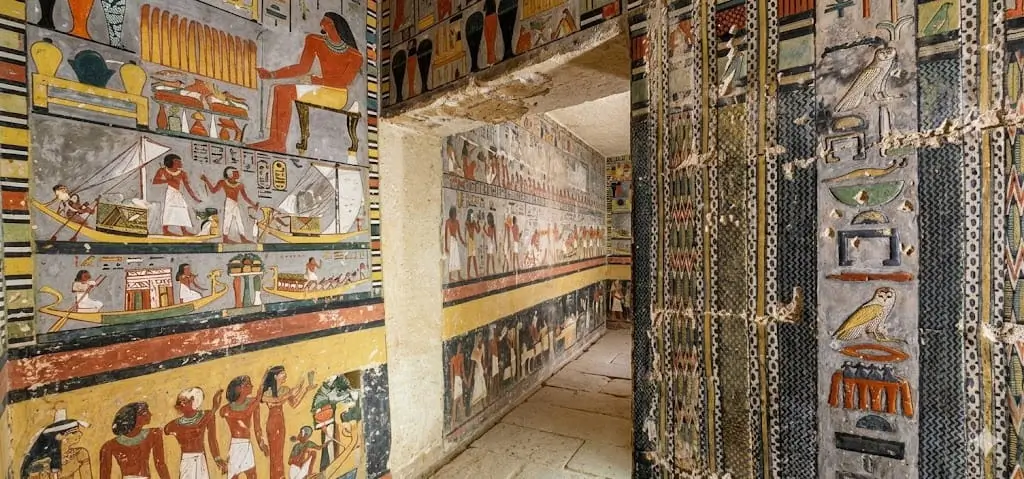
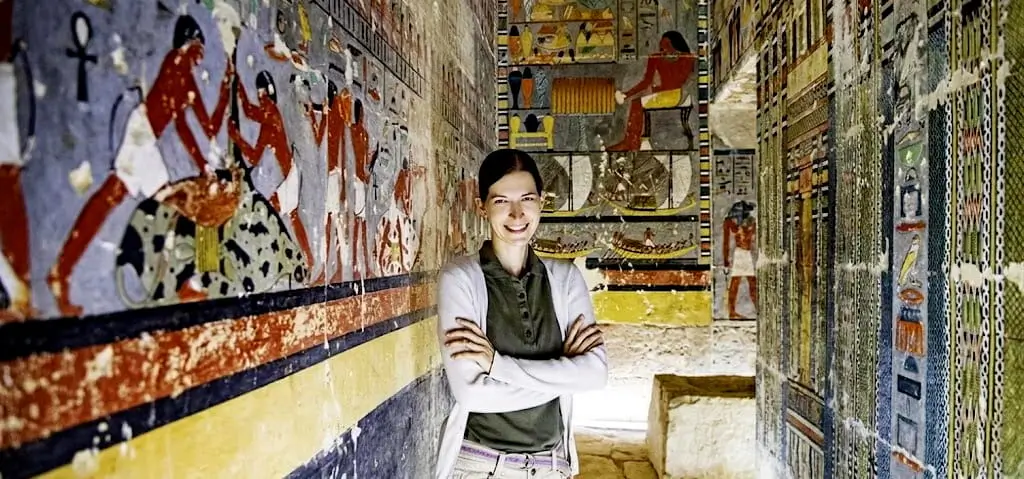
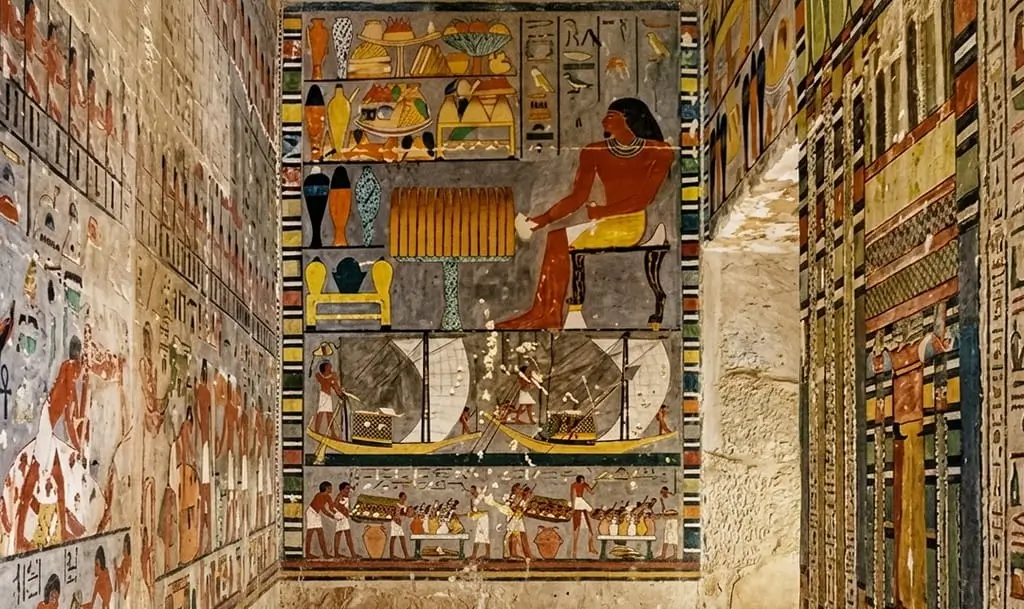
Dating back over 4,400 years to the reign of King Djedkare Isesi, the tomb housed a nobleman whose titles—including “Sole Friend” to the Pharaoh—hint at a life of immense influence. While many ancient sites feature weathered, monochromatic stone, the interior of Khuwy’s resting place retains a kaleidoscope of Egyptian blue, deep ochre, and malachite green. The pigments look as though the artist applied them only yesterday.

From its unique L-shaped entry corridor to the intricate “palace facade” motifs that adorn its walls, the Tomb of Khuwy represents more than a monument; it stands as a masterclass in ancient Egyptian artistry and social hierarchy. This definitive guide explores the architectural secrets, the vibrant iconography, and the historical legacy of the man who rested in the shadow of the pyramids, providing an exhaustive look at one of Saqqara’s most breathtaking treasures.
FUN

The Nobleman Khuwy: Identity and Influence

The Nobleman Khuwy Identity and Influence

To understand the magnificence of the tomb, one must first understand the man behind it. Khuwy was not a king, yet he commanded a level of funerary opulence that rivaled royalty. His high status within the Fifth Dynasty administration allowed him to commission the finest artisans and secure a prime location within the Saqqara necropolis.

Titles and Social Standing

In Ancient Egypt, titles functioned as a roadmap of a person’s proximity to power. Inscriptions within the tomb identify Khuwy as a high-ranking official during the reign of King Djedkare Isesi. Among his most prestigious titles were:

  • Sole Friend (Smer-wat): This designation signaled an intimate, trusted relationship with the Pharaoh, granting him personal access to the king’s inner circle.
  • Overseer of the Khentiu-she of the Great House: This role placed Khuwy in charge of the palace attendants or the “tenants” who managed the royal estates, making him a pivotal figure in the kingdom’s economic and logistical operations.

Relationship with King Djedkare Isesi

The proximity of Khuwy’s tomb to the pyramid of Djedkare Isesi is no coincidence. In the Old Kingdom, officials often sought burial near their sovereign to ensure a share in the king’s eternal afterlife. However, the sheer scale and artistic quality of Khuwy’s tomb suggest a relationship that went beyond standard bureaucratic service.

Historians suggest that Djedkare Isesi’s reign was a period of significant decentralization and administrative reform. By elevating men like Khuwy, the Pharaoh strengthened his grip on the provinces and the palace. The lavishness of this tomb acts as a permanent record of the rewards Khuwy received for his loyalty during this transformative era of Egyptian history.

The Discovery of the Mummy

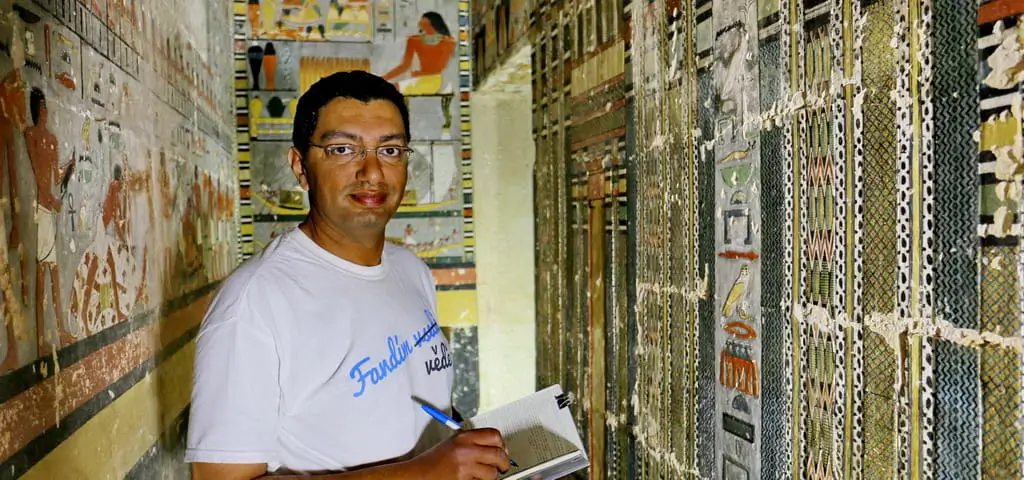
During the 2019 excavation, Dr. Mohamed Megahed’s team discovered the remains of Khuwy’s mummy. The condition of the remains provided a rare scientific look into Fifth Dynasty embalming. The team found that the body had been thoroughly mummified using high-quality resins and fine linen—techniques typically reserved for the royal family. This discovery further confirms that Khuwy occupied a social tier far above the average nobleman of his time.

FUN

Architectural Blueprint: The L-Shaped Innovation

Architectural Blueprint The L-Shaped Innovation

While many Old Kingdom tombs follow a traditional “T” shape or a simple straight-line corridor, the Tomb of Khuwy breaks the mold. Its design reveals a sophisticated understanding of space and a deliberate attempt to mimic royal funerary architecture.

The Descending Entrance

The journey into the tomb begins with a descending corridor, a feature typically found in the pyramids of kings rather than the mastabas of officials. This architectural choice immediately signals Khuwy’s elevated status. As you descend, the limestone walls transition from rough-hewn rock to the smooth, plastered surfaces that host the tomb’s legendary artwork.

The L-Shaped Corridor

The defining feature of the tomb is its unique L-shaped layout. After the initial descent, the corridor makes a sharp turn before leading into the main offering chamber.

  • Symbolism: Scholars believe this “winding” path mimics the subterranean passages found in royal pyramid complexes of the Fifth Dynasty.
  • Structural Purpose: The layout allowed for a grander sequence of scenes, leading the visitor (or the spirit of the deceased) through a narrative progression of rituals before reaching the burial core.

The Burial Chamber

At the heart of the structure lies the burial chamber. In many contemporary tombs, this room remained undecorated. In Khuwy’s case, however, the artistry extends into the very depths of the earth.

  • The Sarcophagus: The room houses a massive limestone sarcophagus, which archaeologists found in several fragments. Despite the damage from ancient tomb robbers, the scale of the sarcophagus remains impressive.
  • Structural Integrity: Even after 4,400 years, the ceiling and walls remain remarkably stable. The builders utilized high-quality white limestone, which provided a perfect “canvas” for the vivid pigments that define the site today.

Mimicking Royalty: The North-South Axis

The tomb aligns carefully with the surrounding necropolis. By mirroring the architectural language of Djedkare Isesi’s nearby pyramid complex—specifically the use of a decorated sub-structure—Khuwy’s architects created a “miniature pyramid” experience for a man who was a king in all but name. This architectural mimicry serves as a bold statement of the decentralization of power that characterized the late Fifth Dynasty.

The Catacombs of Kom Esh-Shokafa: Roman-Egyptian Underworld

Descend into one of the "Seven Wonders of the Middle Ages" at the Catacombs of...
Related post
FUN

The Artistry: “Colors of the Old Kingdom”

The Artistry Colors of the Old Kingdom

The most striking feature of the Tomb of Khuwy is undoubtedly its preservation. While many tombs from the 24th century BCE lost their vibrancy to time and humidity, Khuwy’s burial chamber looks as if the painters laid down their brushes only days ago. The walls provide a rare, pristine window into the aesthetic preferences of the Fifth Dynasty.

The Secrets of the Pigments

The ancient Egyptian palette relied on naturally sourced minerals, and the decorators of Khuwy’s tomb utilized the highest-grade materials available:

  • Egyptian Blue: A complex synthetic pigment made from copper and silica, used here to represent the heavens and the primordial waters.
  • Red and Yellow Ochre: Sourced from the desert, these iron oxides provided the rich skin tones of the figures and the golden hues of the offering tables.
  • Malachite Green: Ground copper ore that symbolized life, rebirth, and the lush vegetation of the Nile Delta.

Iconography and Key Scenes

The wall reliefs follow a strict artistic canon but execute it with rare finesse. The scenes serve a functional religious purpose: ensuring that Khuwy’s soul (Ka) would receive sustenance for eternity.

  • The “Palace Facade” Motif: One of the most famous sections of the tomb features an intricate “niche” design. This colorful geometric pattern mimics the exterior of a royal palace, symbolically transforming the burial chamber into a grand residence for the afterlife.
  • The Offering Table: A classic scene depicts Khuwy seated before a table piled high with loaves of bread, cuts of meat, and jugs of beer. The artists meticulously painted each item, believing that the “image” could manifest into reality in the spirit world.
  • Procession of Offering Bearers: Rows of figures carry baskets of fruit, poultry, and linen toward the deceased. These scenes capture the abundance of the estates Khuwy managed during his life.

Art as a Political Statement

The sheer quality of the painting in a non-royal tomb highlights the shifting social landscape of the time. During the reign of Djedkare Isesi, the monopoly on high-end artistic labor began to spread from the Pharaoh to his most trusted officials. The Tomb of Khuwy serves as the ultimate proof of this “democratization” of luxury, where a nobleman could employ the same master decorators who worked on the royal pyramids.

The Tomb of Merefnebef at Saqqara: A Complete Guide to the Vizier’s Masterpiece

The Tomb of Merefnebef (Fefi) is a masterclass in Sixth Dynasty funerary art and architecture....
Related post
FUN

Hieroglyphs and Inscriptions: Reading the Walls

Hieroglyphs and Inscriptions Reading the Walls

The inscriptions within the tomb act as both a legal document and a spiritual map. Unlike the later “Book of the Dead,” the Old Kingdom relied on shorter, more direct “Pyramid Texts” and “Offering Formulas” (Htp-di-nsw).

Deciphering the Titles

The hieroglyphs carved into the limestone lintels and painted onto the walls repeatedly emphasize Khuwy’s proximity to the throne. Scholars focus on the specific arrangement of his titles:

  1. Iry-pat: A title indicating he was a hereditary noble or a member of the elite class.
  2. Smer-wat: As mentioned, the “Sole Friend” highlights his personal bond with Djedkare Isesi.
  3. Hery-tep ni-ut: “Great Overlord of the City,” suggesting his administrative control over local populations.

The Offering Formula

The most frequent inscription is the standard petition to Anubis, the god of mummification, and Osiris, the lord of the dead. These texts ask for a “fine burial in the beautiful West” and a constant supply of offerings during the festivals of the living. By reading these names aloud today, visitors—in the eyes of the ancient Egyptians—symbolically keep Khuwy’s soul alive.

The Excavation: How the World Rediscovered Khuwy

The story of the tomb’s modern discovery is as fascinating as its ancient origins. In early 2019, an Egyptian archaeological mission led by Dr. Mohamed Megahed focused on the area surrounding the pyramid of Djedkare Isesi. While documenting the royal complex, the team identified a substructure that hinted at a significant burial.

Uncovering the Entrance

The team spent weeks clearing centuries of desert sand and debris. As they descended the shaft, they realized they were not entering a standard mastaba. The transition from rough rock to finely dressed limestone signaled that they were on the verge of a major find. When the team finally breached the burial chamber, the preservation of the colors stunned the archaeological community.

Scientific Analysis of the Mummy

The discovery of Khuwy’s physical remains provided a rare opportunity for bioarchaeologists to study Old Kingdom elite life.

  • The Embalming Process: Analysis revealed the use of high-quality resins and specific linen wrapping techniques. This level of mummification was previously thought to be exclusive to the royal family during this period.
  • Osteological Findings: Initial studies of the bone fragments suggest Khuwy lived a life of relative comfort, though further DNA and isotopic testing continue to reveal details about his age, health, and diet.

Aswan’s Tombs of the Nobles: The Ultimate View & Ancient Stories

Discover Aswan's best-kept secret: the Tombs of the Nobles. Carved high into the cliffs of...
Related post
FUN

Khuwy vs. Other Saqqara Tombs

To understand why the Tomb of Khuwy is a “pillar” of Egyptian history, we must compare it to its famous neighbors in Saqqara.

Feature Tomb of Khuwy Tomb of Ti (Standard 5th Dyn) Tomb of Mereruka (6th Dyn)
Primary Shape L-Shaped Multi-room Mastaba Large Complex (33 rooms)
Color Preservation Exceptional/Pristine Faded/Partially Intact Moderate
Architecture Royal-style Substructure Traditional Private Tomb Grand Palace Style
Main Innovation Mimicking Pyramid Design Intricate Daily Life Reliefs Largest Non-Royal Tomb

Why Khuwy Stands Out

While the Tomb of Ti is famous for its detailed reliefs of hippopotamus hunts, Khuwy’s tomb is prized for its intensity of color. Most Old Kingdom tombs rely on the sculptural quality of the reliefs (the carving), but Khuwy’s tomb relies on the painterly quality. It bridges the gap between the rigid architectural styles of the early Old Kingdom and the more expressive, colorful styles that would eventually define the Middle Kingdom.

Tourism and Preservation Today

The Ministry of Tourism and Antiquities has designated the Tomb of Khuwy as a primary attraction within the Saqqara circuit. However, protecting 4,400-year-old paint from modern breath and humidity requires constant vigilance.

Conservation Efforts

  • Environmental Control: The tomb features advanced ventilation systems and glass barriers to prevent physical contact with the walls.
  • LED Lighting: Special “cool” lights protect the pigments from the UV damage and heat that traditional bulbs would cause.

Visiting the Site

For travelers, the tomb is often bundled with a visit to the Step Pyramid of Djoser and the Serapeum.

  • Location: South Saqqara, near the pyramid of Djedkare Isesi.
  • Photography: Usually requires a special permit, though rules change frequently. Check with the Ministry’s official portal before visiting.

The Legacy of Khuwy

The Tomb of Khuwy remains one of the most significant archaeological benchmarks of the 21st century. It proves that the “Old Kingdom” was far more dynamic than previously thought—a time of shifting power, artistic experimentation, and incredible craftsmanship.

By visiting or studying this tomb, we look directly into the eyes of the Fifth Dynasty. We see the world as Khuwy saw it: vibrant, orderly, and filled with the hope of an eternal life. As excavations continue in the Djedkare Isesi complex, Khuwy stands as a colorful sentinel, guarding the secrets of Egypt’s first great golden age.

Journey through the rich history, cultural heritage, and natural wonders of Egypt....
Experience the rich culture and breathtaking landscapes of Egypt in style....
God_Anubis_Icon

Highly Recommend Egypt Fun Tours!

Several weeks ago, I reached out to Egypt Fun Tours regarding a 9-hour layover in Cairo. From the very beginning, Hani Ahmed was responsive and professional, quickly providing a well-organized itinerary tailored to our limited time. The itinerary included a visit to the pyramids, other historical sites, a delicious dinner,

More »

Great layover tour

First things first…I was in Cairo about a week before the protests of 2011 started. As far as the tour was concerned, I was very pleased. I was met at the airport by a knowledgeable guide (Sara) who spoke great English and a driver. They took me to Giza first,

More »

Perfect layover Tour

I had a 10 hour layover in Cairo so booked a tour with Hani at Egypt Fun Tours. The tour was brilliant. I saw exactly what I wanted to see during the day which included the pyramids, Sphinx, Egyptian museum and the Bazaar. Hani was very knowledgeable and was the

More »

Early Layover Tour in Cairo

My husband, 2 sons – aged 9 & 11 – and I landed in Cairo at 5:15am on Saturday 12 January 2013. We had booked an early layover tour with Egypt Fun Tours after reading the great reviews in TripAdvisor. As promised he and his driver awaited us in a

More »

Well Done

All aspects of the experience were considered and well taken care of. Knowledgeable and friendly guide and organized itinerary.

More »
God_Anubis_Icon

Top-rated Tour Packages

God_Anubis_Icon