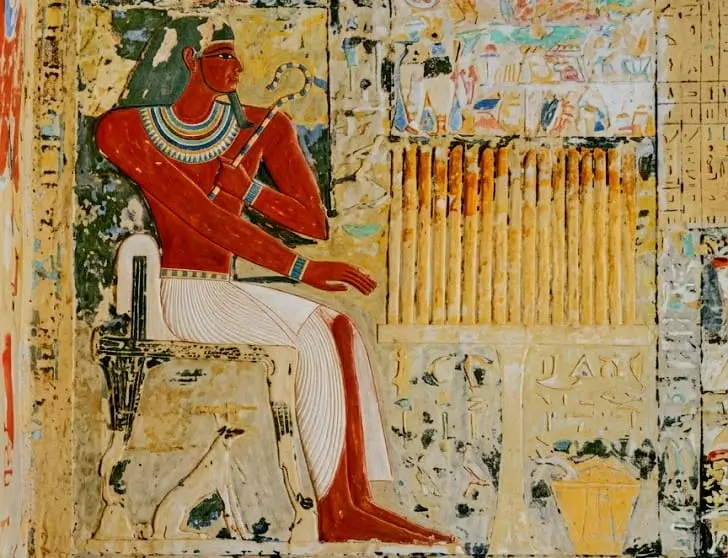
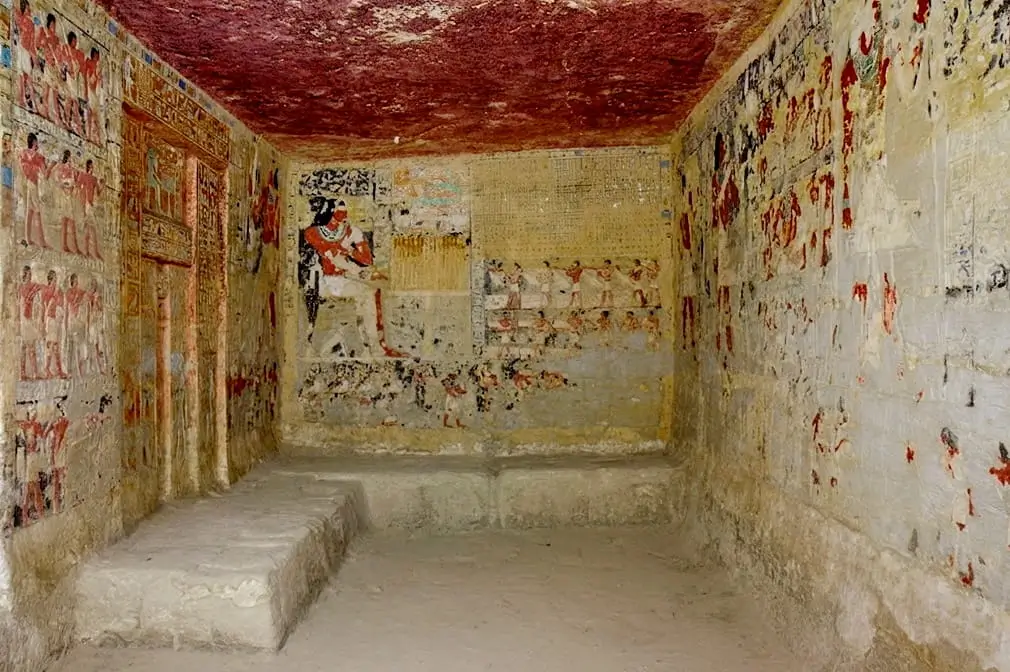
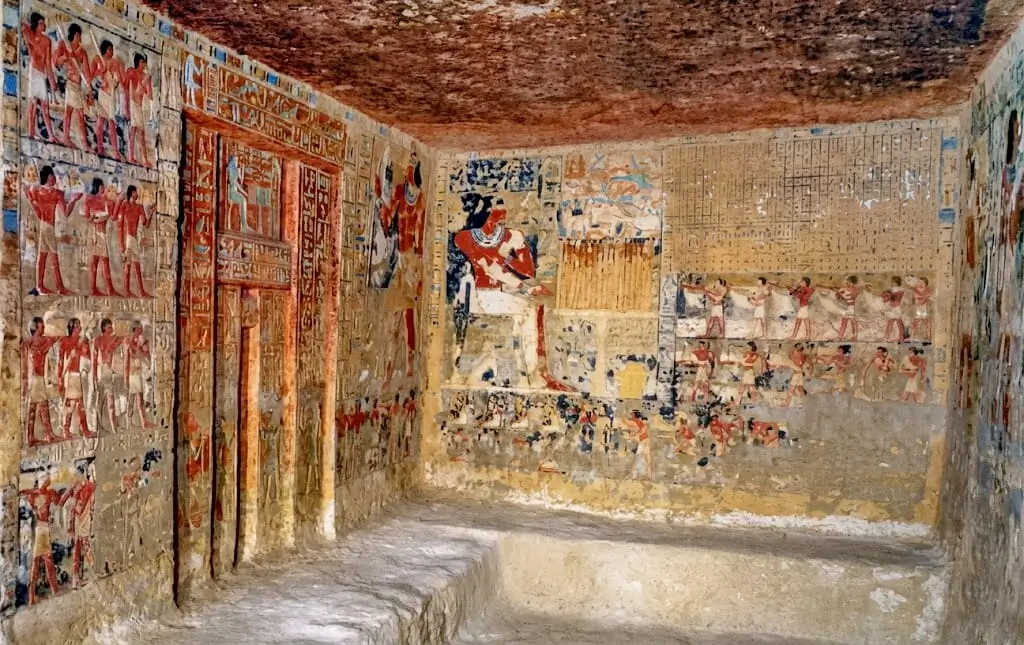
In 1997, a Polish-Egyptian mission uncovered a hidden masterpiece beneath the Saqqara sands: the Tomb of Merefnebef. This Sixth Dynasty complex belonged to one of the most powerful men in ancient Egypt. He was a Vizier and Chief of Works known as Fefi. Unlike many burial sites from this era, the tomb contains multiple rooms. It serves as a vibrant encyclopedia of life at the end of the Old Kingdom.
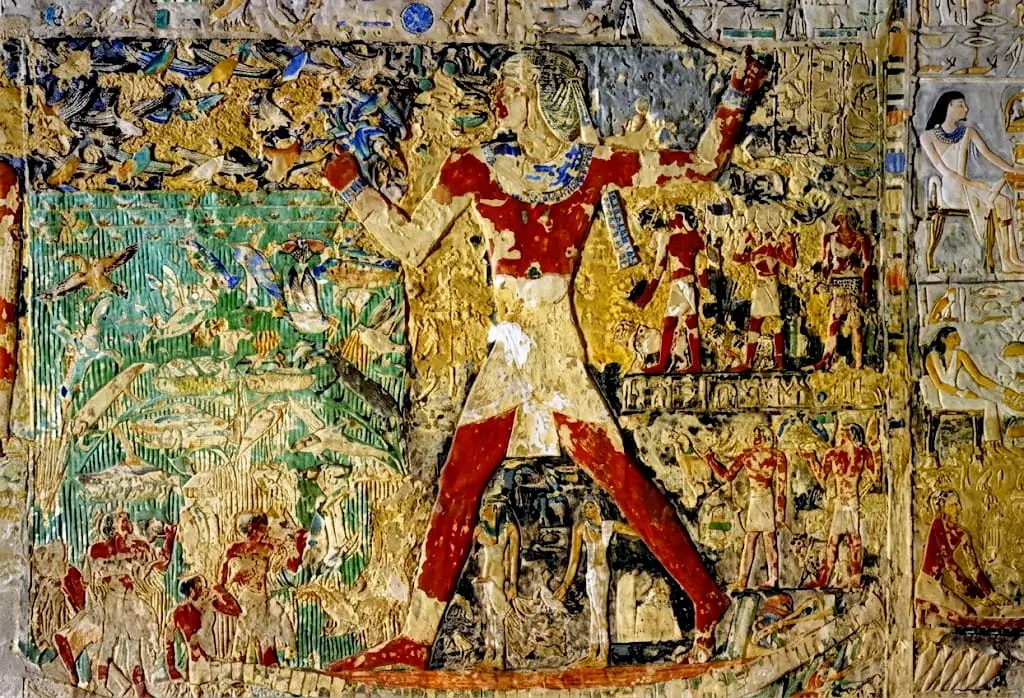
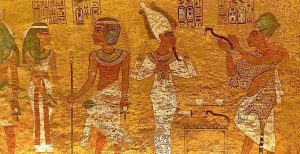
The tomb resembles a miniature underground palace. Its walls feature incredibly detailed murals that have survived more than 4,200 years. These scenes offer an intimate look into Merefnebef’s world. They show everything from high-stakes hunts in the Nile marshes to crowded family banquets. Interestingly, the artwork even names his multiple wives and sons. This provides a rare level of personal detail for a high-ranking official.
Beyond its beauty, the Tomb of Merefnebef is a vital historical record. It highlights a time when elite officials began to commission tombs that rivaled the grandeur of royalty. This guide explores the tomb’s unique architectural maze and its stunning iconography. It also explores the lasting legacy of the Vizier who built a monument to withstand eternity.