
The Tomb of Roy (TT255): A Masterpiece of Late 18th Dynasty Art

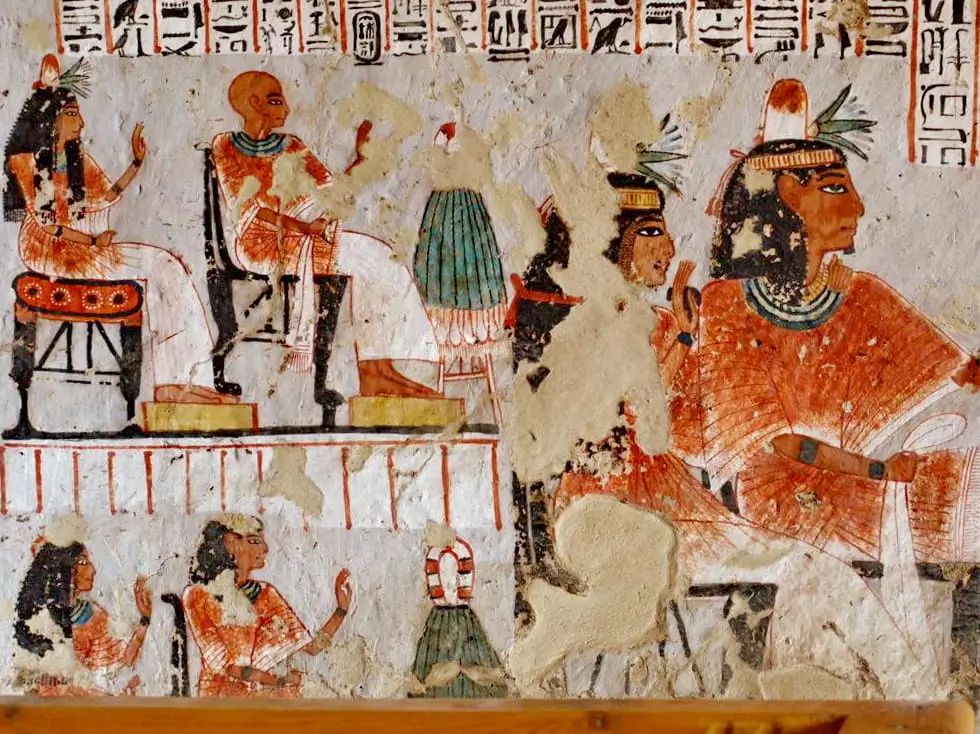
The Tomb of Roy (TT255) is a vivid, single-room masterpiece from the late 18th Dynasty. Despite its small size, it features some of the best-preserved artwork in Luxor, characterized by bright white backgrounds and jewel-toned pigments. The murals are famous for their emotional depth, particularly the visible tears on the faces of mourning women during the funeral procession. By blending the fluid grace of the post-Amarna style with traditional religious themes, Roy's tomb offers a perfectly concentrated "snapshot" of elite craftsmanship and 18th-Dynasty elegance.

A Hidden Gem of Dra’ Abu el-Naga

The Tomb of Roy (TT255) proves that a small space can hold immense beauty. Located in the necropolis of Dra’ Abu el-Naga, this late 18th-Dynasty tomb belonged to a man named Roy. He served as a “Royal Scribe” and the “Steward of the Estates of Horemheb.” Although the tomb consists of only one small chamber, its vivid colors and master-level brushwork make it a highlight of the West Bank.

A Period of Artistic Rebirth

Roy lived during the reign of King Horemheb, a pivotal time in Egyptian history. Because this era followed the Amarna Period, artists were returning to traditional religious themes. However, they kept the graceful, fluid style of the previous years. As a result, the murals in TT255 feel alive. You can see this energy in the rhythmic movements of mourning women and the detailed scenes of the grain harvest.

Intimate Detail and Vivid Color

Furthermore, the tomb offers a much more personal experience than the massive royal valleys. The white-washed walls reflect light perfectly, making the ancient pigments look remarkably fresh.

  • The Palette: The artists used bright blues, deep reds, and rich greens that have not faded over 3,000 years.
  • The Craftsmanship: Because Roy was a high-level official, he hired the finest draftsmen to illustrate his journey to the afterlife.

Consequently, the Tomb of Roy serves as a perfect “snapshot” of elite life at the end of the 18th Dynasty. It reminds every visitor that in ancient Egypt, the quality of the art mattered far more than the size of the room.
FUN

The Life of a Royal Scribe: Roy’s Role and Status

The Life of a Royal Scribe; Roy’s Role and Status

Roy occupied a position of significant trust within the Egyptian administration. As a Royal Scribe, he belonged to the educated elite who kept the empire running. Furthermore, his title as the “Steward of the Estates of Horemheb” suggests he managed the personal properties and agricultural wealth of the King himself. Consequently, Roy possessed both the financial means and the social connections to secure a top-tier burial.

The Power of the Pen

In ancient Egypt, literacy was a gateway to power. Because Roy could read and write, he moved in the highest circles of government.

  • Managing Wealth: His role as a steward meant he oversaw land, cattle, and grain. You can see this reflected on his tomb walls, which proudly display agricultural abundance.
  • Proximity to the King: Serving under Horemheb—the general-turned-pharaoh who stabilized Egypt—meant Roy lived through a time of national rebuilding. Therefore, his tomb reflects a sense of order and restored tradition.

Access to Master Artists

Because Roy managed royal estates, he likely worked closely with the same administrators who managed the royal workshops. As a result, he didn’t just hire any painter; he secured the services of a master draftsman.

  • The “Elite” Style: Although the chamber is small, the proportions of the figures and the clarity of the hieroglyphs are nearly perfect.
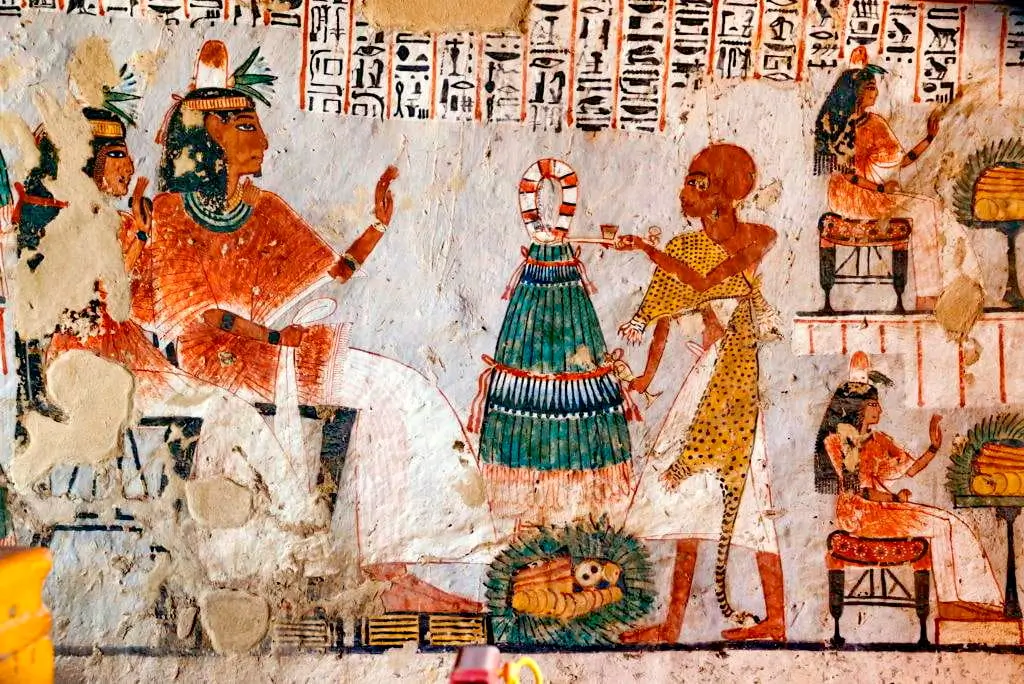
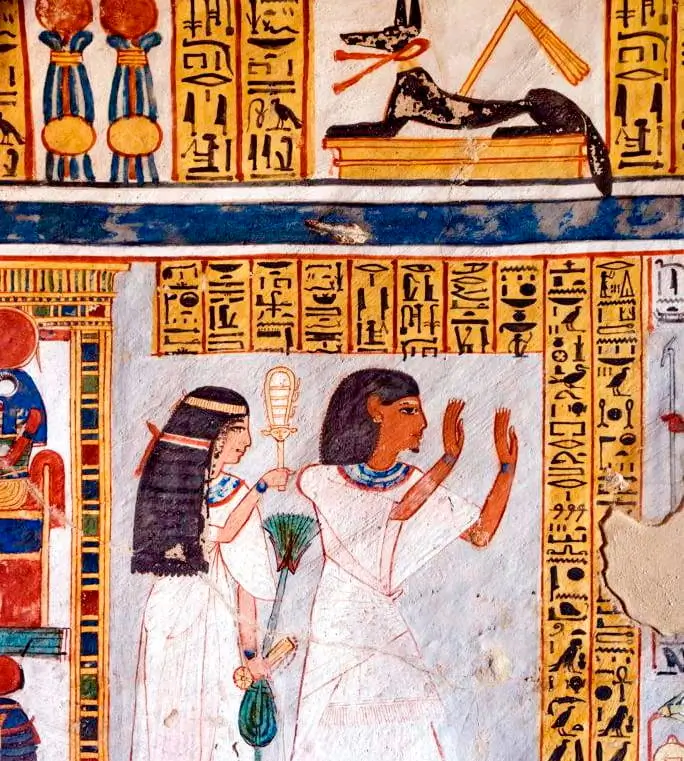
  • A Professional Legacy: Roy chose to be depicted in his professional attire—a fine linen kilt and a transparent shirt—which signaled his status as a sophisticated man of the court.

A Family Affair

Similarly, the tomb highlights Roy’s personal life alongside his professional duties. We see his wife, Nebtawy, accompanying him in many scenes. Her presence ensures that their partnership continues into the afterlife. By including his family and his professional titles so prominently, Roy created a permanent record of his successful life on earth.

FUN

The Funeral Procession: A Masterpiece of Emotion

The Funeral Procession; A Masterpiece of Emotion

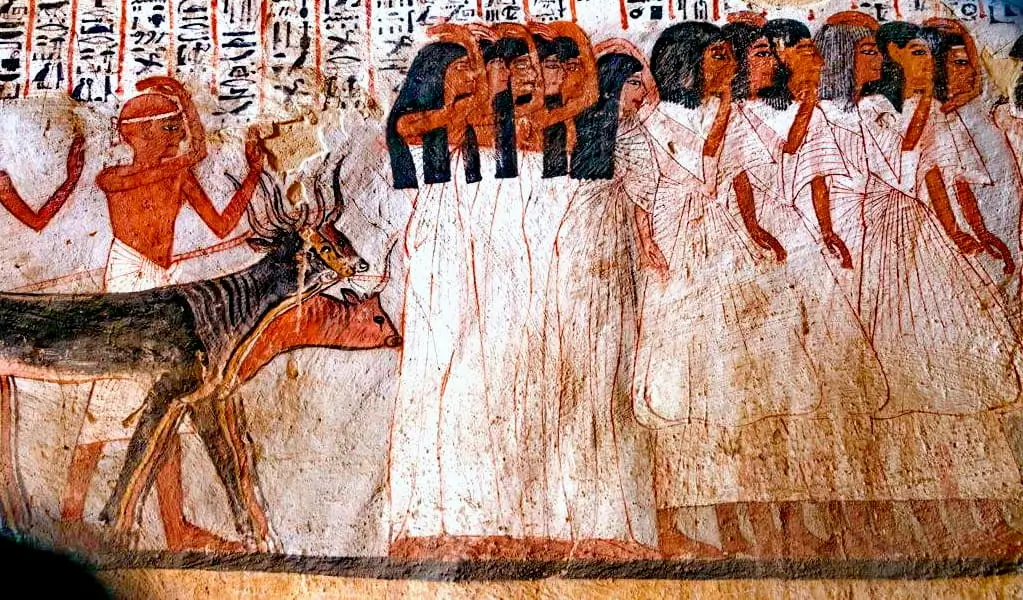
The mural documenting Roy’s journey to the necropolis is a vibrant, multi-layered composition. It guides the viewer through the final earthly steps of a Royal Scribe. Because the artists used a bright white background, the figures and their colorful offerings seem to leap off the wall.

Tomb of Roy: The Mourners’ Grief

One of the most striking elements is the group of mourning women.

  • Expressive Gestures: The artists depicted the women with their arms raised in grief, some throwing dust on their heads or tearing at their hair.
  • Artistic Detail: Furthermore, you can see individual tears painted on their faces. This attention to detail demonstrates the “human” touch that characterizes post-Amarna art.
  • Movement: By overlapping the figures, the painters created a sense of a large, crowded, and vocal procession.

Tomb of Roy: The Journey to the Tomb

The scene continues with the transport of Roy’s sarcophagus.

  • The Barque: Attendants pull a funeral boat across the land on a sledge. This symbolizes the transition from the world of the living to the realm of the dead.
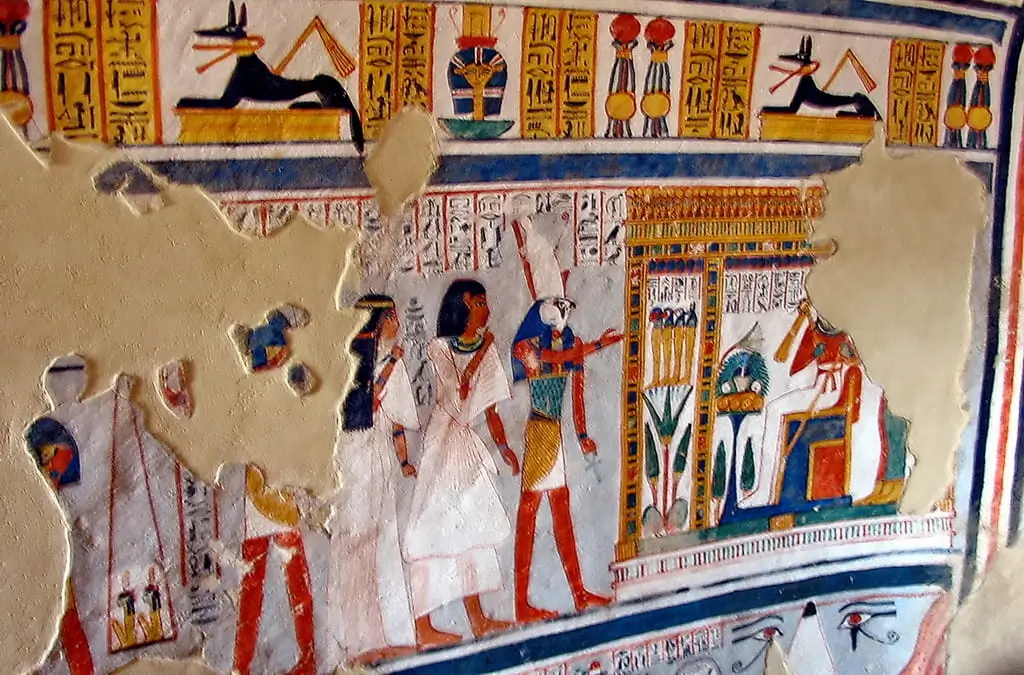
  • The “Opening of the Mouth“: At the end of the procession, we see the final ritual. A priest stands before Roy’s mummy to perform the “Opening of the Mouth” ceremony. This magical act ensured that Roy could breathe, speak, and eat in the afterlife.

Tomb of Roy: Symbolism and Superstition

Moreover, every object in the procession holds a specific meaning.

  • The White Robes: The participants wear fine, pleated white linen, contrasting beautifully with the red and blue jewelry.
  • The Offerings: Servants carry furniture, jars of oil, and chests of clothing. As a result, the viewer understands that Roy is entering eternity fully prepared with all the luxuries of a high-ranking official.

By capturing both the sadness of the family and the hope of the religious rituals, the funeral wall in TT255 achieves a perfect balance. It serves as a visual bridge, moving Roy from his successful career in the Royal Court to his new life as an eternal soul.

The Catacombs of Kom Esh-Shokafa: Roman-Egyptian Underworld

Descend into one of the "Seven Wonders of the Middle Ages" at the Catacombs of...
Related post
FUN

The Agricultural Spirit: Harvest and Abundance

The Agricultural Spirit; Harvest and Abundance - Tomb of Roy

Opposite the funeral scenes, the walls of TT255 shift toward the lush, green world of the Nile’s banks. This portion of the tomb focuses on the “Agricultural Spirit.” Consequently, it highlights Roy’s role as a steward while simultaneously ensuring his physical survival in the next world.

The Cycle of the Harvest

The painters captured the entire process of Egyptian farming with extraordinary clarity. Because Roy managed royal estates, these scenes likely represent the actual lands he supervised during his lifetime.

  • The Plowing: We see laborers driving oxen to prepare the soil. The artists used a rhythmic layout to convey the work’s repetitive nature.
  • The Reaping: Furthermore, the murals depict men using sickles to cut the tall stalks of grain. Above them, the hieroglyphic captions provide the “songs” or chants the workers sang to keep time.
  • Winnowing and Storage: The final stage shows the grain being tossed into the air to separate the chaff, then meticulously recorded by scribes.

The Magic of the “Ka”

Moreover, these scenes served a vital religious purpose. According to ancient belief, once the “Opening of the Mouth” was performed, Roy’s Ka (spirit) required nourishment.

  • Self-Sustaining Art: By painting the harvest, the artists created a “magical substitute.” Therefore, even if physical offerings at the tomb ceased, the painted grain would provide Roy with eternal bread and beer.
  • Vibrant Greens: Because the artists used a special copper-based pigment, the plants in these scenes remain a vivid, deep green. This color represented “Wadj,” the concept of freshness, health, and rebirth.

A Symbol of Order

Similarly, these agricultural scenes represent Ma’at (universal order). Under Horemheb’s reign, the restoration of the fields was a sign that the gods were once again pleased with Egypt. By including these scenes, Roy demonstrated that he was a man of order who helped the land flourish. As a result, his tomb remains a peaceful sanctuary of abundance, forever sheltered from the chaos of the outside world.

Tomb of Shuroy (TT13): Guide to Dra’ Abu el-Naga’s Hidden Gem

The Tomb of Shuroy (TT13) is a standout archaeological site in the Dra’ Abu el-Naga...
Related post
FUN

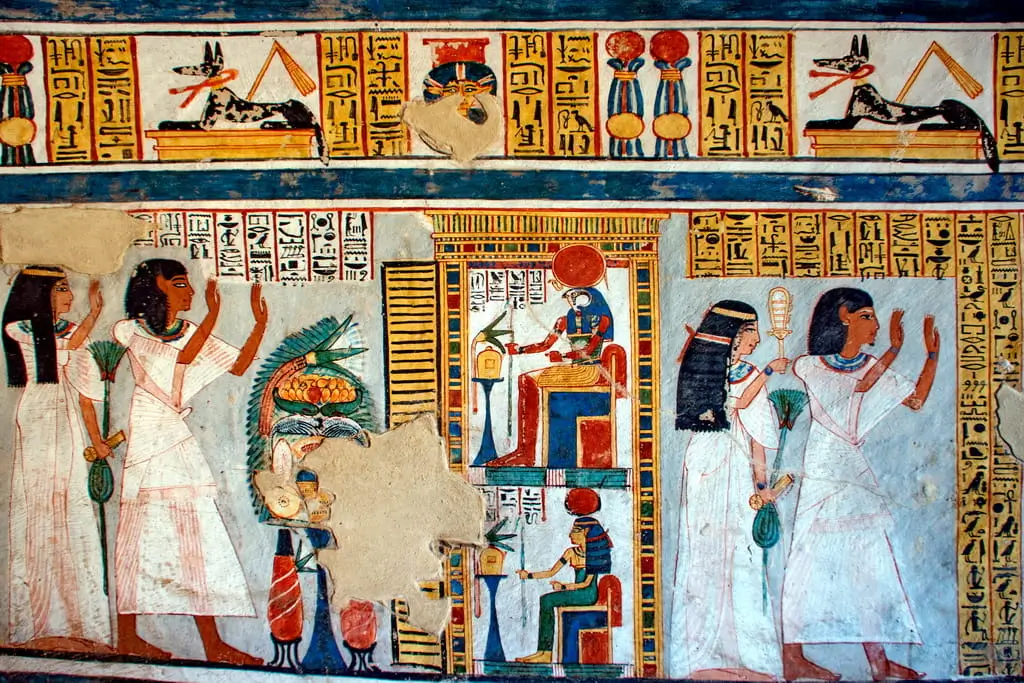
Tomb of Roy: The 18th Dynasty Palette

Vivid Preservation; The 18th Dynasty Palette - Tomb of Roy

What immediately strikes every visitor entering TT255 is the luminosity of the walls. Unlike the deep, golden backgrounds found in the later Ramesside tombs, the artists here utilized a bright white base. This choice makes the entire chamber feel airy and light, despite being tucked into the hillside of Dra’ Abu el-Naga.

The Secret of the White Background

The painters first applied a layer of high-quality white plaster. Because this base was so clean, the colors applied over it appeared more translucent and jewel-like.

  • Luminous Blues: The artists used “Egyptian Blue” (a synthetic pigment made of copper and silica) for water and sky. Because of the white background, this blue retains a brilliant, sky-like quality that is often lost in darker tombs.
  • Rich Ochres: The reds and yellows, derived from natural iron oxides, provide a warm contrast. Consequently, the skin tones of Roy and his wife appear vibrant and healthy, symbolizing their “living” status in the afterlife.

Artistic Refinement after Amarna

Furthermore, the style in TT255 represents the “Horemheb Style.” This was a period of restoration where artists combined the realism of the previous era with traditional formal rules.

  • Fine Outlining: If you look closely at the figures, you will notice extremely thin, steady black outlines. This transition away from the heavy, thick lines of earlier eras gives the art a more “delicate” and “professional” look.
  • Textural Details: Moreover, the painters were not afraid to show detail. You can see the individual pleats in Roy’s transparent linen shirt and the intricate patterns of the jewelry worn by the mourning women.

A Pristine Time Capsule

A Pristine Time Capsule - Tomb of Roy

Because the tomb was sealed and remained dry for millennia, the preservation is nearly 100%. Therefore, the colors you see today are almost exactly what Roy saw when the tomb was first completed. As a result, TT255 acts as a pristine time capsule. It allows us to study the exact brushstrokes and color-mixing techniques of the 18th-Dynasty masters without the interference of smoke damage or heavy restoration.

By visiting the Tomb of Roy, you are not just looking at “old” art; you are witnessing a moment where Egyptian craftsmanship reached a peak of elegance, clarity, and light.

Qurnet Murai: The Silent Sanctuary of the Theban Necropolis

Qurnet Murai is the Theban Necropolis’s best-kept secret, offering a peaceful alternative to Luxor’s busier...
Related post
FUN

Summary and Visitor Tips for the Tomb of Roy TT255

Summary and Visitor Tips for TT255 - Tomb of Roy

The Tomb of Roy remains a quintessential example of late 18th-Dynasty elegance. By prioritizing quality over quantity, Roy created a burial chamber that feels like a concentrated gallery of ancient life. Whether you are analyzing the emotional depth of the funeral procession or the vibrant agricultural murals, TT255 offers a clarity of color and a refinement of line that is rarely matched in the larger, more famous tombs of the West Bank.

Planning Your Visit to Dra’ Abu el-Naga

Because this tomb is located slightly away from the main clusters of the Valley of the Kings and Deir el-Medina, it often receives fewer crowds. Consequently, it is an excellent choice for those seeking a quiet, contemplative experience.

  • Combined Tickets: Typically, the entry for TT255 is bundled with the neighboring Tomb of Shuroy (TT13). Ensure you purchase your tickets at the Main West Bank Ticket Office (Antiquities Inspectorate) near the Colossi of Memnon before heading up the hill.

  • Space Constraints: Because the chamber is exceptionally small, most guards only allow a few people inside at a time. Therefore, if you are traveling with a group, expect to rotate in and out. This small size, however, allows you to be inches away from the masterpieces, providing an unparalleled view of the brushwork.

  • Photography: As of 2026, mobile photography without flash is permitted. However, because the white walls reflect light so intensely, you may need to adjust your exposure settings to avoid “blowing out” the delicate details of the frescoes.

Key Highlights for Your Guide

When documenting this tomb for your pillar content, make sure to emphasize these three “must-see” details:

  1. The Tears of the Mourners: Look for the tiny, individual teardrops on the cheeks of the women in the funeral procession. This is a rare, humanizing detail in Egyptian art.

  2. The Offering Table: Observe the table piled high with food and flowers. The colors—especially the grapes and the lotus blossoms—are so fresh they appear three-dimensional.

  3. The Transparent Garments: Note how the artists used a thin wash of white paint to show Roy’s skin through his linen clothes. This technique demonstrates a high level of artistic sophistication.

Enjoy lavish living in the heart of Egypt's four most famous and ancient cities....
Designed to immerse you in the Wonders of Egypt...
God_Anubis_Icon

Layover tour of Cairo Pyramids

On a recent trip, I had 8 hours from the time I landed in Cairo to when my next flight was scheduled to leave. Luckily, I arrived in the morning and left in the afternoon, so, not being one to sit around an airport for 8 hours, I visited the

More »

Valley of the Kings, Hepchepsut

I never had a more positive experience and educational time than this tours. Learning about a variety of kings and queens was amazing! The tour guide was super nice and helped me and my friend every step of the way! Including bargaining for a few souvenirs! I will never forget

More »

Layover Tour in Cairo

This August, my boyfriend and I had quite a long layover in Cairo, 9 hours to be exact. Instead of wasting our time at the airport, we decided to do a layover tour of the city. I had been before, but my boyfriend hadn’t, so we wanted to hit the

More »
God_Anubis_Icon

Top-rated Tour Packages

God_Anubis_Icon