The Tomb of Amenemope (TT148): The Temple-Tomb of Dra’ Abu el-Naga

The Tomb of Amenemope (TT148) stands as one of the most monumental private funerary complexes in the Dra’ Abu el-Naga necropolis. Dating to the 20th Dynasty, it belonged to the "Third Prophet of Amun," a high-ranking priest who served during the reigns of Ramesses III through Ramesses V. The tomb's massive "temple-style" architecture, featuring a grand pylon and a vast pillared hall, reflects the immense political and economic power held by the Amun priesthood during the late New Kingdom. Historically significant for its use of the Litany of Re—a solar text usually reserved for pharaohs—the tomb highlights the spiritual "democratization" of the era. Currently, TT148 is a focal point of modern conservation, where an Austro-Egyptian mission uses advanced technology to restore its deep-cut reliefs and stabilize its colossal structure for future study.

While many noble tombs in the Theban Necropolis feel like private chapels, the Tomb of Amenemope (TT148) feels like a fortress of faith. This massive complex sits on the lower slopes of Dra’ Abu el-Naga in Luxor. It belongs to one of the most powerful religious figures of the 20th Dynasty. Amenemope served as the “Third Prophet of Amun” during a time of great change. He lived and worked under the reigns of three different Pharaohs: Ramesses III, Ramesses IV, and Ramesses V. Consequently, his tomb reflects the immense wealth and political power held by the high priesthood at Karnak.

A Statement of Power and Status

You cannot ignore the scale of TT148. Most officials built simple “T-shaped” tombs, but Amenemope chose a monumental design. He designed his final resting place to mimic a royal temple. Therefore, the tomb includes features usually reserved for the king, such as a large courtyard and a massive pylon entrance. This architectural choice sends a clear message. It shows that by the late New Kingdom, the High Priests of Amun had become nearly as powerful as the Pharaohs themselves.

Amenemope did not just focus on size; he focused on spiritual authority. His titles connected him to the “Lord of the Thrones of the Two Lands.” He managed the vast resources of the Temple of Amun, the wealthiest institution in Ancient Egypt. Because of his high rank, his tomb serves as a vital record of the religious and political landscape of the 20th Dynasty.

Why TT148 is Unique Today

Currently, the Tomb of Amenemope is a center for modern archaeological discovery. An Austro-Egyptian mission is working to restore the site to its former glory. These experts are cleaning centuries of soot from the walls and reinforcing the heavy stone pillars. Their work reveals rare religious texts and vibrant reliefs that scholars once thought were lost forever.

For the traveler and the researcher, TT148 offers a look at the “Late Ramesside” style. This era features deep carvings and complex solar hymns. It provides a bridge between the classic New Kingdom era and the later periods of Egyptian history. In the following sections, we will explore the massive pillared halls, the rare “royal” texts found on the walls, and the incredible efforts to save this monument from the passage of time.

FUN

Architectural Grandeur: The “Temple-Tomb” Design

Architectural Grandeur The Temple-Tomb Design

The Tomb of Amenemope breaks the standard mold of private Theban tombs. Instead of a simple subterranean chamber, Amenemope commissioned a structure that mirrors the layout of a divine temple. This “temple-tomb” style highlights his status as a high-ranking member of the Karnak priesthood.

The Monumental Pylon and Courtyard

The experience begins with a massive pylon entrance. In Ancient Egypt, pylons represented the two mountains of the horizon between which the sun rose. By building a pylon at his tomb, Amenemope transformed his burial site into a place of solar rebirth.

  • The Sun Court: Behind the pylon lies a sprawling open-air courtyard. This area served as a public space for priests and family members to perform daily offering rituals.
  • Symbolic Alignment: The entrance faces East. Consequently, the first rays of the morning sun would hit the pylon, symbolically “awakening” the soul of Amenemope every day.

The Pillared Hall (The Transverse Chamber)

As you pass through the main gateway, you enter a wide, majestic Pillared Hall. This is the architectural heart of TT148.

  • Massive Support: Heavy stone pillars support the ceiling, creating a sense of weight and permanence.
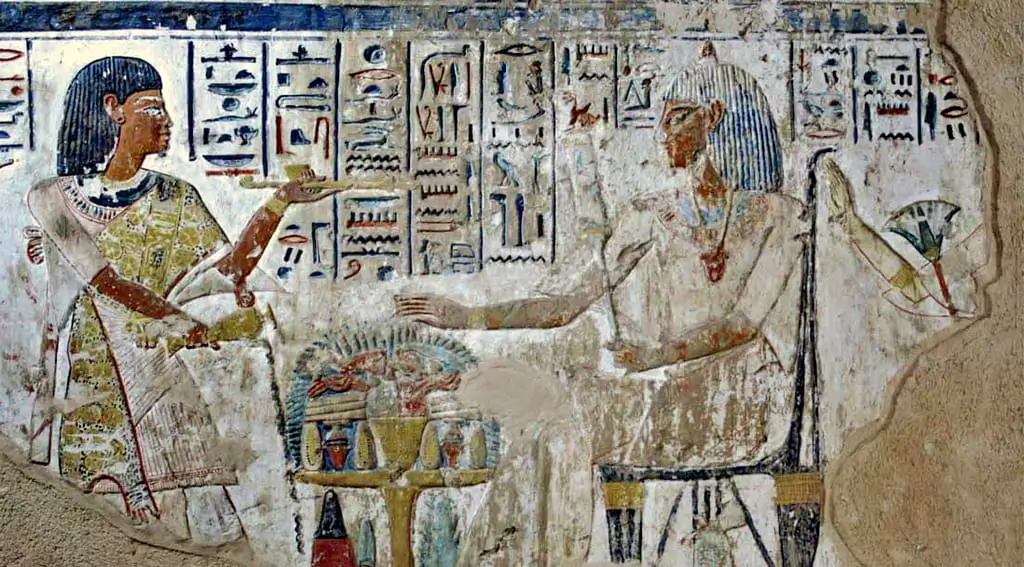
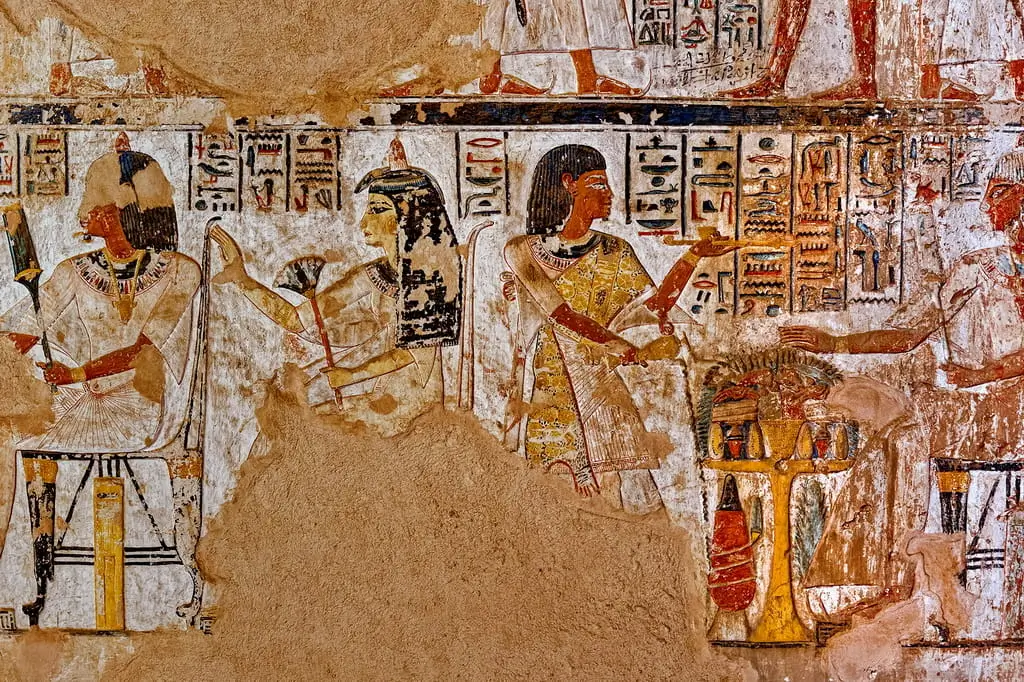
  • Religious Reliefs: Each pillar features carvings of Amenemope making offerings to deities like Osiris, Amun-Ra, and Anubis.
  • Transition Space: This hall acts as a buffer between the bright, public courtyard and the dark, sacred burial gallery.

The Sloping Passage and Burial Chambers

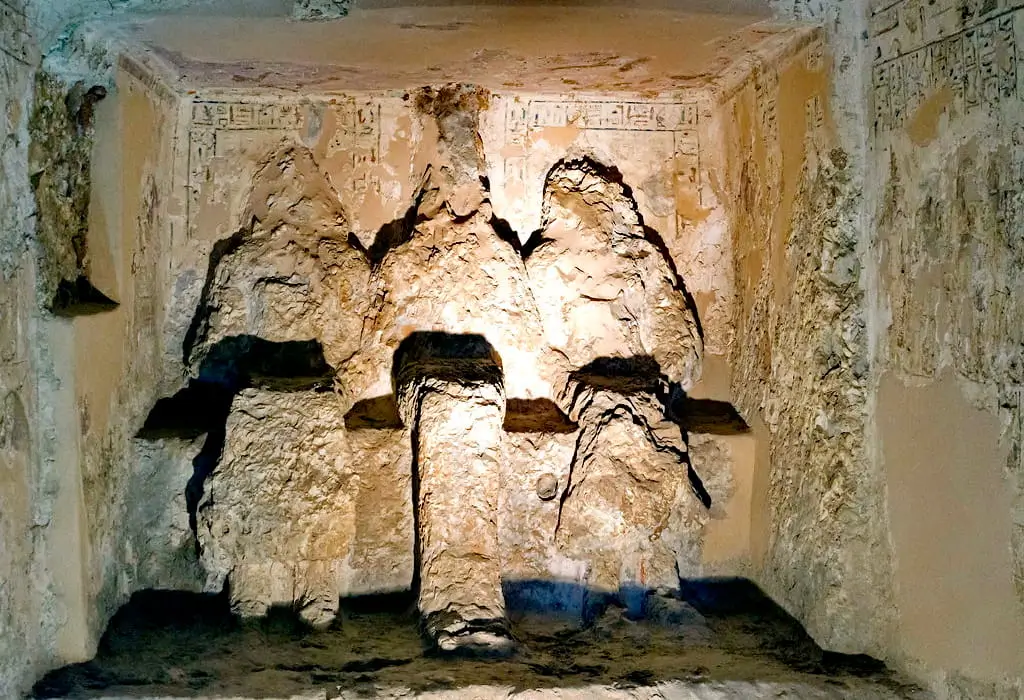
Beyond the pillared hall, a long corridor slopes deep into the limestone bedrock of the Dra’ Abu el-Naga hillside.

  • The Journey to the West: The descent represents the soul’s journey into the underworld (the Duat).
  • The Sarcophagus Chamber: At the end of this long gallery sits the burial chamber. This room was the most private part of the complex. It once held the sarcophagus of Amenemope and his funerary treasures, protected by walls covered in protective spells.
FUN

The Art and Inscriptions: Solar Hymns and Royal Texts

The Art and Inscriptions Solar Hymns and Royal Texts

The decoration within TT148 is as monumental as its architecture. Because Amenemope was a “Third Prophet,” he had access to the most skilled royal artisans of the 20th Dynasty.

1. The Litany of Re

One of the most significant features of this tomb is the presence of the Litany of Re. Usually, artists reserved this complex funerary text for the walls of royal tombs in the Valley of the Kings.

  • The Meaning: The Litany of Re praises the 75 forms of the sun god.
  • The Significance: Finding this text in TT148 proves the growing “democratization” of the afterlife. High-ranking priests began to use royal “intellectual property” to ensure their own resurrection.

2. High-Relief Carving Style

The artistic style of the 20th Dynasty differs from earlier periods.

  • Deep Outlines: Artists used deep, bold incisions to define figures. This style makes the reliefs visible even in the dim light of the tomb.
  • Polychrome Details: Although time has faded many colors, traces of yellow, blue, and red remain. These colors originally represented the sun, the heavens, and the life-giving blood of the earth.

3. Solar Hymns

The entrance area contains extensive inscriptions of Solar Hymns. These texts praise the sun god at sunrise and sunset. Amenemope’s position required him to be a master of these prayers. Therefore, he chose to have them carved permanently into his “eternal house” to ensure he remained in the sun god’s favor forever.

The Catacombs of Kom Esh-Shokafa: Roman-Egyptian Underworld

Descend into one of the "Seven Wonders of the Middle Ages" at the Catacombs of...
Related post
FUN

Modern Restoration: Saving the Monumental Complex

Modern Restoration Saving the Monumental Complex

The Tomb of Amenemope currently serves as one of the most active conservation sites in the Theban Necropolis. Because the tomb is massive and carved into fragile limestone, it requires modern engineering and artistic restoration to survive. The Austro-Egyptian Mission, in collaboration with the Egyptian Ministry of Tourism and Antiquities, leads these efforts.

1. Structural Reinforcement

The sheer size of the Pillared Hall presents a major challenge. Over the millennia, the weight of the mountain above has put immense pressure on the stone supports.

  • The Problem: Vertical cracks appeared in the primary pillars, threatening a total collapse of the ceiling.
  • The Solution: Engineers have installed discrete steel reinforcements and used specialized mortars to fill deep fissures. This work ensures the tomb remains structurally sound for future generations.

2. Soot Removal and Chemical Cleaning

For centuries, local inhabitants and early travelers used many Theban tombs as shelters. Consequently, thick layers of black soot from cooking fires covered the reliefs.

  • The Process: Conservators use delicate chemical “compresses” and laser cleaning technology.
  • The Result: This meticulous work has revealed the original vibrant pigments of the 20th Dynasty. Removing the soot has brought the intricate details of Amenemope’s priestly robes and the divine faces of the gods back to light.

3. Digital Documentation

Because many parts of the tomb remain fragile, the mission uses 3D laser scanning and high-resolution photogrammetry.

  • Creating a Digital Twin: Researchers create a complete 3D map of the complex. This allows scholars to study the inscriptions and architecture remotely without touching the ancient stone.
  • Reconstructing Fragments: Hundreds of fallen stone fragments are being “puzzled” back together digitally before they are physically replaced on the walls.

Tomb of Kheruef (TT192): Guide to Asasif’s Masterpiece

The Tomb of Kheruef (TT192) stands as a monumental bridge between traditional Egyptian aesthetics and...
Related post
FUN

The Legacy of a High Priest: Why TT148 Matters

Amenemope was not just a bureaucrat; he was a guardian of the faith during a period of transition. His tomb acts as a historical archive for the Late Ramesside Period.

  • Political Insight: The scale of the tomb confirms that the High Priests of Amun at Karnak were effectively ruling Upper Egypt during the 20th Dynasty.
  • Religious Innovation: The use of royal texts like the Litany of Re in a non-royal tomb shows a shift in how Egyptians viewed the afterlife. It suggests that high-ranking priests believed they shared a similar spiritual destiny with the Pharaoh.
  • Artistic Transition: The “heavy” style of the reliefs in TT148 provides a clear link to the art of the Third Intermediate Period that followed.

The Tomb of Princess Idut: Saqqara’s Masterpiece of Old Kingdom Art

The Tomb of Princess Idut remains one of the most significant artistic treasures in the...
Related post
FUN

Practical Information for Researchers and Enthusiasts

Category Details
Current Status Ongoing Restoration (Closed to the General Public).
Special Permission Researchers may apply for access through the Ministry of Antiquities.
Viewable Features The massive pylon and exterior courtyard are visible from the hillside.
Nearby Sites Located near the Tomb of Shuroy (TT13) and the Tomb of Roy (TT255).

A Fortress of the Soul

The Tomb of Amenemope (TT148) remains one of the most imposing private monuments in Ancient Egypt. Its temple-like design, royal-grade inscriptions, and massive scale tell the story of a man who stood at the peak of religious power. Thanks to modern restoration efforts, we are finally uncovering the full glory of Amenemope’s vision. For anyone interested in the intersection of power, priesthood, and the afterlife, TT148 is an essential chapter in the story of Thebes.

Enjoy 7 night Nile cruise itinerary from Aswan to visit the most famous monuments joining your private Egyptologist guide. Book us now!...
Explore Pyramids, Luxor, the black & white desert, and more...
FUN
God_Anubis_Icon

Day trip to Wadi el Hitan and Wadi el Rayan

We went on a full-day trip to Wadi el Hitan and Wadi el Rayan with Mohamed (Hamada). Mohamed was a wonderful guide, always making sure we had plenty of water and enough to eat, and providing us with information about the area and Egypt more generally. He also gave us

More »
13-day Egypt guided tour package - Egypt Fun Tours

Easily the best two days of the year!

We were doing the 14-day Mediterranean cruise and were in Egypt for two days. I was searching the internet for about 4 days and finally found Egypt Fun Tours as my guide in Egypt. It ended up being the best 2 days of the entire cruise trip. Since this is

More »

Highly Recommend Egypt Fun Tours!

Several weeks ago, I reached out to Egypt Fun Tours regarding a 9-hour layover in Cairo. From the very beginning, Hani Ahmed was responsive and professional, quickly providing a well-organized itinerary tailored to our limited time. The itinerary included a visit to the pyramids, other historical sites, a delicious dinner,

More »

Day Trip to Alexandria

An enjoyable drive from Cairo to Alexandria. It was an enriching trip. I learnt so much history about the ancient civilisation. The tour guide explained the history of each site we visited. There is so much to see. I would definitely highly recommend visiting Alexandria. It’s rich in history. The

More »
God_Anubis_Icon

Top-rated Tour Packages

God_Anubis_Icon