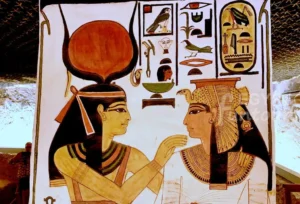

Beit el-Wali: The Vibrant Military Masterpiece of Ramesses II

The Temple of Beit el-Wali, the oldest of the Nubian monuments built by Ramesses II, serves as a vibrant gateway into the 19th Dynasty's history. This rock-cut sanctuary is renowned for its remarkably preserved interior, featuring military reliefs that depict the Pharaoh’s early conquests and a diverse array of southern tribute, including gold and African wildlife. Originally carved into sandstone cliffs near Aswan, the temple was meticulously relocated to the island of New Kalabsha during the 1960s UNESCO rescue mission. Today, it offers travelers and researchers an intimate look at ancient Egyptian artistry, where 3,300-year-old pigments remain vivid due to their accidental protection by early Christian plaster.

Beit el-Wali: The Vibrant Gateway to Nubia

Welcome to the definitive guide to Beit el-Wali. This site is the oldest and perhaps most colorful of the Nubian temples that Ramesses II built. Located today on the island of New Kalabsha, this rock-cut sanctuary serves as a vivid introduction to the artistic and military ambitions of the 19th Dynasty. While many visitors focus on the larger monuments of the south, those who stop here find themselves face-to-face with some of the most well-preserved reliefs in the ancient world. Specifically, the name “Beit el-Wali”—meaning “House of the Holy Man”—hints at the site’s long history of religious transformation.

Furthermore, the temple offers a rare look at the Pharaoh as a young conqueror. Originally, workers carved it directly into the sandstone cliffs near Aswan. It acted as a bold political statement to all who entered Egypt from the south. Fortunately, a dedicated rescue mission saved this masterpiece from the rising waters of Lake Nasser in the 1960s. Today, it stands alongside the Temple of Kalabsha. It provides a unique perspective on how the Egyptians blended architecture with the natural landscape of the Nile Valley.

The Military Prowess of a Young Pharaoh

In this comprehensive guide, we will explore every corner of this historic site. First, we analyze the famous “tribute scenes” that depict diverse African wildlife and gold. Then, we examine the technical mastery of the rock-cut sanctuary and its distinctive “Proto-Doric” columns. Finally, we provide the practical logistics you need to visit this hidden gem during your next stay in Aswan.
FUN

The Military Hall: Scenes of Conquest and Tribute

The Military Hall Scenes of Conquest and Tribute

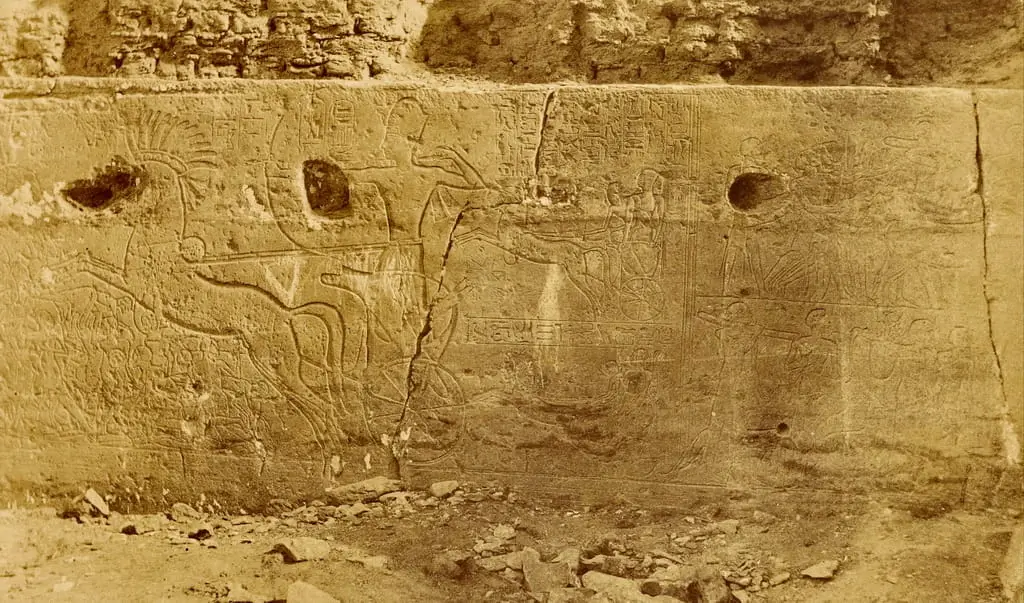
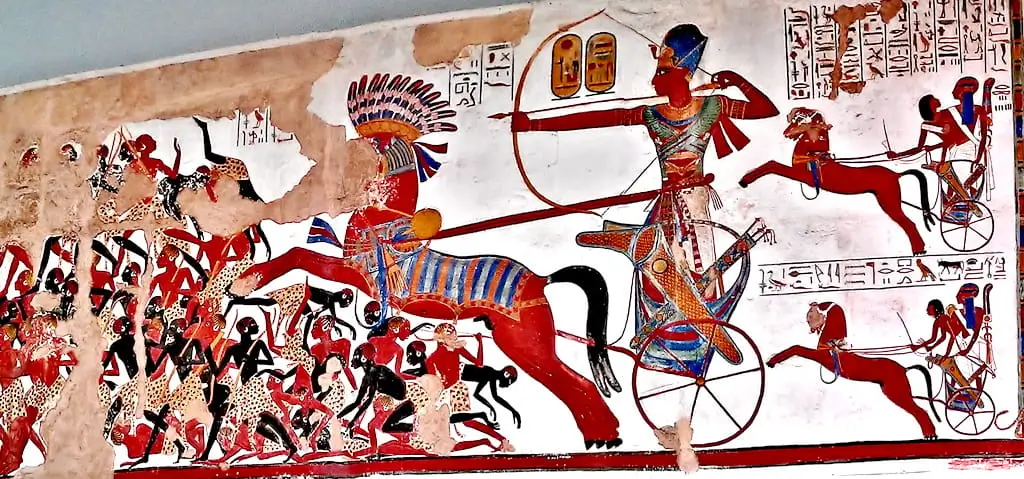
Historically, the entrance hall of Beit el-Wali serves as a vibrant archive of Egyptian military history. Because Ramesses II wanted to project his power early in his reign, he commissioned detailed reliefs that show his victories over neighboring lands. When you enter the hall, you will see two primary narratives: the northern campaigns against the Libyans and Syrians, and the southern campaigns against the Nubians.

On the left wall, the carvings depict the chaos of battle with incredible energy. Specifically, they show the King charging in his chariot, scattering his enemies under his horses’ hooves. Unlike more static temple art, these scenes capture a sense of movement and urgency that was groundbreaking for the 19th Dynasty.

The Diverse Tribute of the South

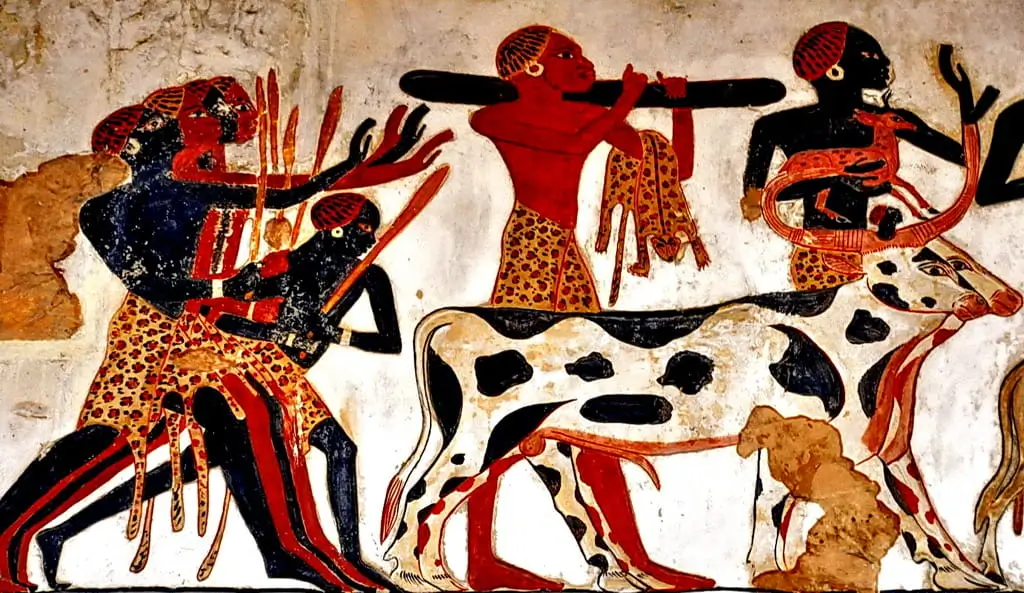
On the right wall, the tone shifts from the violence of war to the rewards of victory. Here, the reliefs illustrate the diverse wealth that flowed into Egypt from the south. Therefore, this section provides a fascinating look at the resources the Egyptians valued most.

  • The Procession: Long lines of Nubian people bring offerings to the Pharaoh as a sign of submission.
  • The Animals: The carvings clearly show a variety of wildlife, including giraffes, monkeys, and even leopard skins.
  • The Wealth: You can see piles of gold rings, high-quality ebony wood, and ivory tusks being presented to the King.
  • The Royal Children: Interestingly, the reliefs include the King’s sons, such as Amun-her-khepeshef, participating in these official ceremonies.

As a professional guide, I often tell my guests that these scenes are like a 3,300-year-old documentary. They do not just show power; they show the actual items and animals that moved along the Nile trade routes during the New Kingdom. Next, we will move into the deeper, rock-cut chambers to see how the architecture changes as we approach the sacred sanctuary.

FUN

The Rock-Cut Interior: Design and Divine Sanctuary

The Rock-Cut Interior Design and Divine Sanctuary

Following the expansive military hall, the temple narrows into its most sacred space—the inner sanctuary. Architecturally, the designers transitioned from the open courtyard into the mountain itself, creating a speos or rock-cut structure. Because the architects carved this area directly into the sandstone, it offers a dramatic change in atmosphere and temperature.

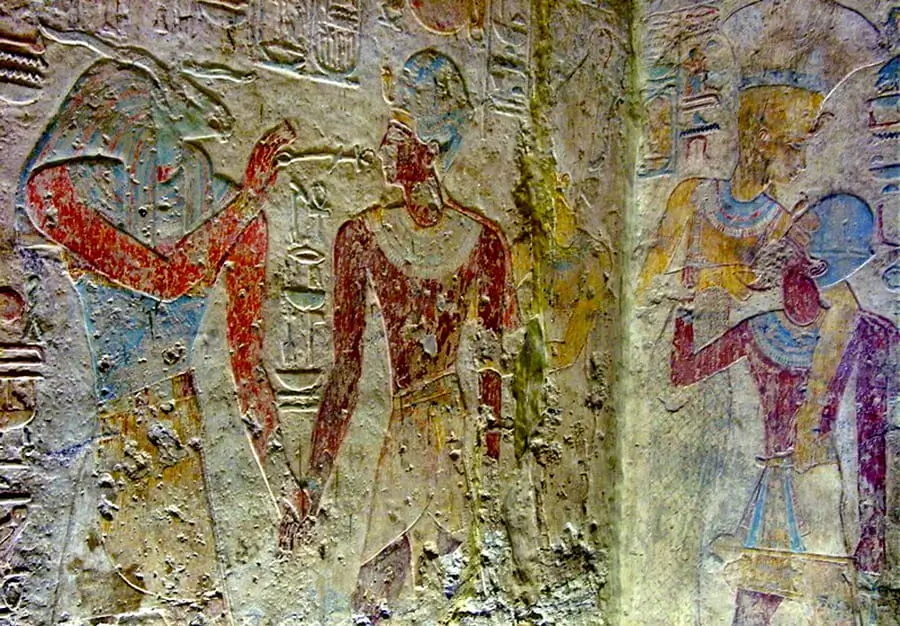
Within the inner hall, two massive, fluted columns support the ceiling. Specifically, these are often called “Proto-Doric” columns because their simple, faceted design predates similar Greek styles by several centuries. Moreover, these pillars create a visual path that leads your eye toward the very back of the temple where the gods reside.

The Sanctuary of the Gods

At the far end of the temple lies the small, square sanctuary, which represents the most intimate part of the monument. Here, the artwork shifts from the worldly chaos of battle to the eternal order of the divine. Therefore, the scenes focus on the Pharaoh’s relationship with the heavens.

  • Divine Statues: Carved into the back wall are three statues representing Ramesses II sitting between the gods Amun-Re and Anuket.
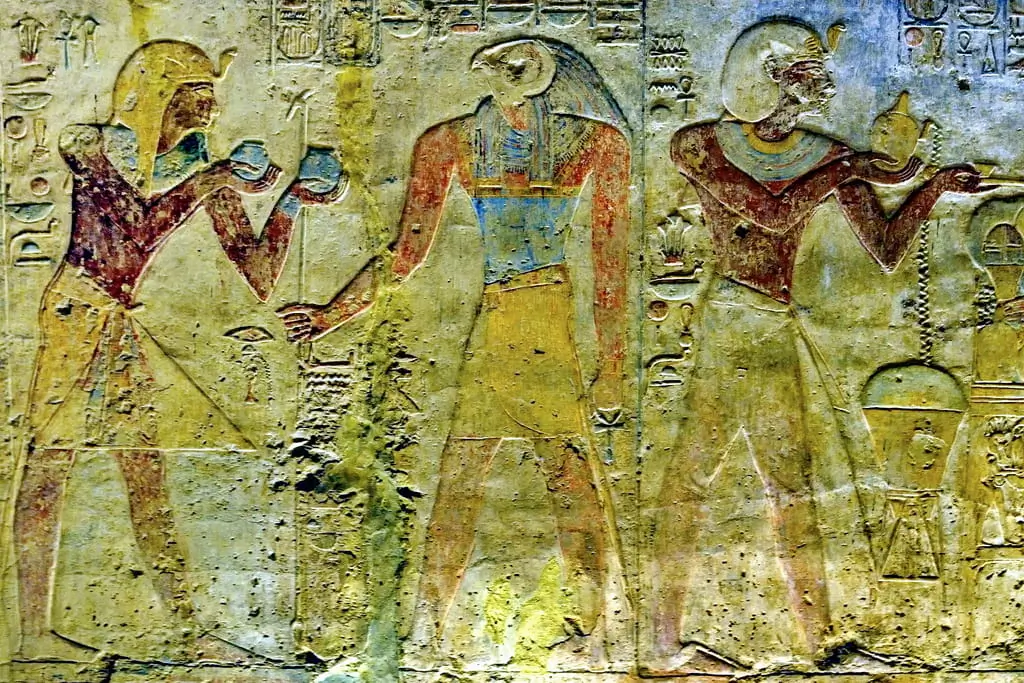
  • The Rituals: Reliefs on the sanctuary walls show the King performing sacred rituals, such as offering incense and cool water to the deities.
  • The Symbology: These images confirm that the gods have accepted the Pharaoh’s rule and his military victories.

Notably, the inner chambers provide the best examples of the temple’s original color palette. Since the artists used mineral-based paints, the reds, blues, and yellows remain strikingly bright even after thousands of years. As we continue, we will explore why these colors survived so well and the role that later history played in their preservation.

Abydos Temple: The Sacred Home of Osiris & the Masterpiece of Seti I

Take a pilgrimage to Abydos, the sacred "home" of the god Osiris and the spiritual...
Related post
FUN

Historical Transformation and the Rescue of Beit el-Wali

Historical Transformation and the Rescue of Beit el-Wali

During the early Christian era, local communities transformed the temple of Beit el-Wali into a church, a common practice for many ancient structures in Nubia. To prepare the space for Christian worship, they covered the Pharaonic reliefs with a layer of mud-plaster and painted over them with religious iconography. Consequently, this act unintentionally protected the original 3,300-year-old pigments from air, light, and humidity for centuries.

Remarkably, when modern restorers removed the plaster, they revealed the vivid reds, blues, and yellows of the 19th Dynasty in their near-original state. As a researcher and professional guide, I find this layering of history essential to understanding the site’s longevity. Furthermore, this temple played a key role in the massive international effort to save Egyptian history from modern development.

The UNESCO Salvage Mission

In the 1960s, the construction of the High Dam created Lake Nasser, which threatened to submerge the temple forever. Therefore, a team from the University of Chicago, in cooperation with UNESCO, spearheaded a mission to dismantle and relocate the monument. Unlike some larger temples, the rescue of Beit el-Wali involved several complex steps:

  • Dismantling: Engineers cut the rock-cut sanctuary into large, manageable blocks to preserve the delicate interior paintings.
  • Transportation: The team moved the temple pieces by barge to its current location on the island of New Kalabsha.
  • Reconstruction: Experts carefully reassembled the blocks to mirror the temple’s original orientation and layout.

Today, visitors can enjoy the temple in its new home, situated safely above the water line. This relocation ensures that future generations can continue to study the military and religious narratives that Ramesses II carved into these walls. Next, we will finish this guide with a concise summary and practical advice for navigating the island of New Kalabsha.

Wadi el-Sebua: Exploring the Sun Temple of Ramesses II in Nubia

The Temple of Wadi el-Sebua, or the "Valley of the Lions," is a spectacular New...
Related post
FUN

Summary and Practical Visit Tips

Summary and Practical Visit Tips

Ultimately, Beit el-Wali stands as a vital piece of the Nubian archaeological puzzle, offering a condensed look at the architectural genius and military ambition of Ramesses II. By visiting this site, you witness the very beginning of a building program that would eventually culminate in the massive wonders of Abu Simbel. Because it is often less crowded than other Aswan monuments, it provides a quiet atmosphere perfect for deep study and high-quality photography.

Navigating New Kalabsha Island

To make the most of your visit, it is helpful to understand the logistics of the site’s modern location. Since the temple was relocated, it is part of a larger archaeological park that includes several other saved structures.

  • Combined Visit: Your ticket for New Kalabsha generally includes entry to Beit el-Wali, the Temple of Kalabsha, and the Kiosk of Qertassi.
  • Access: You must take a short motorboat ride from the dock near the High Dam to reach the island.
  • Timing: Early morning visits are recommended to avoid the midday heat, as the island has limited shade.
  • Expert Insight: Focus your time on the interior hall of Beit el-Wali to see the best-preserved military reliefs before the light shifts.

As you conclude your journey through these rock-cut halls, you carry with you a clearer picture of how ancient Egypt maintained its southern borders and how modern nations worked together to save that history. Whether you are a researcher or a curious traveler, the “House of the Holy Man” remains one of the most rewarding stops in all of Nubia.

The Temple of Luxor: Egypt’s Living Monument of Royal Power

The Temple of Luxor stands as a living bridge between the ancient and modern worlds....
Related post
FUN

The Legacy of Ancient Engineering and Modern Conservation

The Legacy of Ancient Engineering and Modern Conservation

Reflecting on the journey of Beit el-Wali, we see a remarkable bridge between two eras of monumental effort. Originally, the temple was a feat of ancient engineering, where workers carved a sanctuary into solid rock to honor a living king. In the 20th century, it became a symbol of modern international cooperation, as experts from around the world dismantled and moved it to prevent its loss to the Nile.

Consequently, this relocation has allowed researchers and travelers to continue analyzing the site’s unique features in a secure environment. By preserving the temple on New Kalabsha, the UNESCO mission ensured that the specific artistic details—from the military narratives to the vibrant mineral pigments—did not vanish beneath Lake Nasser.

Why Beit el-Wali Matters Today

While larger temples often receive more attention, Beit el-Wali provides an intimate look at the transition of Egyptian history. For several reasons, it remains a cornerstone of Nubian studies:

  • The Early Reign: It serves as a rare primary record of the beginning of the 19th Dynasty’s expansion.
  • The Transition: It bridges the gap between the traditional temple architecture of Cairo and the rock-cut style typical of southern Nubia.
  • The Cultural Layering: It offers physical evidence of how later Coptic communities repurposed and unintentionally protected Pharaonic art.

Finally, as we close this guide, remember that Beit el-Wali is more than just a historical site. It is a testament to the endurance of human creativity. Whether you are exploring the “Valley of the Lions” at Wadi el-Sebua or standing before the military reliefs here, you are witnessing a story of power, faith, and survival that has spanned over three millennia.

Ready for Your Next Discovery?

If you found this guide helpful for your research or travel planning, explore our other “guide” articles covering the hidden gems of Lake Nasser. From the architectural evolution of the pyramids to the latest archaeological finds, we are committed to providing the most authoritative content for the modern explorer.

Tour the most enchanting attractions of Egypt....
Discover the amazing wonders of ancient Egypt in Luxor and Aswan...
FUN
God_Anubis_Icon

Cairo Day Trip

Great trip organised. I had a 12-hour layover in Cairo and had a great time with Sherif, who answered every question I had on ancient Egypt. Highly recommend.

More »

Great shore excursion of Cairo & Giza

We are glad that we arranged our private shore excursion with Egypt Fun tours in last week of October 2012. Booking process was very easy with Hamada and she took care of all our questions promptly just via E-mail. Our group was little worried about safety in Egypt especially because

More »

Amazing layover Tour

We had 12 hour layover in Cairo, and our guide Hani waited patiently for us when we had a few visa issues entering the country! We got on our tour, and had the best experience ever! We saw the pyramids, the sphinx, Islamic Cairo and rode through the city! We

More »

Alexandria! Wow!

Muhammad is the best! He showed me a world I never thought possible! The tombs in Alexandria, by far, were my favorite! I never knew there was a place on earth that contained both Greek and Egyptian carvings in the same tombs! The history and culture of Egypt is so

More »
God_Anubis_Icon

Top-rated Tour Packages

God_Anubis_Icon