10th Dynasty of Egypt: Herakleopolis and the Struggle for a Divided Nile

This comprehensive guide explores the Tenth Dynasty of Egypt during the turbulent First Intermediate Period, tracking the century-long geopolitical rivalry between the northern Herakleopolitan kingdom and the rising southern Theban Eleventh Dynasty. Rather than a chaotic dark age, the article reveals a resilient epoch marked by the decentralization of pharaonic power to provincial governors (nomarchs) and an explosion of cultural evolution. This era reshaped Ancient Egypt by democratizing the afterlife through the widespread use of Coffin Texts, pioneering sophisticated masterworks of political literature like the Instruction for King Merykare, and shifting toward a talent-based bureaucracy—innovations that directly laid the social, cultural, and administrative foundations for the glorious Middle Kingdom.
The eye of Horus
WhatsApp
Email
Print

We often remember Ancient Egypt for its towering pyramids and unified golden eras. However, some of its most fascinating chapters unfolded when the nation fractured. The Tenth Dynasty of Egypt represents a critical, turbulent epoch during the First Intermediate Period (c. 2160–2025 BCE). During this time, the absolute power of the Old Kingdom evaporated. A divided land emerged, ruled by rival regional factions.

Many old history books paint this era as a dark age of pure chaos. Despite that reputation, modern archaeology reveals a far more nuanced picture. This period brought intense political drama, fierce military clashes, and a surprising explosion of local art and literature.

The Tenth Dynasty of Egypt: The Forgotten Kings of a Fractured Egypt

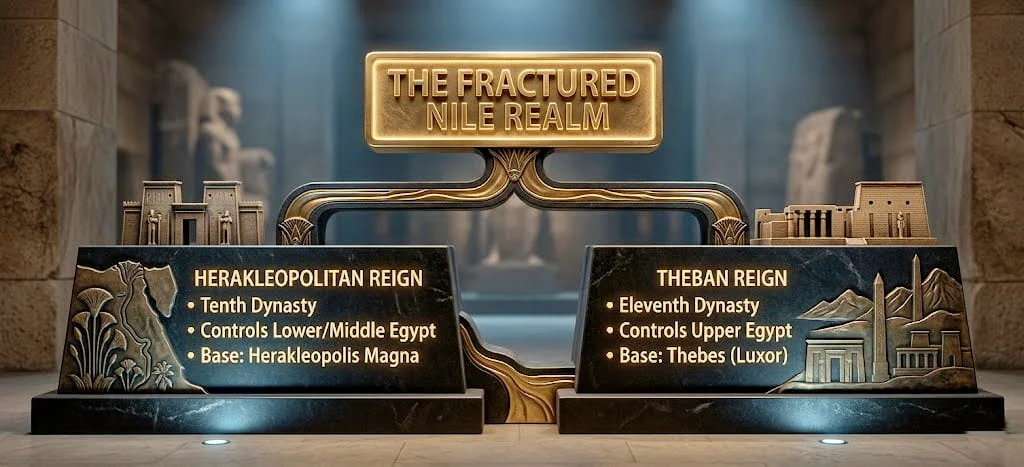
To understand the Tenth Dynasty, you must visualize a realm split in half. These kings ruled from their northern stronghold of Herakleopolis Magna. They claimed sovereignty over Lower and Middle Egypt. However, the rising Theban Eleventh Dynasty in the south constantly challenged their legitimacy. For over a century, these two royal houses fought a brutal civil war for the ultimate prize: the double crown of a unified Egypt.

The Forgotten Kings of a Fractured Egypt

Defining the Tenth Dynasty

Historical records deeply intertwine the Ninth and Tenth Dynasties. Both lines of kings originated from the city of Herakleopolis. Time has broken and scarred the surviving king lists from this era. Because of these gaps, historians group both lines as the Herakleopolitan Period.

The Tenth Dynasty represents the later lineage of these northern rulers. These pharaohs did not build monumental stone pyramids. Instead, they spent their energy securing borders, managing vital trade routes, and fighting a grueling war against their southern neighbors.

The First Intermediate Period: Crisis or Cultural Evolution?

For decades, early scholars relied on later Middle Kingdom propaganda. These ancient texts described the First Intermediate Period as an unmitigated disaster filled with lawlessness and famine.

However, contemporary excavations reveal that this crisis sparked a profound cultural evolution. The breakdown of the royal monopoly on wealth allowed local governors (nomarchs) to flourish.

  • New Art Styles: Regional art workshops emerged. They broke away from stiff traditions to embrace expressive, realistic local styles.
  • Spiritual Access: The exclusive royal privilege of entering the afterlife extended to ordinary citizens. Funerary texts shifted from royal pyramid walls onto the wooden coffins of everyday provincial Egyptians.

The Tenth Dynasty was not merely a historical footnote of collapse. It was a resilient, highly sophisticated state that laid the foundations for the glorious Middle Kingdom.

Divider

The Geopolitical Landscape: How Egypt Split in Two

The collapse of the Old Kingdom did not happen overnight. Instead, a slow decay of central authority fractured the state, paving the way for the Tenth Dynasty to seize power in the north.

The Collapse of Central Authority After the Sixth Dynasty

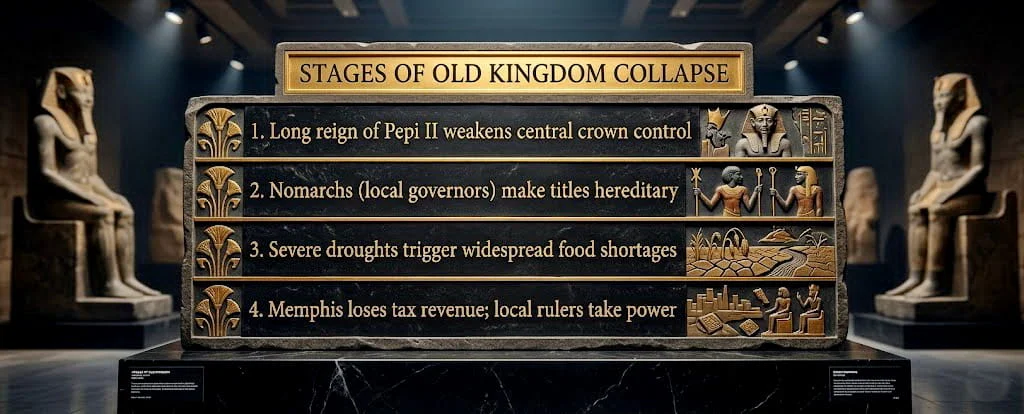
For centuries, the Old Kingdom pharaohs ruled Egypt with absolute power from the capital city of Memphis. However, during the Sixth Dynasty, the political foundations began to crack.

The exceptionally long reign of Pepi II created a major succession crisis. As the aging king grew weaker, provincial governors—known as nomarchs—grew stronger. The central government slowly lost control over the country’s wealth.

The Collapse of Central Authority After the Sixth Dynasty

Furthermore, severe climate shifts brought low Nile floods and widespread famine. The central court could no longer provide food relief to the provinces. Local leaders stepped in to protect their own people, effectively ending the absolute power of the Memphis throne.

The Tenth Dynasty of Egypt: The Rise of Herakleopolis Magna (Nen-Nesut)

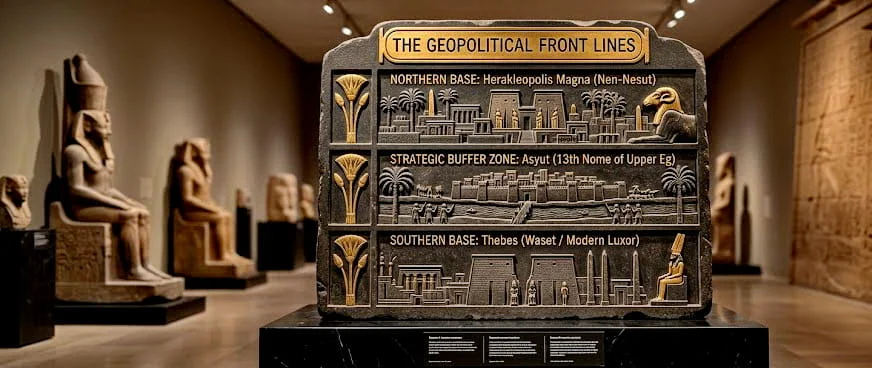
As Memphis faded into political irrelevance, a new center of power emerged in Middle Egypt. The city of Herakleopolis Magna (known to ancient Egyptians as Nen-Nesut) sat at a highly strategic location near the Faiyum Oasis.

A powerful local ruler named Khety I seized control of the region. He declared himself pharaoh, founding the Herakleopolitan line. This line includes both the Ninth and Tenth Dynasties.

Herakleopolis grew rapidly because its rulers controlled the rich agricultural lands of the Faiyum and the strategic trade corridors of Lower Egypt. The city became a glittering capital, complete with its own royal court, elite cemeteries, and administrative center.

The North-South Divide: Herakleopolis vs. Thebes

The Herakleopolitan kings claimed authority over all of Egypt, but they faced a massive problem in the south. A rival family of local princes in Thebes (modern-day Luxor) also declared themselves the rightful pharaohs of Egypt, forming the Eleventh Dynasty.

This declaration split Egypt into two competing realms:

  • The Herakleopolitan Kingdom (North): Controlled Lower Egypt (the Delta) and Middle Egypt. They focused on securing the borders against Asian nomads and maintaining traditional administrative ties to Memphis.
  • The Theban Kingdom (South): Controlled Upper Egypt from Abydos down to the first cataract at Aswan. They built a highly aggressive, military-focused state.

The Nile became a militarized highway. The border between these two kingdoms constantly shifted, turning Middle Egypt into a permanent battleground. This geopolitical split defined the entire lifespan of the Tenth Dynasty.

Chronology and the King Lists: Piecing Together Fragmented Records

Reconstructing the timeline of the Tenth Dynasty presents a massive challenge for modern Egyptologists. Because this era lacked a single, central administrative archive, historians must piece together the narrative from scattered, heavily damaged records.

The Missing Links in the Turin King List and Abydos King List

Our primary understanding of Egyptian royal timelines comes from ancient monumental stone inscriptions and papyrus scrolls. However, the Tenth Dynasty is deliberately omitted or lost in many of them.

  • The Abydos King List: Carved on the walls of the Seti I temple, this list completely skips the First Intermediate Period. The New Kingdom pharaohs viewed the Herakleopolitan kings as illegitimate usurpers. Therefore, they erased them from the official state history to preserve a direct line of legitimate rulers.
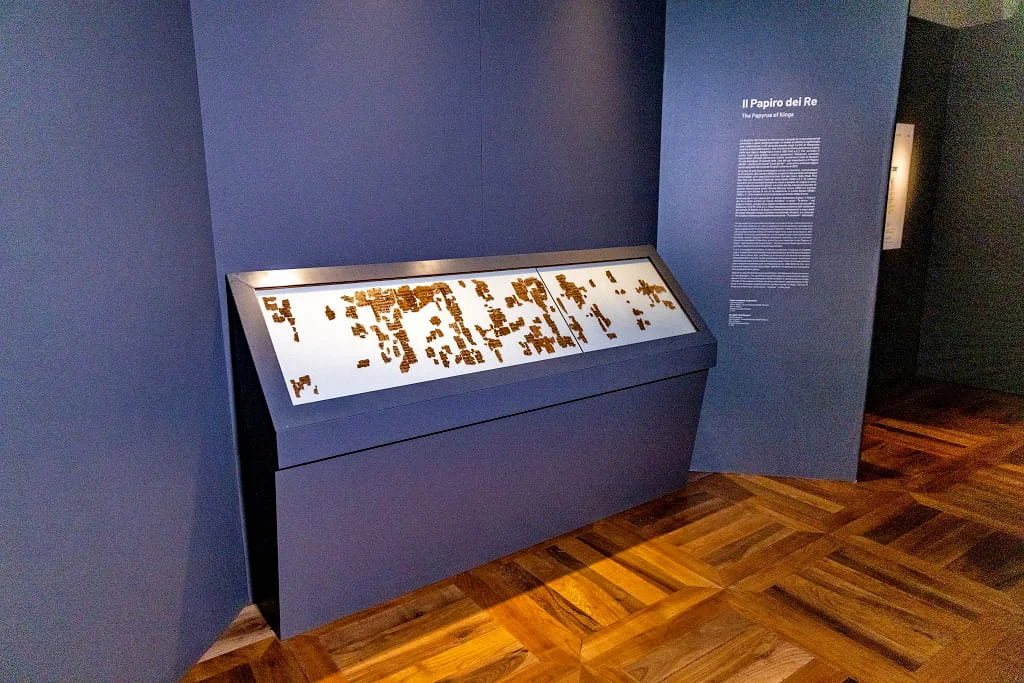
  • The Turin Royal Canon: Unlike the Abydos list, this famous Ramesside papyrus originally recorded every single king, including the Herakleopolitans. Unfortunately, the scroll suffered severe fragmentation over the centuries. The section dedicated to the Ninth and Tenth Dynasties is badly torn, leaving major gaps in names and reign lengths.

The Missing Links in the Turin King List and Abydos King List

Look closely at the image above. The heavily damaged fragments of the Turin Canon illustrate why reconstructing this era is so difficult. Many royal names exist only as broken syllables.

The Overlap Between the Ninth and Tenth Dynasties

Because of the gaps in the Turin papyrus, historians face an ongoing debate regarding where the Ninth Dynasty ends, and the Tenth Dynasty begins.

Many contemporary Egyptologists believe these two dynasties should actually be treated as a single, continuous line of Herakleopolitan rulers. The division we use today originates from the ancient historian Manetho. He likely divided them based on political shifts or family branches ruling from the same northern capital.

Key Pharaohs of the Tenth Dynasty: Reconstruction of the Lineage

Despite these fragmentary records, archaeology confirms the existence of several prominent kings. They fought hard to maintain control over the north.

PharaohHistorical SignificanceEvidence & Artifacts
Meryibre KhetyLikely initiated the Tenth Dynasty lineFound on a flame-broached brazier and ivory tools
Wahkare KhetyStabilized the delta bordersMentioned later in the Instruction for Merykare
MerykareThe last major king; commissioned famous literatureAttested in contemporary tombs at Asyut and Saqqara

Khety VII: The Sovereign of Consolidation

King Khety VII was a highly pragmatic military strategist. He recognized that constant fighting with the south was draining his resources. He temporarily shifted his focus away from the Theban front. Instead, he cleared Asian nomadic groups out of the eastern Nile Delta, securing the agricultural heartland of Egypt.

Meribhre Khety: Archaeology and Artifacts

Meribhre Khety left behind rare, tangible physical proof of his reign. Excavators discovered an ornate copper brazier bearing his cartouche. This artifact proves that metalworking and royal artisan workshops continued to operate at a very high level in Herakleopolis, despite the ongoing political division.

Merykare: The Last Great King of the North

Merykare stands out as the most famous figure of the Tenth Dynasty. He ruled during a period of extreme political tension. He maintained a strong alliance with the powerful nomarchs of Asyut to protect his southern border.

Merykare even built a pyramid at Saqqara named Wadj-Sut-Merykare (The Places of Merykare are Flourishing). Although archaeologists have not yet located the physical remains of this monument, records in contemporary tombs confirm it existed, signaling his desire to claim the traditional burial spaces of the Old Kingdom pharaohs.

Golden Scarab

The Masterpiece of Herakleopolitan Literature: The Teaching for King Merykare

While the Tenth Dynasty struggled to maintain physical control over a fractured Egypt, it achieved an absolute triumph in the realm of literature. The era produced some of the most sophisticated philosophical writings in ancient history. Chief among these works is the famous literary masterpiece known as The Teaching for King Merykare (or The Instruction for Merykare).

This text belongs to the sebayt genre, a traditional form of Egyptian wisdom literature. However, it completely breaks from earlier styles. Instead of offering general moral advice from a father to a son, it serves as a raw, highly practical manual on statecraft, wartime politics, and royal crisis management.

The Tenth Dynasty of Egypt: The Historical Significance of Papyrus Leningrad 1116A

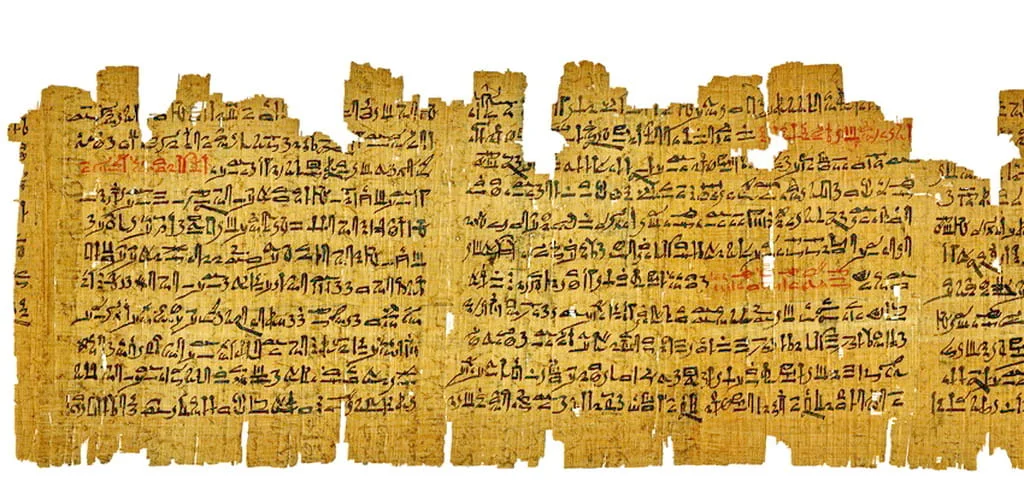
Historians do not possess the original, tenth-dynasty royal scroll. Instead, our knowledge of this brilliant treatise comes from later New Kingdom copies, primarily Papyrus Leningrad 1116A, alongside fragments like Papyrus Carlsberg 6.

The Historical Significance of Papyrus Leningrad 1116A

The image above shows a well-preserved section of this historic text. New Kingdom scribes used this composition in royal schools centuries after the Tenth Dynasty fell. They copied it repeatedly because they deeply admired its poetic vocabulary and sharp political insights.

The Tenth Dynasty of Egypt: Political Wisdom and Royal Etiquette in a Time of Civil War

The text takes the form of a theoretical address from an aging Herakleopolitan pharaoh—often identified as Wahkare Khety—to his young son and successor, Prince Merykare. The old king speaks with startling honesty. He admits to his own tactical errors and warns his son about the immense burdens of leadership in a divided country.

The treatise lays out a clear strategy for maintaining power through short, direct guidelines:

  • Reward Eloquence and Loyalty: The text advises the young prince to master public speaking. It notes that a king’s tongue acts as his strongest weapon, capable of subduing rivals without physical violence.
  • Support the Local Elite: The ruler must enrich his nobles and officials. Wealthy elites have no incentive to accept bribes or plot rebellions against the crown.
  • Govern with Justice (Ma’at): Even during war, a pharaoh must protect the vulnerable. The text warns that the divine judges of the afterlife weigh a king’s character, not his military conquests.

The Tenth Dynasty of Egypt: Insights Into Foreign Relations and Border Control

Beyond domestic politics, the document provides invaluable information about the state of Egypt’s borders during the First Intermediate Period. It provides a rare, firsthand perspective on the nomadic groups threatening the eastern fringes of the Nile Delta.

The author describes these nomadic groups as a constant, unpredictable threat. They wander from place to place, fighting over water and raiding settled Egyptian farming communities.

To counter this danger, the text reveals that Tenth Dynasty pharaohs built a massive network of garrisoned forts and defensive ditches along the eastern delta border. By securing this vital agricultural zone, the Herakleopolitan kings protected their grain supply, allowing them to focus their primary military strength on the long civil war against Thebes.

Geopolitics and Warfare: The Long War with the Theban Eleventh Dynasty

The lifespan of the Tenth Dynasty was defined by an ongoing, existential conflict. For over a century, the northern Herakleopolitan pharaohs locked horns with the aggressive southern rulers of Thebes. This was not a series of brief skirmishes. Instead, it was a grinding civil war for total control of the Nile Valley.

Geopolitics and Warfare The Long War with the Theban Eleventh Dynasty

The Battle for Middle Egypt: Abydos as the Crucial Frontier

Middle Egypt became a heavily fortified permanent battleground. The sacred city of Abydos sat directly on the fluid boundary separating the two kingdoms. Because Abydos held immense religious significance as the traditional burial ground of Egypt’s earliest kings, controlling it provided massive political legitimacy.

The city changed hands multiple times throughout the war. In the Instruction for Merykare, the old king makes a stunning confession. He admits that Herakleopolitan troops sacked the ancient holy royal tombs of Abydos during a military campaign.

The northern king describes this destruction as a terrible crime that brought him deep personal shame and divine displeasure. This rare admission highlights the brutal, desperate nature of the conflict.

The Role of Asyut: The Loyal Nomarchs Tefibi and Khety II

The Tenth Dynasty could not fight the Theban army alone. Because the central government lacked a vast standing imperial army, the Herakleopolitan pharaohs relied heavily on the military support of loyal provincial governors.

The rulers of Asyut (the 13th Nome of Upper Egypt) acted as the ultimate shield for the northern kingdom. Powerful local nomarchs like Tefibi and Khety II commanded highly trained, private regional armies. They blocked the narrow Nile valley, preventing the Thebans from marching directly into Lower Egypt.

The Role of Asyut The Loyal Nomarchs Tefibi and Khety II

The tombs of these warlords in the cliffs of Asyut contain detailed autobiographical inscriptions. Tefibi proudly recorded his military achievements on his chapel walls. He described leading his fleet and infantry southward to crush Theban assaults, successfully pushing the northern border back down to Abydos.

Military Strategy, Fortifications, and the Defense of the Eastern Delta

To survive this dual pressure from the southern Thebans and eastern nomads, the Tenth Dynasty developed a highly sophisticated defensive strategy:

  • River Blockades: The northern military deployed large fleets of armed patrol ships to control troop movements along the Nile.
  • Town Fortifications: Local provincial centers transformed into heavily fortified strongholds. High mud-brick walls shielded urban grain stores from enemy raids.
  • The Ruler’s Wall: In the northeast, the pharaohs built a network of fortresses to secure the delta. This defensive line kept nomadic raiders at bay, ensuring the northern home front remained stable and economically productive during the civil war.
The eye of Horus

Provincial Power: The Rise of the Nomarchs and Autonomy of the Nomes

The true administrative heart of the Tenth Dynasty did not beat in the royal palace of Herakleopolis. Instead, power resided in the provincial districts, known as nomes. As the central crown weakened, regional governors (nomarchs) stepped into the power vacuum, transforming themselves from royal servants into independent warlords.

The Tenth Dynasty of Egypt: From Royal Servants to Independent Warlords

During the Old Kingdom, pharaohs appointed nomarchs and could remove them at will. However, by the Tenth Dynasty, these local rulers made their administrative titles hereditary. They passed their offices directly to their sons without seeking permission from the royal court.

These governors built private armies, collected local taxes, and commissioned major public works. While they still officially recognized the Herakleopolitan pharaoh as their rightful sovereign, they operated with total practical autonomy. The king became a first among equals, relying entirely on the goodwill and military alliances of these powerful provincial families to keep his throne.

The Famine Inscriptions: Ankhtifi of Mo’alla and the Reality of Climate Shift

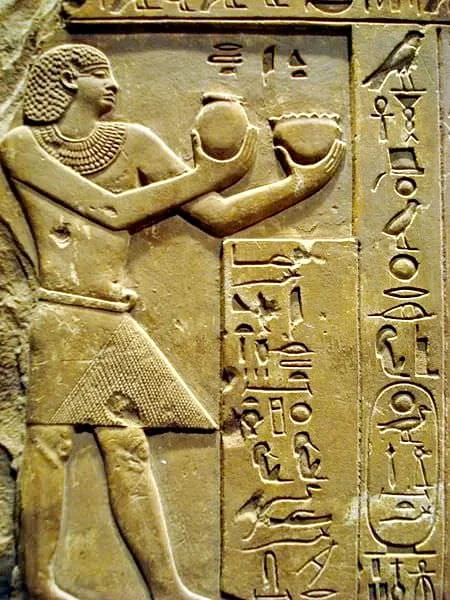
The shift in power from the royal court to local rulers shows up clearly in the remarkable tomb inscriptions of the era. The most famous example belongs to a highly ambitious southern nomarch named Ankhtifi. He ruled the third nome of Upper Egypt (Nekhen) from his base in Mo’alla.

The Famine Inscriptions Ankhtifi of Mo'alla and the Reality of Climate Shift

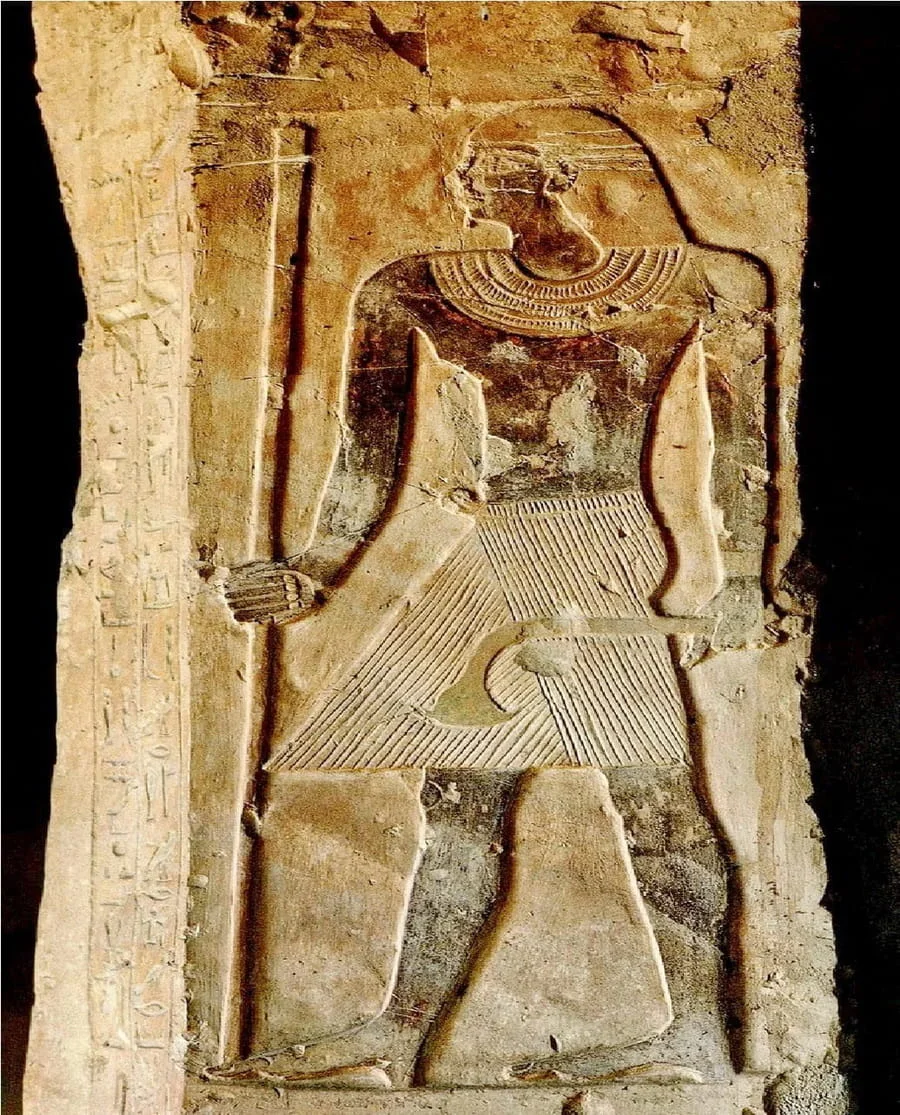
The image above highlights a pillar relief from Ankhtifi’s rock-cut tomb chapel. On these walls, Ankhtifi carved a stunning, dramatic autobiography. He paints a grim picture of a climate crisis, claiming that all of Upper Egypt was dying of hunger to the point that people were eating their own children.

He then boldly declares his own heroic achievements:

“I provided grain to the south… I did not allow anyone to die of hunger in this nome. I was like a good father to my people.”

Crucially, Ankhtifi never mentions a pharaoh or a royal relief effort. His inscription completely ignores the crown. This text proves that when severe droughts struck, everyday Egyptians looked to their local nomarch for survival, not the distant king in Herakleopolis.

The Tenth Dynasty of Egypt: Economic Survival Strategies Beyond Royal Supervision

To survive these harsh ecological and political conditions, individual nomes developed self-sufficient economic strategies.

Instead of sending their surplus grain, livestock, and raw materials to the royal treasury in Herakleopolis, the nomarchs kept their wealth at home. They used these assets to build massive regional granaries, establish local manufacturing workshops, and trade directly with neighboring districts.

This decentralized economic model allowed provincial communities to survive the long civil war. By bypassing the royal administrative monopoly, the provinces kept trade flowing, laying the economic foundation that would eventually rescue Egypt from instability.

Divider

The Tenth Dynasty of Egypt: Culture, Art, and Religion Under Herakleopolitan Rule

Political division did not freeze Egyptian creativity. Instead, the Tenth Dynasty saw a massive cultural explosion. When the royal courts lost their total monopoly on wealth, everyday people gained access to art, fine burials, and spiritual privileges.

The Democratization of the Afterlife: The Evolution of Coffin Texts

The greatest religious shift of the First Intermediate Period was the democratization of the afterlife. During the Old Kingdom, only the pharaoh could expect to become a god after death. Royal workers carved sacred spells exclusively inside royal pyramid chambers.

During the Tenth Dynasty, this absolute royal monopoly shattered. Wealthy non-royal citizens, such as regional merchants, military officers, and scribes, bought these same sacred protections for themselves.

The Democratization of the Afterlife The Evolution of Coffin Texts

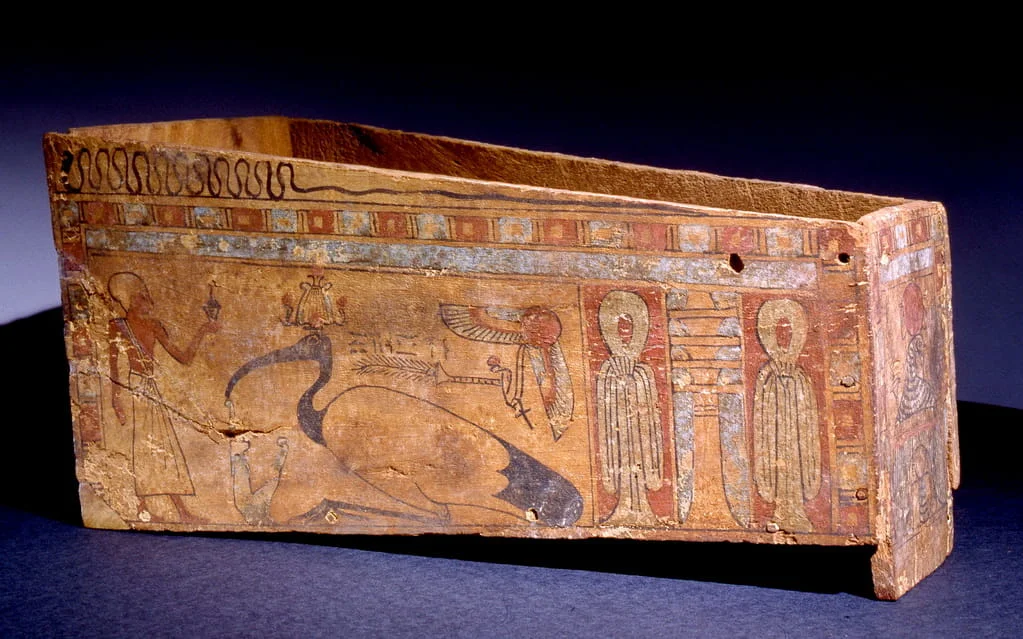
As you can see in the image above, artists painted these sacred spells directly onto the interior wooden panels of regular sarcophagi. These writings are known as Coffin Texts. They gave ordinary people the map and magic passwords needed to navigate the dangerous underworld, bypassing the pharaoh entirely to achieve eternal life.

Regional Artistic Styles: Decentralization and Raw Realism

With Memphis no longer enforcing strict artistic rules, independent workshops popped up across the country. This decentralization created two very different artistic movements:

  • The Formal Northern Style: At Herakleopolis, artists tried hard to mimic the elegant, elongated lines of classical Old Kingdom monuments to make their kings look legitimate.

  • The Bold Provincial Style: In the provinces, artists ignored old restrictions. They embraced raw, expressive realism. They carved figures with oversized eyes, thick lips, and dynamic poses, capturing the vibrant energy of local everyday life.

The Cult of Heryshaf: The Divine Patron of Herakleopolis

In terms of religion, the Tenth Dynasty focused heavily on their local god, Heryshaf (or Herishef). His name means “He who is upon his lake.”

The image above shows Heryshaf represented as a powerful ram-headed man wearing the elaborate Atef crown. The Herakleopolitan pharaohs treated him as a supreme creator deity, pairing him with the sun god Ra.

The kings poured massive resources into enlarging Heryshaf’s grand temple complex at Herakleopolis Magna. By elevating their local protector god to national status, the Tenth Dynasty tried to prove that their capital city was the true spiritual center of all Egypt.

The eye of Horus

The Tenth Dynasty of Egypt: The Fall of Herakleopolis and the Reunification of Egypt

Despite their strong alliances and fortified borders, the Tenth Dynasty could not hold back the tide of southern expansion forever. The century-long civil war reached its dramatic conclusion around 2025 BCE, when the military might of the Theban Eleventh Dynasty finally broke through the northern defenses.

The Final Confrontation: Mentuhotep II and the Theban Triumph

The turning point came under the leadership of the aggressive Theban pharaoh Mentuhotep II. He launched a massive, decisive military campaign aimed directly at the heart of Middle Egypt.

The strategic city of Asyut, which had shielded the Tenth Dynasty for generations, fell to the southern forces. With the defensive line shattered, the Theban fleet surged up the Nile and laid siege to the northern capital of Herakleopolis Magna.
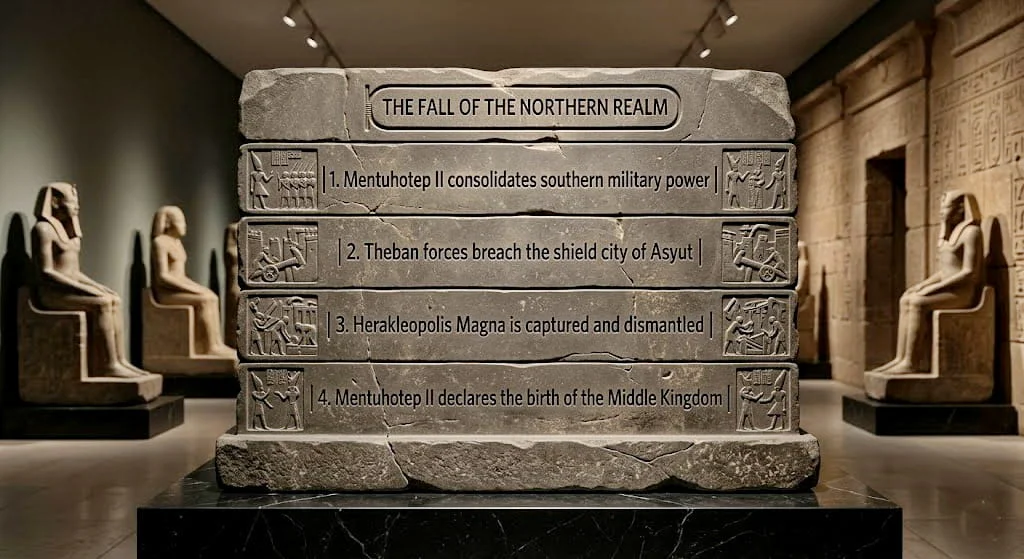
The Final Confrontation Mentuhotep II and the Theban Triumph

The northern forces could not withstand the assault. Herakleopolis fell, and Mentuhotep II officially reunified Lower and Upper Egypt under a single crown, marking the end of the First Intermediate Period and the birth of the Middle Kingdom.

The Fate of the Tenth Dynasty Royal Family

What happened to the royal family of the Tenth Dynasty remains a mystery. Unlike later periods of Egyptian history, where vanquished rulers were routinely executed or publicly humiliated, evidence suggests a quieter end.

Some historians believe the last Herakleopolitan king died during the final siege of the capital. Others suggest that Mentuhotep II may have allowed the surviving northern royals and loyal elites to blend into the new administration. This tactical mercy would have prevented further rebellions and helped stabilize the newly unified country.

The Tenth Dynasty of Egypt: Archaeological Evidence of Destruction at Herakleopolis

Modern archaeological excavations at the site of Herakleopolis Magna provide clear, physical proof of this violent political transition.

Excavators uncovered widespread layers of ash, burned wood, and smashed monuments dating precisely to the end of the Eleventh Dynasty’s northern campaign. The tombs of the tenth-dynasty elite were systematically looted and dismantled.

The Thebans deliberately destroyed these monuments to erase the memory of their northern rivals, ensuring that the history of Egypt would henceforth be written from the victorious perspective of Thebes.

Historiography and Legacy: How History Remembers the Tenth Dynasty

The historical legacy of the Tenth Dynasty resembles a puzzle rewritten multiple times by different authors. For millennia, the victorious Theban narrative dominated historical memory. It cast the entire Herakleopolitan era as an illegitimate period of lawlessness and rebellion.

Manetho’s Account vs. Modern Archaeological Discoveries

Our modern structural understanding of Egyptian dynasties comes largely from Manetho, an Egyptian priest who wrote a comprehensive history of the land in the third century BCE.

Manetho preserved the memory of the Tenth Dynasty, identifying it as a line of nineteen kings ruling from Herakleopolis for a total of 185 years. However, his records survived only as summaries copied by later Roman and Christian historians. These later authors often introduced transcription errors and exaggerated the level of political collapse.
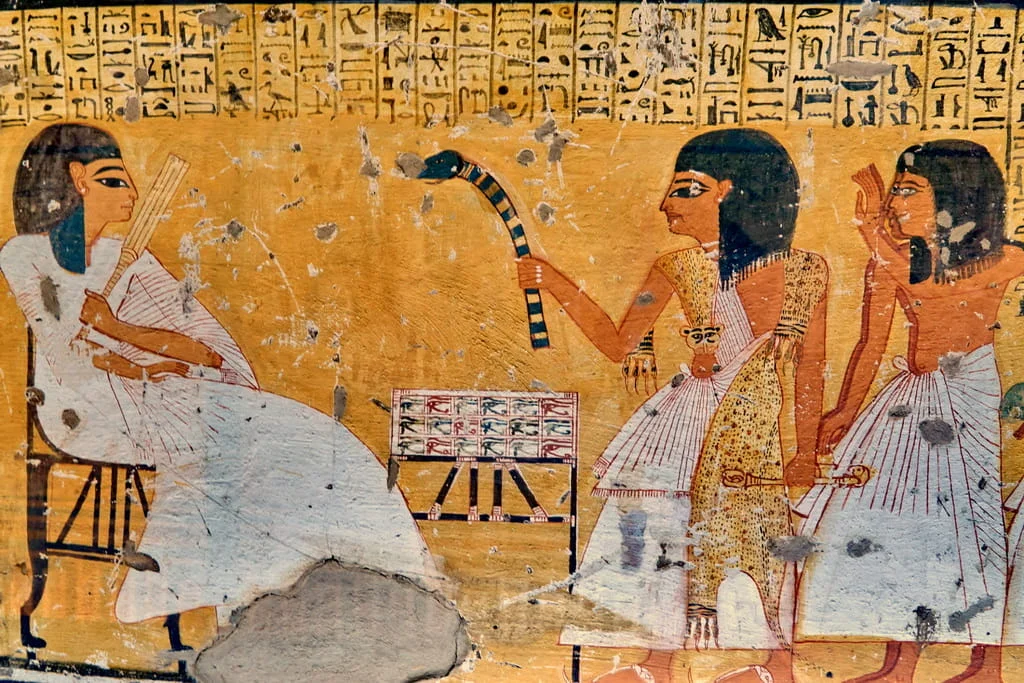
Manetho’s Account vs. Modern Archaeological Discoveries

Modern archaeology acts as a vital correction to these biased ancient texts. The image above shows traditional scribes keeping detailed administrative accounts. Excavations prove that despite the division of the country, Tenth Dynasty scribes maintained sophisticated legal, economic, and bureaucratic records. The sophisticated administration did not vanish; it simply decentralized.

Why the Tenth Dynasty is Essential to Understanding the Middle Kingdom

Historians can no longer view the Tenth Dynasty as a dead-end era of failure. Without the socio-political breakthroughs of the Herakleopolitan Period, the brilliant Middle Kingdom could never have emerged.

The Tenth Dynasty served as a critical crucible for testing new governance models. The fierce rivalry between the north and south forced both sides to innovate, leading directly to the classic structures of the unified state:

  • The Rise of Professional Bureaucracy: The erosion of total royal control forced the Tenth Dynasty to appoint officials based on talent and eloquence rather than purely aristocratic birth.

  • The Foundation of Classical Literature: The linguistic styles and philosophical deep dives developed by Herakleopolitan royal courts became the official golden standard for Egyptian education during the subsequent centuries.

The Tenth Dynasty of Egypt: The Resilient Spirit of First Intermediate Period Egypt

The story of the Tenth Dynasty of Egypt reminds us that a fractured nation is not necessarily a dead nation. While the Herakleopolitan kings ultimately lost the civil war for the double crown, their impact on the trajectory of Egyptian culture remains undeniable.
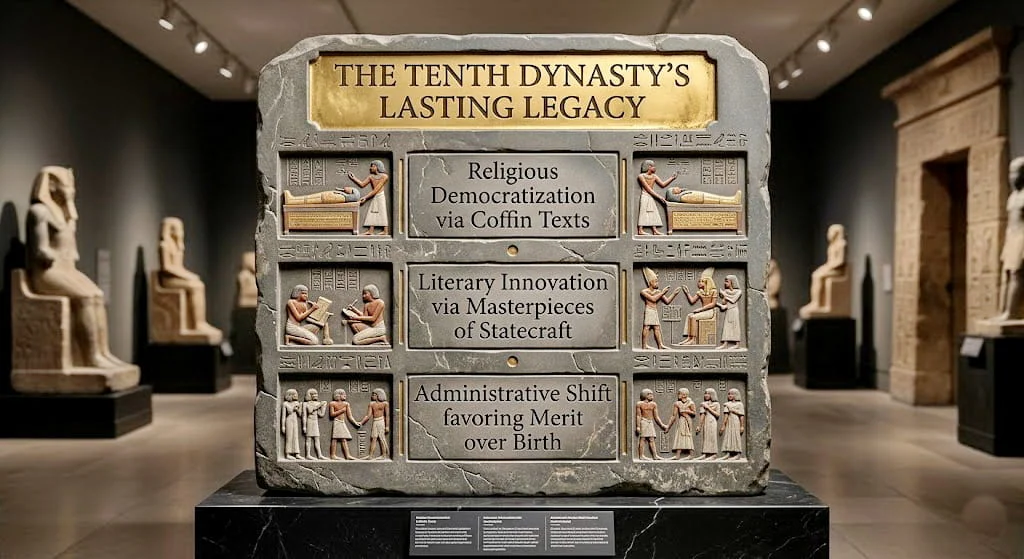
The Resilient Spirit of First Intermediate Period Egypt

These forgotten kings governed a resilient, highly adaptive northern realm during an unprecedented ecological crisis. They successfully defended their borders against external raids, nurtured breathtaking local artistic movements, and democratized access to the afterlife for ordinary citizens.

When you look past the biased propaganda of their Theban conquerors, you discover that the Tenth Dynasty was not a chaotic dark age. Instead, it was an era of profound cultural rebirth that reshaped the spiritual, political, and literary future of Ancient Egypt forever.

Divider
9-day tour package - Egypt Fun Tours

You’re in “GREAT HANDS” with Egypt Fun Tours!

We first went to Egypt in July 2010. We were to pass through Cairo on our way to Africa, and we had arranged to be picked up from the Cairo airport and shown around the city during our 6-hour layover. This was arranged through emails with Hamada, of Egypt Fun

More »
Tailored Services for Corporate Business Transportation Needs

On time, adaptable, and fun!

My friend and I planned a whirlwind trip to Dubai, the Dead Sea, Petra, Cairo, Luxor, and Sharm el Sheikh for early November 2011 – 6 cities in 10 days! We allotted one afternoon and evening for Cairo, and we wanted to see as much as we could! We drove

More »
4 Days Egypt Experience for Solo Woman Egypt Fun Tours min 1

Amazing experience

My husband and I had a ten-hour layover in Cairo and luckily found Egypt Fun Tours while researching tour companies online. The owner, Hamada, picked us up from the airport and brought us around Cairo. He took us to see the pyramids, which was a memory I will never forget.

More »

Amazing layover Tour

We had 12 hour layover in Cairo, and our guide Hani waited patiently for us when we had a few visa issues entering the country! We got on our tour, and had the best experience ever! We saw the pyramids, the sphinx, Islamic Cairo and rode through the city! We

More »
12 Days Solo Woman Tour Package (Queen Cleopatra)

Mohamed is Very Kind Person

Mohamed. I just want to thank you again for your kindness. You made our trip memorable. Give your family and the Egypt Fun Tours crew all my love and thank them again for me. Take care. Enjoy the season! Love. Linda

More »
God_Anubis_Icon

Top-rated Tour Packages

God_Anubis_Icon
WhatsApp
Email
Print