Apophis: The Egyptian Lord of Chaos and the Eternal Serpent

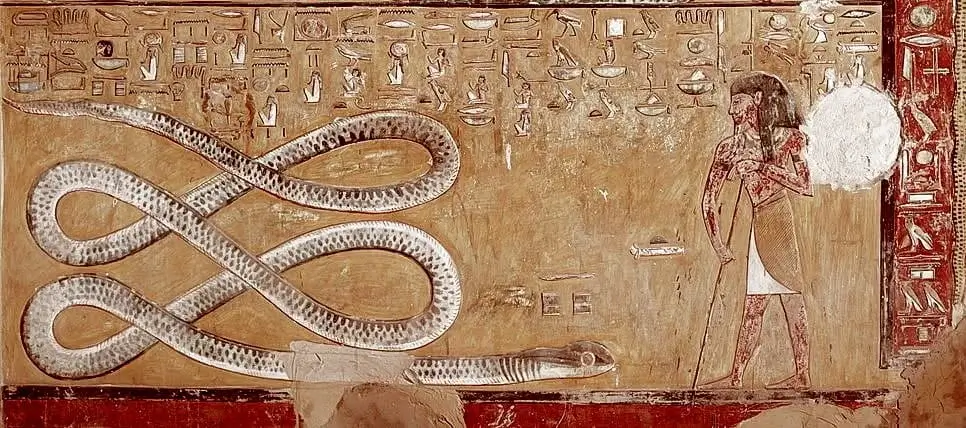
Apophis, the primordial serpent of ancient Egyptian mythology, serves as the ultimate embodiment of Isfet (chaos) and the eternal adversary of Ma’at (divine order). Residing in the darkness of the Duat, he wages a nightly war against the Solar Barque of the sun god Ra, attempting to swallow the sun and dissolve creation back into the void of non-existence. This cosmic struggle was so vital to the Egyptian worldview that it required daily ritual intervention by priests to ensure the sun’s rebirth, a legacy of existential dread that survives today in the naming of the "God of Chaos" asteroid, 99942 Apophis.

Apophis Egyptian God is the ultimate villain of Ancient Egyptian mythology. He represents the terrifying force of destruction. Unlike other gods, he has no temples. He has no followers. Instead, he exists only to destroy the sun and end time itself.

Commonly known as Apep, this monstrous serpent embodies Isfet, the concept of chaos and injustice. He is the eternal shadow to Ra’s light. Consequently, the ancient Egyptians lived in fear of his power. They believed the world would end if Apophis ever won his nightly battle.

In this comprehensive guide, you will learn about his origins, his terrifying powers, and the rituals used to keep him at bay. Explore the dark side of the Nile’s history and discover why the Apophis Egyptian God remains a symbol of cosmic dread today.

The Origins of the Serpent: How Apophis Was Born

The origin of Apophis is unique among the Egyptian pantheon. Most gods were born from divine unions or rose from the primordial waters of Nun as creators. However, Apophis is often described as the “Uncreator.” He did not want to rule the world; he wanted to return it to nothingness.

Born from the Umbilical Cord

According to one popular myth, Apophis was born at the exact moment of creation. When the sun god Ra first emerged from the waters of Nun, his umbilical cord was severed. This discarded cord transformed into the Great Serpent. Therefore, darkness was born at the same time as light. This suggests that chaos is a natural, albeit dangerous, byproduct of order.

The Saliva of Neith

Another tradition offers a different perspective. In the Temple of Esna, texts claim that the goddess Neith spat into the primeval waters. Her saliva turned into a massive snake, 120 yards long. This version emphasizes that Apophis was a mistake of the cosmos. He was a creature of pure instinct and malice.

A Being of Non-Existence

Interestingly, the Egyptians did not consider Apophis a “living” god. He was a “non-being.” Because he represented the void, he could never be fully killed. He was simply a force that had to be repelled every single day.

  • Key Concept: While Ra represents Maat (order and truth), Apophis represents Isfet (chaos).
  • The Physical Form: He is always depicted as a giant snake with heavy, crushing coils.
  • The Names: He is called “The Evil Lizard,” “The World-Encircler,” and “The Enemy of Ra.”

Furthermore, his presence was not limited to myths. Ancient Egyptians believed that earthquakes, thunderstorms, and solar eclipses were all physical signs that Apophis was attacking our reality.

FUN

The Nightly Battle: Solar Barque vs. Great Serpent Apophis

The Nightly Battle The Solar Barque vs. The Great Serpent Apophis

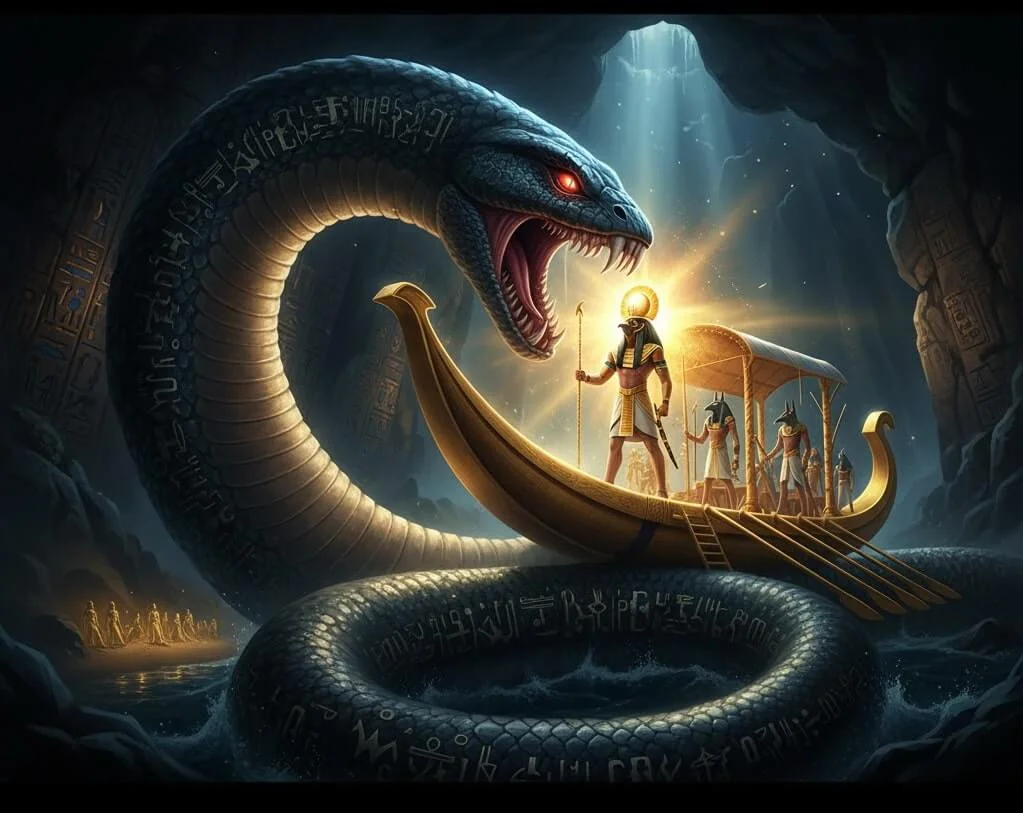
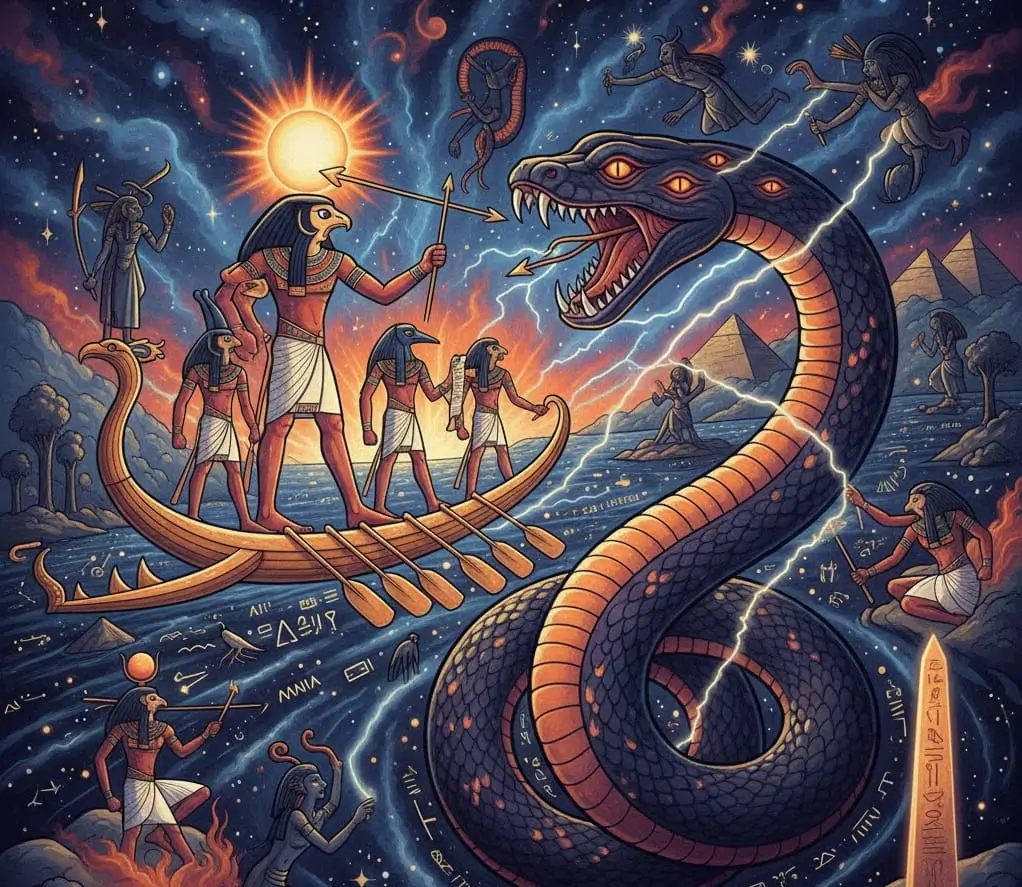
The struggle between Ra and Apophis is the most vital cycle in Egyptian cosmology. Every day, the sun travels across the sky. However, the true danger begins at sunset. As the sun enters the Duat (the Underworld), the “Solar Barque” must face the Lord of Chaos.

The Twelve Hours of Danger

The Underworld is divided into twelve distinct regions. Each region represents one hour of the night. Apophis waits in the darkest part of this journey, usually the tenth or eleventh hour. He does not use weapons. Instead, he uses his massive body to block the celestial river.

First, Apophis attempts to swallow the water of the Nile in the Duat. By doing this, he intends to ground the boat of Ra. Second, he uses his terrifying “magical gaze.” This gaze can hypnotize the gods and the spirits of the dead. If the crew of the boat loses focus, the sun will never rise again.

The Defenders of the Sun

Why the ancient Egyptians worshipped the sun Egypt Fun Tours

Ra does not fight alone. He travels with a crew of powerful deities. Each god has a specific role in defending the light.

  • Set: Surprisingly, the god of storms is the primary protector. He stands at the prow of the boat. He uses a massive spear to pierce the serpent’s neck.
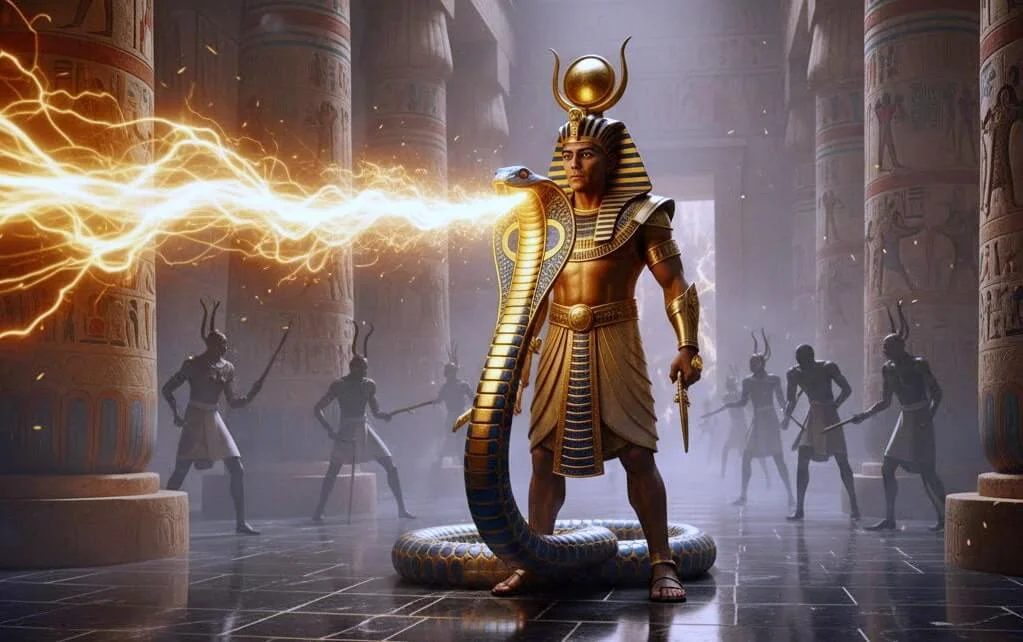
  • Mehen: This is a protective serpent god. He coils around Ra to shield him from Apophis’s venom.
  • Bastet: Sometimes appearing as a lioness or a cat, she uses her sharp claws to hack at the serpent.
  • Isis: The great magician uses her spells to confuse Apophis and bind him in invisible chains.

The Symbolism of the Eclipse

Occasionally, the battle spills over into the living world. The Egyptians believed that a solar eclipse was a moment of crisis. During an eclipse, they thought Apophis had momentarily swallowed the sun. Therefore, the people would gather to shout and play loud instruments. They believed the noise would help Ra regain his strength to break free.

Rituals of Destruction: The Book of Overthrowing Apep

Rituals of Destruction The Book of Overthrowing Apep (Apophis)

The ancient Egyptians were not passive observers of this cosmic war. They believed that human action could influence the divine outcome. Consequently, they developed the most aggressive rituals in their history to combat the Apophis Egyptian God.

The “Execration” Rituals

Priests in the Temple of Amun-Ra performed daily ceremonies called the “Book of Overthrowing Apep.” These rituals were designed to weaken the serpent through sympathetic magic.

  1. Creation of Effigies: Priests crafted small models of Apophis out of wax or clay.
  2. Naming the Enemy: They wrote the name of the serpent on the models in green ink.
  3. Physical Destruction: In a highly choreographed sequence, the priests would spit on the models, hack them with flint knives, and trample them under their feet.
  4. The Final Fire: Finally, they threw the remnants into a fire to signify the total annihilation of the demon.

Magic as a Weapon

Magic, or Heka, was the primary tool for survival. The Egyptians believed that speaking a name gave you power over the entity. By documenting exactly how to destroy Apophis in the Book of the Dead, they gave the deceased the tools to survive the journey through the Underworld.

Transitioning from the spiritual to the physical, these rituals ensured that Maat (divine order) remained stronger than Isfet. Because the sun rose every morning, the Egyptians knew their rituals were working.

FUN

Why Apophis Had No Cult or Temples

Why Apophis Had No Cult or Temples

In the world of Egyptian mythology, almost every deity has a place of worship. Even “darker” gods like Set or Sekhmet had priests and shrines. However, Apophis is a unique exception.

The God of Non-Being

Apophis was never worshipped. There are no statues intended for his veneration. This is because he was not considered part of the natural order. To worship Apophis would be to invite the end of the world. Instead, his image was only used in art to show his defeat.

The Power of Imagery

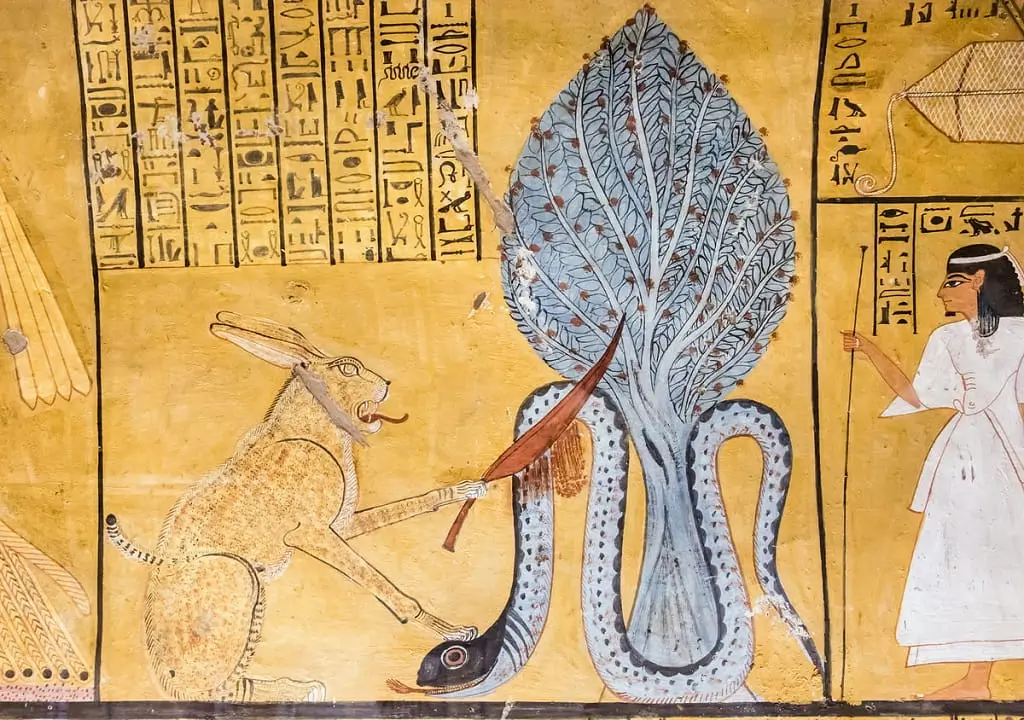
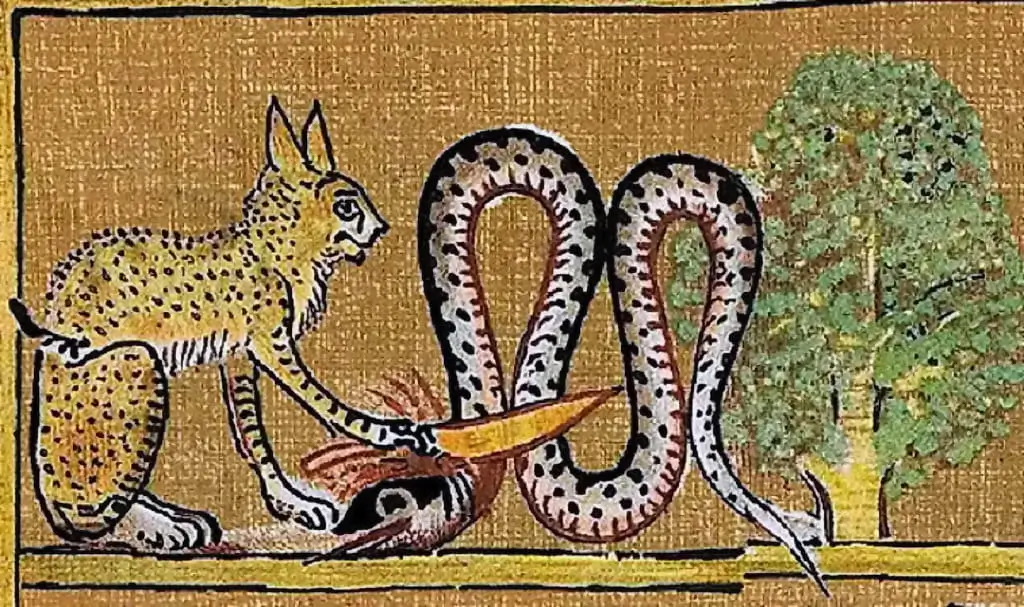
In Egyptian art, you will often see a cat cutting the head of a snake. This “Great Cat of Heliopolis” is a form of Ra. This specific image was placed in tombs to protect the soul. By showing Apophis being defeated, the artist created a permanent “magical reality” where the serpent was always losing.

Furthermore, the name “Apep” was often written and then immediately crossed out or defaced. This served as a linguistic trap to prevent the name from gaining any real power in our world.

The Philosophy of Isfet: Why Chaos Was Necessary

The Philosophy of Isfet Why Chaos Was Necessary: Apophis

To understand the Apophis Egyptian God, one must understand the balance between Maat and Isfet. Maat represents truth, justice, and the predictable movement of the stars. In contrast, Isfet represents the chaotic void. While Apophis was hated, his existence was philosophically vital to the Egyptian worldview.

The Conflict That Defines Existence

The Egyptians believed that the universe was not static. Instead, it was a constant struggle. If there were no darkness, the light would have no meaning. If there were no chaos, order would be stagnant. Apophis provided the “friction” required for the world to turn.

However, this does not mean the Egyptians wanted Apophis to succeed. They viewed him as a “necessary enemy.” His constant threat forced the gods and humans to work together. This cooperation maintained the structure of civilization. Therefore, every sunrise was not just a natural event. It was a hard-won victory for life over the void.

Egyptian Phoenix Bennu: Myth, Symbolism, and Legacy

Forget the fire. The original legend is even better. Meet the Bennu, the Egyptian Phoenix....
Related post
FUN

Archaeological Evidence: Finding the Serpent in Stone

Archaeological Evidence Finding the Serpent in Stone (Apophis)

We do not find temples for Apophis, but we find him everywhere in Egyptian funerary art. His presence in tombs was a warning to the soul. It prepared the deceased for the dangers of the afterlife.

The Coffin Texts and the Book of the Dead

During the Middle Kingdom, the Coffin Texts began to include specific spells to repel “the one who swallowed his own tail.” Later, in the New Kingdom, the Book of the Dead featured detailed vignettes of the serpent’s destruction.

  • The Tomb of Ramesses VI: This tomb contains a stunning depiction of the “Book of Gates.” It shows Apophis bound in chains and being sliced by the guardians of the underworld.
  • The Papyrus of Ani: This famous scroll shows the Sun God in the form of a cat. The cat is shown severing the head of the serpent under the sacred Persea tree.

The Hyksos Connection

During the Second Intermediate Period, foreign rulers known as the Hyksos took control of Lower Egypt. One of their most powerful kings took the throne name Apepi (Apophis). Scholars believe this was a psychological tactic. By naming himself after the ultimate force of chaos, he signaled to the Egyptians that his power was absolute and terrifying.

Hathor, Sekhmet, and the Volatile Eye of Ra: Dual Power for Political Control

The pharaohs used the terrifying dual nature of the Volatile Eye of Ra as a...
Related post
FUN

The Modern Legacy: From Mythology to Astronomy

The Modern Legacy From Mythology to Astronomy

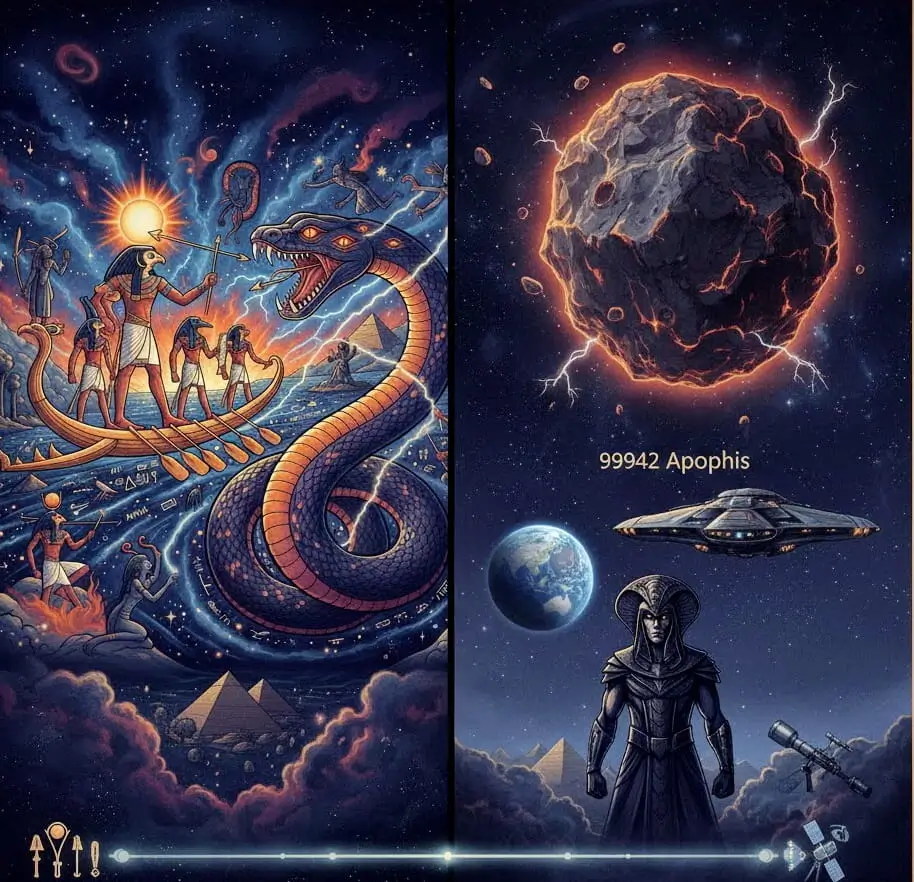
The name Apophis still carries a sense of dread today. However, the fear has moved from the underworld to the stars. In 2004, astronomers identified a massive near-Earth asteroid. They named it 99942 Apophis.

The “God of Chaos” Asteroid

The choice of name was deliberate. For several years, scientific data suggested a small but real possibility that the asteroid could impact Earth in 2029. Like the ancient serpent, this asteroid was a “shadow” moving through the darkness of space, threatening to bring destruction to the world.

While NASA has since confirmed that the asteroid will safely pass Earth, the cultural link remains. The Apophis Egyptian God continues to be the perfect symbol for any force that threatens the stability of our planet.

Pop Culture and Media

Apophis has also transitioned into modern storytelling. In the sci-fi series Stargate SG-1, Apophis is portrayed as a powerful and cruel alien villain. This character kept the ancient themes of the serpent alive: he was a bringer of darkness, an enemy of the light, and a persistent threat that refused to stay dead.

Geb: The Ancient Egyptian God of Earth, Fertility, and the Pharaoh’s Throne

God Geb is the Ancient Egyptian deity of the Earth, who, along with his sister-wife...
Related post
FUN

Apophis: The Eternal Struggle

Apep (Apophis); The Eternal Serpent of Darkness

The story of Apophis is more than a myth about a giant snake. It is a story about the human condition. It represents our fear of the unknown and our struggle to maintain order in a chaotic world.

  • He is the Uncreator: Born from the shadow of creation.
  • He is the Nightly Enemy: Fighting Ra in the Duat every twelve hours.
  • He is the Ritual Target: Destroyed in wax and fire by priests to protect the world.
  • He is the Modern Symbol: Representing the dangers that lurk in the depths of space.

Ancient Egyptians knew that the battle against Apophis would never truly end. As long as there is light, there will be a shadow. As long as there is Maat, there will be the Great Serpent waiting to test it.

FAQs About Apophis (Apep)

Egypt's Mythical Creatures; Ammit, Apep & The Sphinx Explained - Uraeus: The Rearing Cobra of Fire

1. Who is the Egyptian god Apophis?

Apophis (also known as Apep) is the ancient Egyptian deity of chaos, darkness, and destruction. He is depicted as a giant serpent or snake. Unlike other gods, he represents Isfet (disorder) and is the eternal enemy of Ra, the sun god. His primary goal is to swallow the sun and plunge the universe back into primordial darkness.

2. Is Apophis a god or a demon?

In Egyptian mythology, Apophis is often classified as a demon or a “non-being” rather than a traditional god. While he possessed god-like power, he had no temples, no cult followers, and was never worshipped. He was viewed as a cosmic malfunction—a force of pure malice that existed outside the divine order of Maat.

3. Why did Set protect Ra from Apophis?

Although Set is often seen as a villain in the Osiris myth, he was the only god strong enough to face the serpent directly. Standing at the prow of the Solar Barque, Set used his physical strength and chaos-magic to spear Apophis every night. This myth highlights that even “fearsome” gods were necessary to protect the universe from total annihilation.

4. How big was the serpent Apophis?

Ancient texts describe Apophis as a terrifyingly massive creature. Some accounts in the Book of the Dead suggest he was over 16 yards (15 meters) long, while other myths claim his coils were large enough to encircle the entire world. His size symbolized his ability to overwhelm and “suffocate” the light of the sun.

5. What is the difference between Apophis and Apep?

There is no difference in the entity; the names reflect different linguistic origins. Apep is the original Egyptian name. Apophis is the Greek transcription of the name. Most historians and archaeologists use the names interchangeably when discussing Egyptian mythology.

6. Did the Egyptians believe Apophis caused solar eclipses?

Yes. To the ancient Egyptians, a solar eclipse was a terrifying event where Apophis momentarily succeeded in swallowing the solar boat. During an eclipse or a heavy storm, priests would perform frantic rituals and make loud noises to help Ra break free from the serpent’s belly and restore the light.

7. Why is the 99942 asteroid named Apophis?

Astronomers named Asteroid 99942 after the Egyptian god of chaos because, upon its discovery in 2004, it was calculated to have a significant chance of hitting Earth in 2029. The name reflects the “world-ending” threat the asteroid posed, mirroring the ancient serpent’s desire to destroy our reality.
8. How did the Egyptians “kill” Apophis?

The Egyptians believed Apophis could never be killed permanently because he was a force of nature. However, he could be defeated daily. Priests used the “Book of Overthrowing Apep,” which involved burning wax effigies of the snake, spitting on his name, and hacking his image with flint knives to magically weaken him in the Underworld.

Discover the secrets of ancient Egypt while exploring its magical wonders....
Explore the Wonders of Egypt and the immortal Nile River....

Layover Tour in Cairo

This August, my boyfriend and I had quite a long layover in Cairo, 9 hours to be exact. Instead of wasting our time at the airport, we decided to do a layover tour of the city. I had been before, but my boyfriend hadn’t, so we wanted to hit the

More »
Giza pyramids Tours - Egypt Fun Tours

Thanks to egypt fun tours!

Thank u Hani for the enlightening tour of Giza and Saqqara. Thank u also for the great recommendation – Felfela – which we enjoyed a lot. returning the commission u got at the papyrus shop was something we didn’t expect and truly appreciate. shookran!

More »

Day trip to Wadi el Hitan and Wadi el Rayan

We went on a full-day trip to Wadi el Hitan and Wadi el Rayan with Mohamed (Hamada). Mohamed was a wonderful guide, always making sure we had plenty of water and enough to eat, and providing us with information about the area and Egypt more generally. He also gave us

More »

The best holiday ever!

The Nile cruise, Luxor, and Aswan were amazing sites to see, especially when you have the best tour guide in Egypt. Hamada was absolutely fantastic, lots of information, and some of it not spoken by others. This guy was not only a simple tour guide for us, but he also

More »

Cairo Day Trip

Great trip organised. I had a 12-hour layover in Cairo and had a great time with Sherif, who answered every question I had on ancient Egypt. Highly recommend.

More »
Isis with wings

Top-rated Tour Packages

Isis with wings