An Eternal Bond: The Tomb of Khnumhotep and Niankhkhnum
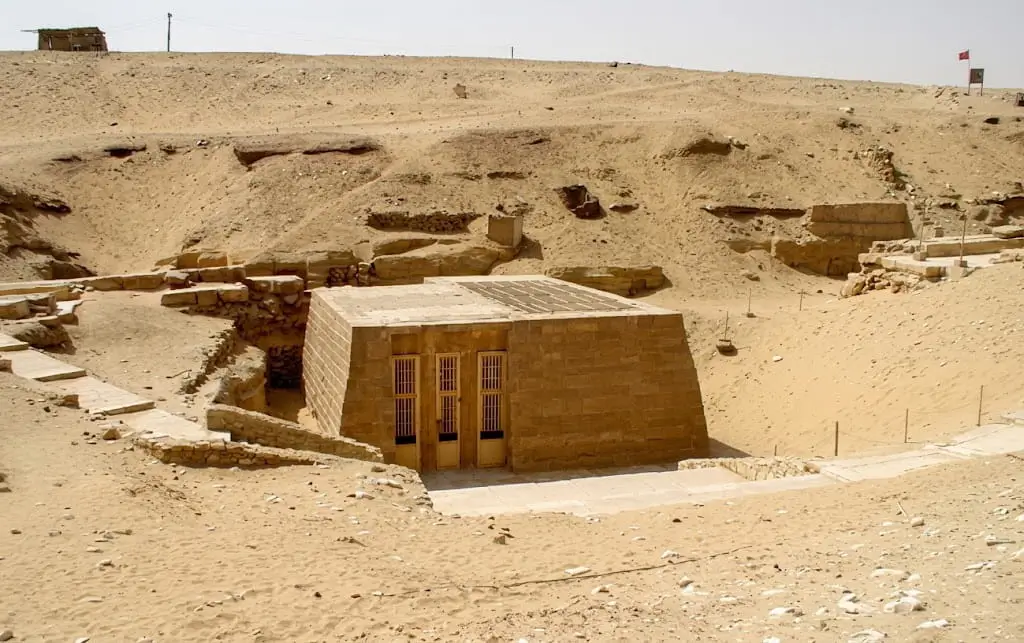
Deep within the Saqqara necropolis sits a monument that challenges our understanding of Old Kingdom society. The Tomb of Khnumhotep and Niankhkhnum dates back to the Fifth Dynasty (c. 2400 BC). Most ancient Egyptian tombs celebrate a single official or a traditional family. However, this unique mastaba honors two men with equal importance. Archaeologists discovered the site relatively recently in 1964. The Egyptian scholar Ahmed Moussa found the structure buried beneath the massive stone causeway of Pharaoh Unas. Because the causeway covered the tomb, it protected the vibrant colors and carvings for thousands of years. Today, many people call this site the “Tomb of the Two Brothers.”
Servants of the King
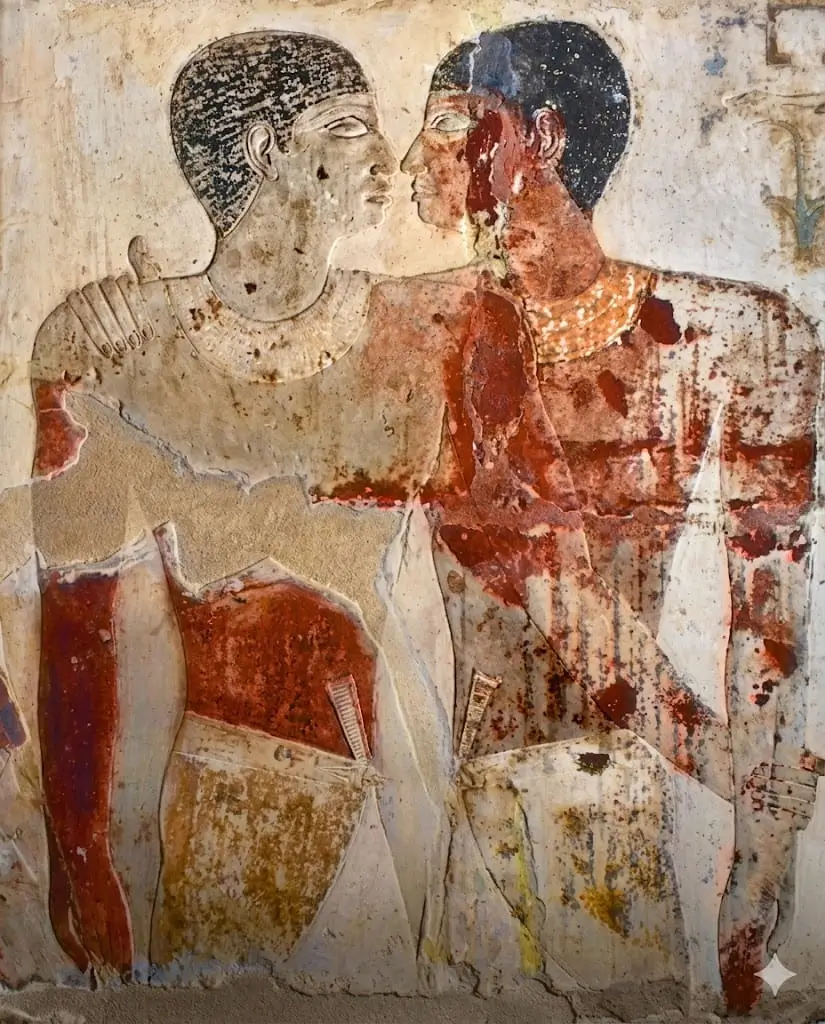
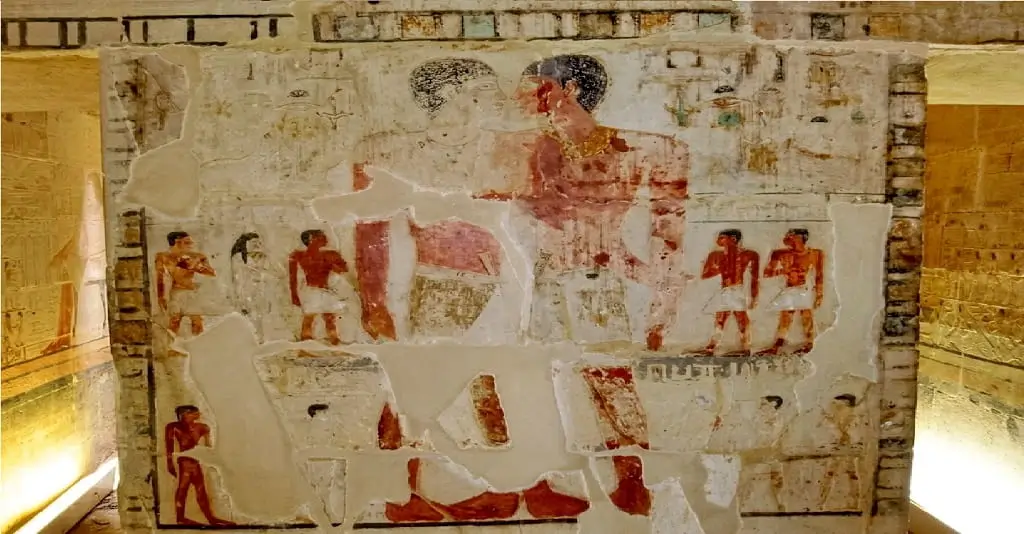
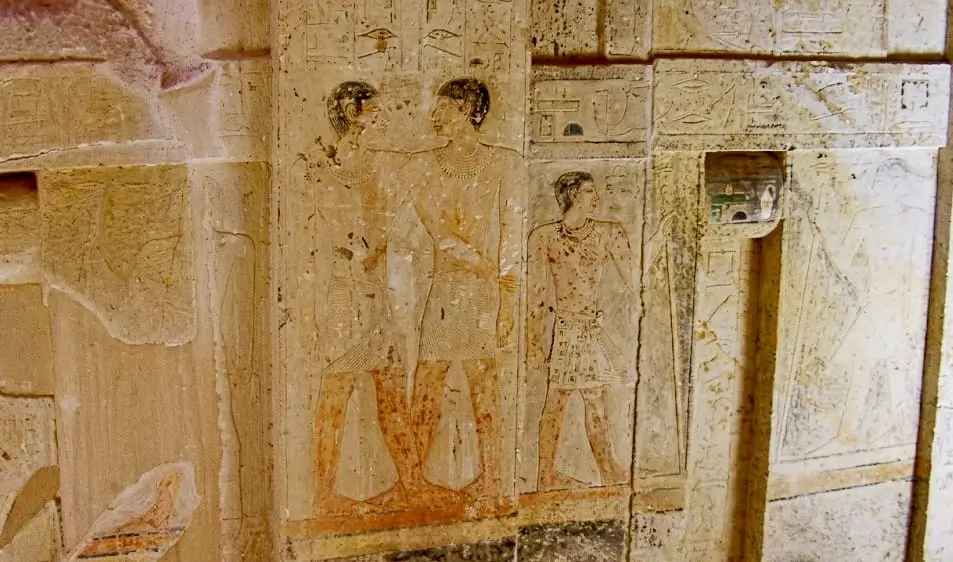
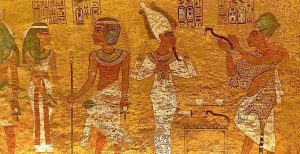
These two men were not just ordinary citizens. They served as high-ranking officials in the palace of King Niuserre. Specifically, they held the titles of “Overseers of the Manicurists.” While this title sounds simple today, it represented a position of great trust and intimacy with the Pharaoh. The artwork inside the tomb captivates scholars because of its deep affection. In several scenes, the two men embrace, hold hands, and touch noses. This gesture represents the most profound expression of love in ancient Egyptian art. Consequently, these images sparked a long debate. Are they brothers, twins, or the first recorded same-sex couple in history?
What This Guide Covers
In this comprehensive pillar post, we explore the many layers of this fascinating monument. First, we analyze the royal titles that gave these men their power. Next, we examine the competing theories regarding their relationship. We also take a close look at the vivid market scenes that reveal daily life in the Old Kingdom. Finally, we provide a virtual walkthrough of the tomb’s unique architecture.