The Tomb of Horemheb in Saqqara: The Temple-Tomb of Egypt’s Greatest General

The Tomb of Horemheb in Saqqara is a pre-royal masterpiece that reflects the General’s immense power before he became Pharaoh. This "temple-tomb" is famous for its sophisticated architecture and realistic military reliefs, including the iconic "Gold of Honor" ceremony and detailed depictions of foreign captives. Transitioning between the Amarna and Ramesside styles, it remains the most significant New Kingdom monument in the Saqqara necropolis.

The Tomb of Horemheb stands as one of the most historically significant monuments in the entire Saqqara necropolis. Long before he ascended the throne as the final Pharaoh of the 18th Dynasty, Horemheb served as the Commander-in-Chief of the Egyptian army under King Tutankhamun. During this influential military career, he commissioned a magnificent “temple-tomb” at Saqqara to serve as his eternal resting place. While he eventually built a royal tomb in the Valley of the Kings (KV57), this Memphite site remains the ultimate record of his life as a high-ranking official.

The General Who Would Be King

The life of Horemheb bridges the gap between the revolutionary Amarna period and the dawn of the Ramesside era. Because he lived through the reigns of Akhenaten, Tutankhamun, and Ay, his Saqqara tomb reflects a unique blend of artistic styles and political transitions. The site serves as a vital historical archive, capturing the moment when Egypt’s military leadership began to seize the ultimate power of the state.

Archaeologists consider the Tomb of Horemheb in Saqqara the largest and most elaborate private tomb of the New Kingdom. Its rediscovery in 1975 by a joint Dutch-British expedition solved a century-long mystery. Pieces of the tomb’s exquisite reliefs had appeared in European museums for decades, but their exact origin remained unknown until the sands of Saqqara finally revealed the General’s lost monument.

A Monument of Dual Identity

Visiting the Tomb of Horemheb in Saqqara offers a fascinating look at a man with a dual legacy. On one hand, the architecture celebrates his absolute mastery over the Egyptian military. On the other hand, the unfinished nature of certain chambers reminds us of his sudden elevation to Pharaoh, which required him to abandon this site for a royal burial in Luxor. Despite this shift, the tomb remained a sacred family site, eventually housing the remains of his high-status wife, Queen Mutnedjmet.

What You Will Discover in This Guide

Casual visitors often bypass the New Kingdom cemetery in favor of older pyramids, but the Tomb of Horemheb in Saqqara is a masterpiece that no history enthusiast should miss. This guide explores the “temple-tomb” architecture that mirrors the great sanctuaries of Thebes. We also analyze the world-famous military reliefs that showcase Horemheb’s diplomatic and martial prowess. Finally, we provide updated visitor logistics to help you locate this hidden gem south of the Unas Causeway.

FUN

Exploring the Temple-Tomb Layout of the Tomb of Horemheb

Exploring the Temple-Tomb Layout of the Tomb of Horemheb

The structural design of the Tomb of Horemheb in Saqqara represents a revolutionary moment in Egyptian funerary architecture. Unlike the hidden shafts of the Old Kingdom or the rock-cut corridors of the Valley of the Kings, this monument follows the “temple-tomb” model. This style allowed high-ranking officials to express their status through a massive superstructure that functioned like a private sanctuary dedicated to their memory.

The Superstructure: A Miniature State Temple

The layout of the Tomb of Horemheb in Saqqara closely mimics the great temples of Thebes. As you approach the site, you encounter a series of monumental features:

  • The First Pylon: A massive entrance gateway that once served as the public face of the tomb.
  • The Courtyards: The tomb contains two large, open-air courtyards. These spaces provided light and room for priests to perform daily offering rituals.
  • The Statue Room and Sanctuary: At the rear of the complex lies the cult chapel, where statues of Horemheb once stood to receive prayers.
  • The Pyramidion: Originally, a small mud-brick pyramid topped the rear of the structure, signaling its presence to the surrounding necropolis.

The Substructure: The 28-Meter Shaft and Burial Chambers

While the surface architecture celebrated Horemheb’s earthly power, the substructure of the Tomb of Horemheb in Saqqara focused on eternal protection. Beneath the second courtyard, a vertical shaft descends 28 meters into the bedrock. This engineering feat leads to a complex network of corridors and burial rooms.

Although Horemheb eventually chose a royal burial in Luxor, this shaft remained active. It became the final resting place for his high-status wife, Queen Mutnedjmet. During excavations, archaeologists discovered her remains along with high-quality funerary equipment, confirming that the “General’s Tomb” remained a vital family asset even after its owner became Pharaoh.

Construction Techniques: Mud-Brick and Tura Limestone

The builders utilized a sophisticated “sandwich” construction method for the Tomb of Horemheb in Saqqara. They constructed the core of the walls with sturdy mud-bricks and then encased them in blocks of fine, white Tura limestone. This allowed the artists to carve the incredibly detailed reliefs that characterize the 18th Dynasty. Interestingly, some sections remain unfinished; certain walls show only the preliminary red-ink sketches made by the master scribes, offering a “behind-the-scenes” look at the artistic process that stopped the moment Horemheb took the throne.

The wall carvings within the Tomb of Horemheb in Saqqara represent some of the most sophisticated artwork of the late 18th Dynasty. These reliefs act as a visual autobiography, documenting Horemheb’s rise as a brilliant strategist and diplomat. Unlike the rigid, traditional styles of earlier periods, these scenes display the fluid movement and realistic detail that characterized the post-Amarna era.

FUN

The “Gold of Honor” and Royal Recognition

The Gold of Honor and Royal Recognition

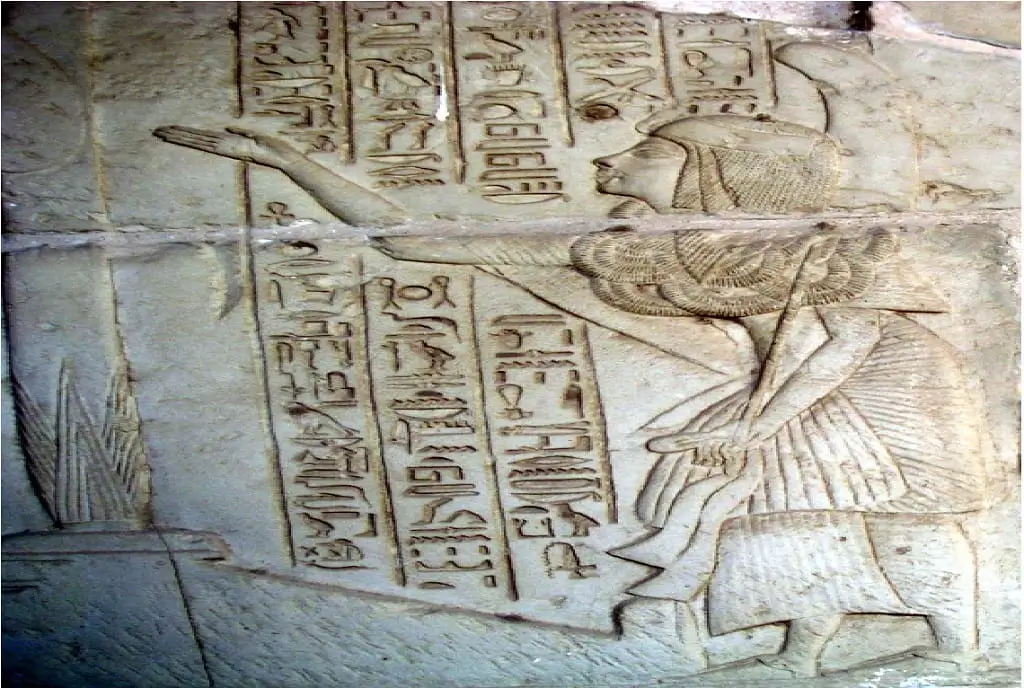
The most famous scene in the Tomb of Horemheb in Saqqara depicts the “Gold of Honor” ceremony. In this powerful relief, King Tutankhamun (whose figure was later modified) rewards Horemheb for his exceptional service.

  • Symbolism of the Collars: You can see Horemheb wearing multiple heavy gold collars (shebyu), which served as the highest military decoration in Ancient Egypt.
  • The Gesture of Praise: Horemheb appears with his arms raised in a gesture of adoration and gratitude, a scene that highlights his intimate proximity to the throne.

A Global Perspective: Foreign Prisoners and Envoys

Horemheb’s role as Commander-in-Chief required him to manage Egypt’s complex foreign interests. The reliefs in his Saqqara tomb provide an incredible “ethnographic” record of the ancient world.

  • Ethnic Realism: The artists meticulously carved the distinct facial features, hairstyles, and clothing of Libyans, Syrians, and Hittites. These are not generic enemies; they are specific, lifelike representations of the people Horemheb encountered.
  • The “Bringing of the Prisoners”: One particularly striking section shows a long line of captives being led before the King. The varied emotional expressions—ranging from exhaustion to defiance—show a level of artistic maturity rarely seen in funerary art.
  • The Egyptian Army in Motion: Other panels depict the logistical side of war, including scribes counting booty and soldiers organizing supply lines, providing a rare look at the daily operations of the 18th Dynasty military.

The Catacombs of Kom Esh-Shokafa: Roman-Egyptian Underworld

Descend into one of the "Seven Wonders of the Middle Ages" at the Catacombs of...
Related post
FUN

Artistic Style: The Amarna Transition

Artistic Style; The Amarna Transition

The Tomb of Horemheb in Saqqara serves as a perfect example of the “Memphite” style. While it retains the realism and naturalism introduced during Akhenaten’s reign, it returns to the structured elegance of traditional Egyptian art.

  • High-Relief Detail: Notice the thinness of the limestone carving; the artists achieved incredible depth while only removing a few millimeters of stone.
  • Unfinished Sketches: In the inner chambers, you can still see the master artist’s red ochre grid lines. These grids helped maintain perfect proportions, and their presence today offers a fascinating glimpse into the ancient creative process.

The Mystery of the Forgotten Tomb and Restoration

For over a century, the Tomb of Horemheb in Saqqara was a “ghost” monument. During the early 19th century, looters removed large sections of its beautifully carved limestone reliefs, which eventually found their way into major European collections in Leiden, London, and Berlin. Without a recorded location, the physical site vanished beneath the shifting desert sands.

It wasn’t until 1975 that a joint expedition from the Egypt Exploration Society and the Rijksmuseum van Oudheden rediscovered the structure. This discovery allowed historians to reunite the scattered reliefs with their original architectural context finally. Today, meticulous restoration work ensures that the remaining wall carvings remain protected from the elements, while replicas or photographs often fill the gaps left by pieces currently abroad.

The Tomb of Maya and Meryt at Saqqara: A Masterpiece of Egypt’s Golden Age

The Tomb of Maya and Meryt stands as a pinnacle of New Kingdom artistry and...
Related post
FUN

Essential Visitor Logistics for the Tomb of Horemheb in Saqqara

To see the Tomb of Horemheb in Saqqara, you must look beyond the central Step Pyramid area. This site is part of the “New Kingdom Tombs” cluster, located south of the Unas Causeway.
Tickets and Access

A specific group ticket is required for this area. When purchasing your entry at the main Saqqara gate, ask for the “New Kingdom Tombs” pass. This single ticket usually grants access to several high-profile sites in the same vicinity, including:

  • The Tomb of Maya: The burial place of Tutankhamun’s treasurer.
  • The Tomb of Tia: The resting place of Ramesses II’s sister and her husband.
  • The Tomb of Meryneith: A unique monument belonging to the high priest of the Aten.

Location and Timing

  • Walking Distance: The New Kingdom cemetery is a short drive or a 10-15 minute walk from the Step Pyramid.
  • The Best Light: We recommend visiting in the early morning. The sunlight hits the open courtyards beautifully, highlighting the fine details of the military reliefs without creating harsh shadows.
  • Photography: Like most of Saqqara, smartphone photography is generally permitted, but flash is strictly prohibited to preserve the integrity of the limestone and any remaining pigments.

Why the Tomb of Horemheb is a Pillar of Saqqara History

The Tomb of Horemheb in Saqqara is much more than a burial site; it is a monument to a pivotal moment in human history. It captures the transition from the Amarna revolution back to traditional Egyptian power, all seen through the eyes of a soldier who became a god-king. By exploring the courtyards and shafts of this site, you gain a deep appreciation for the strategic mind that stabilized Egypt during one of its most turbulent eras.

The Tomb of Ptahhotep: The Masterpiece of Old Kingdom Sculpture in Saqqara

The Tomb of Ptahhotep stands as a crowning achievement of 5th Dynasty craftsmanship. As a...
Related post
FUN

FAs: The Tomb of Horemheb in Saqqara

To assist visitors and researchers, we have compiled the most pertinent questions regarding this New Kingdom masterpiece. These answers reflect the latest archaeological findings and visitor regulations for 2026.

If Horemheb became Pharaoh, why is he buried in Saqqara?

Actually, he isn’t! Horemheb built the Tomb of Horemheb in Saqqara while he was still the Commander-in-Chief of the army. Once he ascended the throne, he followed royal tradition and commissioned a much larger, rock-cut tomb in the Valley of the Kings (KV57). The Saqqara site remained a “memorial” and served as the burial place for his family, specifically his wife, Queen Mutnedjmet.

Where exactly is the tomb located within Saqqara?

The tomb is situated in the New Kingdom Cemetery, which lies south of the Unas Causeway. It is a distinct area from the older Step Pyramid complex. It sits in a cluster alongside other famous 18th and 19th Dynasty tombs, such as those of Maya (Tutankhamun’s treasurer) and Tia (sister of Ramesses II).
What is the most famous relief in this tomb?

The most celebrated artwork is the “Gold of Honor” scene. It depicts Horemheb being rewarded with heavy gold necklaces by the Pharaoh. This relief is world-renowned because it showcases the intimate relationship between the military and the throne during the post-Amarna period, and for its incredible artistic fluidity.

Is the tomb currently open to the public?

Yes, as of 2026, the Tomb of Horemheb in Saqqara is open to visitors. However, it requires a specific “New Kingdom Tombs” ticket, which is separate from the general Saqqara entrance fee. It is always wise to check with the ticket office at the main gate for any temporary closures due to ongoing conservation.

Why do some of the reliefs look unfinished?

The tomb is a “frozen moment” in history. When Horemheb became Pharaoh, work on his private Memphite tomb largely stopped as resources were moved to his royal projects. You can still see the red ochre sketches and grid lines in some chambers, which provide a rare look at how ancient Egyptian master artists planned their work.

Are the reliefs in the tomb the originals?

Most of the reliefs visible today are original. However, because the tomb was looted in the 19th century, some sections were taken to museums in Leiden, London, and Berlin. In some cases, high-quality plaster casts or photographic reproductions have been placed in the tomb to allow visitors to understand the original narrative of the walls.

Tour the most enchanting attractions of Egypt....
Journey across the priceless wonders of Egypt....
God_Anubis_Icon

Cairo Day Trip

My day trip to Cairo was brilliant, and close to the best one-day experience of my life. Hani was an amazing ambassador for his city and country; his wealth of knowledge, courtesy, and good humour was awesome. The itinerary was perfect, I visited most of the famous landmarks as well

More »
6 Days Elegence of Egypt Group Tour - Cairo and nile cruise affordable tour

Superbly organized

I can’t recommend them enough. I got into Cairo on a 12-hour layover at 2:00 AM. By 3:15 Hani and his driver were meeting me at the airport. For the next five hours we strolled through lovely downtown Cairo & over the Nile, wandered through (friendly, well-organized) Tahrir Square, toured

More »

Great shore excursion of Cairo & Giza

We are glad that we arranged our private shore excursion with Egypt Fun tours in last week of October 2012. Booking process was very easy with Hamada and she took care of all our questions promptly just via E-mail. Our group was little worried about safety in Egypt especially because

More »

Valley of the Kings, Hepchepsut

I never had a more positive experience and educational time than this tours. Learning about a variety of kings and queens was amazing! The tour guide was super nice and helped me and my friend every step of the way! Including bargaining for a few souvenirs! I will never forget

More »
God_Anubis_Icon

Top-rated Tour Packages

God_Anubis_Icon