Lahun Pyramid: The Revolutionary Mudbrick Masterpiece of Senusret II

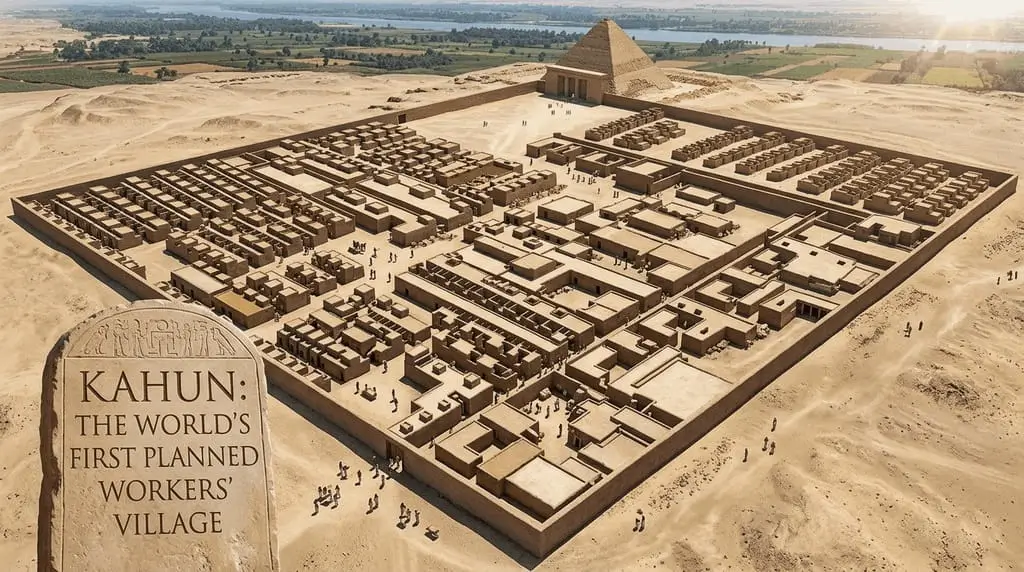
Kahun (or El-Lahun), established during the Middle Kingdom reign of Senusret II around 1895 BCE, represents a revolutionary milestone in urban history as the earliest known example of a planned town. Unlike the organic, sprawling growth typical of ancient settlements, Kahun was constructed on a rigid orthogonal grid, featuring a massive enclosure wall that separated the village into distinct districts based on social hierarchy. The western sector housed smaller, uniform dwellings for laborers and craftsmen, while the eastern sector contained expansive, multi-room villas for high-ranking officials. This sophisticated layout included dedicated drainage channels and centralized administrative buildings, providing archaeologists with a rare, "frozen" blueprint of Ancient Egyptian social stratification and the birth of civil engineering.

Lahun Pyramid: Architectural Revolution of the Faiyum

Many travelers envision the majestic silhouettes of Egypt’s pyramids as the limestone giants of Giza. Others may think of the ancient Step Pyramid of Djoser. However, tucked away on the edge of the lush Faiyum Oasis lies a different marvel. This structure is the Lahun Pyramid, located about 100 kilometers south of Cairo. It represents an innovative period in human engineering known as the Middle Kingdom. Furthermore, this site is also called the Pyramid of Senusret II. It remains a masterclass in ancient “cyber-security” and environmental adaptation.

For the modern explorer, Lahun is not just another pile of weathered stone. Instead, it is a testament to a Pharaoh who changed the rules of royal burial. Senusret II built this monument during the 12th Dynasty ($c. 1897–1878$ BC). Notably, he turned his back on the traditional northern necropolises of Memphis. He chose to embrace the fertile promise of the Faiyum region. Consequently, his legacy is tied to the irrigation and transformation of this desert landscape.

Why Lahun Pyramid Changes Everything

In contrast to Old Kingdom Pharaohs, Senusret II was a practical leader. Those earlier rulers relied on sheer mass and millions of tons of solid rock. By comparison, Senusret II utilized a sophisticated mudbrick core. This core was reinforced by a “skeleton” of limestone retaining walls. As a result, this technique allowed for faster construction. It did so without sacrificing the imposing scale required for a god-king. Moreover, the true genius of Lahun lies deep beneath the surface.

Tomb robbers had already plundered the Great Pyramids of the north. Therefore, Senusret II’s architects abandoned the traditional north-facing entrance. To illustrate their brilliance, they constructed a bewildering network of vertical shafts. They also designed complex horizontal tunnels. In addition, they hid the true entrance in a location so obscure it remained a secret for millennia. Ultimately, this was a security masterpiece designed to protect the king for eternity.

Lahun Pyramid: The Gateway to the Middle Kingdom

Today, visiting the Lahun Pyramid offers a rare encounter with Egypt’s “Golden Age.” This was a time of great advancements in literature and science. For instance, the nearby ruins of Kahun represent the world’s first planned workers’ village. Similarly, the pink granite burial chamber has recently been reopened to the public. Thus, Lahun provides a narrative that Giza simply cannot match. It tells the story of the people, the pioneers, and the brilliant minds of the era.

In this definitive guide, we will peel back the layers of sand and mudbrick. We will explore the technical brilliance of Senusret II in detail. Additionally, we will discuss the exquisite “Treasure of Lahun” discovered by Flinders Petrie. In conclusion, you will see why this site remains a cornerstone of Egypt Fun Tours’ most exclusive itineraries.

Lahun Pyramid: Quick Facts for the Explorer

Feature Details
Pharaoh Senusret II (12th Dynasty)
Location El-Lahun, Faiyum Governorate
Construction Mudbrick core with limestone retaining walls
Original Height 48.6 meters (160 feet)
Discovery First excavated by Sir Flinders Petrie in 1889
Key Attraction The hidden southern entrance & granite burial chamber

FUN

Lahun Pyramid: Engineering a New Era

The Mudbrick Revolution Engineering a New Era

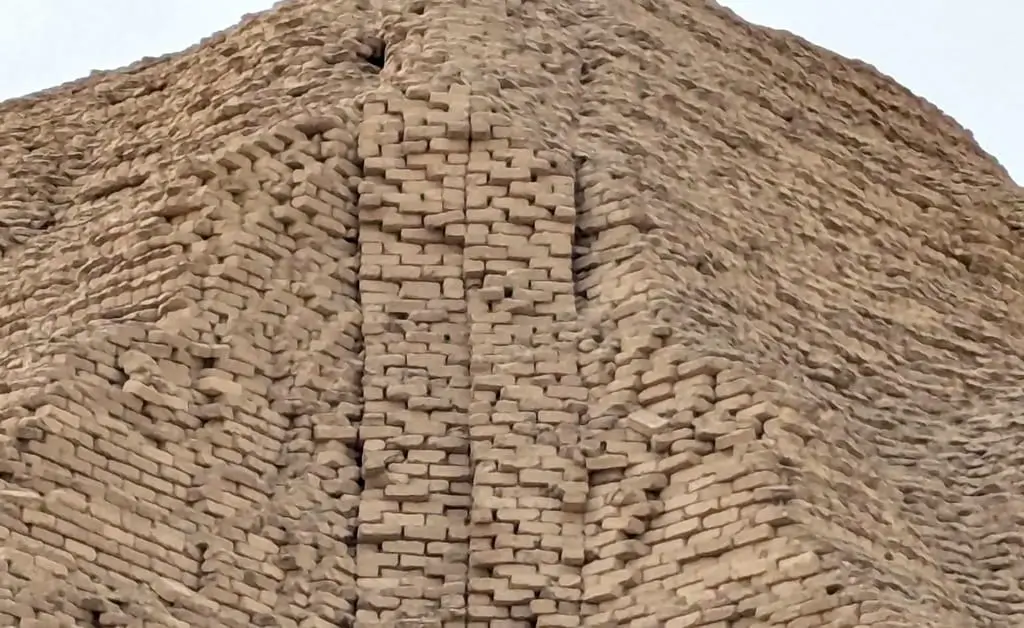
Senusret II chose a radical path for his pyramid’s construction. Most Old Kingdom pharaohs used massive, solid limestone blocks throughout their structures. However, this pharaoh adopted a more efficient and flexible approach. He utilized a core of sun-dried mudbricks. Consequently, this choice significantly reduced the time and labor required for the project. Additionally, the use of mudbrick allowed the structure to settle more naturally over the uneven terrain of the Faiyum.

The Internal Stone Skeleton

To ensure the mudbrick stayed in place, the royal architects designed a sophisticated internal “skeleton.” They built a series of radial limestone retaining walls. These walls started at the center and moved outward like the spokes of a wheel. Furthermore, horizontal cross-walls connected these “spokes” to create a grid of deep compartments. The workers then filled these compartments with millions of mudbricks. As a result, the internal stone frame provided the necessary structural integrity to support the heavy exterior.

The Fine Limestone Casing

Originally, the pyramid did not look like a mudbrick hill. The builders encased the entire structure in high-quality white Tura limestone. Specifically, they cut the casing blocks with incredible precision. Moreover, they anchored these outer stones into the internal limestone skeleton. Thus, from a distance, the Lahun Pyramid looked just as brilliant and smooth as the Great Pyramid of Khufu. Unfortunately, later pharaohs—most notably Ramesses II—stripped away this casing. They repurposed the stone for their own temples and monuments. Therefore, we today see the exposed mudbrick core that gives the pyramid its unique, rugged appearance.

Technical Dimensions and Measurements

Despite its unconventional core, the pyramid maintained impressive proportions. The architects followed a strict mathematical plan to ensure the monument’s longevity.

Technical Aspect Measurement
Base Length 106 meters (348 feet)
Slope Angle 42° 35.’
Current Height Approximately 18 meters (59 feet)
Core Material Nile silt mudbricks
Structural Frame Yellow limestone retaining walls

By using these techniques, Senusret II proved that innovation could replace sheer mass. This engineering shift defined the Middle Kingdom’s approach to royal architecture. In the next section, we will explore how these same architects protected the pharaoh’s remains with a labyrinth of hidden tunnels.

FUN

The Labyrinthine Substructure: A Masterpiece of Ancient Security

Ancient architects faced a persistent threat: tomb robbery. By the 12th Dynasty, thieves had already plundered the famous pyramids of Giza and Saqqara. Consequently, Senusret II demanded a revolutionary security plan for his final resting place. His builders abandoned traditional designs to create a “labyrinth” beneath the desert floor. As a result, they produced one of the most complex and secretive burial systems in Egyptian history.

The Hidden Southern Entrance

In a bold move, the architects broke a thousand-year-old tradition. They did not place the entrance on the north side of the pyramid. Instead, they hid a vertical shaft on the south side. Specifically, they tucked this opening into the floor of a princess’s tomb nearby. Furthermore, they filled the shaft with heavy debris to mask its existence. Thus, any intruder searching the northern face would find only solid stone and mudbrick. Notably, this deception worked for nearly four thousand years until Sir Flinders Petrie’s team discovered the secret in 1889.

The Granite Burial Chamber

Deep within the pyramid’s core, the burial chamber reflects the highest level of craftsmanship. The workers carved this room entirely from blocks of pink granite. Moreover, they polished the surfaces until they shone like glass. Inside, a magnificent red granite sarcophagus still sits against the western wall. Interestingly, this sarcophagus is larger than the entrance tunnels themselves. Therefore, the builders must have placed the stone coffin in the chamber before they finished the roof. In addition, the room features a unique “water pit” or drainage system. This design protected the mummy from the rising groundwater of the nearby Faiyum irrigation canals.

The Diversion Tunnels

To further confuse intruders, the substructure contains multiple “blind” corridors. These paths lead to dead ends or empty rooms. Meanwhile, the actual route to the king’s body remains hidden behind carefully sealed walls. By doing this, the architects forced potential robbers to waste time and resources in the wrong areas. Consequently, the Lahun Pyramid serves as a precursor to the famous “Labyrinth” described by Herodotus at the nearby Hawara Pyramid.

Substructure Engineering Highlights

Security Feature Purpose
Shifted Orientation Hidden South entrance to foil traditional North-side looting.
Vertical Shafts Made access difficult and required specialized equipment.
Granite Lining Prevented thieves from easily tunneling through the walls.
Labyrinthine Paths Created a psychological and physical maze for intruders.

Through these efforts, Senusret II’s engineers set a new standard for royal protection. In the next section, we will discuss the incredible “Treasure of Lahun” and the artifacts that managed to survive the ages.

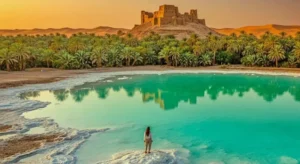
Discover the Magic Lake: Fayoum’s Hidden Desert Gem

Discover Fayoum's best-kept secret: the Magic Lake. This stunning oasis, hidden among golden dunes, gets...
Related post
FUN

The Treasure of Lahun: A Legacy of Royal Splendor

The Treasure of Lahun; A Legacy of Royal Splendor

While many pyramids stood empty for centuries, Lahun yielded one of the most significant archaeological finds in Egyptian history. In 1914, Sir Flinders Petrie’s team excavated the subsidiary tombs surrounding the main pyramid. Specifically, they focused on the burial of Princess Sithathoriunet, a daughter of Senusret II. Notably, her tomb had suffered from ancient looting, yet the thieves missed a small niche filled with mud. As a result, this hidden corner preserved an incredible collection of Middle Kingdom jewelry.

The Masterpieces of Sithathoriunet

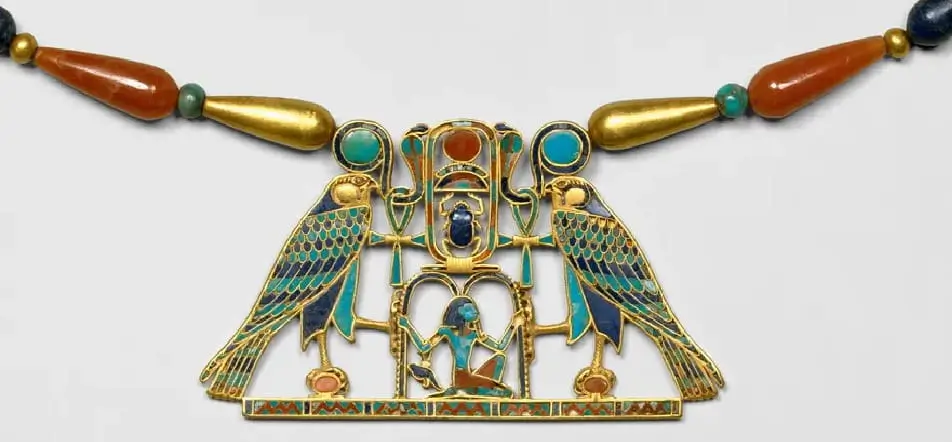
The “Treasure of Lahun” showcases the peak of Egyptian goldsmithing. For instance, the collection includes a stunning gold uraeus (royal cobra) crown. Furthermore, the archaeologists discovered two exquisite pectoral ornaments. One pectoral features the cartouche of Senusret II, while the other honors Amenemhat III. In addition, the craftsmen used a technique called cloisonné. They inlaid tiny pieces of turquoise, lapis lazuli, and carnelian into solid gold frames. Consequently, these artifacts remain some of the finest examples of ancient art in existence.

Beyond the Gold: Daily Life and Luxury

Besides the jewelry, the tomb contained items of personal luxury. To illustrate, the team found silver mirrors with obsidian handles and ivory containers for cosmetics. Moreover, these objects provide a glimpse into the sophisticated court life of the 12th Dynasty. Today, these treasures are split between two world-class institutions. Specifically, the Egyptian Museum in Cairo houses the majority of the collection, while the Metropolitan Museum of Art in New York displays several key pieces.

The Archaeological Impact

By studying these finds, historians gained a deeper understanding of the Middle Kingdom’s wealth. Furthermore, the discovery proved that the Faiyum was a central hub for the royal family, not just a provincial outpost. Thus, the Treasure of Lahun serves as a bridge between the military strength of the pharaohs and the artistic refinement of their households.

Key Artifact Material Current Location
Gold Uraeus Crown Solid Gold & Inlays Egyptian Museum, Cairo
Senusret II Pectoral Gold, Lapis, Turquoise Metropolitan Museum, NY
Silver Mirrors Silver & Obsidian Metropolitan Museum, NY
Cosmetic Jars Alabaster & Gold Egyptian Museum, Cairo

In the next section, we will step outside the pyramid walls to explore Kahun, the remarkably preserved town where the pyramid builders lived and worked.

The Pyramid of Hawara: Amenemhat III’s Mud-Brick Marvel

Discover the Pyramid of Hawara, the 12th Dynasty tomb of Pharaoh Amenemhat III, located in...
Related post
FUN

Kahun: The World’s First Planned Workers’ Village

Kahun; The World’s First Planned Workers' Village

Just 800 meters from the pyramid, a second archaeological marvel awaits. This is the town of Kahun, also known as Hetep Senusret. Unlike the eternal stone monuments of the pharaohs, Kahun provides a rare look at the lives of the living. Notably, it remains the most complete example of an ancient Egyptian settlement. Consequently, it offers historians a unique “time capsule” of Middle Kingdom social structure.

A Masterpiece of Urban Planning

Before the first mudbrick was laid for the pyramid, the architects designed a strict grid for the town. Specifically, they built a massive perimeter wall to enclose the community. Furthermore, a large internal wall divided the town into two distinct districts. One side housed the elite officials and high-ranking priests in spacious villas. In contrast, the other side contained smaller, uniform houses for the laborers and craftsmen. Thus, the layout of Kahun physically mapped the social hierarchy of the 12th Dynasty.

The Kahun Papyri: A Library of Ancient Knowledge

During his excavations, Sir Flinders Petrie discovered a treasure trove of written records. These documents, known as the Kahun Papyri, cover an astonishing range of subjects. For instance, they include legal contracts, private letters, and even accounting ledgers for the pyramid project. Moreover, the collection features the oldest known medical papyrus in the world. Specifically, it details gynecological treatments and veterinary medicine. As a result, these texts prove that the residents of Kahun were highly literate and scientifically advanced.

Domestic Life and Infrastructure

In addition to the buildings, the town featured sophisticated infrastructure. To illustrate, the streets included shallow stone channels to drain rainwater and waste. Similarly, the houses contained dedicated areas for grinding grain and weaving textiles. By studying these domestic spaces, we see that Kahun was a bustling hub of industry. Therefore, the town was not just a temporary camp; it was a permanent, thriving city dedicated to the King’s eternal legacy.

Social Structure at Kahun

Residential Feature Occupant Class Key Characteristic
Large Villas High Officials / Priests 70+ rooms, open courtyards, painted walls.
Standard Houses Scribes / Foremen Multiple rooms, central living area.
Small Terraces Laborers / Craftsmen Uniform 2-3 room layouts, shared walls.
Public Granaries Entire Community Massive storage for grain rations.

In the final section, we will cover the practical side of visiting this site today. Furthermore, we will explain how to include Lahun in your next Egypt Fun Tours adventure.

Discover the Magic Lake: Fayoum’s Hidden Desert Gem

Discover Fayoum's best-kept secret: the Magic Lake. This stunning oasis, hidden among golden dunes, gets...
Related post
FUN

Visiting Today: Logistics, Nearby Sites, and Expert Tips

Today, the Lahun Pyramid offers a unique experience for those who prefer solitude over the crowds of Giza. Specifically, the Egyptian Ministry of Antiquities reopened the internal burial chamber to the public in 2019. Consequently, you can now descend into the very heart of Senusret II’s security masterpiece. Furthermore, standing in the pink granite chamber allows you to witness the precision of Middle Kingdom engineering firsthand.

How to Get There and What to Expect

Lahun sits roughly two hours south of Cairo by car. To reach the site, you will travel through the scenic agricultural lands of the Faiyum. Notably, the entrance to the pyramid requires a descent through a narrow vertical shaft. Therefore, you should wear comfortable, sturdy shoes and prepare for a bit of a climb. In addition, the interior remains quite warm and humid throughout the year. As a result, many visitors find that a morning arrival provides the most comfortable conditions.

Nearby Historical Treasures

In addition to the main pyramid, the surrounding area contains several essential sites. For instance, you can visit the Hawara Pyramid of Amenemhat III, located just 10 kilometers away. Similarly, the Meidum Pyramid sits a short drive to the north. Moreover, the Faiyum Oasis itself offers beautiful natural scenery and the Greco-Roman ruins of Karanis. Thus, a trip to Lahun serves as the perfect centerpiece for a full-day historical expedition.

Expert Tips for the Modern Explorer

To maximize your experience, consider these practical suggestions:

  • Photography: The exterior mudbrick core creates dramatic shadows at sunrise and sunset.
  • Hydration: There are very few shops directly at the pyramid site. Consequently, you should bring plenty of water.
  • Guides: A professional guide is essential to navigate the complex history of the Kahun village. Specifically, they can point out the subtle details of the town’s grid system.

Travel Logistics at a Glance

Detail Information
Best Time to Visit October to April (Winter months).
Entry Fee Approximately 100 EGP for foreigners (confirm locally).
Physical Difficulty Moderate (Steep stairs and narrow shafts).
Total Tour Duration 6 to 8 hours (including travel from Cairo).

In conclusion, the Lahun Pyramid remains one of Egypt’s most rewarding “off-the-beaten-path” destinations. Ultimately, its mix of innovative architecture and mysterious security makes it a must-see for any true history lover. At Egypt Fun Tours, we specialize in these deep-dive historical journeys. By choosing a dedicated itinerary, you will discover the secrets of Senusret II that most tourists never see.

Classic Egypt, including Nile Cruise and Hurghada resort....
Enjoy exploring the wonders of Cairo and Alexandria with your private guide to enjoy the pyramids tour, Cairo tour, and the Alexandria tour....

Alexandria! Wow!

Muhammad is the best! He showed me a world I never thought possible! The tombs in Alexandria, by far, were my favorite! I never knew there was a place on earth that contained both Greek and Egyptian carvings in the same tombs! The history and culture of Egypt is so

More »

Outstanding layover tour

I had the opportunity to do a layover tour with Egypt Fun Tours this Friday, and it was amazing. I had a 10-hour layover tour in Cairo, and I was met by Mohamed on time at the airport. He picked me up in a clean, new, safe, and comfortable van.

More »

Lenka Traverlers

Egypt Fun Tours was contracted by our travel agency, Lenka Travelers, to arrange and guide us through parts of Egypt and Jordon. They did a fabulous job. The hotels, restaurants, places we visited, and transportation were the best. Our guide in Egypt, Mohammad, was very knowledgeable, spoke perfect English, and

More »

Absolutely the best

We visited Cairo over a 15-hour layover. Egypt Fun Tours organized a customized and wonderful experience for us. We could not be happier. The day included a visit to all the great sites, the marketplace, dinner, a boat ride on the Nile, and a host of other special requests. I

More »

7 night Egypt Experience Cairo, Aswan, Luxor

Trip of a lifetime!! COVID SAFE!! Knowledgeable guide who loves to share the magic of Egypt with tourists. Friendly and accommodating. This company goes to the extreme to make clients feel welcome and help them. A family company that takes good care of its support staff. Must book the 7-night

More »
Isis with wings

Top-rated Tour Packages

Isis with wings