
The Sentinel of the West Bank
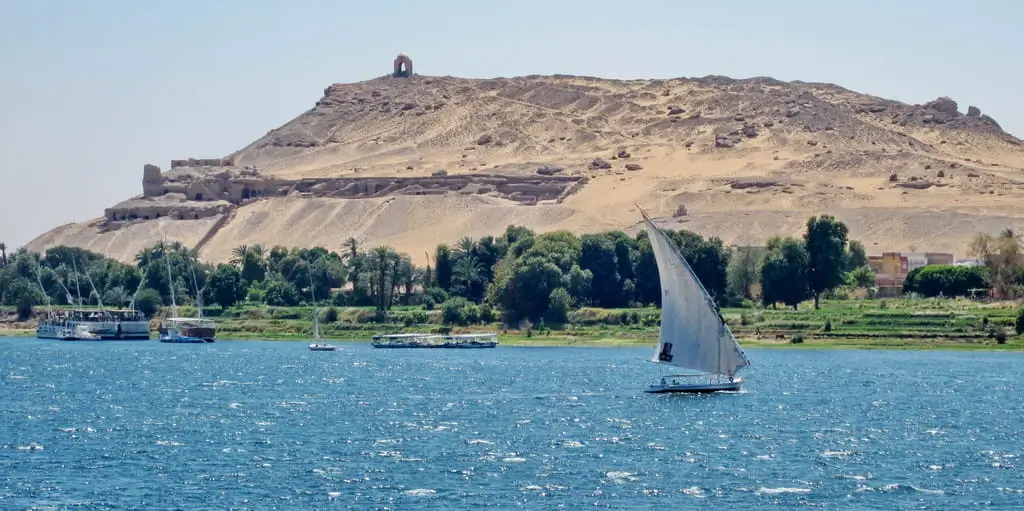
The sandstone hill of Qubbet el-Hawa rises sharply above the Nile’s west bank. It stands directly opposite the modern city of Aswan. This site serves as a silent witness to millennia of Egyptian history. It is known locally as the “Dome of the Wind.” This name comes from the white-domed tomb of a local sheikh that crowns the summit. However, for historians, this site is one of the most important archaeological necropolises in Upper Egypt. It houses the final resting places of the powerful officials of Elephantine Island. These men served as the ancient gatekeepers to the south.
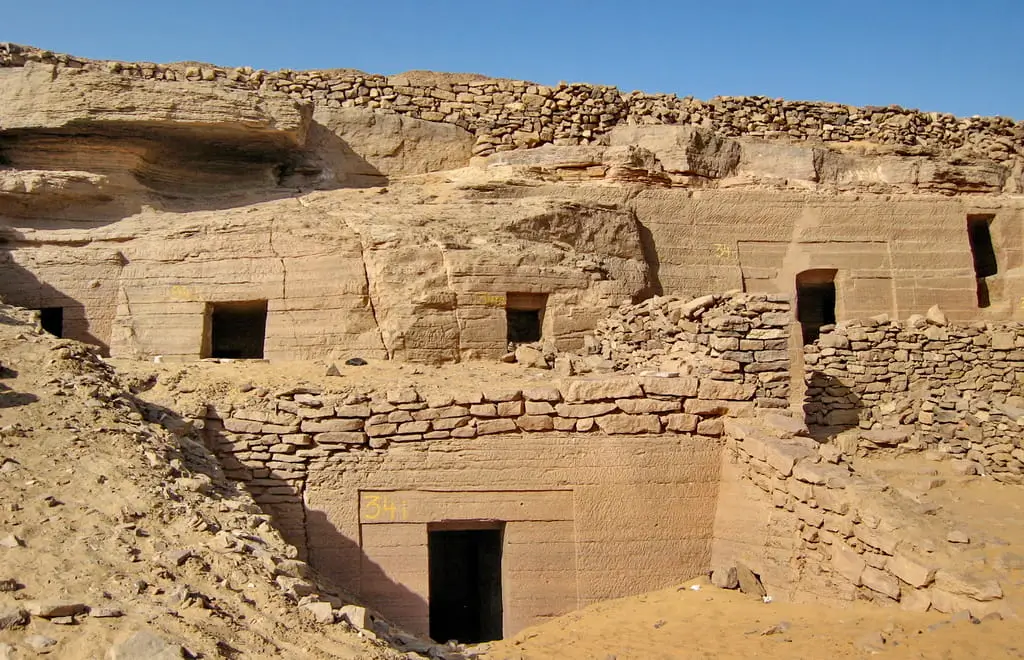
Unlike the royal burials in the Valley of the Kings, Qubbet el-Hawa provides a vivid record of provincial life. Furthermore, it offers insight into early international diplomacy. The rock-cut tombs span a vast timeline. They range from the Old Kingdom through to the Roman Period. Consequently, these chambers do not just hold mummies. Instead, they preserve the biographies of explorers and military leaders. These men shaped Egypt’s complex relationship with Nubia and Sub-Saharan Africa.
The Gateway to the South
Aswan, known anciently as Swenett, was a vital frontier town. Because of this strategic location, the men buried here were no ordinary bureaucrats. They held the prestigious title “Keepers of the Door of the South.” Their tombs reflect a unique blend of high-court tradition and the rugged reality of frontier life.
- Historical Depth: To begin with, the site contains over 100 tombs. The most significant examples date to the 6th and 12th Dynasties.
- Literary Treasures: In addition, many tombs feature “autobiographies” carved into their facades. These texts are among the most important documents in Egyptology. They detail early expeditions into unknown African territories.
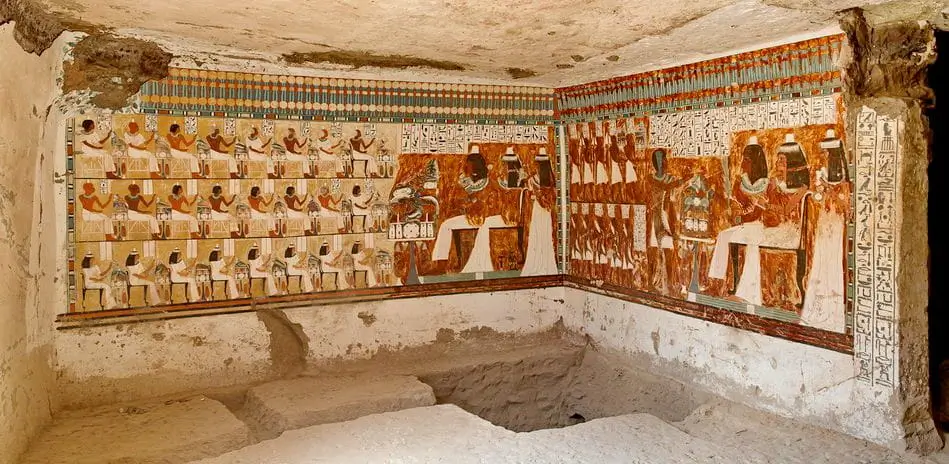
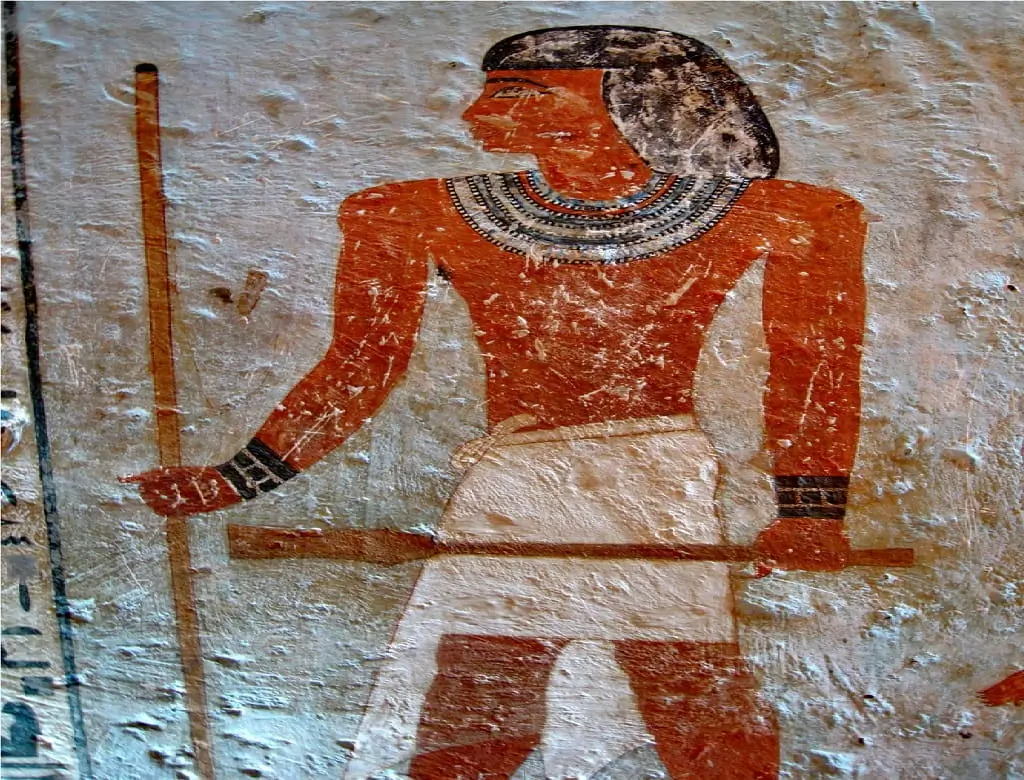
- Architectural Evolution: From simple Old Kingdom layouts to grand Middle Kingdom halls, the site tracks the evolution of funerary art. As a result, we can see how styles changed outside the royal capital.
Why Qubbet el-Hawa Matters Today
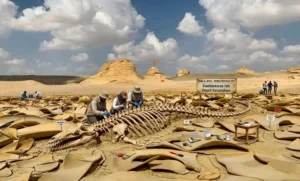
For researchers and travelers alike, Qubbet el-Hawa offers a perspective often missing from northern monuments. It tells the story of the “Frontier Men.” These pioneers expanded the boundaries of the known world. Moreover, the site continues to yield secrets today. Recent excavations have uncovered new chambers and intact burials. These finds constantly rewrite our understanding of the First Cataract region.
In this comprehensive pillar, we will explore the lives of the most famous governors. We will also examine the architectural features of their rock-cut “eternal houses.” Finally, we will look at the incredible autobiographical texts that serve as the world’s first travel journals.