Ancient Thebes: The Religious and Political Capital of the New Kingdom

Ancient Thebes, known today as Luxor, stands as the most vital city in understanding the power and piety of the Egyptian Empire. Serving as the nation's political and religious capital during the illustrious New Kingdom (c. 1550–1070 BCE), Thebes was the seat of the mighty god Amun and the favored home of pharaohs like Thutmose III, Hatshepsut, and Ramesses II. The city is geographically divided into two monumental halves: the East Bank is dominated by the spectacular Temple of Luxor and the massive Karnak Temple Complex, while the West Bank serves as the eternal necropolis, featuring the clandestine tombs of the Valley of the Kings and the awe-inspiring terraced Temple of Hatshepsut. Collectively named the "City of a Million Years," Thebes remains the ultimate destination for unlocking the secrets of Egypt’s greatest imperial age.

The Rise of the Imperial City

The City of Amun: Origins and Naming

The city known to the ancient Egyptians was Waset or Niut (“The City”). The name Thebes is of Greek origin, likely derived from the Egyptian term Ta-Apet, referring to the great temple precinct.

The city’s importance grew steadily from the beginning of the Middle Kingdom (c. 2055–1650 BCE), when the Theban 11th Dynasty unified Egypt after the First Intermediate Period. However, its true power was inextricably linked to the cult of its local god, Amun. Originally a minor deity, the Theban victory elevated Amun to a national level, merging him with the sun god Ra to become Amun-Ra, King of the Gods. This divine promotion guaranteed Thebes a perpetual flow of royal patronage, wealth, and influence.

Ancient Name Meaning Modern Name Primary Significance
Waset The Scepter-City Luxor Political and administrative capital.
Ipet-isut The Most Select of Places Karnak Religious center of the entire Egyptian Empire.
Ta-Apet The Sanctuary Luxor Temple Site of the annual Opet Festival.

The New Kingdom Zenith (18th–20th Dynasties)

The 18th through 20th Dynasties marked Thebes’ undisputed golden age. After expelling the Hyksos, the Theban royal line established the New Kingdom, transforming Egypt into an international empire. Pharaohs devoted unprecedented wealth—sourced from gold mines and conquered territories—to the glory of Amun-Ra and the construction of temples and funerary monuments at Thebes.

The most famous pharaohs who contributed to Thebes’ monumental scale include:

  • Ahmose I: Founder of the 18th Dynasty and the New Kingdom.
  • Hatshepsut: The powerful female pharaoh who initiated major building projects on the West Bank.
  • Thutmose III: The “Napoleon of Egypt,” whose conquests brought massive wealth to the Temple of Amun.
  • Amenhotep IV (Akhenaten): Though he temporarily abandoned Thebes for Amarna, his rule dramatically impacted the city’s religious structure.
  • Ramesses II (The Great): A prolific builder who significantly expanded the Luxor Temple and the Karnak complex.

This era cemented the division of Thebes into its functional halves: the East Bank for the living city and worship, and the West Bank for the dead and eternal memory.

FUN

The East Bank: Temples of the Gods
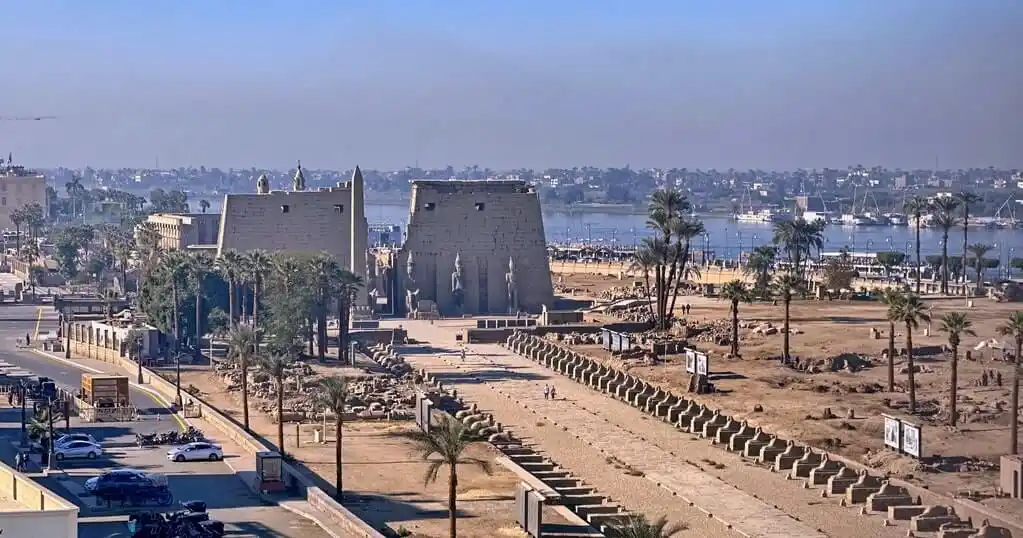
4-day-christmas-nile-cruise-Ancient-thebes-luxor

The East Bank of the Nile River, the site of the ancient city of Waset, served as the active hub of Thebes. Here, the pharaohs built the magnificent temples dedicated to the patron gods of the city, where daily rituals were performed and major festivals, like the spectacular Opet Festival, took place.

Karnak Temple Complex: The Most Select of Places (Ipet-isut)
8 day honeymoon tour - 12-day tour package - Cairo and Luxor Wheelchair-Accessible Tour (4 Days)

The Karnak Temple Complex is not a single temple but a vast collection of sanctuaries, chapels, pylons, and obelisks built and expanded over a period of nearly 2,000 years, beginning in the Middle Kingdom. It covers over 200 acres and served as the chief place of worship for the Theban Triad: Amun-Ra, his consort Mut, and their son Khonsu.

The complex is oriented along two main axes: the main sanctuary dedicated to Amun-Ra faces the Nile, while another axis runs south toward the Temple of Mut.

The Great Hypostyle Hall: An Architectural Marvel

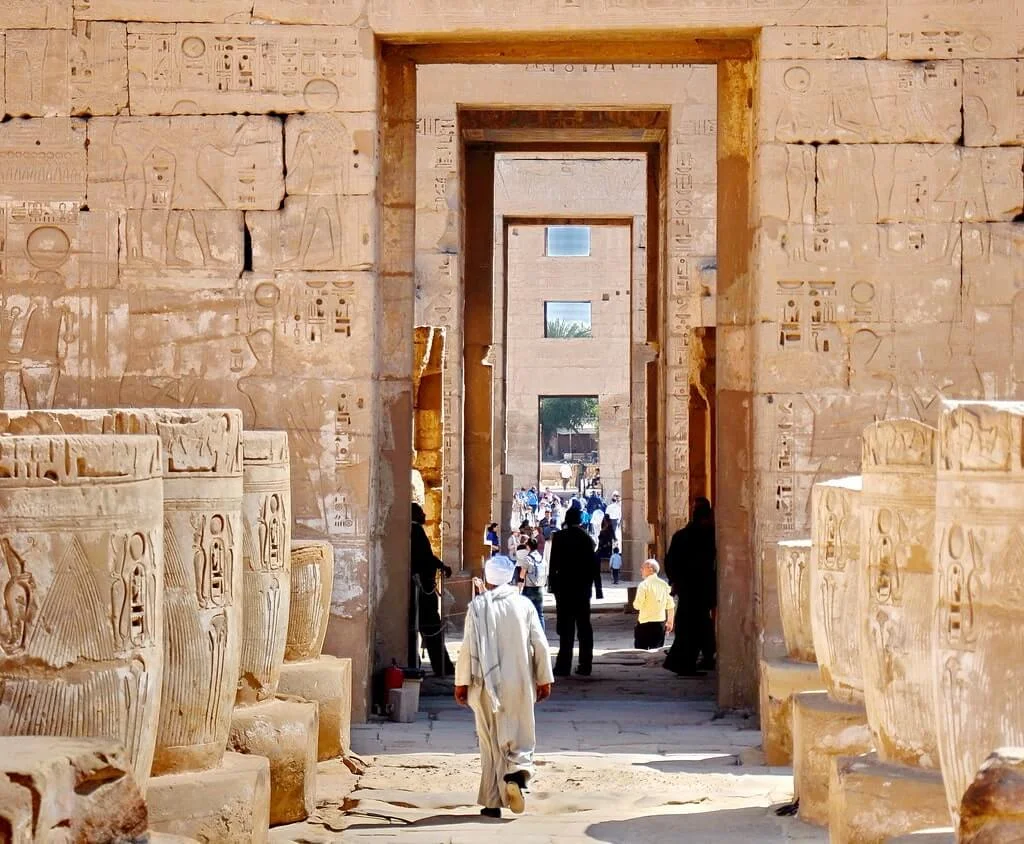
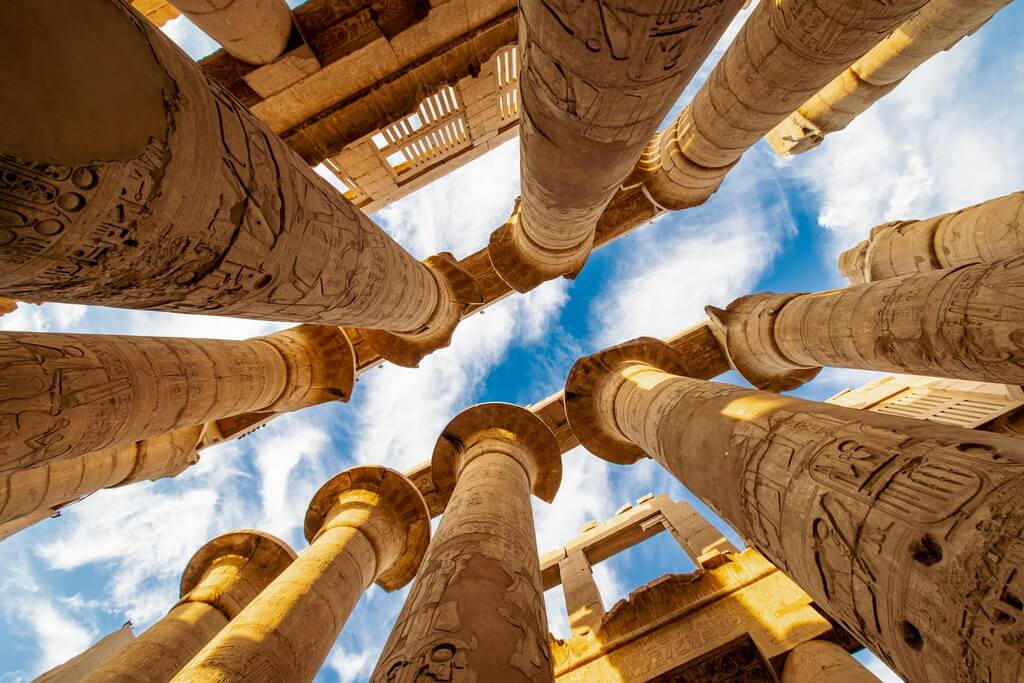
The greatest architectural achievement at Karnak, and perhaps in all of ancient Egypt, is the Great Hypostyle Hall in the Temple of Amun-Ra.

  • Scale and Scope: Completed largely under the reigns of Seti I and Ramesses II, the hall measures 103 meters long and 52 meters wide. It remains the largest room of any religious building in the world.
  • The Columns: The hall contains 134 massive sandstone columns, arranged in 16 rows. The central aisle features 12 towering columns, each 21 meters high, designed with open capitals (resembling open papyrus flowers). The remaining columns are 13 meters tall and feature bud capitals.
  • Clerestory Lighting: The difference in height between the central columns and the side columns allowed for clerestory windows—slotted stone panels that filtered light down into the hall. This innovative lighting created a mesmerizing atmosphere, symbolizing the creation of the world emerging from the primordial darkness (Nun).

The Triad of Thebes: Amun, Mut, and Khonsu

Theban Triad of Luxor, Amun, Mut, and Khonsu - Ancient Thebes (Luxor)

The overall plan of Karnak is defined by the three principal deities of Thebes:

  1. Amun-Ra: The central and largest precinct is dedicated to him, housing the Hypostyle Hall and a sacred lake. He was the primary source of the pharaoh’s political and military authority.
  2. Mut: Located south of Amun’s precinct, Mut’s temple features a crescent-shaped sacred lake and was connected to the main temple by an avenue of sphinxes. She represented the divine mother.
  3. Khonsu: Located southwest, his smaller temple represented the moon and the divine child.

The sheer scale of Karnak reflects the unparalleled wealth and power channeled to the priesthood of Amun during the New Kingdom, effectively making them one of the wealthiest and most influential institutions in the ancient world, often rivaling the pharaoh’s own authority.

Luxor Temple: The Festival Temple (Ta-Apet)
4-day-christmas-nile-cruise-Ancient-thebes-luxor

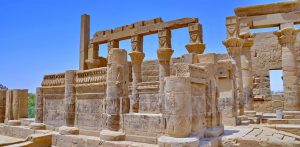
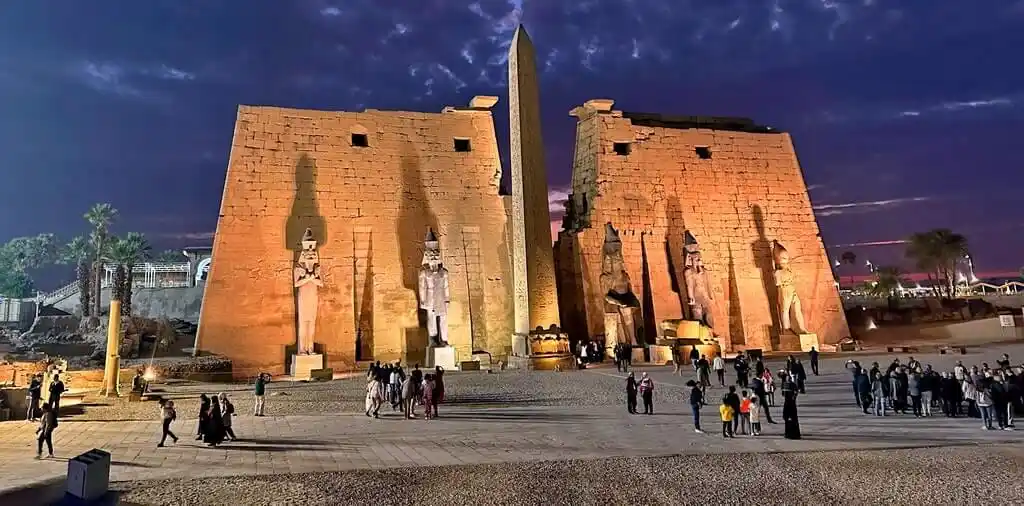
Located about three kilometers south of Karnak, the Luxor Temple is an exquisite structure dedicated to the rejuvenation of kingship, rather than the worship of a deity in the traditional sense. It was primarily the focus of the annual Opet Festival.

The Opet Festival: Celebrating Divine Kingship

The Opet Festival was the most important religious event in Thebes, running for several weeks (sometimes over 20 days).

  • Procession: The festival involved a magnificent procession where the sacred statues of Amun, Mut, and Khonsu were ritually transported from their shrines in Karnak down to Luxor Temple. This journey could be made on foot along the Avenue of Sphinxes or, more commonly, by ceremonial barges sailed down the Nile.
  • Rebirth: The procession symbolized the mystical union of the pharaoh with the god Amun, effectively reaffirming the divine nature of the king and legitimizing his rule for another year.

Architectural Features and Royal Contributions

Unlike Karnak, which was continuously expanded, Luxor Temple has a more cohesive structure, though it also received additions from many different rulers:

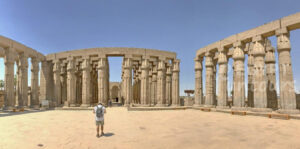
  • Amenhotep III: The main body of the temple, including the great colonnade and the inner sanctuary, was constructed by Amenhotep III (18th Dynasty).
  • Ramesses II: The massive forecourt, the first pylon, and the impressive statues that front the entrance were added by Ramesses II (19th Dynasty). Originally, two colossal granite obelisks stood before the pylon; only one remains, as the other now stands in the Place de la Concorde in Paris, France.
  • The Colonnade: This architectural element, filled with 74 massive columns, was intended to evoke the papyrus thicket through which the sacred barges would pass.

The Avenue of Sphinxes

Connecting the two great temples—Karnak and Luxor—was the Avenue of the Sphinxes (Ipet-Ro), a magnificent, nearly three-kilometer-long ceremonial road. Flanked by hundreds of human-headed sphinx statues, this route was built primarily by Pharaoh Nectanebo I (30th Dynasty). Its recent full excavation and restoration now allow modern visitors to walk the same grand processional path used by priests and pharaohs during the Opet Festival.

FUN

The West Bank: The City of the Dead (The Necropolis)

valley of the kings luxor (Ancient Thebes) - 6 days cheap holiday

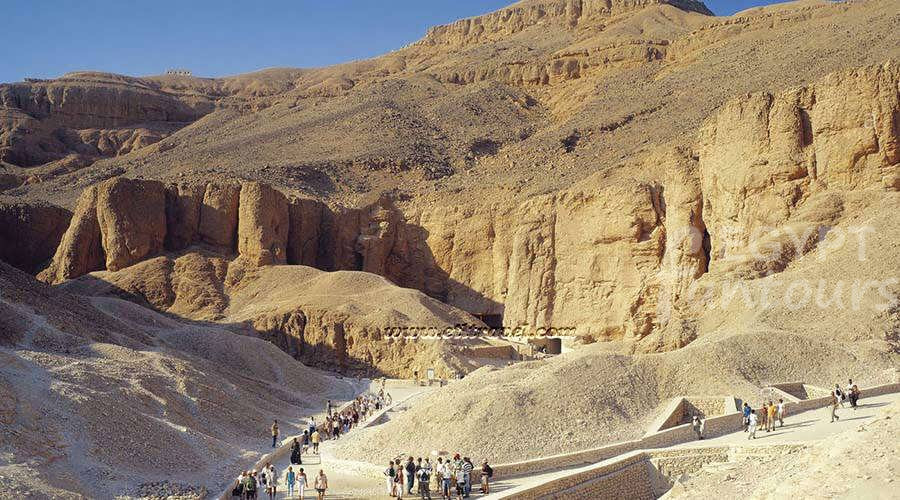
In contrast to the East Bank, which buzzed with political and religious life, the West Bank of the Nile River at Thebes was the City of the Dead. Ancient Egyptians believed the setting sun symbolized death and rebirth, making the western desert cliffs the ideal location for their eternal dwellings. This vast necropolis contains the greatest concentration of royal tombs, mortuary temples, and burial sites in the world, earning it the evocative name, the “Million Years.”

The West Bank is defined by three principal valleys and a series of massive mortuary temples, each an indispensable stop on the pharaoh’s journey to eternal union with Amun.

The Valley of the Kings (Biban el-Muluk)

Luxor and Aswan Nile Cruises - Tomb in the valley of the kings - 4-Night Movenpick Darakum

The Valley of the Kings (KV), located deep in a secluded wadi in the Theban hills, served as the primary burial ground for New Kingdom pharaohs (from the 18th to the 20th Dynasties). This site represents a radical departure from the tradition of pyramid building, as pharaohs sought security and secrecy for their remains and treasures.

Tomb Architecture and Concealment

  • Concealment over Monumentality: Unlike the massive, visible pyramids, the Valley of the Kings tombs were cut deep into the bedrock, hidden below a natural pyramid-shaped peak called el-Qurn (“The Horn”).
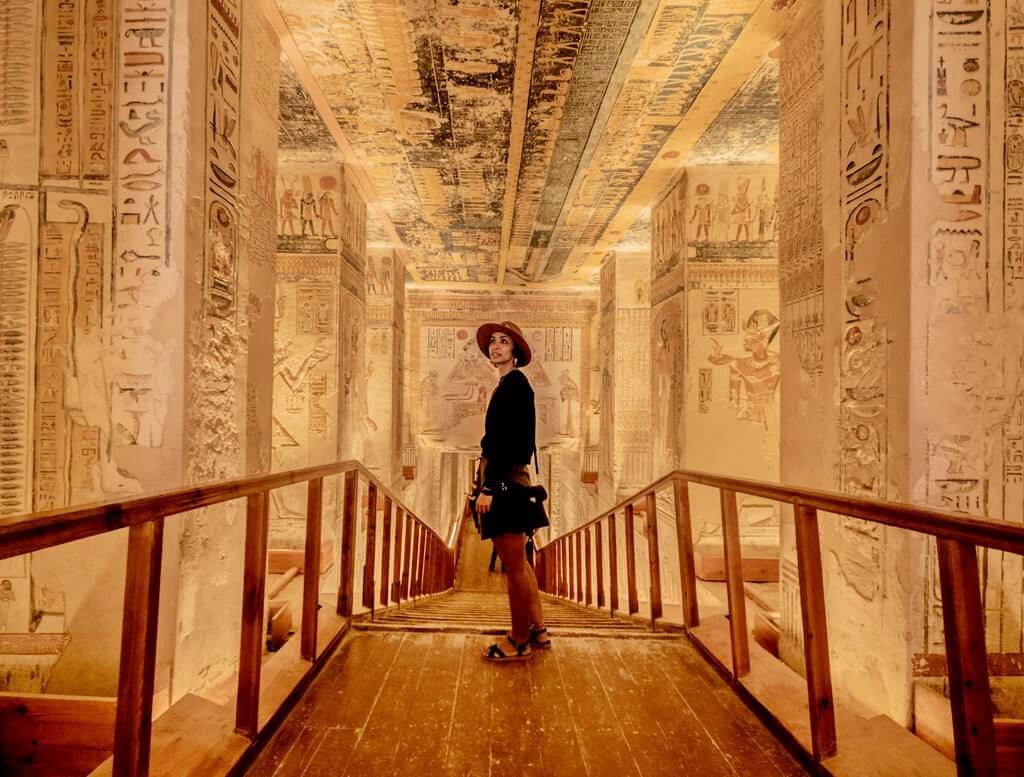
  • Layout: The tombs typically followed a structured plan: a series of descending corridors and staircases, often punctuated by a deep shaft (designed to deter thieves), leading to an antechamber, the treasury, and finally, the large, decorated burial chamber where the sarcophagus lay.
  • Decoration: Tomb walls were covered in vibrant, meticulously painted scenes and texts from funerary literature, such as the Amduat (What is in the Afterworld) and the Book of Gates. These texts were not merely decorations; they were ritual roadmaps intended to guide the deceased pharaoh’s soul through the dangers of the underworld to achieve successful resurrection.

The Discovery of Tutankhamun (KV 62)

King Tutankhamun tomb discovery - Ancient Thebes (Luxor)

No discussion of the Valley of the Kings is complete without mentioning the monumental discovery of KV 62, the tomb of the young Pharaoh Tutankhamun, found almost entirely intact by Howard Carter in 1922.

  • Significance: While Tutankhamun himself was a minor pharaoh, the incredible preservation of his tomb offered an unparalleled glimpse into the wealth and ritual complexity of a royal Egyptian burial. The thousands of artifacts—from the solid gold death mask to the gilded shrines and chariots—provided a concrete understanding of the pharaoh’s status and the resources dedicated to his eternal life.
  • The Curse: The subsequent death of Lord Carnarvon, the patron who financed the excavation, fueled the popular myth of the “Curse of the Pharaohs,” adding a sensational layer to the valley’s history.

Notable Tombs and Royal Families

Beyond Tutankhamun, the Valley of the Kings houses the tombs of:

  • Thutmose III (KV 34): Distinguished by its oval-shaped burial chamber and sophisticated Amduat illustrations.
  • Seti I (KV 17): The longest and deepest tomb in the valley, featuring some of the finest surviving Egyptian wall reliefs and vibrant color.
  • Ramesses VI (KV 9): Known for its astronomical ceiling decorations and vivid depictions of the solar cycle.

Hatshepsut’s Temple: The Splendor of Deir el-Bahari

Luxor and Aswan Nile Cruises - Hatshepsut's temple - 4-Night Movenpick Darakum

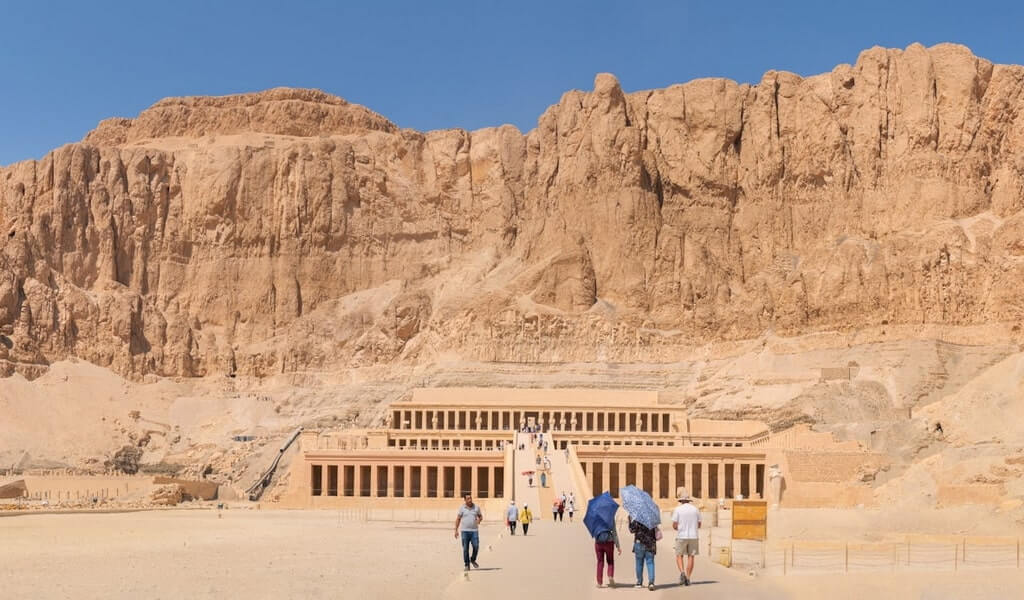
Flanking the entrance to the Valley of the Kings, the most visually dramatic structure on the West Bank is the mortuary temple of the female pharaoh Hatshepsut (18th Dynasty).

  • Architecture: Designed by her architect, Senenmut, the temple at Deir el-Bahari (Northern Monastery) is radically different from other mortuary complexes. It is composed of three massive terraced levels, cut into the cliff face and connected by long ramps. Its stark geometric lines contrast beautifully with the rugged natural landscape.
  • The Punt Expedition: The magnificent reliefs on the middle colonnade are historically invaluable. They chronicle a detailed trading expedition the Queen launched to the mysterious Land of Punt (likely in modern Eritrea or Sudan), bringing back unfamiliar goods such as frankincense, myrrh, ebony, and live incense trees. These reliefs serve as propaganda, showing Hatshepsut’s success as a ruler who provided divine blessings and prosperity to Egypt.
  • Divine Birth: Other reliefs depict Hatshepsut’s divine birth, a scene where the god Amun himself impregnates her mother, Queen Ahmose. This was a political necessity to legitimize her claim to the throne, as female pharaohs were rare exceptions to the patrilineal rule.

The Valley of the Queens (Ta-Set-Neferu)

Nefertari tomb qv66 valley queens luxor - 9 days unesco tour

Located nearby, the Valley of the Queens (QV), or Ta-Set-Neferu (“The Place of Beauty”), served as the burial site for the wives and children of the pharaohs, as well as high-ranking nobility.

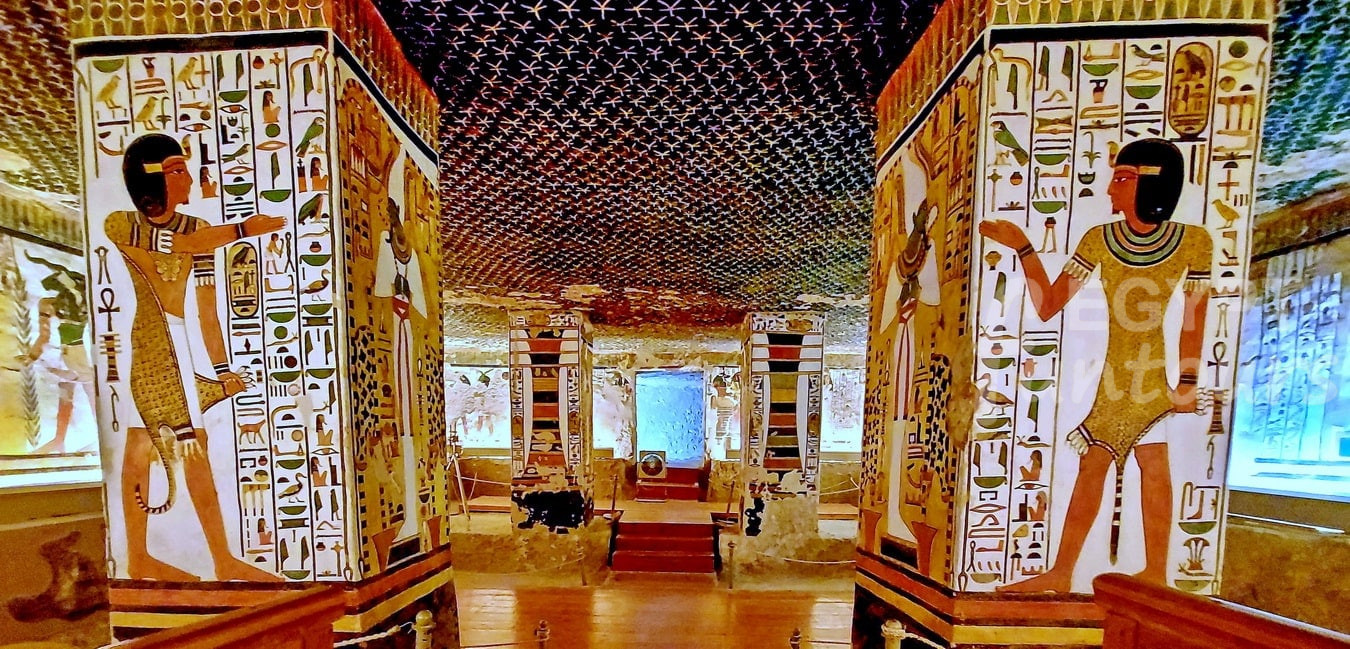
  • Nefertari’s Tomb (QV 66): The undisputed masterpiece of the Valley of the Queens is the tomb of Nefertari, the Great Royal Wife of Ramesses II. Its stunning wall paintings are famed for their lifelike quality, vibrant colors, and exquisite detail, depicting the Queen’s journey through the afterlife, guided by various deities. It is often described as the single most beautiful tomb in all of Egypt.
  • Other Notable Tombs: The valley also houses tombs for several sons of Ramesses III and other important royal wives and children.

Other Key West Bank Monuments

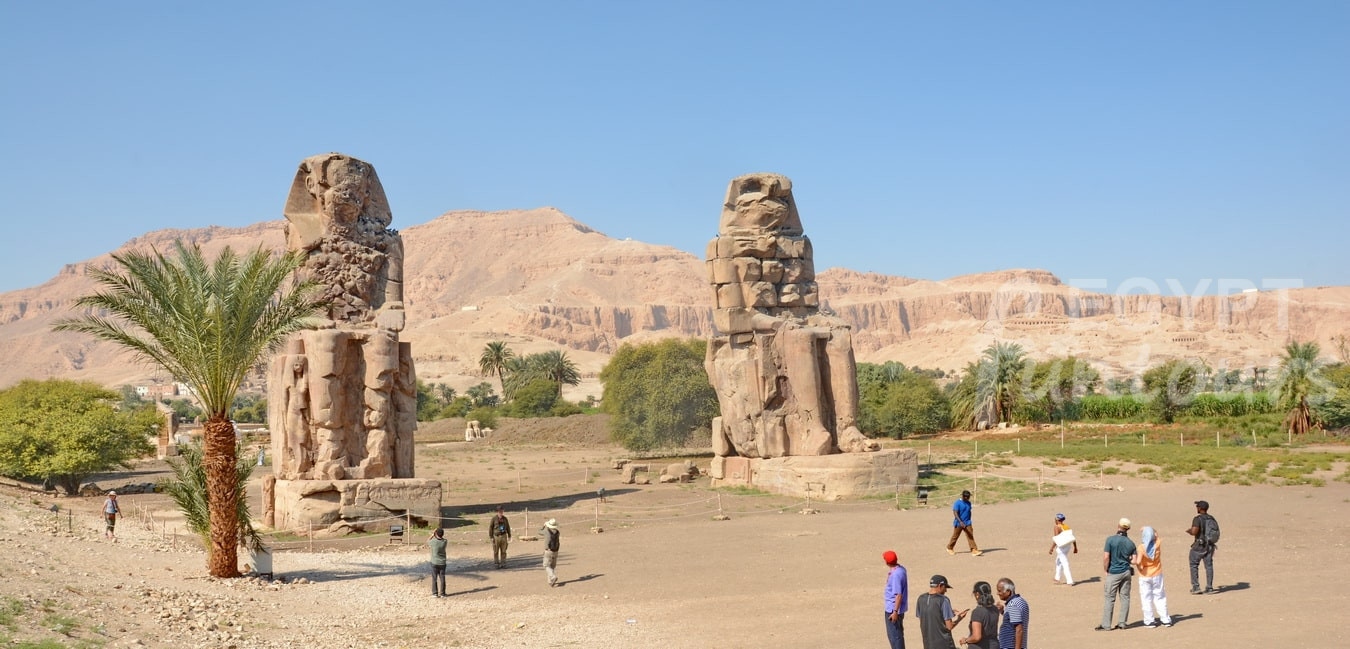
Colossi of Memnon

Memnon colossi of king amenophis III - Ancient Thebes (Luxor)

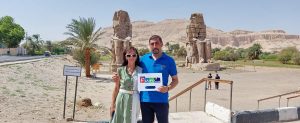
Standing sentinel at the entrance to the Theban Necropolis are the colossal twin statues of Amenhotep III, known today as the Colossi of Memnon.

  • Size and Purpose: Each monolithic quartzite statue is 18 meters (60 feet) tall and once fronted Amenhotep III’s massive, but now largely vanished, mortuary temple.
  • The Greek Connection: The statues gained the name “Memnon” from the Greeks, who mistook the northern statue for the mythical hero Memnon. After an earthquake cracked the northern statue, it famously “sang” at sunrise due to changes in temperature and humidity, attracting ancient tourists from across the Mediterranean world.

Medinet Habu: The Temple of Ramesses III

Medinet Habu - A Fortress of Propaganda and Piety

Located south of the Colossi, the mortuary temple complex of Ramesses III at Medinet Habu is one of the best-preserved on the West Bank.

  • Fortress Design: The temple complex was designed like a fortress, with massive fortified walls and an imposing entrance gate, reflecting the turbulent period of the late New Kingdom (20th Dynasty).
  • Historical Records: Its exterior walls contain detailed, well-preserved reliefs documenting Ramesses III’s decisive victories over the Sea Peoples, a confederation of seafaring invaders who destabilized the entire Near East. These reliefs are one of the most important historical sources for this crucial transitional period.

The Unification Battle by King Narmer

The Unification Battle by King Narmer The unification battle of King Narmer is shown on...

Related post
FUN

Legacy and Decline: The Enduring City of Amun

Despite its unparalleled golden age during the New Kingdom, Thebes eventually succumbed to internal political struggles, economic shifts, and external pressures. Yet, its physical monuments were too grand to disappear, ensuring its legacy survived the passing of dynasties.

The Priesthood of Amun and Political Power Shifts

The beginning of Thebes’ political decline coincides with the close of the 20th Dynasty (c. 1070 BCE). By this time, the immense wealth showered upon the temples, particularly Karnak, had centralized an inordinate amount of power in the hands of the High Priests of Amun.

  • Rival Authority: The priests became a hereditary class whose influence grew so strong that they often rivaled, and sometimes exceeded, the authority of the reigning pharaoh in the distant North. The pharaohs of the 21st Dynasty, ruling from the new capital in the Delta (Tanis), were often weak, allowing the High Priests of Thebes to effectively control Upper Egypt as a religious and political entity.
  • Fragmentation: This period of internal division, known as the Third Intermediate Period, saw Egypt politically fragmented, with Thebes operating as a theocracy—a state ruled by religious officials.
  • The God’s Wife of Amun: To manage and contain the priesthood’s power, later dynasties (like the Kushite 25th Dynasty) installed royal princesses into the powerful ceremonial role of “God’s Wife of Amun.” While technically celibate, this figure commanded great wealth and status, helping to keep Thebes tied to the crown’s authority, even if only nominally.

The Prophecies of Neferti: A Dive into Middle Kingdom Political Propaganda

The Prophecies of Neferti serves as a masterclass in ancient political messaging, functioning as a...
Related post
FUN

The Later Dynasties and External Influences

Though no longer the capital, Thebes continued to attract patronage from foreign and later rulers who sought to legitimize their rule by associating themselves with the powerful cult of Amun-Ra.

  • Kushite (25th Dynasty): The Nubian pharaohs of the 25th Dynasty, reverent admirers of Egyptian tradition, made significant repairs and additions to the Karnak complex, reflecting their deep piety toward Amun.
  • Graeco-Roman Period: Even after the conquest by Alexander the Great and the subsequent rule by the Ptolemies and Romans, Thebes remained a religious center.
    • Ptolemaic Additions: The Ptolemies added gateways and chapels, and the cult continued.

    • Christian Conversion: During the Roman period, some temples, such as Hatshepsut’s Deir el-Bahari, were converted into Christian monasteries (hence the modern name, “Northern Monastery”), leading to both preservation and physical alteration of the ancient structures.

  • Final Decline: By the 4th century CE, the rise of Christianity led to the closure of pagan temples, and the magnificent structures of Thebes were gradually abandoned, falling victim to the encroaching desert sand and the seasonal floods of the Nile. They remained buried and partially preserved until the advent of modern archaeology.

The Rediscovery of Thebes and the Birth of Egyptology

The systematic rediscovery of Thebes began with the Napoleonic expedition to Egypt in 1798. Napoleon’s accompanying scholars and artists documented the ruins in the massive Description de l’Égypte, which captivated Europe and ignited the field of Egyptology.

  • Early Explorers: Figures like Giovanni Belzoni, a powerful Italian explorer, famously used his strength to excavate and remove massive statues, including the younger Memnon, from the West Bank, often leading to destructive exploration methods.
  • Archaeological Giants: The late 19th and early 20th centuries saw methodical, scientific excavation. Key figures include:
    • Gaston Maspero: Initiated systematic surveys and preservation efforts.

    • Howard Carter: His 1922 discovery of the intact tomb of Tutankhamun provided the world with an unparalleled, sensational window into Theban wealth and customs.

  • Current Preservation: Today, Thebes is an active archaeological zone. International teams continue to excavate, restore, and preserve the massive monuments, using advanced techniques like laser scanning and specialized conservation methods to protect the fragile paintings and reliefs.

Thebes Today: Modern Luxor (A World Heritage Site)

The remains of Ancient Thebes make up modern Luxor, named after the Arabic al-Uqsur (“the palaces”). This entire zone—the East Bank (Karnak and Luxor Temple) and the West Bank (Valley of the Kings and Queens)—was collectively designated a UNESCO World Heritage site in 1979.

  • A Living Museum: The transformation of the Avenue of the Sphinxes into a fully walkable pedestrian route now physically connects the two great East Bank temples once more, allowing visitors to experience the grand scale of the ancient ritual procession.
  • Economic Hub: Luxor thrives today as one of Egypt’s most vital tourism centers. The revenue generated by the sites helps fund the essential preservation and documentation necessary to protect these monumental remnants of an imperial age.

Ancient Egyptian Festivals: A Complete Guide to Sacred Celebrations

Discover the vibrant heart of ancient Egyptian culture through its sacred festivals. These massive celebrations...
Related post
FUN

The legacy of Ancient Thebes is one of enduring grandeur. It remains a physical testament to a civilization that placed ultimate value on monumentality, religion, and the concept of eternity, offering modern visitors an unparalleled opportunity to walk through the “City of a Million Years.”

Egypt entry visa

Live the memories that make Egypt the ideal spot worthy of remembering....
Discover the most fascinating monuments of Egypt's big cities....

Amazing layover Tour

We had 12 hour layover in Cairo, and our guide Hani waited patiently for us when we had a few visa issues entering the country! We got on our tour, and had the best experience ever! We saw the pyramids, the sphinx, Islamic Cairo and rode through the city! We

More »

My Dream Came True

I had waited 60 years to get to Egypt; in fact, it was my 60th birthday gift to myself. I went with my oldest daughter, and the experience was excellent. It was meticulously planned by the tour company and was designed for me and my daughter. I never had a

More »
4-day-christmas-nile-cruise

Hossam Rashwan Tour Guide

We took this trip with Hossam Rashwan as our tour guide, and I must say that Hossam was the greatest tour guide in Luxor who showed us around. Our tour guide’s tales transported us to Luxor’s past, and we felt as if we were living in ancient Egypt. We really

More »

Transit Stopover in Cairo

We have just returned from a two week holiday in Cape Town. On the way out our airline schedule meant that we had a 15 hour stop in Cairo. We decided to arrange a tour of the city and after asking for quotes/itineraries we chose Egypt Fun Tours. This worked

More »
Isis with wings

Top-rated Tour Packages

Isis with wings