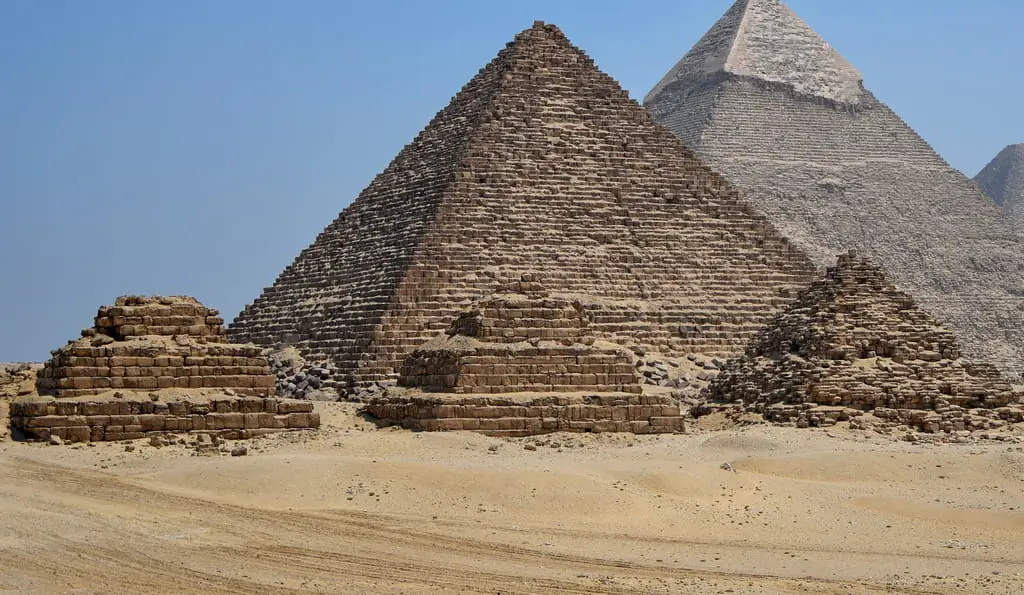
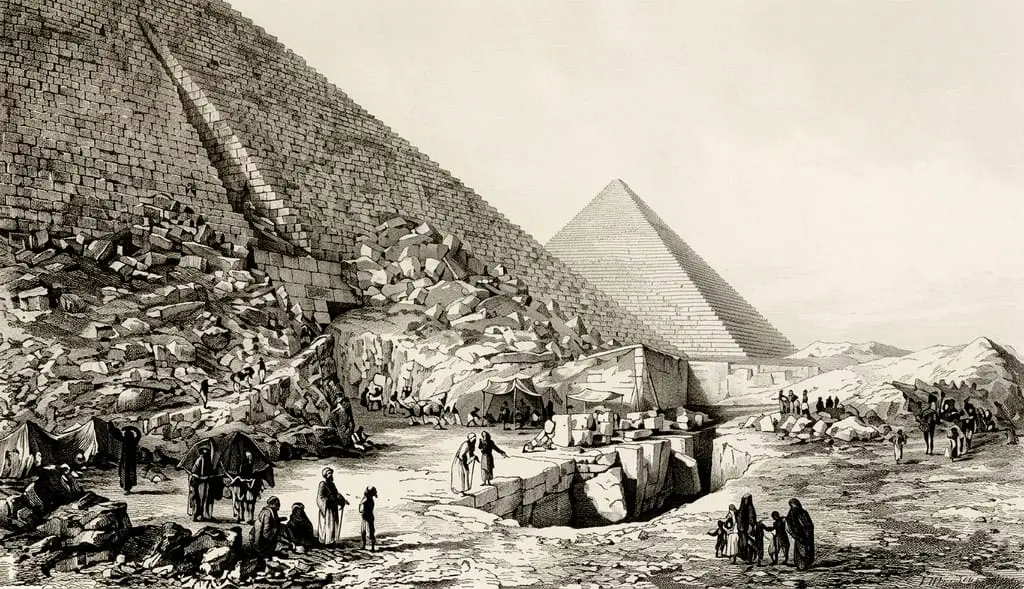
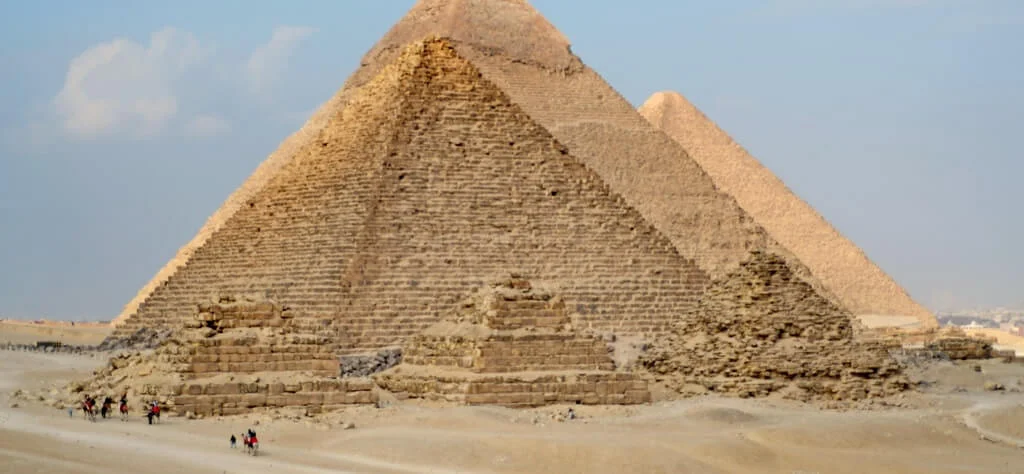
Standing quietly at the southern end of the Giza Necropolis, the Pyramid of Menkaure often plays second fiddle to the massive Pyramid of Khufu and Khafre’s Pyramid. However, this third and smallest pyramid offers a more intimate, human, and technically challenging story than its neighbors. It represents the closing chapter of Egypt’s “Pyramid Age.” While his predecessors focused on monumental scale, Pharaoh Menkaure shifted the royal vision toward artistic refinement and structural complexity.
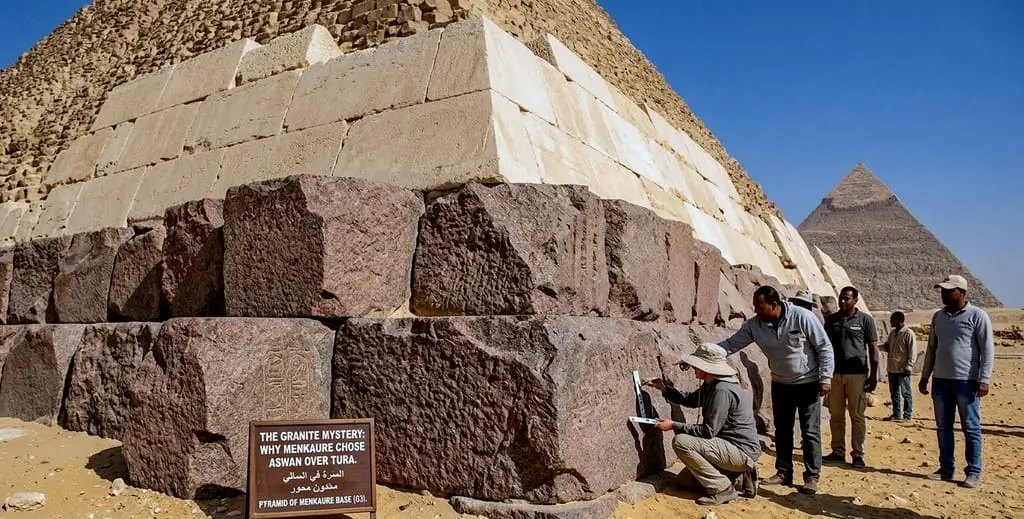
Instead of a monolithic limestone face, the Pyramid of Menkaure displays a striking visual signature: a base encased in heavy, rough red granite. Ancient workers transported these massive blocks from Aswan, over 500 miles away, to give the structure a grounded, powerful presence. Today, the pyramid serves as a premier destination for authoritative exploration. It boasts a complex system of internal chambers and a compelling history of a project cut short by time. This monument invites travelers to look beyond sheer size and appreciate the technical and spiritual sophistication that finalized Giza’s legendary horizon.
The Historical Foundation: Menkaure, the Pious Pharaoh
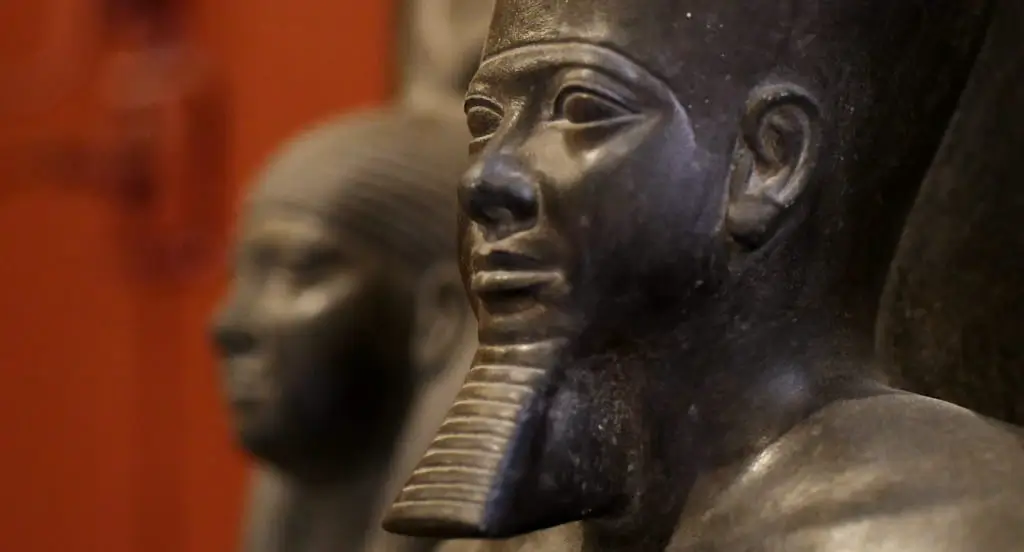
To understand the pyramid, you must understand the king. Menkaure (also known as Mykerinos) was the son of Khafre and the grandson of Khufu. Historically, his predecessors were known for their absolute—and sometimes ruthless—authority. Herodotos, the ancient Greek historian, noted that the people of Egypt suffered under Khufu and Khafre.
In stark contrast, when Menkaure ascended the throne, he was beloved. He reopened the temples and restored the people’s right to worship. Consequently, his mortuary complex was designed not to intimidate, but to serve as a sacred center. The Pyramid of Menkaure was the physical anchor of a harmonious city of the dead. By exploring this historical context, you move beyond the stones and connect with the human ambition and religious devotion that finalized Giza’s legendary horizon.