El-Khokha Tombs: The Ancient Artistic Gateway of Thebes

El-Khokha serves as a vital bridge across three thousand years of Egyptian history, offering a peaceful alternative to the West Bank’s more crowded sites. This hill features the El-Khokha tombs, where visitors can trace the evolution of art from the sturdy realism of the Old Kingdom to the refined elegance of the 18th Dynasty. By exploring the grand halls of Surer or the intricate details in the Tomb of the Two Sculptors, you witness the skill of the elite professionals who built the empire. This quiet sector rewards those who take the short drive south with a deep, private connection to the ancient heart of Thebes.

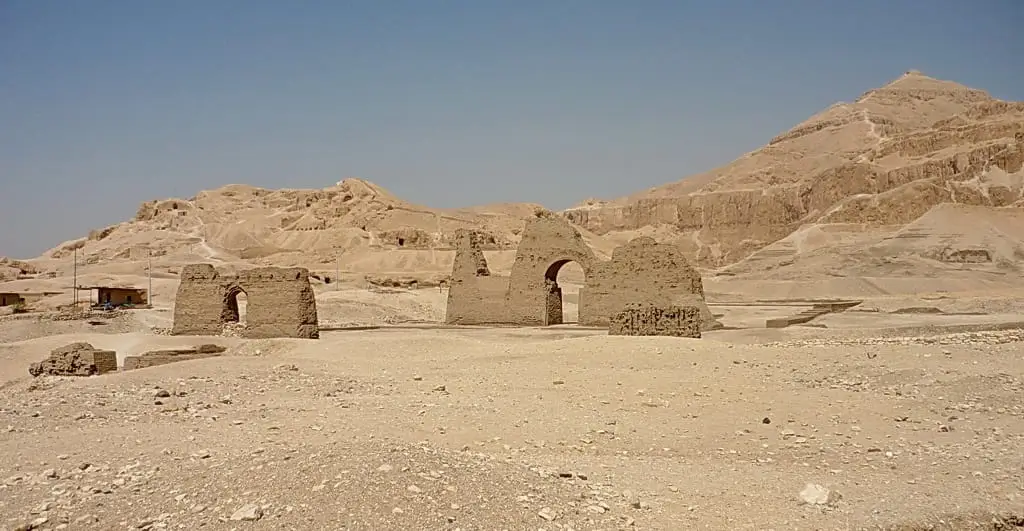
While many visitors follow the famous paths of the West Bank, a shorter drive south leads to the El-Khokha tombs. This area remains the quietest part of the necropolis, yet it holds historical gems well worth the visit. El-Khokha sits on a natural hill between the more famous areas of Sheikh Abd el-Qurna and the El-Assasif valley. It serves as a peaceful sanctuary for those who want to explore ancient history without the heavy crowds.

The Oldest Foundations of the West Bank

El-Khokha is unique because it contains some of the oldest decorated tombs in the entire Theban Necropolis. While much of Luxor focuses on the New Kingdom, this hill holds secrets from the Old Kingdom and the First Intermediate Period. These early pioneers carved their eternal homes into the limestone long before the great Pharaohs of the 18th Dynasty arrived. This long history makes El-Khokha an essential chapter in the story of Egyptian burial traditions.

A Neighborhood of Silent Masterpieces

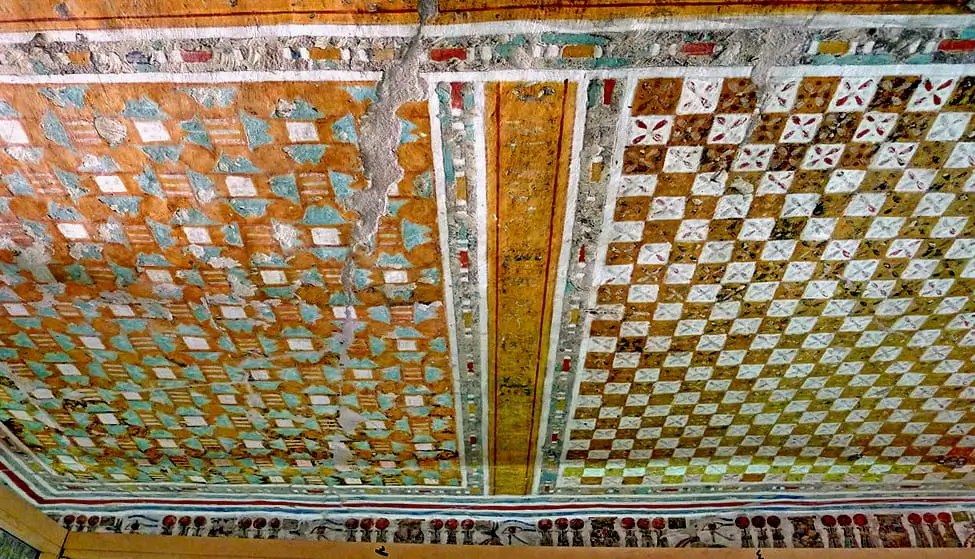
The El-Khokha tombs showcase incredible artistic variety. Because ancient officials used the hill for thousands of years, visitors can see exactly how Egyptian art changed over time. The site features more than 50 registered tombs belonging to high-ranking officials, royal scribes, and even the king’s personal sculptors. Walking through this area feels like walking through an open-air museum of administrative power and religious devotion.

Why This Area Remains a Hidden Gem

Even though it is home to massive structures and beautiful reliefs, El-Khokha stays off the main tourist trail. Its position slightly further south keeps the large tour buses away, leaving the paths open for curious travelers. Visitors here enjoy a sense of discovery. You can stand in the courtyard of a 3,000-year-old tomb and hear nothing but the wind, making it the perfect spot for deep reflection and photography.

FUN

The Heavyweights: Masterpiece Tombs of El-Khokha

The Heavyweights Masterpiece Tombs of El-Khokha

The El-Khokha tombs are home to some of the most ambitious private funerary projects ever attempted in ancient Egypt. While many noble tombs are small and intimate, the elite officials who chose this hill often built on a grand scale. These “heavyweight” tombs provide a direct look at the wealth and influence of the men who served Egypt’s most powerful Pharaohs.

TT48: The Tomb of Amenemhat (Surer)

The tomb of Amenemhat, also known as Surer, is the crown jewel of El-Khokha. Surer served as the Chief Steward during the reign of Amenhotep III, a period known for its unprecedented luxury and artistic perfection.

  • Massive Scale: This tomb is designed like a miniature temple. It features a huge courtyard and a massive hall that originally contained 60 to 70 columns.
  • Artistic Detail: The reliefs here are carved in the delicate, high-quality style of the late 18th Dynasty. One famous scene shows Amenhotep III himself seated under a canopy, representing the peak of royal court life.
  • Historical Impact: The size of TT48 proves that Surer was one of the most powerful non-royal individuals in the world at that time.

TT39: The Tomb of Puimre

Puimre held the prestigious title of Second Prophet of Amun under the famous female Pharaoh, Hatshepsut. His tomb is a masterpiece of architectural complexity and relief carving.

  • Three Chapels: Unlike most tombs with a single shrine, TT39 features three separate chapels. Each one is dedicated to different aspects of his life and religious duties.
  • Exquisite Reliefs: The wall carvings show the construction of monuments and the weighing of gold for the temple of Amun. These scenes are essential for understanding the economy of the New Kingdom.
  • Preservation: The quality of the limestone in this part of El-Khokha allowed artists to create sharp, crisp details that have survived for over 3,400 years.

TT181: The Tomb of the Two Sculptors

This tomb is unique because it belongs to two men, Nebamun and Ipuky. They were both “Head Sculptors” who worked on the royal monuments of the 18th Dynasty.

  • A Rare Double Burial: It is uncommon to find two unrelated professionals sharing a tomb. It is believed that Ipuky married Nebamun’s widow, and they decided to share the burial space.
  • Artistic Legacy: Since the owners were master artists themselves, the quality of the tomb’s decoration is exceptional. It features some of the most famous “daily life” scenes in Luxor, including depictions of craftsmen at work in the royal workshops.
  • Emotional Depth: The tomb contains a touching scene of mourning that is often cited by historians as one of the most expressive in Egyptian art.
FUN

The Full Catalog: The Residents of El-Khokha

The Full Catalog The Residents of El-Khokha

To understand why El-Khokha is such a dense archaeological site, we must look at the long list of officials who rested here. This area was not just for one era; it served as a cemetery for over a thousand years.

The Old Kingdom and First Intermediate Period

These are the “pioneer” tombs that established El-Khokha as a sacred site:

  • TT185 (Seniqer): A Chancellor from the First Intermediate Period.
  • TT186 (Ihy): A Nomarch (governor) who lived during the late Old Kingdom.
  • TT413 (Unasankh): An official whose tomb represents the transition from the Old to the Middle Kingdom.

The New Kingdom (18th and 19th Dynasties)

This was the “Golden Age” of the hill, where the royal administration of Thebes was buried:

  • TT178 (Neferronpet): A scribe of the treasury in the Estate of Amun.
  • TT256 (Nebenkemet): A royal fan-bearer and overseer of the cabinet.
  • TT296 (Nefersekheru): A scribe of the divine offerings.
  • TT172 (Mentiywi): A royal butler under Thutmose III and Amenhotep II.
  • TT179 (Nebamun): A scribe of the counter of grain in the granary of Amun.

The Ramesside Period (20th Dynasty)

Later officials continued to build here, often reusing older spaces or carving deeper into the rock:

  • TT13 (Shuroy): Head of the brazier-bearers of Amun.
  • TT183 (Nebsumenu): Chief Steward in the house of Ramses II.

The Catacombs of Kom Esh-Shokafa: Roman-Egyptian Underworld

Descend into one of the "Seven Wonders of the Middle Ages" at the Catacombs of...
Related post
FUN

Artistic Evolution: A Thousand Years of Style at El-Khokha

Artistic Evolution A Thousand Years of Style at El-Khokha

The El-Khokha tombs act as a living timeline for Egyptian art. Because this hill was used from the Old Kingdom through the Ramesside period, we can observe the dramatic shifts in how artists portrayed the human form, nature, and the divine. This evolution reveals not just a change in skill, but a shift in the very soul of Egyptian culture.

The Formalism of the Old Kingdom

The earliest tombs in El-Khokha, such as TT186 (Ihy), showcase the disciplined and sturdy style of the Old Kingdom.

  • Rigidity and Power: Figures are often carved in high relief with a sense of permanence and strength. The focus was on the status of the tomb owner as a pillar of the state.
  • Limited Palette: The colors used during this era were earthy and symbolic, focusing on the essential elements of the offering rituals.
  • Physicality: Faces and bodies appear more muscular and athletic compared to the later, more elegant styles of the New Kingdom.

The Naturalism of the 18th Dynasty

The New Kingdom brought a “Golden Age” of creativity to the El-Khokha tombs. Under Pharaohs like Hatshepsut and Amenhotep III, the art became fluid, sophisticated, and incredibly detailed.

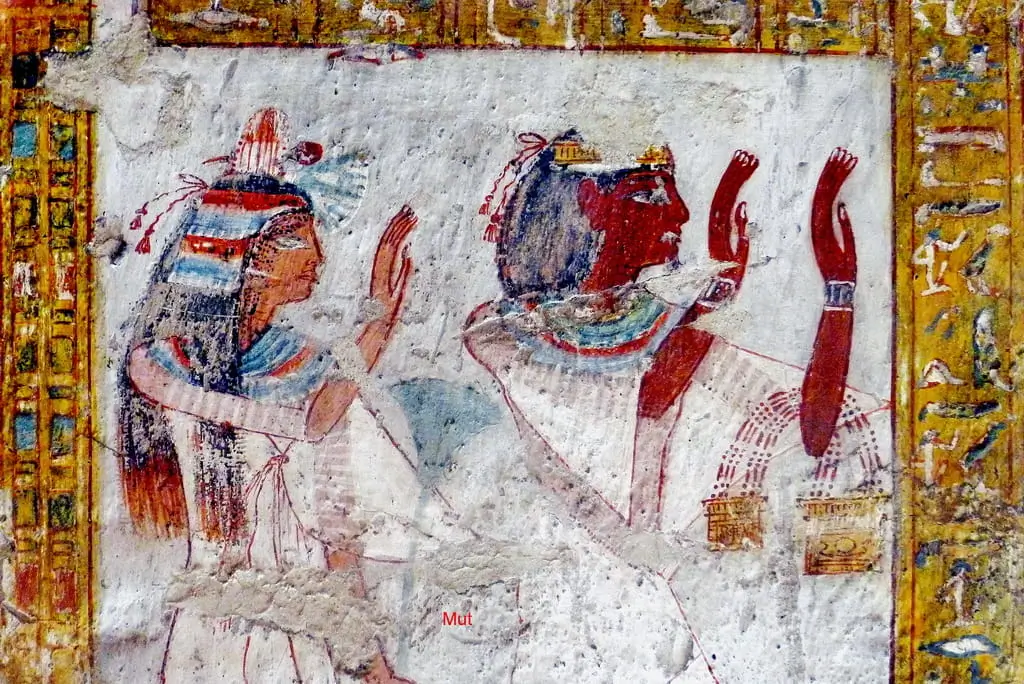
  • The “Amarna Influence”: In tombs like TT48 (Surer), we see the beginning of a softer, more naturalistic style. Faces become more expressive, and the human body is shown with more realistic curves and movement.
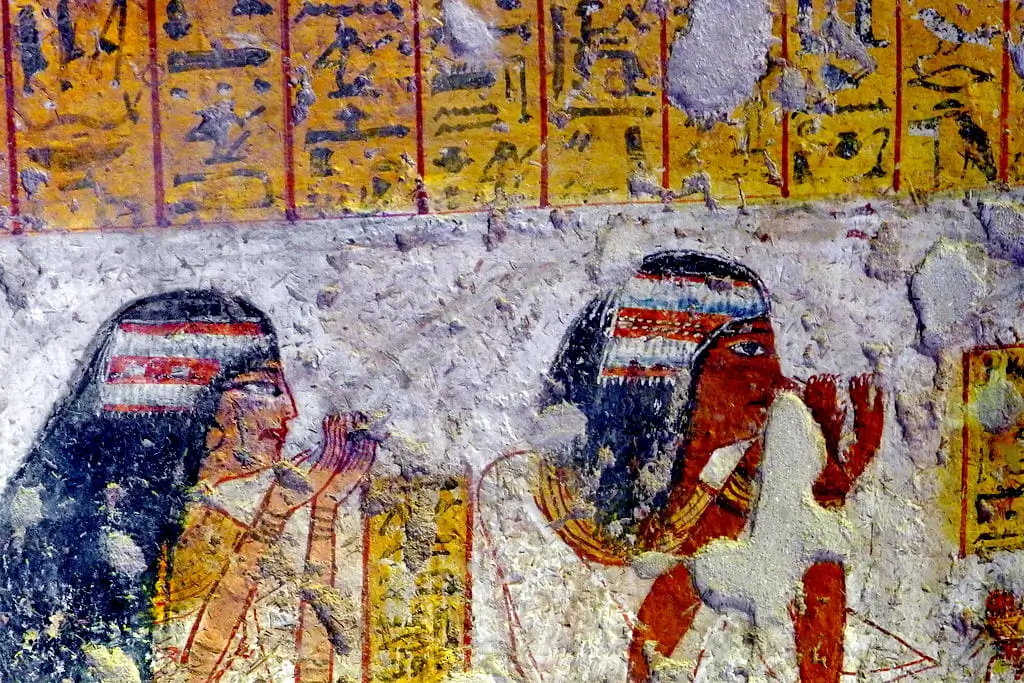
  • Intricate Detail: This is the era of “the fine line.” Artists used tiny brushes to paint individual hairs on a wig or the complex patterns on a guest’s linen robe during a banquet scene.
  • Vibrant Landscapes: For the first time, the desert and the Nile marshes are painted with a sense of life. You can see birds fluttering in papyrus reeds and hunters moving with grace through the landscape.

The Theatricality of the Ramesside Era

As we move into the 19th and 20th Dynasties, the art in El-Khokha changes once again. The focus shifts from the “daily life” of the owner to the “mysteries” of the afterlife.

  • Religious Drama: The walls become filled with scenes from the Book of the Dead and the Book of Gates. The artwork is meant to guide the soul through the dangers of the underworld.
  • Bold Contrast: Ramesside artists often used bolder colors and thicker outlines. While perhaps less “delicate” than the 18th Dynasty, the art has a powerful, theatrical energy.
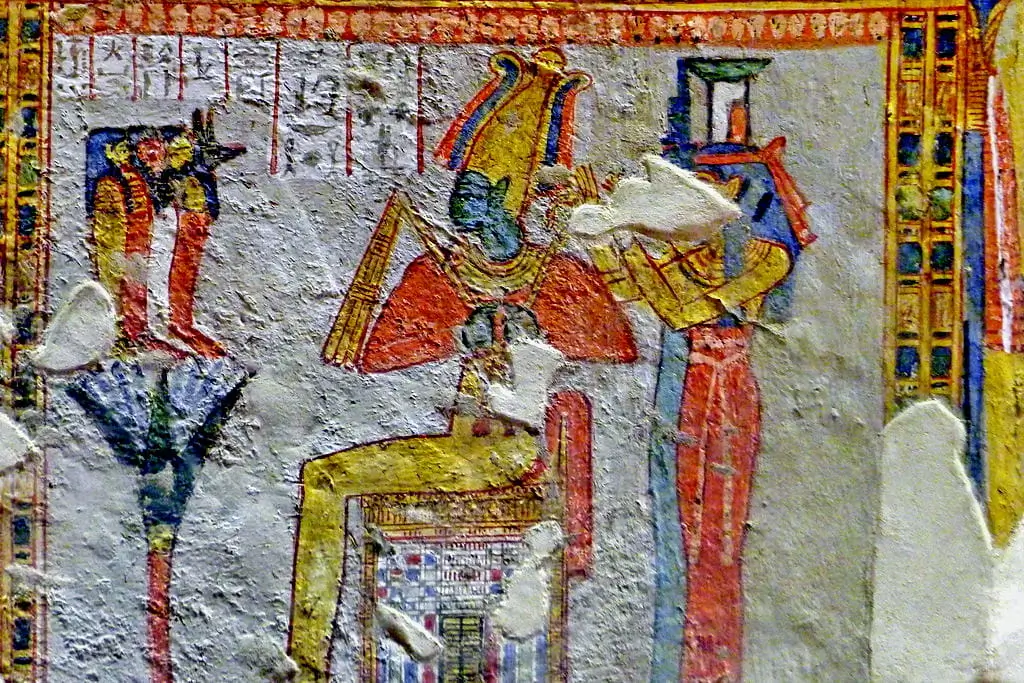
  • Focus on the Gods: The tomb owner is frequently shown standing before Osiris, Anubis, or Hathor. The relationship between the human and the divine becomes the central theme of the decoration.

The “Two Sculptors” Effect

A special mention must be made of TT181, the Tomb of Nebamun and Ipuky. Since the owners were master sculptors themselves, their tomb represents a “technical peak.” The reliefs here are so sharp and well-proportioned that they served as a standard for other artists in the necropolis. It is a rare example where we see the art through the eyes of the creators themselves.

The Step Pyramid Complex: A Revolution in Stone

The Step Pyramid Complex of King Djoser, built around 2670 BCE by the architect Imhotep,...
Related post
FUN

Technical Mastery: Tools and Techniques

Technical Mastery Tools and Techniques

The artists of El-Khokha were masters of their environment. To create these masterpieces, they utilized a specific set of skills:

  1. Grid Systems: Artists used red ochre to draw a square grid on the walls. This ensured that every figure followed the strict “canon of proportions” required by Egyptian tradition.
  2. Sunk vs. Raised Relief: In the earlier periods, raised relief (where the background is cut away) was common. Later, “sunk relief” became popular because it was faster to carve and captured shadows beautifully in the sunlight of the courtyards.
  3. The Master’s Touch: In many El-Khokha tombs, we can see “corrections” made in black ink by a master artist over the red sketches of an apprentice. This gives us a direct connection to the ancient workshops that once buzzed with activity on this hill.

Practical Visitor Information: Navigating El-Khokha

Visiting the El-Khokha tombs rewards the patient traveler. This area remains a tranquil pocket of the necropolis because it sits slightly further south between more famous landmarks. Follow these practical steps to ensure a smooth visit to these hidden gems.

How to Reach El-Khokha

El-Khokha sits on the West Bank of Luxor, nestled between the hills of Sheikh Abd el-Qurna and the flat basin of El-Assasif.

  • The “Short Drive”: Drivers can reach the site in just 10 minutes from the main Nile ferry. Look for the hill just behind the Ramesseum and south of the Temple of Hatshepsut.
  • On Foot: Explorers already in the Nobles’ Tombs can walk to El-Khokha from Sheikh Abd el-Qurna, though the paths remain sandy and uneven.

Ticketing and Logistics

The Ministry of Tourism and Antiquities manages the site. You must purchase tickets before arriving at the tomb entrances.

  • Main Ticket Office: Buy your permits at the Antiquities Inspectorate (Taftish) near the Colossi of Memnon.
  • Bundled Passes: The ministry often sells El-Khokha tombs in small groups. One ticket might grant you entry to three specific tombs, such as TT178 and TT296.
  • Hours: The site typically opens from 6:00 AM to 5:00 PM.

Best Time to Visit

Timing your visit perfectly helps you appreciate the “quietest part of the necropolis.”

  • Morning Light: Arrive before 9:00 AM to avoid the heat and the occasional tour group.
  • Afternoon Solitude: Visit after 3:00 PM for a peaceful atmosphere and beautiful lighting across the valley.

Expert Travel Tips

  • Bring a Flashlight: While modern lighting illuminates the “heavyweight” tombs, smaller sites have dark corners. A small torch helps you see the fine relief work.
  • Hydration: Carry plenty of water, as few vendors work in the immediate vicinity of El-Khokha.
  • Photography: Standard tickets generally permit mobile phone photography, but always check for specific signs at each tomb entrance.

The Intact Egyptian Royal Tombs: Egypt’s Ultimate Secret

While many believe Tutankhamun's tomb was the only intact royal burial discovered, this guide reveals...
Related post
FUN

FAQs About El-Khokha

FAQs About El-Khokha

What makes El-Khokha different from other tomb areas in Luxor?

El-Khokha stands out because it contains a much wider chronological range. While most areas focus on the New Kingdom, El-Khokha holds the oldest rock-cut tombs in Thebes, dating back to the Old Kingdom.

Does the ministry always open the Tomb of Surer (TT48)?

Opening schedules change due to ongoing restoration. Always confirm which specific El-Khokha tombs you can view at the main ticket office before you make the drive.

Did the artists preserve the tombs at El-Khokha well?

Yes. Despite their age, many tombs—like the Tomb of the Two Sculptors (TT181)—feature sharp reliefs and vibrant colors. The high-quality limestone on this hill protected the art for millennia.

How much walking should I expect?

The tombs cluster relatively close together, but the terrain remains hilly and rocky. Expect a moderate amount of walking on unpaved paths with slight inclines. Wear sturdy shoes.

Can I visit El-Khokha and Qurnet Murai on the same day?

Absolutely. Both areas occupy the southern stretch of the necropolis. Combining them creates a perfect “Off-the-Beaten-Path” itinerary focused on the quieter gems of the West Bank.

Who rests at El-Khokha?

Most owners belonged to the high-ranking “middle-class” elite. The residents included royal stewards, prophets of Amun, treasury scribes, and master artists. These professionals kept the Egyptian Empire functioning.

Does a village still exist at El-Khokha?

Historically, a modern village sat atop the hill. The government relocated most houses to protect the archaeology. The hill now serves as a dedicated historical site, though the spirit of the old village remains.

A wonderful chance to marvel at the wonders of Egypt....
Extraordinary 8 days Egypt overland tour to Cairo, Abu Simbel, Luxor & Hurghada accompanied by Egyptologist tour guide to visit what Egypt has to offer....
God_Anubis_Icon

Valley of the Kings, Hepchepsut

I never had a more positive experience and educational time than this tours. Learning about a variety of kings and queens was amazing! The tour guide was super nice and helped me and my friend every step of the way! Including bargaining for a few souvenirs! I will never forget

More »

Well Done

All aspects of the experience were considered and well taken care of. Knowledgeable and friendly guide and organized itinerary.

More »

Amazing layover Tour

We had 12 hour layover in Cairo, and our guide Hani waited patiently for us when we had a few visa issues entering the country! We got on our tour, and had the best experience ever! We saw the pyramids, the sphinx, Islamic Cairo and rode through the city! We

More »
God_Anubis_Icon

Top-rated Tour Packages

God_Anubis_Icon