
The Egyptian Museum in Cairo: The Red Palace of Human History
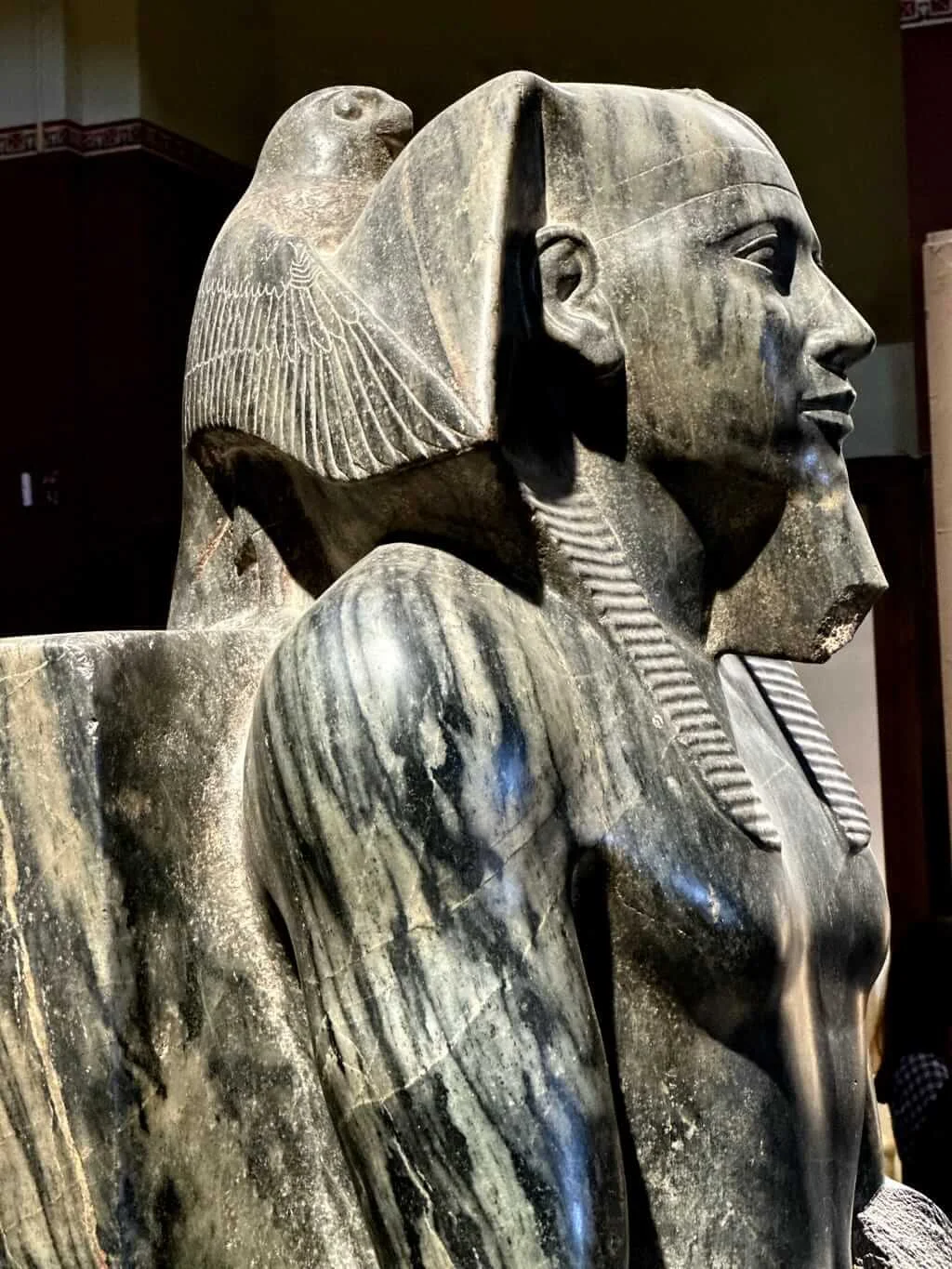
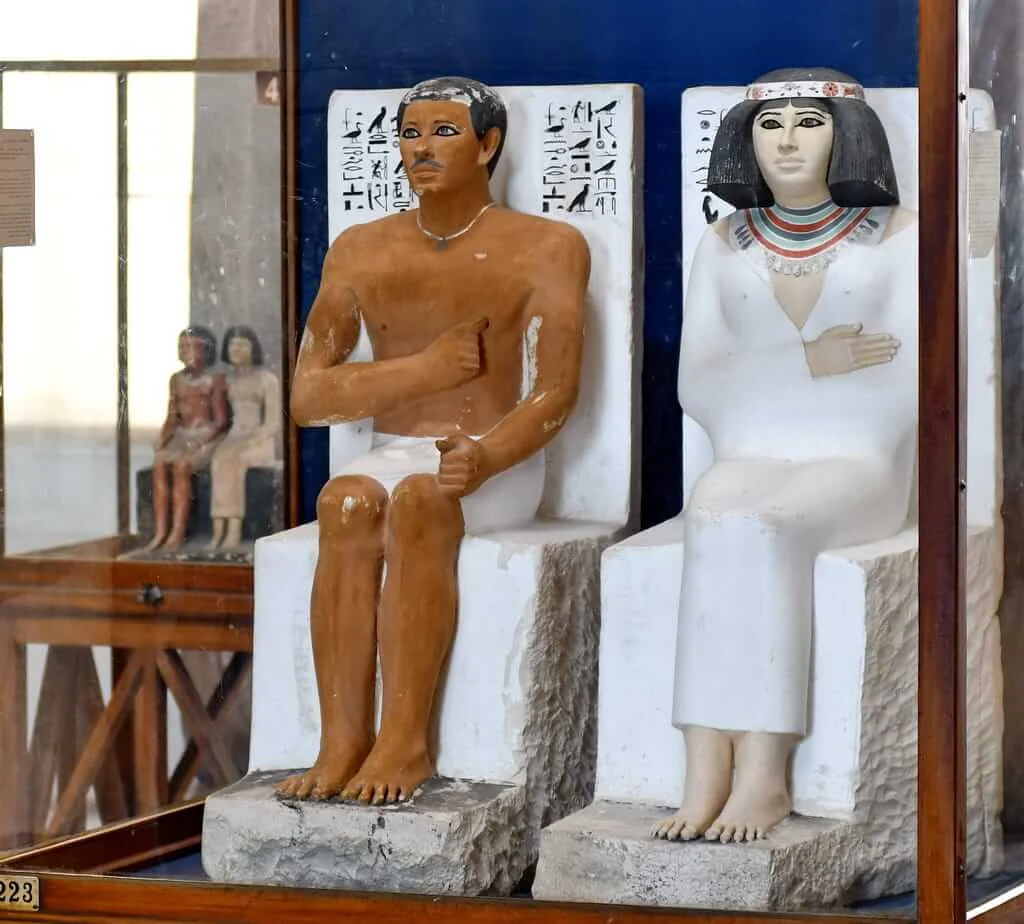
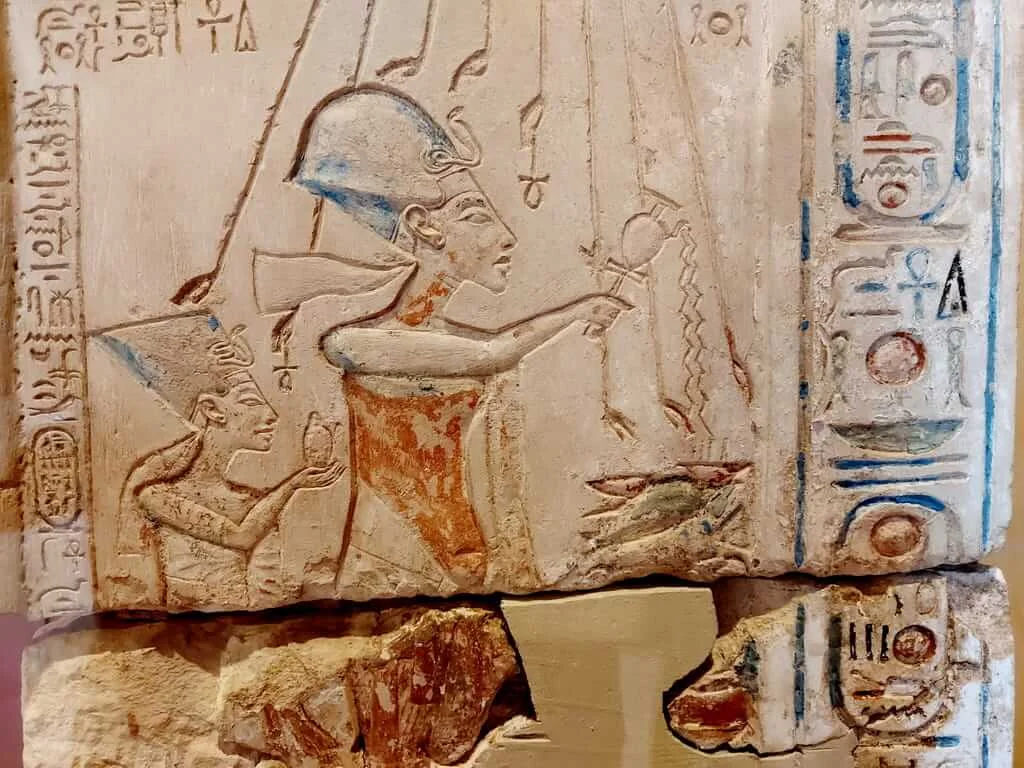
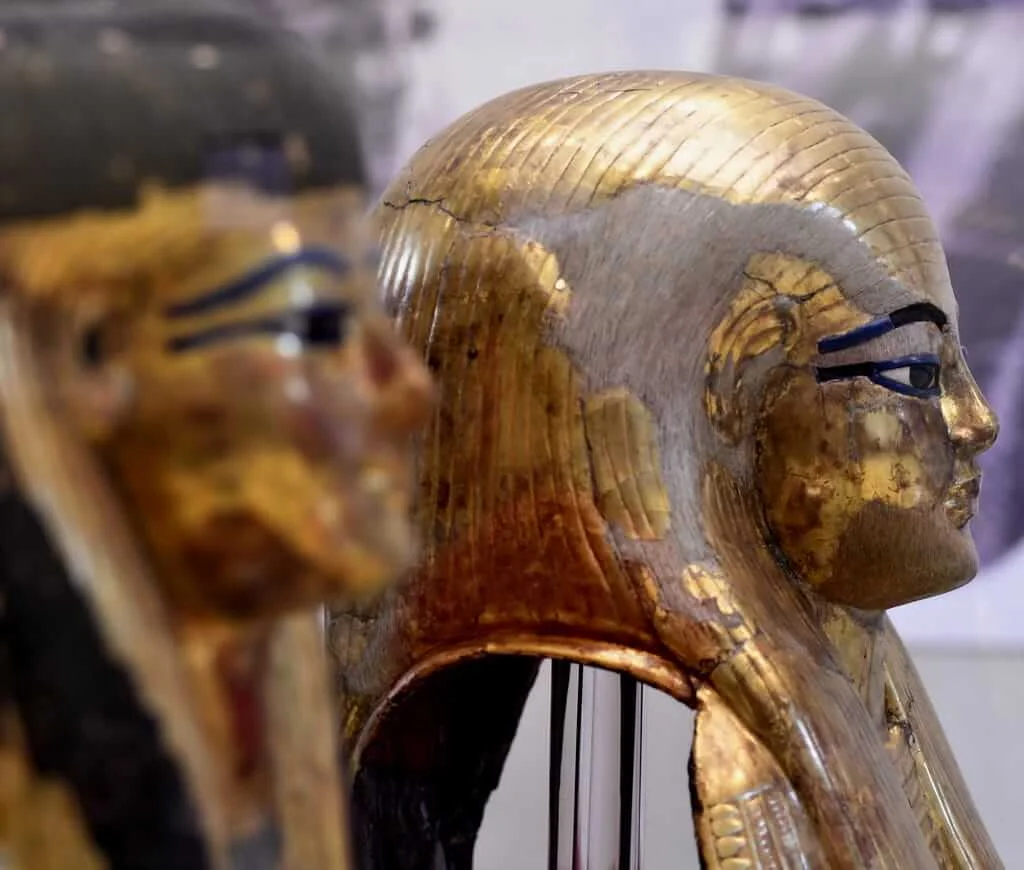
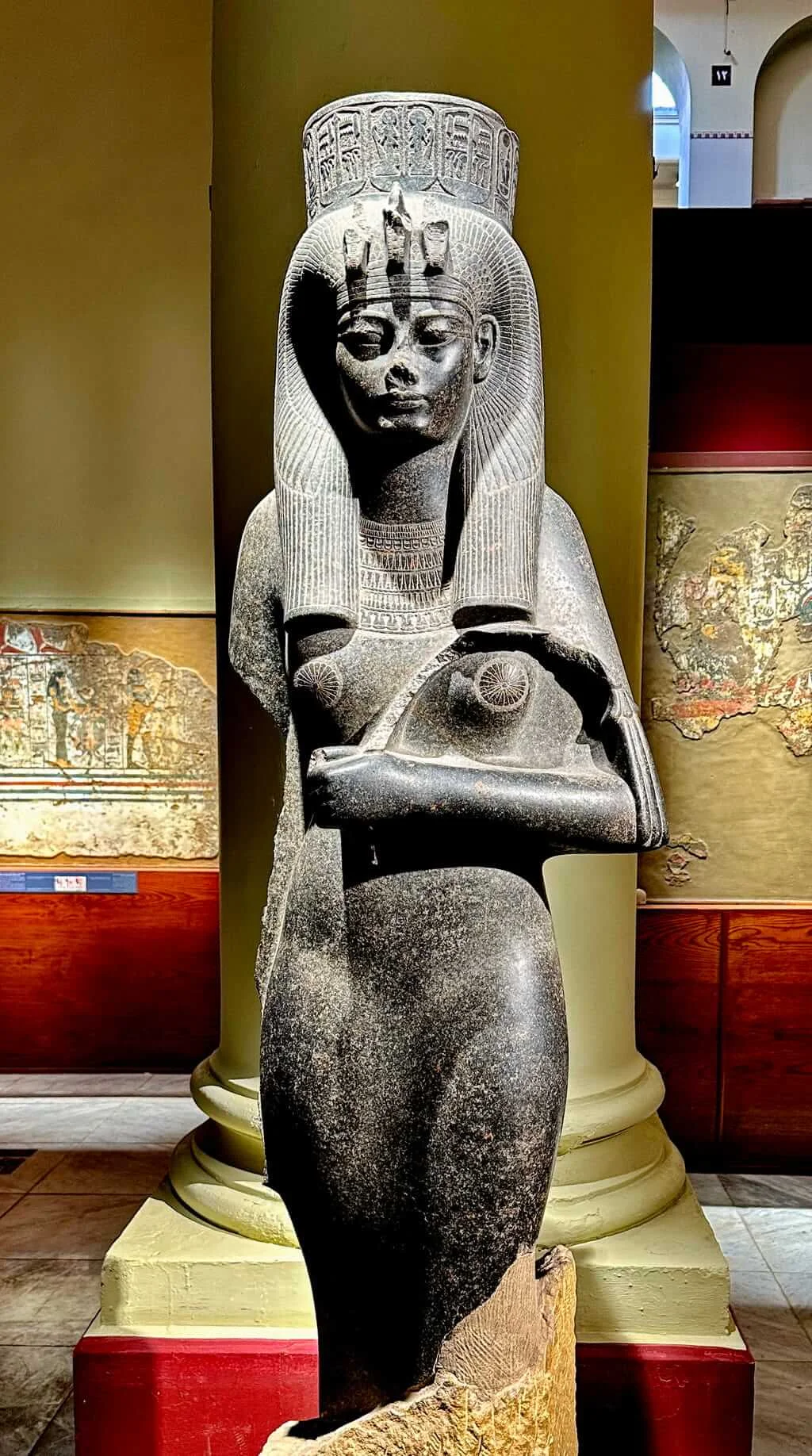
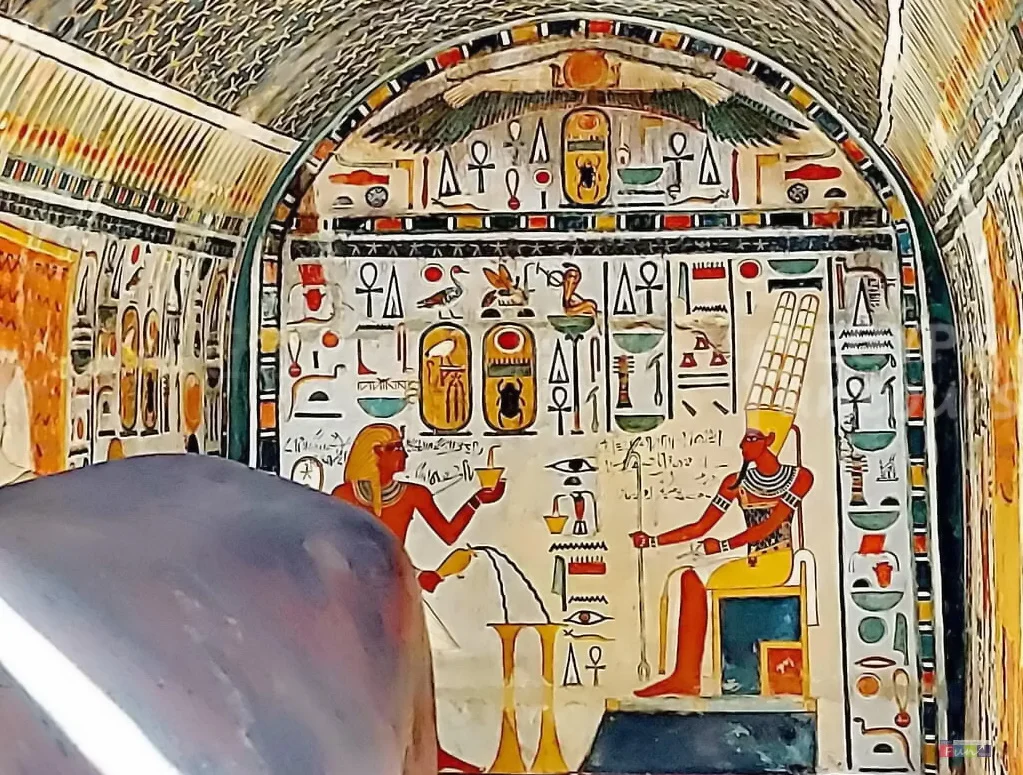
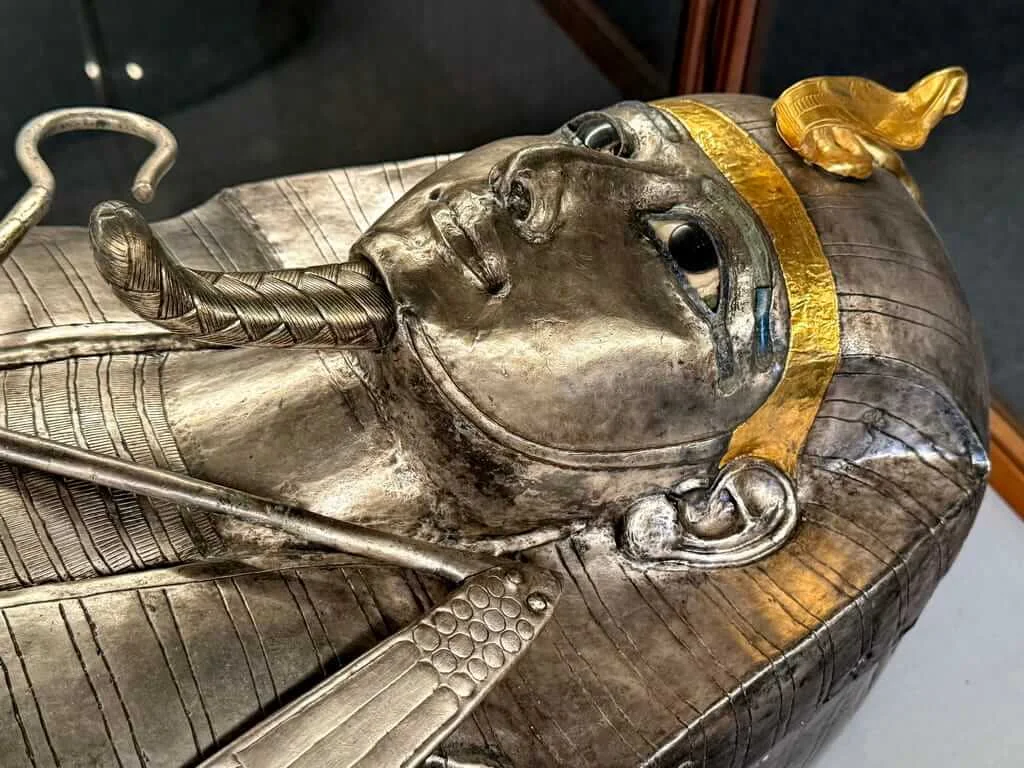
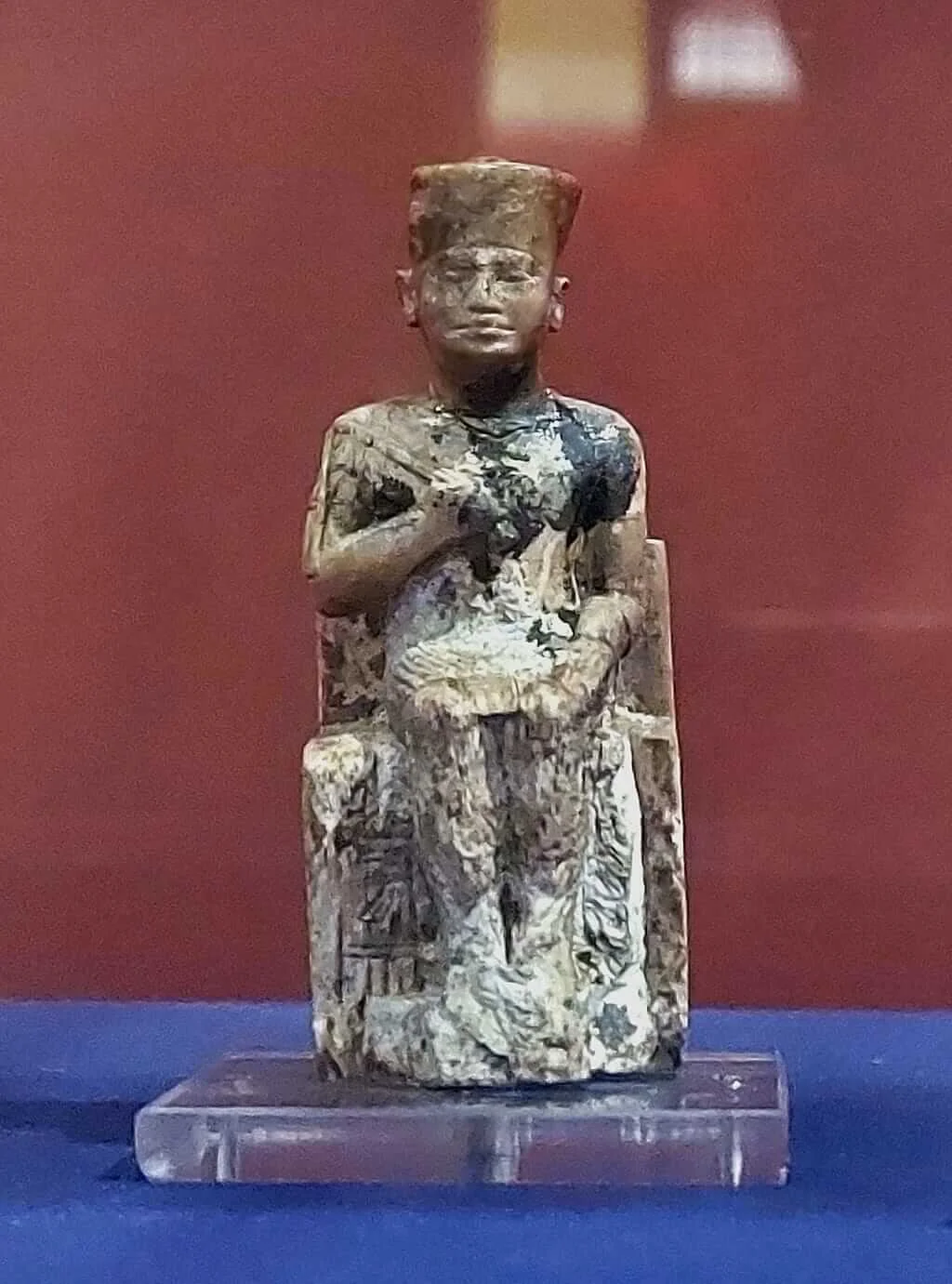
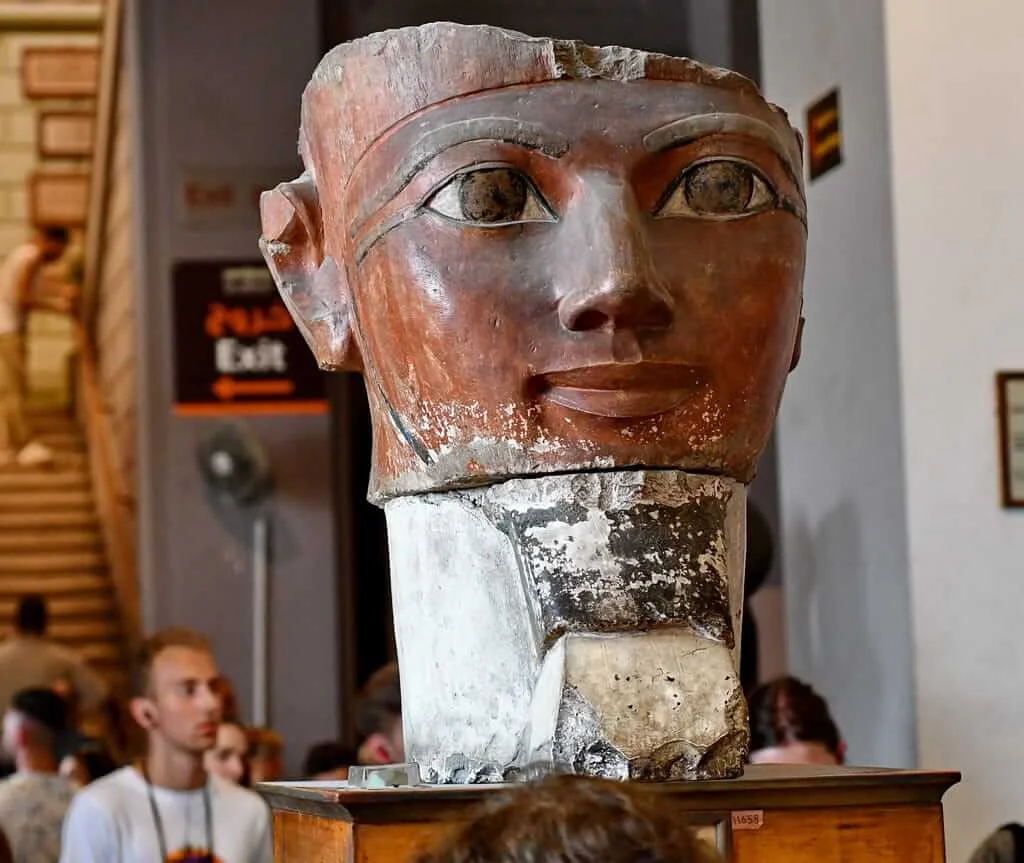
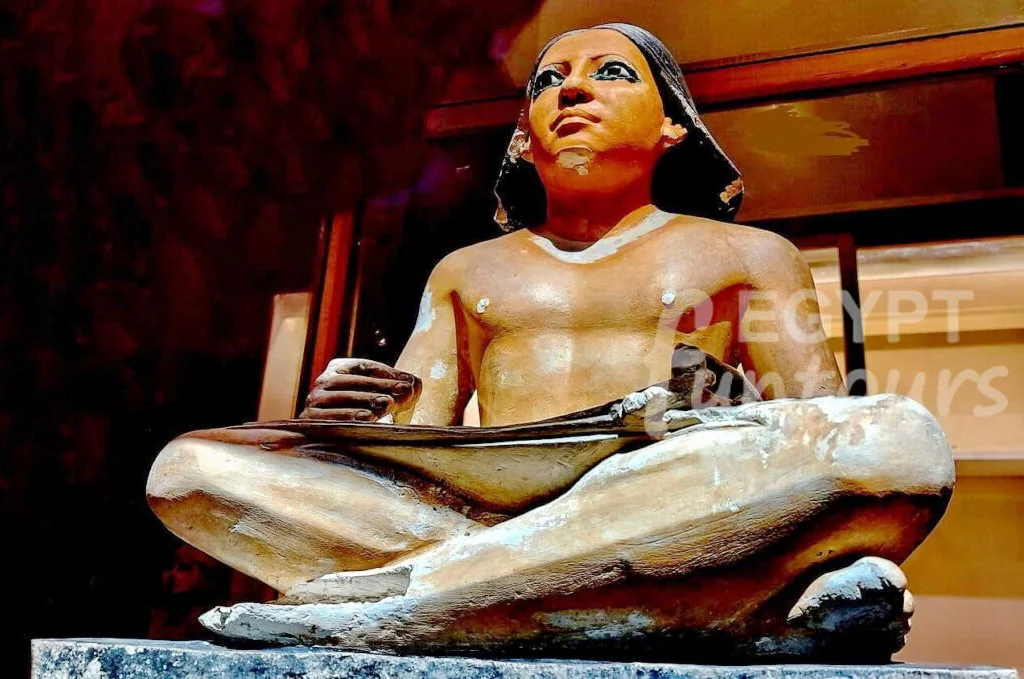
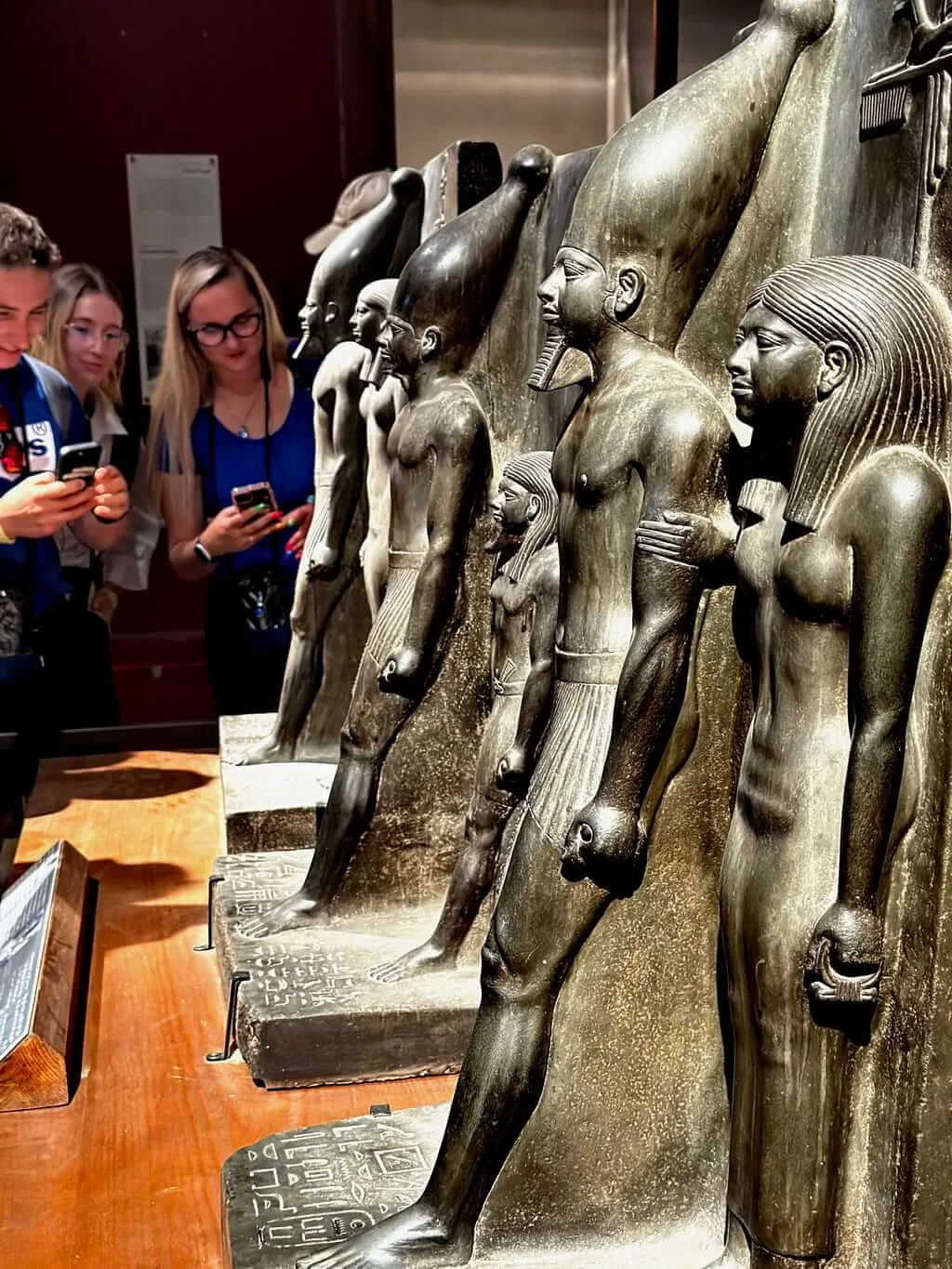
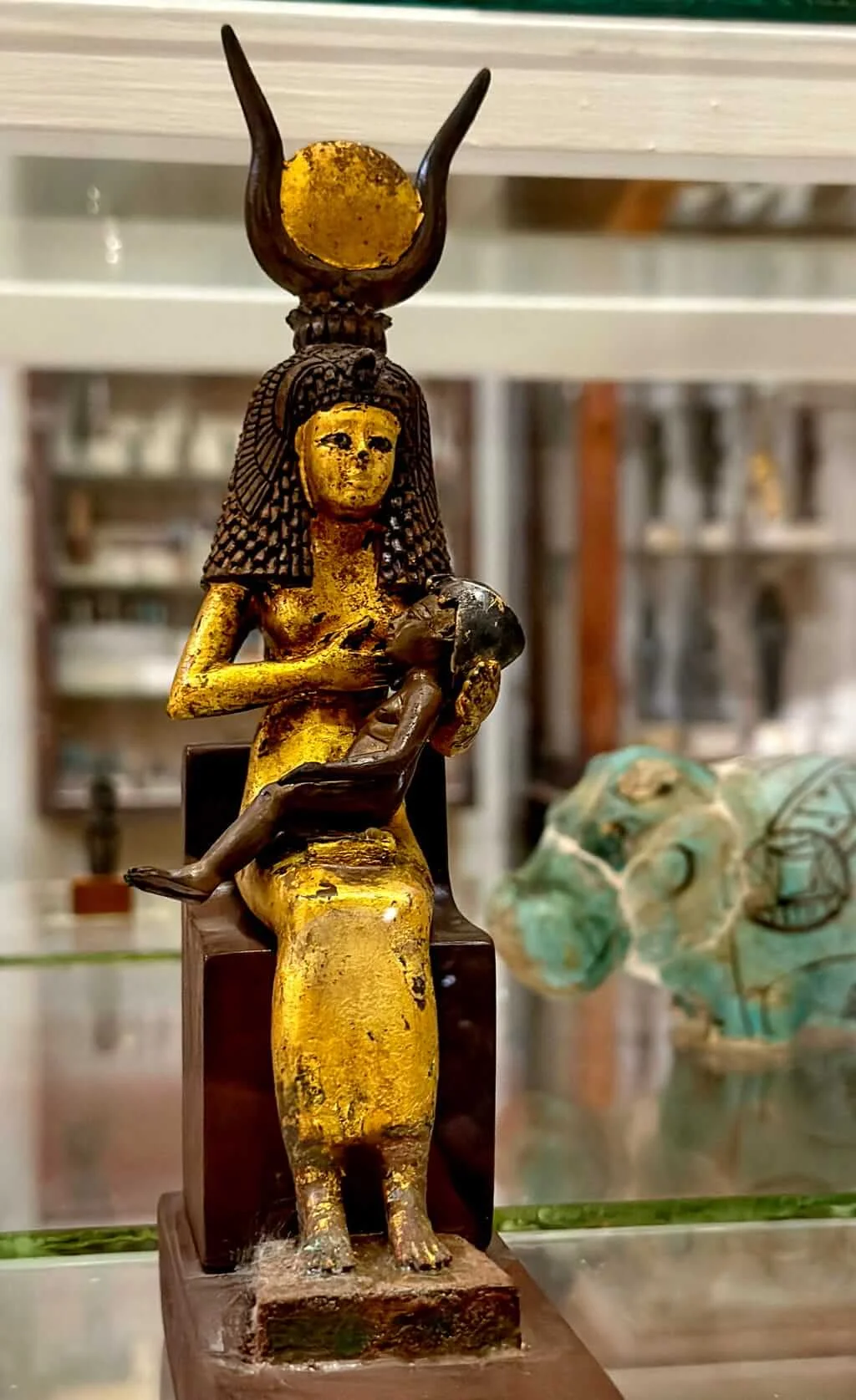
The Egyptian Museum in Cairo is one of the most famous buildings in the world. It sits in the heart of Cairo and holds the spirit of the Pharaohs. For over 120 years, this “Red Palace” has guarded the treasures of the Nile. Even though new museums have opened recently, the Tahrir Museum remains the primary home of Egyptian identity. It is a place where every stone tells a story of gods, kings, and common people.
When you walk through the heavy iron gates, you leave the noise of modern Cairo behind. You enter a world of silence and gold. Today, the museum is entering a new era. It has undergone a massive restoration to return it to its original beauty. For any traveler, this museum is an essential stop. It offers a deep look into the oldest civilization on Earth.
The Architecture of a Legend: A Masterpiece on the Nile

The museum building is just as important as the artifacts inside. It was not built by a Pharaoh, but it was designed to feel like a temple for history.
The Architectural Legacy of the Egyptian Museum in Cairo: The Vision of Marcel Dourgnon
The Egyptian Museum in Cairo is more than a treasure house; it is a masterpiece of architectural ingenuity. In the late 19th century, the Egyptian government launched an international competition to design a facility capable of housing thousands of heavy stone artifacts. The vision of Marcel Dourgnon, the French architect who won the commission, set the standard for museum design in the region.
A Landmark Design
Inaugurated in 1902, the structure was the first purpose-built museum in the Middle East. Dourgnon’s Neoclassical vision utilized high arches and grand windows to create an imposing, majestic presence. The building’s iconic dark pink-red facade was not merely aesthetic; it was specifically chosen to stand out against the brilliant, dusty desert sunlight of Cairo.
Designed for Natural Light
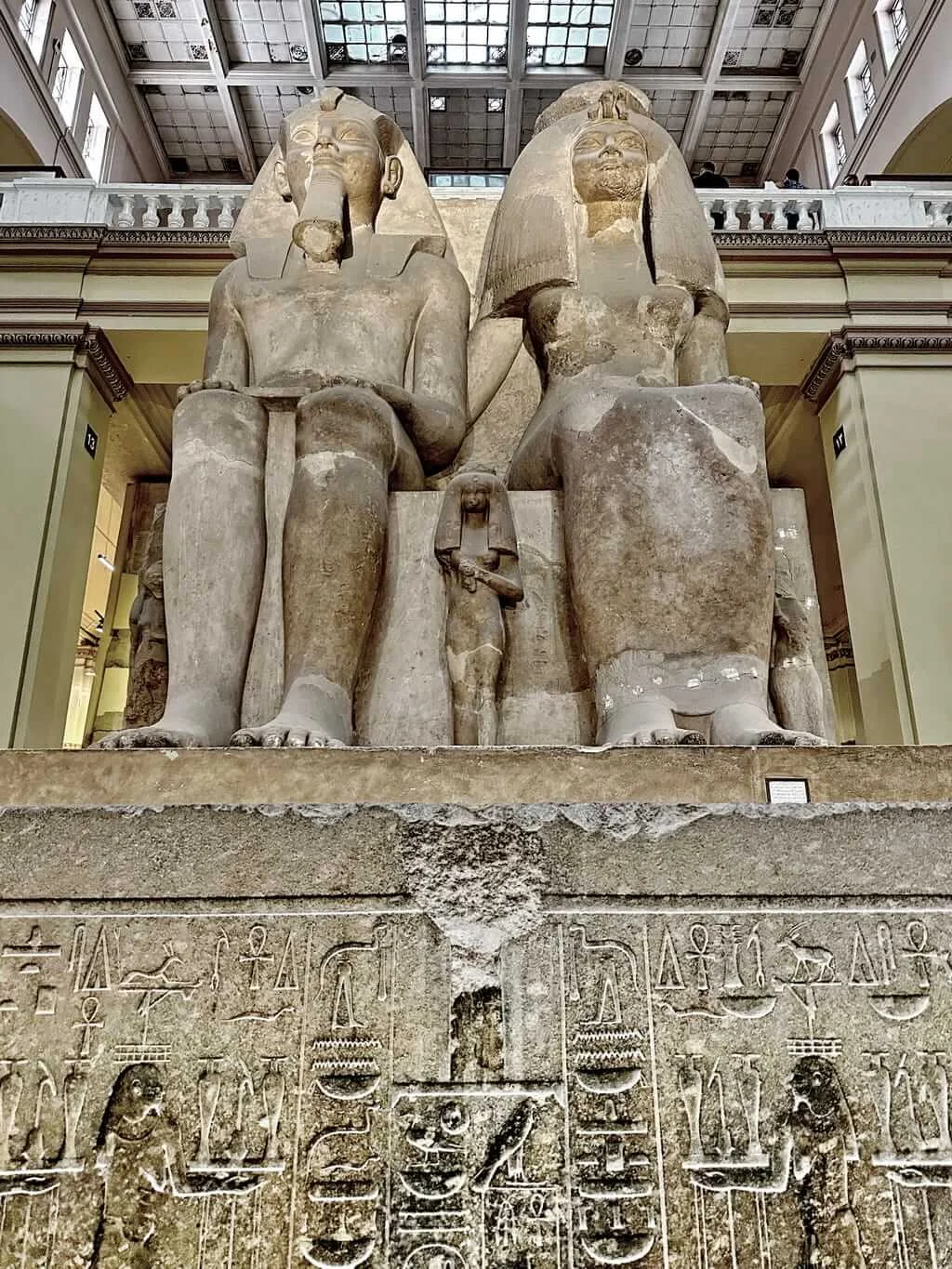
Long before modern electrical lighting, Dourgnon solved the challenge of illuminating vast, heavy antiquities by incorporating a massive glass ceiling.
- Natural Illumination: Sunlight floods the central atrium, recreating the natural desert conditions under which the Old Kingdom statues were originally viewed.
- Climate Control: The exceptionally high ceilings facilitate air circulation, keeping the expansive interior cool during intense Egyptian summers.
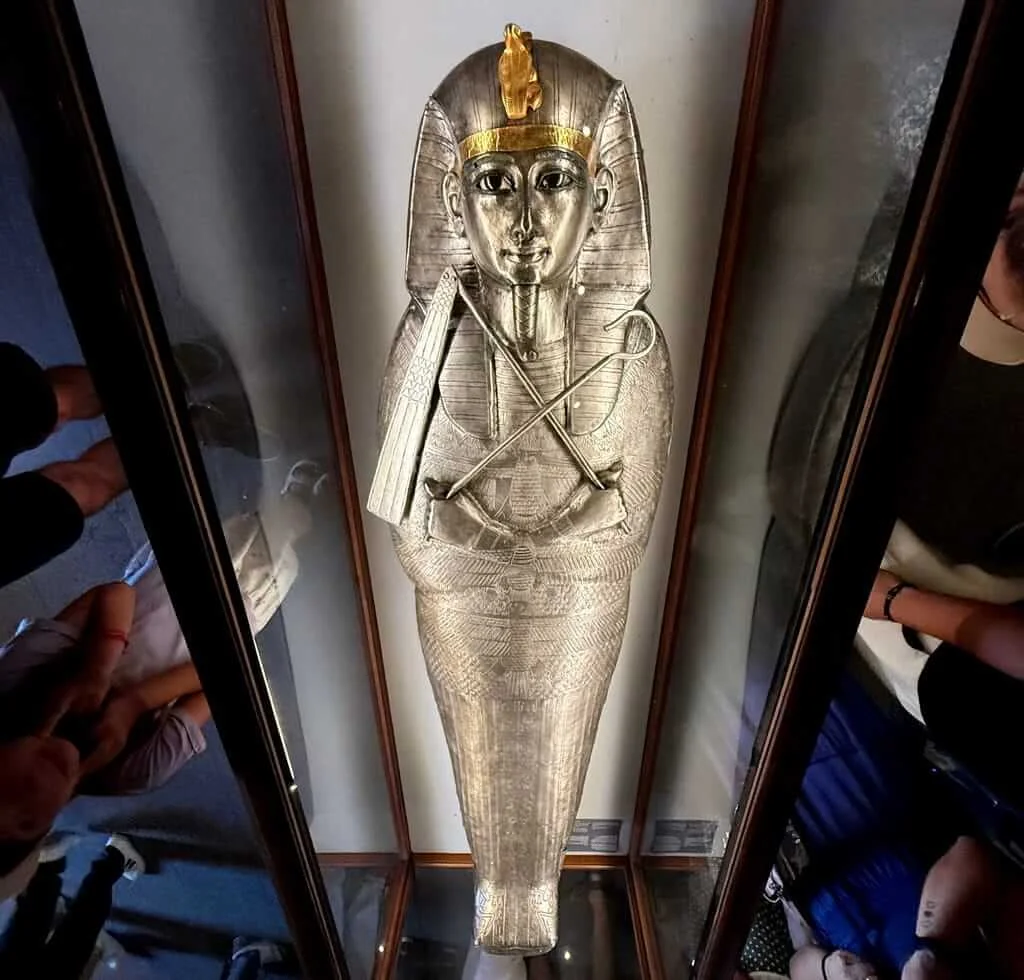
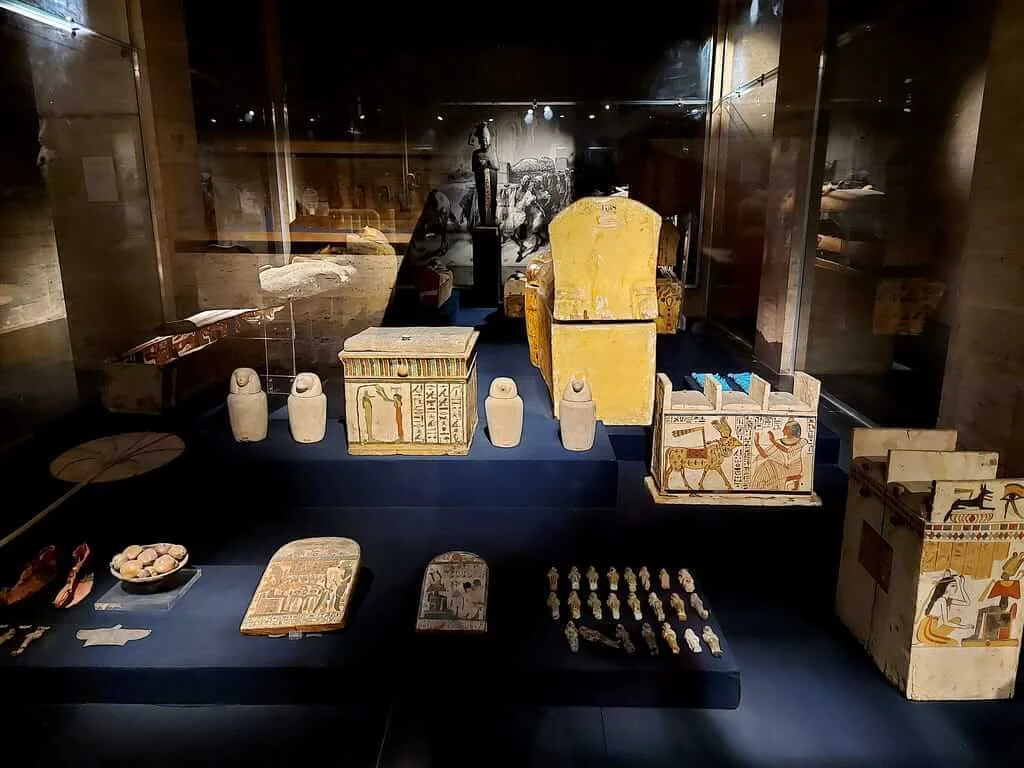
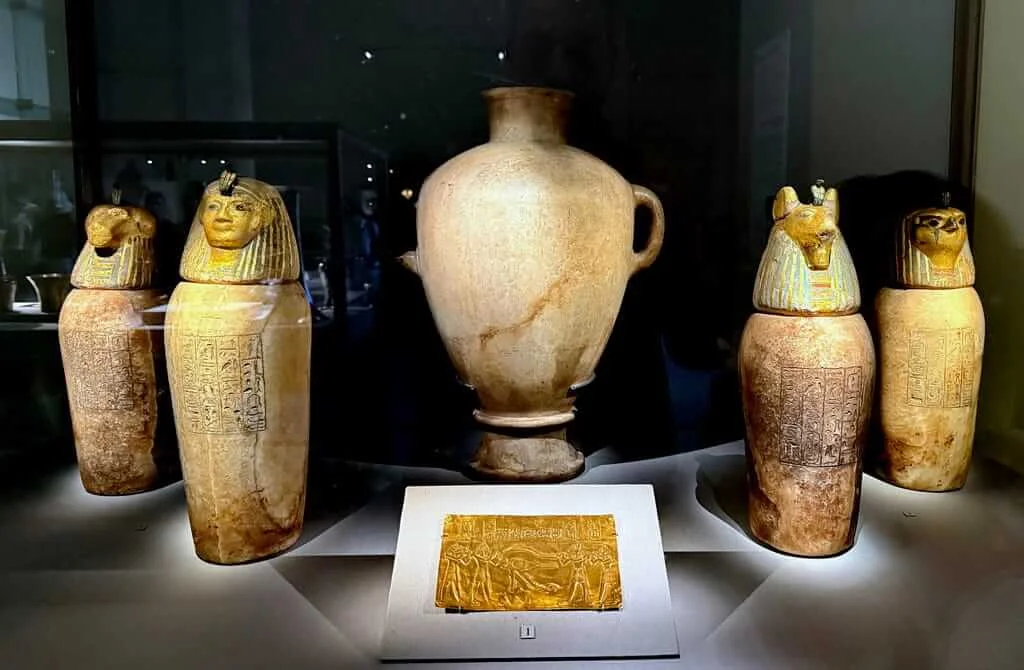
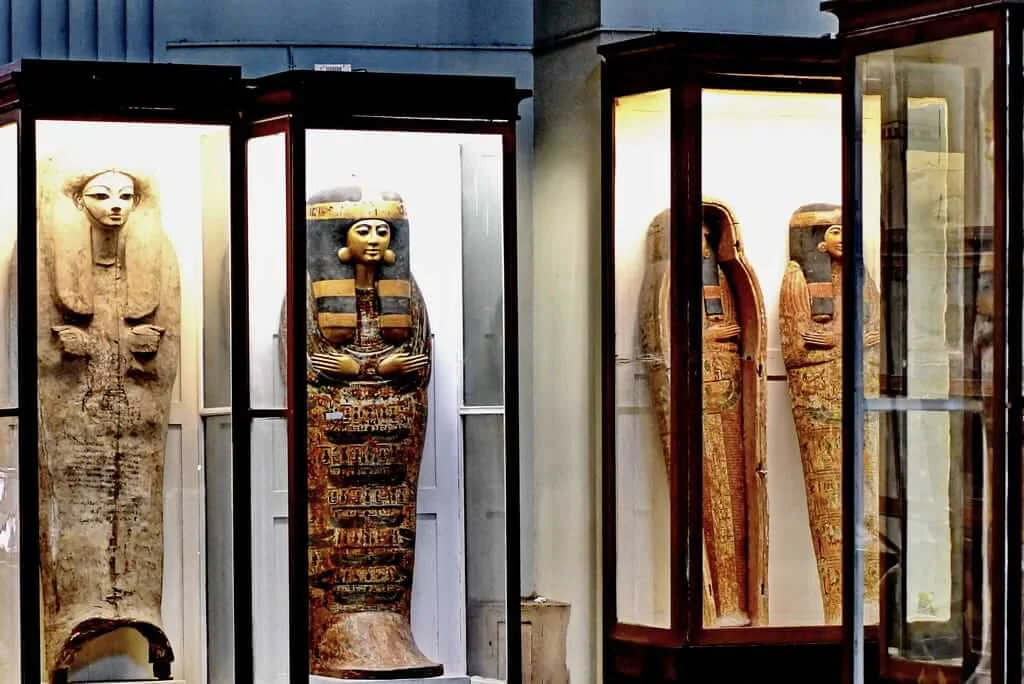
- Historic Atmosphere: The original early 20th-century wooden display cases remain. Far from being outdated, they offer a nostalgic, immersive experience, evoking the atmosphere of a 19th-century explorer unearthing a lost civilization.
The Egyptian Museum in Cairo As a Cultural Fortress
The Tahrir Museum was engineered for endurance, with thick walls designed to support thousands of tons of granite and basalt. Its structural integrity has allowed it to survive earthquakes and the passage of time.
Beyond its physical strength, the Egyptian Museum in Cairo serves as a powerful symbol of national identity. During the 2011 Egyptian Revolution, thousands of citizens formed a human chain around the building, standing hand-in-hand to protect their heritage from looters. This act solidified the Tahrir Museum’s status not just as a repository of the past, but as a living symbol of Egyptian pride and resilience.