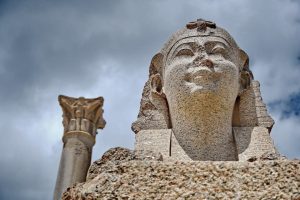
4. The Beard and Cobra Snake of the Great Sphinx of Giza
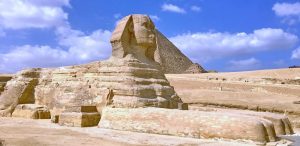
I think this is the most important of all the Masterpieces of the Egyptian Museum of Antiquities. The Great Sphinx of Giza, which belongs to King Chephren, is one of the most renowned ancient Egyptian monuments, as well as the world’s biggest figure constructed of a single piece of stone.
It is part of Egypt’s legendary Pyramids. The nose, the cobra snake on the forehead, and the beard all tumbled down and fractured due to the poor grade of limestone used to make the Sphinx! The Great Sphinx’s beard and cobra serpent may still be shown at the Egyptian Museum in Cairo, and they are regarded as essential museum treasures.
5. Royal Seated Scribe
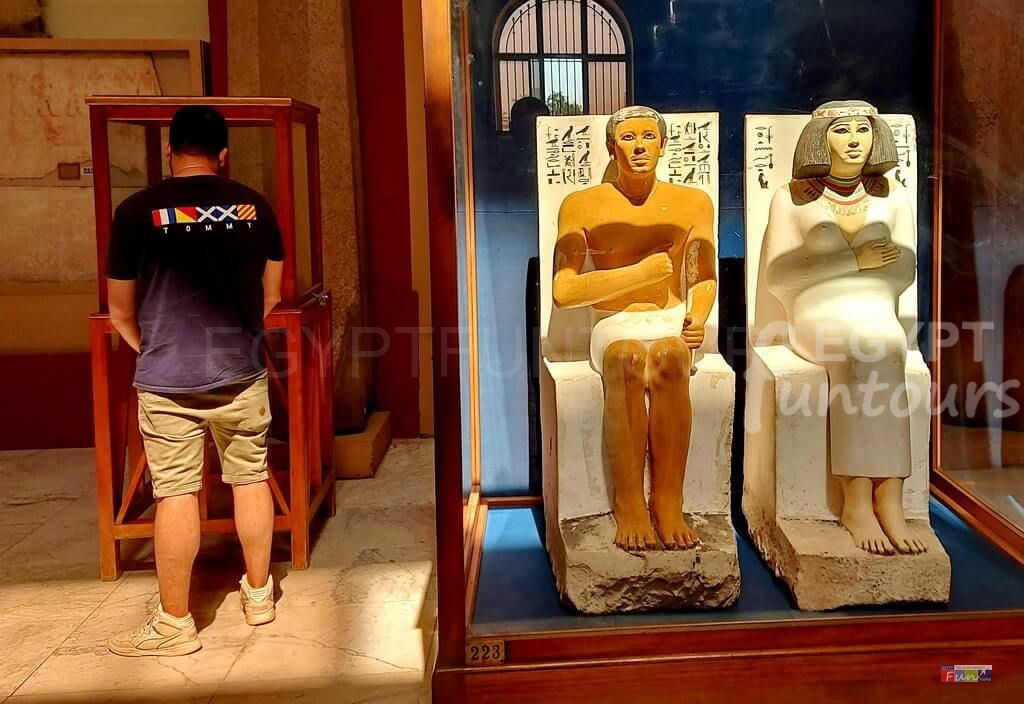
The excellent Royal seated scribe statue at the Egyptian museum exemplifies the ancient Egyptian craftsmen’s and artisans’ incredible expertise. There are no markings on the statue stating who it belongs to, hence it belongs to an unknown scribe.
The artist was incredibly skilled and confident. He freed the statue’s arms and created it without a rear pillar, breaking the artistic norms of the period. The statue has a light wig that leaves his ears free to listen. His eyes, inlaid with rock crystals and black nails, and a small smile on his face, tell us everything about scribes in ancient Egypt.
6. Statue of King Chephren (Diorite stone)
The Statue of King Chephren on display at the Egyptian Museum is one of the most remarkable Ancient Egyptian Artifacts since it was carved from a single piece of diorite stone, which is the second hardest stone on earth after diamond.
We don’t know how this statue came to be. It’s important to note that the ancient Egyptians utilized diorite stone to cut other hard stones for building projects, such as granite. A life-size statue of the 4th Dynasty’s third king. During his reign, King Chephren built a pyramid at Giza for himself, which is only second in size in the world to his father, King Khufu’s Great Pyramid of Giza.
For centuries, the statue was held under the foundation of Giza’s Valley temple of King Chephren, which is also the king’s mummification temple. Tourists congregate at the statue’s discovery site to throw money and make wishes.
7. The Statuette of King Khufu
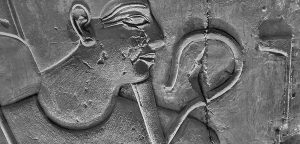
The 7.5-inch (3-inch) ivory statue of King Khufu is one of the smallest and most valuable artifacts ever discovered in ancient Egypt. Furthermore, it is the only known image of him. He is the king for whom people built the Great Pyramid of Giza.
Discovery
Archeologists discovered the statue on the southern corner of the Temple of Osiris in Abydos‘ ancient necropolis. It is now housed in Cairo’s Egyptian Museum. When they found the statue, it was headless. After two weeks of further excavation, they uncovered the head. A serekh name on the statue’s left shoulder confirms its identity as King Khufu.